 Preview
 Send
Send Share
Share
 Details

 Download
 Similars
 X-Ray
X-Ray Diaporama
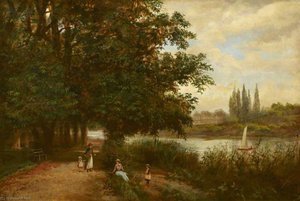
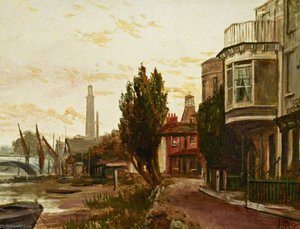
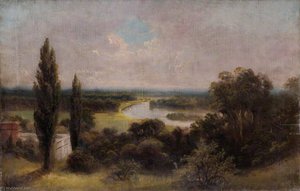
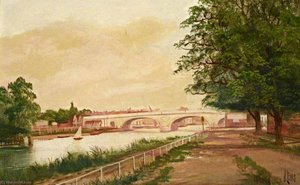
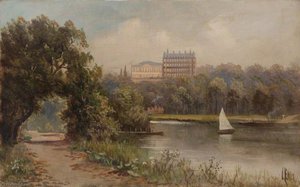
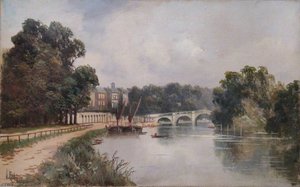
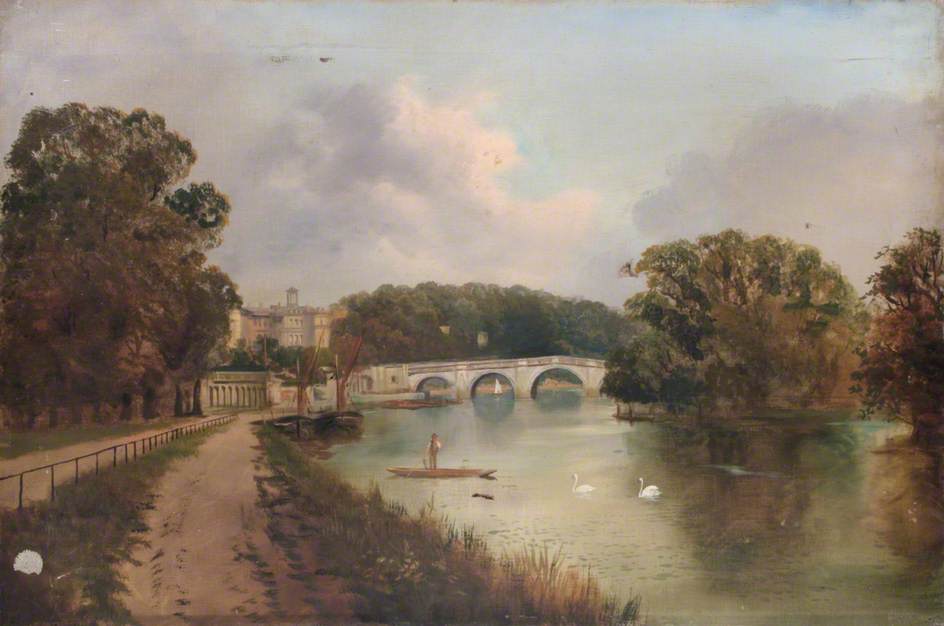
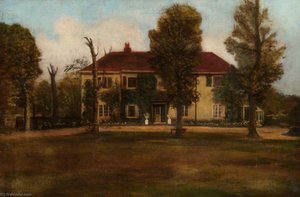
Richmond Bridge Looking towards Twickenham, Middlesex
 51.0 x 76.0 cm
 Orleans House Gallery
 Read More
Hand Made Oil Reproduction
Hand-painted oil on canvas in your size and frame, made to order by our artists. ( Buy Print Buy Image)




































Pick from our preset sizes that match the artwork's original proportions.

You may enter your own dimensions to fit a specific frame or space. If your selected size does not match the original image's proportions, we will either crop the artwork or extend the painting with additional hand-painted elements. A digital mockup will be sent for your approval before production begins.
Please note that the on-screen preview does not reflect the actual cropping or extension. Only the mockup will accurately show the final composition.
While custom sizes are available, we recommend selecting a dimension from the predefined list to preserve the original proportions.
After order, ArtsDot.com team will email client for instructions and provide a mockup preview
Worldwide Delivery () in 3/4 weeks instead of standard 5 weeks. (23 August). No compromise on quality.

Free Worldwide Express Shipping

High-Quality Linen Canvas

Full Shipping Insurance

Customs Tax Refund Guarantee

True Color Matching Guarantee

60-Day Return Policy (Defects Only)

100% Money-Back Guarantee

Bulk Discount Offer
 Glass option is only available in size under 110 CM

Richmond Bridge Looking towards Twickenham, Middlesex
Reproduction Medium
Reproduction Size
-


Total Price
$ 263
Related Artworks









Artist Biography
The Quiet Elegance of James Isaiah Lewis
James Isaiah Lewis (1861-1934) emerged as a prominent watercolorist during the Victorian era, establishing himself as a masterful interpreter of Surrey’s picturesque countryside. Born in Middlesbrough, Yorkshire, he possessed an innate fascination with botany and geology—interests that profoundly shaped his artistic vision and informed his meticulous observation of natural forms. His dedication to capturing subtle nuances of light and color cemented his reputation as one of the foremost landscape painters of his time, a creator who found profound beauty in the understated rhythms of the English landscape.
Lewis's artistic journey began modestly, honing his skills through self-taught experimentation before enrolling at the prestigious Slade School of Fine Art in London. There, he studied under the legendary Frederic Leighton, absorbing the Beaux Arts aesthetic championed by the Royal Academy—a style characterized by idealized beauty and formal composition. However, Lewis swiftly transcended mere imitation, developing a distinctive approach rooted in direct plein air painting and an unwavering commitment to realism. He eschewed theatrical grandeur for quiet contemplation, preferring to depict scenes of rural Surrey with remarkable sensitivity and detail.
A Mastery of Light and Landscape
The essence of Lewis’s work lies in his ability to transform a simple river scene or a woodland path into a moment of eternal stillness. His canvases frequently portray iconic locations such as Kew Gardens and Richmond Hill—subjects that captivated Victorian artists and intellectuals alike. Through his meticulous brushwork, he captured the ethereal glow of dawn over the Thames meadows or the stately grandeur of Richmond Castle perched atop its hilltop. He skillfully rendered foliage, water reflections, and architectural elements with astonishing accuracy, conveying not just visual information but also a palpable sense of atmosphere.
His technical prowess allowed him to bridge the gap between scientific observation and romantic emotion. Influenced by masters such as Claude Lorrain and John Constable, Lewis embraced the Romantic tradition's emphasis on emotion and sublime beauty while maintaining an unwavering adherence to the geological and botanical truths of his subjects. This duality is perhaps most evident in his notable works:
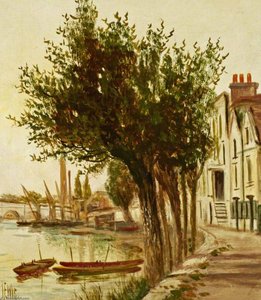
- Kew Bridge: A stunning representation of a river scene from 1900, showcasing a lively waterway filled with boats and the delicate textures of oil on canvas.
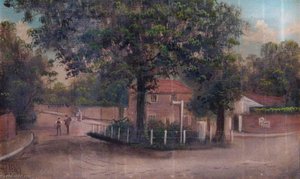
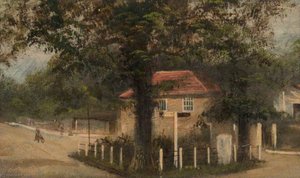
- The Triangle, Sheen Lane, East Sheen: A serene 19th-century depiction of rural Surrey life that exemplifies his evocative landscape style.
- Syon House Seen across the Thames: A masterful study of light and reflection along the Kew riverbank.
- Isleworth Riverside: A contemplative piece looking towards a distant church, highlighting his ability to find sanctity in the everyday.
Legacy of the Surrey Landscape
The historical significance of James Isaiah Lewis resides in his role as a chronicler of a vanishing era. As the industrial landscape began to shift the face of England, Lewis’s dedication to the plein air tradition preserved the pastoral innocence of the Surrey countryside for future generations. His work serves as both a botanical record and an emotional window into the Victorian soul, capturing a period defined by a deep reverence for the natural world.
Today, his paintings remain cherished in collections such as the Hounslow Local Studies Library, where they continue to invite viewers into a peaceful, meticulously rendered world. Through his ability to marry the precision of a scientist with the heart of a poet, Lewis ensured that the quiet elegance of the English landscape would never truly fade from the annals of art history.
james isaiah lewis
1861 - 1934
Quick Facts
- Artistic Movement Or Style: Victorian Painting
- Artists Or Movements Influenced By This Artist: ['Romanticism']
- Artists Who Influenced This Artist: ['William Holman Hunt']
- Date Of Birth: 1861
- Date Of Death: 1934
- Full Name: James Isaiah Lewis
- Nationality: British
- Notable Artworks:
- Kew Bridge
- The Triangle, Sheen Lane
- Strand on the Green, Looking at the Third Kew Bridge
- Place Of Birth: London, England