 Preview
 Send
Send Share
Share
 Details

 Download
 Similars
 X-Ray
X-Ray Diaporama
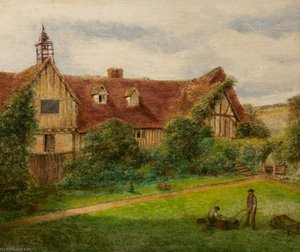
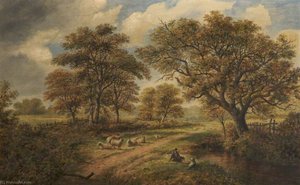
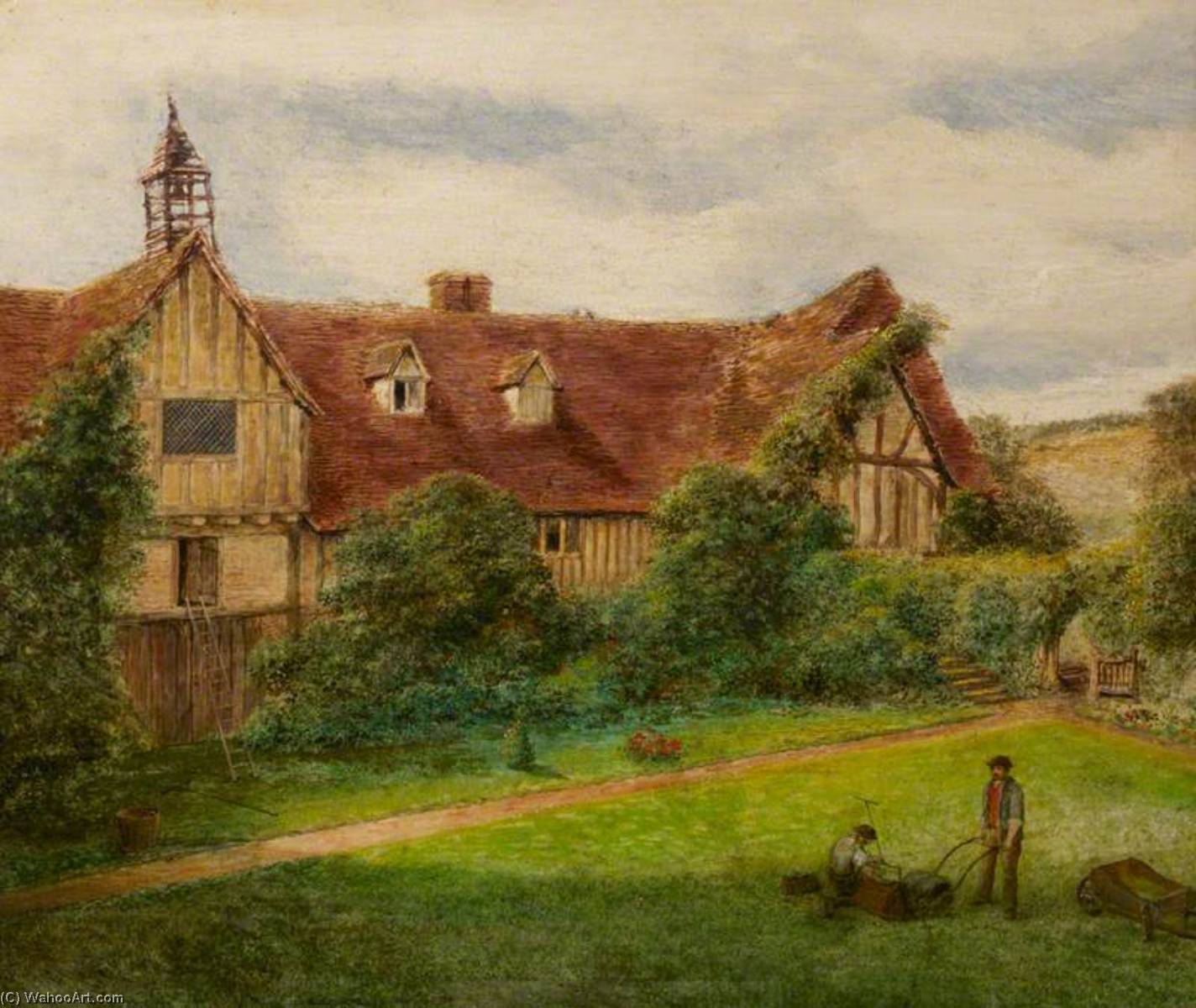
The Cottages, Ightham Mote
 Oil On Canvas
- WallArt
- Pastoral Painting
 1860
1860 43.0 x 49.0 cm
 National Trust
 Read More
Hand Made Oil Reproduction
Hand-painted oil on canvas in your size and frame, made to order by our artists. ( Buy Print Buy Image)




P118B $10

P118H $10

P118W $10

P438Z $10

P508JH $12

P508YH $12

P805H $10

P805Z $10

P919BZ $10

P919G $10

P919XJ $10

P959ZH $10

P968JZ $12

W106C $8

W218G $10

W218JH $8

W218Y $10

W307PJ $10

W316G $10

W316PJ $8

W316Y $10

W398PJ $8

W4111J $10

W500HY $15

W500JH $15

W692G $12

W849H $8

W940BG $15

W953PJ $8




Pick from our preset sizes that match the artwork's original proportions.

You may enter your own dimensions to fit a specific frame or space. If your selected size does not match the original image's proportions, we will either crop the artwork or extend the painting with additional hand-painted elements. A digital mockup will be sent for your approval before production begins.
Please note that the on-screen preview does not reflect the actual cropping or extension. Only the mockup will accurately show the final composition.
While custom sizes are available, we recommend selecting a dimension from the predefined list to preserve the original proportions.
After order, ArtsDot.com team will email client for instructions and provide a mockup preview
Worldwide Delivery () in 3/4 weeks instead of standard 5 weeks. (22 August). No compromise on quality.

Free Worldwide Express Shipping

High-Quality Linen Canvas

Full Shipping Insurance

Customs Tax Refund Guarantee

True Color Matching Guarantee

60-Day Return Policy (Defects Only)

100% Money-Back Guarantee

Bulk Discount Offer
 Glass option is only available in size under 110 CM

The Cottages, Ightham Mote
Reproduction Medium
Reproduction Size
-


Total Price
$ 288
Artwork Description
James Nasmyth’s “The Cottages, Ightham Mote”: A Pastoral Vision of Victorian England
“The Cottages, Ightham Mote” by James Nasmyth (1860) stands as a quintessential example of Victorian pastoral art—a genre dedicated to celebrating the beauty and tranquility of rural landscapes. More than just a picturesque depiction, this oil painting embodies a profound appreciation for craftsmanship and an idealized vision of English countryside life during a period marked by rapid industrialization. Located within Ightham Mote National Trust Estate in Kent, England, it’s a testament to Nasmyth's ability to capture not merely what he saw but also the spirit of his time.Composition and Style: Constable Inspired Elegance
Nasmyth’s masterful composition echoes the influence of John Constable, another prominent landscape painter who championed naturalism alongside romantic sentimentality. The cottage itself—a modest dwelling constructed around 1475—dominates the central frame, positioned strategically against a backdrop of rolling hills and mature trees. This balanced arrangement prioritizes visual harmony, guiding the viewer’s eye across the canvas with ease. Lines are predominantly soft and flowing, characteristic of Nasmyth's brushstrokes which prioritize atmosphere over precise detail – a deliberate choice reflecting the broader artistic movement of Impressionism, albeit executed with a more restrained palette and technique. The overall style leans towards romantic idealism, conveying a sense of nostalgia for a simpler past while simultaneously celebrating the enduring charm of rural England.Technique: Oil Paintsmanship and Textured Surfaces
The artwork is executed in oil paint on canvas, utilizing a technique that emphasizes texture and luminosity. Nasmyth’s meticulous layering of pigments creates visible brushstrokes—a hallmark of Victorian painting—resulting in surfaces rich with tactile qualities. The artist skillfully renders the textures of grass, foliage, and particularly the weathered thatch roof of the cottage, conveying an impression of materiality and authenticity. Careful attention to light is evident throughout the piece; diffused illumination casts a gentle glow upon the scene, fostering a feeling of serenity and tranquility—a deliberate stylistic element intended to evoke emotions associated with pastoral idylls. The artist’s meticulous approach ensures that every detail contributes to the painting's immersive quality.Symbolism: Domestic Tranquility and Connection to Nature
Beyond its aesthetic beauty, “The Cottages, Ightham Mote” carries symbolic weight. The cottage represents home—a bastion of comfort and stability amidst the turbulent currents of Victorian society—while the surrounding garden symbolizes abundance and cultivation—reflecting a humanist belief in the importance of harmony between humanity and nature. Figures engaged in gardening subtly reinforce this connection to the land, suggesting an appreciation for rural traditions and values. Nasmyth’s depiction isn't merely observational; it’s infused with emotional resonance, conveying a yearning for unspoiled landscapes and a celebration of the virtues associated with pastoral life—themes that resonated deeply within Victorian culture.Historical Context: Industrial Revolution Meets Romantic Idealism
Painted during the height of the Industrial Revolution, “The Cottages, Ightham Mote” presents a counterpoint to the burgeoning factories and urban sprawl of the era. It embodies a reaction against the perceived dehumanizing effects of industrial progress—a desire to recapture a sense of connection to the natural world that was increasingly threatened by technological advancement. Nasmyth’s artistic vision reflects the broader cultural preoccupation with preserving traditional values and celebrating beauty in rural settings – an enduring legacy of Victorian Romanticism. The painting serves as a poignant reminder of a bygone era, capturing its spirit of contemplation and appreciation for the simple pleasures of life.Related Artworks
Artist Biography
Early Life and Education
- Born: August 19, 1808, Edinburgh, United Kingdom
- Died: May 7, 1890
- Parents: Alexander Nasmyth (painter) and Barbara Foulis
- Early exposure to mechanics through his father’s workshop.
- Attended the Royal High School in Edinburgh.
- Studied at the Edinburgh School of Arts (later Heriot-Watt University), demonstrating early mechanical aptitude.
- Constructed a working model of a high-pressure steam engine at age 17, showcasing his skills.
Career and Inventions
- Apprenticed to Henry Maudslay in London, gaining experience in machine manufacturing.
- Established his own machine shop in Manchester in 1834.
- Founded Nasmyth, Gaskell and Company (Bridgewater Foundry) in 1836, specializing in machine tools and steam engines.
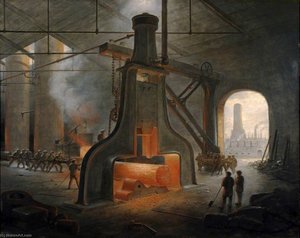
- Major Invention: The Steam Hammer – revolutionized iron forging by significantly reducing processing time and improving quality. Patented in 1842.
- Manufactured over 100 steam locomotives and various other machines like pumps and hydraulic presses.
- Developed pile drivers for marine construction projects.
Artistic Pursuits and Later Life
- Retired at age 48 to Penshurst, Kent in 1856.
- Dedicated himself to hobbies including astronomy, photography, and painting.
- Authored "The Moon: Considered as a Planet, a World, and a Satellite" (1874), demonstrating his interest in astronomical observation.
- Created detailed drawings and illustrations of machinery throughout his career, showcasing artistic talent alongside engineering skills.
Influences and Historical Significance
- Influence: Henry Maudslay – Nasmyth’s apprenticeship under Maudslay provided crucial experience in precision machining.
- Impact: The steam hammer significantly advanced the Industrial Revolution, enabling larger-scale metalworking operations.
- Contribution to Engineering: Emphasized efficiency and control in machinery design.
- Legacy: Recognized as a key figure in British engineering and innovation during the Victorian era.
Philosophical Views and Opposition to Organized Labor
- Nasmyth held strong views on labor, opposing organized labor movements.
- He believed in individual effort and responsibility rather than collective bargaining.
- His philosophical stance reflected a broader perspective prevalent among industrialists of his time.
- These beliefs shaped his approach to managing his workforce and contributed to his overall legacy.
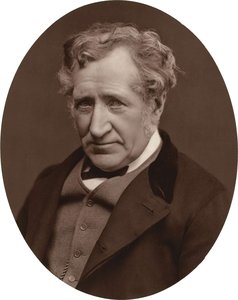
James Nasmyth
1808 - 1890 , United Kingdom
Quick Facts
- Artistic Movement Or Style: Engineer and Inventor
- Artists Who Influenced This Artist: ['Henry Maudslay']
- Date Of Birth: August 19, 1808
- Date Of Death: May 7, 1890
- Full Name: James Hall Nasmyth
- Nationality: Scottish
- Place Of Birth: Edinburgh, United Kingdom
Related Articles
Sir Alfred Munnings' Masterpieces: 25 Paintings That Define Equine Art | ArtsDot
Explore 25 iconic Sir Alfred Munnings paintings! Discover the beauty of British Impressionism, equine art & rural England. Find museum-quality reproductions and elevate your home decor with ArtsDot. Explore the full collection online.
Whistler's Masterpieces: Explore 25 Iconic Paintings & Aesthetic Art for Your Home
Journey through 25 iconic James Abbott McNeill Whistler paintings! Explore his masterpieces of Aestheticism, from 'Nocturne in Black and Gold' to captivating portraits. Find museum-quality art reproductions & elevate your home decor with ArtsDot.com. Discover the full collection online.

John Constable's Masterpieces: Explore 25 Iconic Landscapes for Your Home
Journey through John Constable's 25 most celebrated landscapes. Explore Romanticism, Dedham Vale & his masterful use of light in iconic paintings like 'Hay Wain'. Find museum-quality art reproductions and elevate your home decor on ArtsDot.com.
Idyllic Visions: Exploring the Pastoral Tradition in Western Art – Themes, Techniques & Enduring Appeal
Explore the rich history of pastoral art from classical Arcadia to contemporary interpretations. Discover key artists, themes & collecting tips at ArtsDot.

19th Century Masterpieces: 10 Paintings That Defined an Era | ArtsDot
Journey through 19th century art with ArtsDot! Explore 10 iconic paintings – from Monet & Renoir to Courbet – and discover the stories behind Romanticism, Realism & Impressionism. Find museum-quality reproductions for your home decor. Explore the full collection online!