 Preview
 Send
Send Share
Share
 Details

 Download
 Similars
 X-Ray
X-Ray Diaporama
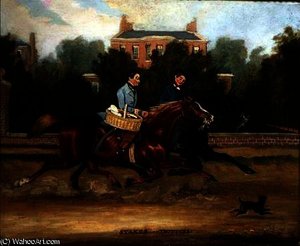
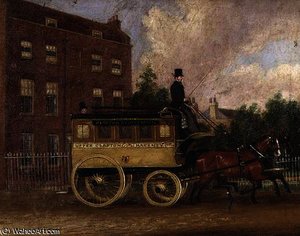
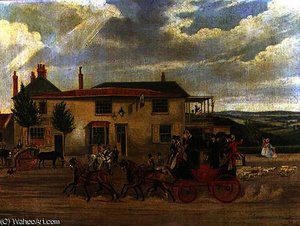
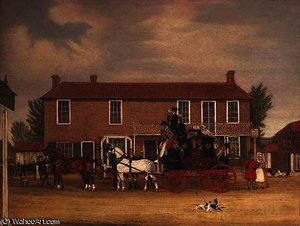
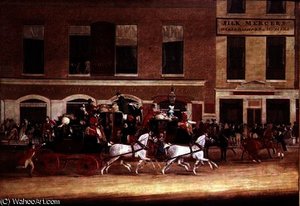
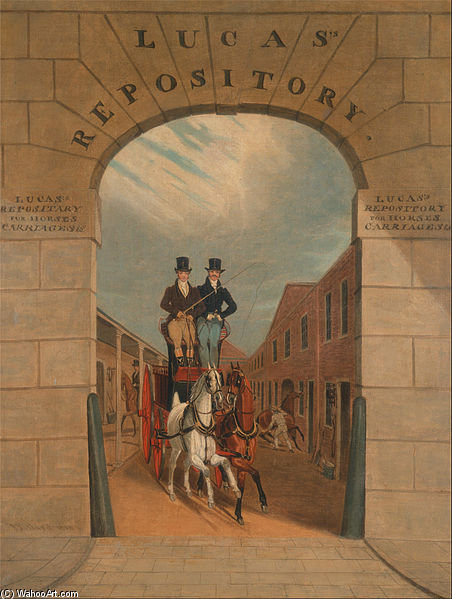
Schooling A Pair In A Brake At Lucas's Yard, Clerkenwell

 Read More
Hand Made Oil Reproduction
Hand-painted oil on canvas in your size and frame, made to order by our artists. ( Buy Print Buy Image)




































Pick from our preset sizes that match the artwork's original proportions.

You may enter your own dimensions to fit a specific frame or space. If your selected size does not match the original image's proportions, we will either crop the artwork or extend the painting with additional hand-painted elements. A digital mockup will be sent for your approval before production begins.
Please note that the on-screen preview does not reflect the actual cropping or extension. Only the mockup will accurately show the final composition.
While custom sizes are available, we recommend selecting a dimension from the predefined list to preserve the original proportions.
After order, ArtsDot.com team will email client for instructions and provide a mockup preview
Worldwide Delivery () in 3/4 weeks instead of standard 5 weeks. (23 August). No compromise on quality.

Free Worldwide Express Shipping

High-Quality Linen Canvas

Full Shipping Insurance

Customs Tax Refund Guarantee

True Color Matching Guarantee

60-Day Return Policy (Defects Only)

100% Money-Back Guarantee

Bulk Discount Offer
 Glass option is only available in size under 110 CM

Schooling A Pair In A Brake At Lucas's Yard, Clerkenwell
Reproduction Medium
Reproduction Size
-


Total Price
$ 288
Artwork Description
A Glimpse into 19th-Century London Commerce: "Schooling A Pair In A Brake At Lucas's Yard, Clerkenwell"
Step back in time to Victorian England with this captivating painting by James Pollard. “Schooling A Pair In A Brake At Lucas’s Yard, Clerkenwell” offers a fascinating window into the bustling commercial life of 19th-century London. The artwork depicts a lively scene centered around ‘Lucas's Repository for Horses and Carriages,’ an establishment clearly designed to cater to the transportation needs of the era. Observe the carefully rendered carriage being maneuvered – likely undergoing training or preparation – within the arched gateway, a focal point that draws the viewer into the heart of this historical moment. This isn’t merely a depiction of transport; it's a snapshot of an economy fueled by horses and carriages, reflecting prosperity and trade in a rapidly evolving urban landscape.Style & Technique: Illustrative Realism with Romantic Undertones
Pollard masterfully employs an illustrative realism that prioritizes clarity and detail while retaining a touch of romantic idealism. The perspective is slightly flattened, lending the scene a two-dimensional quality reminiscent of period engravings or advertisements. The artist’s brushwork creates texture – you can almost feel the roughness of the stone architecture, the smoothness of the carriage upholstery, and the sheen of the horses' coats. While not overly detailed in a hyperrealistic sense, Pollard uses lines effectively to define shapes and forms, creating a balanced composition. The color palette is grounded in muted earth tones and browns, characteristic of 19th-century painting, with darker shades used strategically to accentuate architectural details and text, enhancing the overall visual appeal. The soft, diffused lighting contributes to a gentle glow throughout the scene, further emphasizing the nostalgic charm.Historical Context & Symbolism
This artwork provides valuable insight into the social and economic fabric of Victorian London. Lucas's Repository was a significant business, catering to a clientele that relied on horses and carriages for transportation – both personal and commercial. The scene itself symbolizes the importance of equine power in early 19th-century life, highlighting its role in trade, travel, and daily routines. The "schooling" aspect suggests training and preparation, hinting at the meticulousness required to maintain this vital mode of transport. Beyond the practicalities, the painting evokes a sense of order and progress – a reflection of Victorian society's emphasis on industry and innovation.Emotional Impact & Lasting Appeal
“Schooling A Pair In A Brake At Lucas’s Yard, Clerkenwell” isn't just a historical record; it's an emotionally resonant piece that evokes a sense of quiet dignity and nostalgia for a bygone era. The scene exudes a peacefulness, inviting the viewer to contemplate a time when life moved at a slower pace. The painting’s charm lies in its ability to transport us to another period, offering a glimpse into the everyday lives of Londoners during a pivotal moment in history. It's an ideal piece for those seeking to add a touch of Victorian elegance and historical intrigue to their home or office décor.Related Artworks
Artist Biography
A Chronicler of a Vanishing Era
In the heart of nineteenth-century London, amidst the rhythmic clatter of hooves and the burgeoning chaos of an industrializing metropolis, lived the vision of James Pollard. Born in 1792 in the Islington district, Pollard was not merely an observer of his time but a meticulous chronicler of its most kinetic moments. As the son of the esteemed painter and publisher Robert Pollard, James was immersed from infancy in a world where art and commerce intertwined through the medium of print and fine oil. This early exposure to his father’s disciplined technique instilled in him a profound reverence for detail, a quality that would later allow him to transform simple street scenes into grand historical documents.
Pollard’s career was defined by an extraordinary ability to capture the pulse of Victorian England. While many of his contemporaries sought refuge in the idealized landscapes of the pastoral or the lofty heights of mythological allegory, Pollard found his muse in the grit and grandeur of the everyday. He became a master of the coaching scene, documenting the era of the mail coach with such precision that his works serve as vital historical records. Through his canvases, one can almost feel the spray of mud from a passing carriage or hear the spirited shouts of a crowd gathered for a fox hunt. His work captures a fleeting window in history—a period just before the iron grip of the railway rendered the romantic era of horse-drawn transport a memory.
The Art of Motion and Collaboration
The technical brilliance of Pollard’s oeuvre lies in his command over movement and atmosphere. He possessed a rare talent for rendering the "organized chaos" of London life, most notably seen in his depictions of landmarks like Trafalgar Square. In these compositions, he navigated the complexities of crowded streets, balancing the frantic energy of pedestrians and vehicles with a sense of structural harmony. His mastery extended beyond the brush to the delicate medium of aquatint, where many of his most beloved compositions were published, allowing his detailed visions to reach a much wider public audience.
A significant chapter in his artistic development was his fruitful collaboration with John Frederick Herring Sr., another titan of equine art. This partnership was a true marriage of specialized talents: while Herring focused on the powerful, muscular anatomy of the racing horses, Pollard breathed life into the world surrounding them. He painted the sweeping landscapes, the atmospheric skies, and the diverse tapestry of spectators, creating a holistic experience of the sporting event. This synergy allowed for a level of narrative depth that few other artists of the period could achieve, blending the raw power of nature with the social intricacies of British high society.
Legacy of the Royal Academy
Pollard’s ascent within the prestigious Royal Academy between 1821 and 1839 solidified his status among the elite of the British art world. His frequent exhibitions provided him with a platform to influence the aesthetic tastes of the era, moving the needle toward a more observational, documentary style of painting. Even as the world around him shifted toward the industrial age, Pollard remained dedicated to the subjects that defined the traditional English character: the hunt, the race, and the bustling thoroughfare.
Though he passed away in Chelsea in 1867, his legacy remains etched in the annals of British art history. His works are not merely paintings; they are windows into a lost world. To study a Pollard piece is to witness the transition of a nation—from the spirited, horse-driven rhythms of the early nineteenth century to the structured, locomotive-driven era that followed. He remains a pivotal figure whose eye for detail and passion for movement continue to captivate collectors and historians alike, ensuring that the vibrant energy of Victorian London is never truly forgotten.
James Pollard
1792 - 1867 , United Kingdom
Quick Facts
- Artistic Movement Or Style: Romanticism
- Artists Or Movements Influenced By This Artist: ['Romanticism']
- Artists Who Influenced This Artist: ['Robert Pollard']
- Date Of Birth: 1792
- Date Of Death: 1867
- Full Name: James Pollard
- Nationality: British
- Notable Artworks:
- Quicksilver Royal Mail passing the Star and Garter at Kew Bridge
- The St Albans Grand Steeplechase -
- The Halfway House - A Mail Coach Outside The 'greyhounds Inn
- Place Of Birth: Islington, United Kingdom
Related Articles

Sir Alfred Munnings' Masterpieces: 25 Paintings That Define Equine Art | ArtsDot
Explore 25 iconic Sir Alfred Munnings paintings! Discover the beauty of British Impressionism, equine art & rural England. Find museum-quality reproductions and elevate your home decor with ArtsDot. Explore the full collection online.
Whistler's Masterpieces: Explore 25 Iconic Paintings & Aesthetic Art for Your Home
Journey through 25 iconic James Abbott McNeill Whistler paintings! Explore his masterpieces of Aestheticism, from 'Nocturne in Black and Gold' to captivating portraits. Find museum-quality art reproductions & elevate your home decor with ArtsDot.com. Discover the full collection online.

The Enduring Legacy of Oil on Canvas: Technique, History & Aesthetic Impact
Explore the rich history & techniques of oil painting – from Renaissance masters to Impressionism. Discover pigments, layering methods, and why this timeless medium endures. Expert insights for artists & art enthusiasts.

19th Century Masterpieces: 10 Paintings That Defined an Era | ArtsDot
Journey through 19th century art with ArtsDot! Explore 10 iconic paintings – from Monet & Renoir to Courbet – and discover the stories behind Romanticism, Realism & Impressionism. Find museum-quality reproductions for your home decor. Explore the full collection online!

Oil on Canvas: A Historical & Technical Exploration of a Timeless Artistic Medium
Explore the rich history & enduring techniques of oil painting on canvas. Discover the science behind its longevity, conservation practices, and contemporary relevance. Expert insights for art enthusiasts.