 Preview
 Send
Send Share
Share
 Details

 Download
 Similars
 X-Ray
X-Ray Diaporama
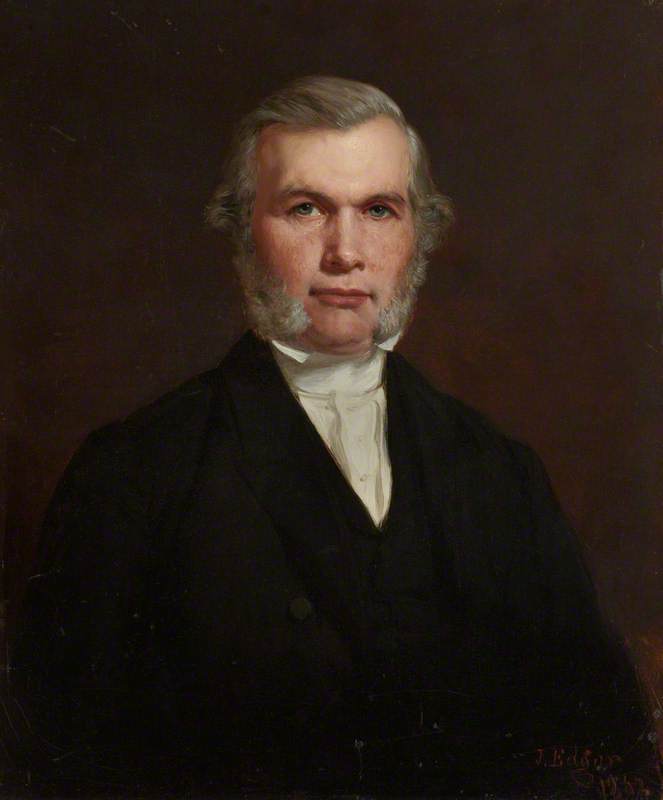
Reverend John Cairns (1818–1892), United Presbyterian Divine
 1862
1862 38.0 x 32.0 cm
 Read More
Giclée / Art Print
Museum-quality giclée or canvas print with fast production and flexible finish options. ( Buy Hand Made Painting Buy Image)




































Pick from our preset sizes that match the artwork's original proportions.

You may enter your own dimensions to fit a specific frame or space. If your selected size does not match the original image's proportions, we will either crop the artwork or extend the image with a mirrored or solid-fill edge. A digital mockup will be sent for your approval before production begins.
Please note that the on-screen preview does not reflect the actual cropping or extension. Only the mockup will accurately show the final composition.
While custom sizes are available, we recommend selecting a dimension from the predefined list to preserve the original proportions.
Worldwide Delivery () in 2 weeks instead of standard 4/5 weeks. (1 September)

Free Worldwide Express Shipping

High-Quality Linen Canvas

Full Shipping Insurance

Customs Tax Refund Guarantee

True Color Matching Guarantee

60-Day Return Policy (Defects Only)

100% Money-Back Guarantee

Bulk Discount Offer
 Glass option is only available in size under 110 CM

Reverend John Cairns (1818–1892), United Presbyterian Divine
Giclée / Art Print
Reproduction Size
-


Total Price
$ 63
Related Artworks










Artist Biography
The Visionary Brush of James R. Edgar
In the vast and storied landscape of British art, few names evoke such a profound sense of atmospheric depth and emotional resonance as James R. Edgar. A painter whose work serves as a bridge between the tangible world and the intangible realms of human feeling, Edgar has carved out a unique space within the contemporary canon. His practice is not merely an act of depiction but an exploration of perception itself, where every stroke of the brush seeks to capture the fleeting essence of a moment or the weight of a silent emotion. Through his mastery of color and texture, he invites the viewer into a meditative state, transforming the canvas into a window through which we might glimpse the complexities of our own inner lives.
The foundation of Edgar’s aesthetic lies in a sophisticated interplay between boldness and fluidity. His works are often characterized by a striking use of color that commands immediate attention, yet this intensity is tempered by a delicate, almost liquid texture that allows the eye to wander through layers of pigment. This duality creates a visual tension that is both arresting and soothing, making his abstract compositions feel alive with movement. To observe an Edgar painting is to witness a dance of light and shadow, where the boundaries between form and void become beautifully blurred, challenging the observer to find meaning within the abstraction.
A Legacy of Emotion and Texture
The development of Edgar’s style reflects a deep-seated commitment to the themes of emotion and perception. Rather than adhering to the rigid structures of traditional realism, he embraces an abstract language that prioritizes the visceral impact of the image over literal representation. This approach allows him to tap into universal human experiences—joy, melancholy, tranquility, and unrest—rendering them in a way that transcends cultural or linguistic barriers. His ability to manipulate the physical properties of paint—building up impasto layers or thinning pigments to translucent washes—serves as a metaphor for the layered nature of memory and thought.
Throughout his career, Edgar has achieved significant recognition for his ability to create visually arresting pieces that resonate deeply with collectors and critics alike. His work stands as a testament to the power of contemporary abstraction to communicate profound truths. The historical significance of his contribution lies in his refusal to settle for the superficial; instead, he pushes the boundaries of how much emotion can be distilled into color and form. As a painter who continues to inspire contemplation, his legacy is one of enduring curiosity and an unwavering pursuit of the sublime.
Key elements that define the artistry of James R. Edgar include:
- Chromatic Intensity: The use of vibrant, saturated hues to evoke immediate psychological responses.
- Textural Complexity: A sophisticated layering technique that adds a tactile dimension to the visual experience.
- Abstract Narrative: The creation of non-representational forms that suggest deep, underlying stories and themes.
- Perceptual Exploration: An artistic focus on how light, color, and movement influence human consciousness.

Quick Facts
- Artistic Movement Or Style: Abstract Painting
- Artists Or Movements Influenced By This Artist: ['']
- Artists Who Influenced This Artist: ['']
- Date Of Death: Living
- Full Name: James Edgar
- Nationality: British
- Notable Artworks: ['']