- Home

- Print on canvas
- james ricalton (1844–1929) / underwood & underwood (ed. elmer u.: 1859–1947 a. bert elias u.: 1862–1943)
 Preview
 Send
Send Share
Share
 Details

 Download
 Similars
 X-Ray
X-Ray Diaporama
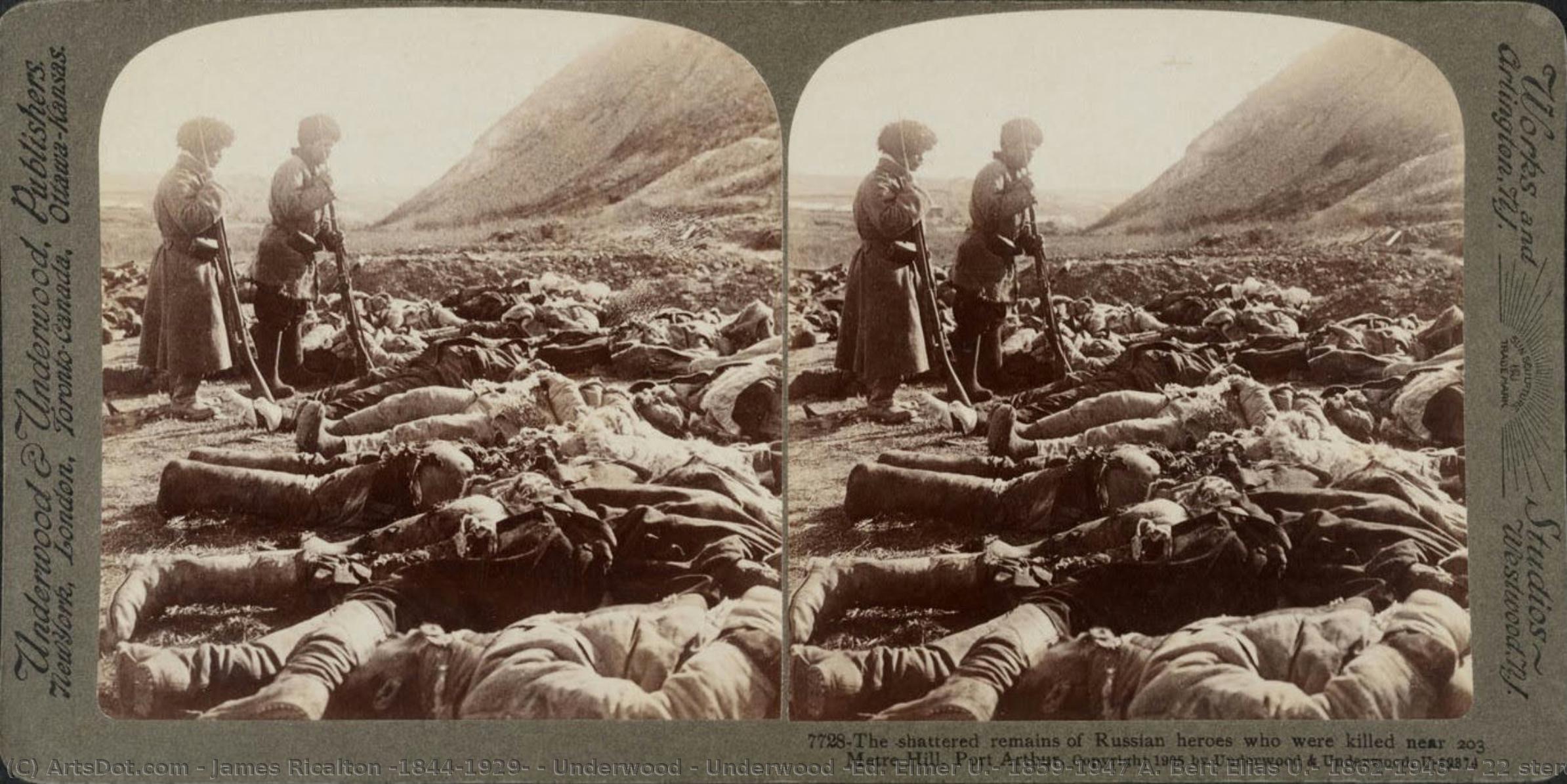
22 stereo photographs from the series Russo-Japanese War
 1905
1905 8.0 x 17.0 cm
 Read More
Giclée / Art Print
Museum-quality giclée or canvas print with fast production and flexible finish options. ( Buy Hand Made Painting Buy Image)




































Pick from our preset sizes that match the artwork's original proportions.

You may enter your own dimensions to fit a specific frame or space. If your selected size does not match the original image's proportions, we will either crop the artwork or extend the image with a mirrored or solid-fill edge. A digital mockup will be sent for your approval before production begins.
Please note that the on-screen preview does not reflect the actual cropping or extension. Only the mockup will accurately show the final composition.
While custom sizes are available, we recommend selecting a dimension from the predefined list to preserve the original proportions.
Worldwide Delivery () in 2 weeks instead of standard 4/5 weeks. (6 September)

Free Worldwide Express Shipping

High-Quality Linen Canvas

Full Shipping Insurance

Customs Tax Refund Guarantee

True Color Matching Guarantee

100-Day Return Policy (Defects Only)

100% Money-Back Guarantee

Bulk Discount Offer
 Glass option is only available in size under 110 CM

22 stereo photographs from the series Russo-Japanese War
Giclée / Art Print
Reproduction Size
-


Total Price
$ 63
Related Artworks









Artist Biography
James Ricalton: A Pioneer of Stereo Photography and the Russo-Japanese War
James Ricalton (1844–1929) was more than just a photographer; he was an American explorer, inventor, and educator whose life intersected with some of the most pivotal moments in late 19th and early 20th-century history. Born in Waddington, New York, on May 13, 1844, Ricalton’s journey took him across continents and through a remarkable career that culminated in his recognition as a key figure in the development of stereo photography, particularly for documenting the dramatic events surrounding the Russo-Japanese War.
Ricalton's early life was marked by a quiet determination. He attended St. Lawrence University but left before completing his degree, choosing instead to pursue a path that blended education with adventure. His initial foray into teaching began in 1871 at Maplewood, New Jersey, where he secured a temporary contract and quickly proved himself a dedicated educator. Known for his gentle demeanor and innovative approach – conducting classes outdoors when the weather permitted – Ricalton steadily gained respect within the community. He expanded his modest home to accommodate his growing collection of artifacts and curiosities, reflecting a lifelong fascination with the world around him.
However, Ricalton’s ambitions extended far beyond the confines of Maplewood. Driven by an insatiable curiosity and a desire to document his travels, he embarked on extensive journeys that would span decades. He circumnavigated the globe no less than seven times, immersing himself in diverse cultures and landscapes. This relentless exploration fueled his passion for photography, particularly stereo photography – a technique that offered viewers a remarkably immersive three-dimensional experience. It was through this medium that Ricalton truly left his mark on history.
The Underwood & Underwood Partnership: A Collaboration of Vision
Ricalton’s most significant contribution to the world of photography came through his association with the renowned Underwood & Underwood studio, founded by Edward Elmer Underwood and Albert Bert Elias Underwood. Established in 1893, this firm quickly became synonymous with high-quality photographic reproductions and a commitment to capturing the essence of historical events. Ricalton’s expertise in stereo photography proved invaluable to Underwood & Underwood, particularly when documenting the Russo-Japanese War (1904–1905).
The studio's decision to produce a comprehensive series of stereo photographs depicting the war was groundbreaking at the time. Ricalton’s meticulous attention to detail and his ability to capture the scale and intensity of the conflict resulted in an unparalleled visual record. These images, often displayed side-by-side, offered viewers a remarkably realistic sense of being present on the battlefield – witnessing troop movements, naval engagements, and the human cost of war with unprecedented immediacy. The partnership between Ricalton and Underwood & Underwood wasn't merely a professional arrangement; it was a synergistic collaboration that elevated both their reputations.
Stereo Photography: A Window into the Past
Ricalton’s mastery of stereo photography went beyond simply producing technically proficient images. He understood the power of this medium to evoke emotion and convey complex narratives. The process itself demanded painstaking precision – each photograph had to be taken with a slightly different angle, creating subtle variations that, when viewed through a stereoscope, produced the illusion of depth and perspective. This meticulousness is evident in his work documenting the Russo-Japanese War, where the images capture not only the physical reality of the conflict but also the psychological impact on both sides.
The stereo photographs from this period are particularly significant because they offered a democratic access to historical events that would otherwise have been confined to newspapers and official reports. They allowed ordinary citizens to experience, in a tangible way, the drama unfolding thousands of miles away. Ricalton’s work stands as a testament to the power of photography to shape public opinion and preserve memories of significant moments in history.
Legacy and Enduring Significance
James Ricalton died on October 28, 1929, in his hometown of Waddington, New York. His legacy extends far beyond his photographic achievements. He was a lifelong traveler, an inventor (he developed a device for projecting stereo images), and a dedicated educator. His collection of artifacts and curiosities, initially intended as a gift to Maplewood, ultimately found its home in Waddington, reflecting his deep connection to his roots.
Today, Ricalton’s work continues to be studied and appreciated for its historical significance and technical artistry. The 22 stereo photographs documenting the Russo-Japanese War remain among the most compelling visual records of that conflict. His contributions to the field of photography helped establish Underwood & Underwood as a leading force in the industry, and his legacy serves as an inspiration to photographers seeking to capture the world with both precision and empathy. His images are available for viewing at /en/art/list/ and can also be found within the collection of the National Museum of Korea in Seoul.
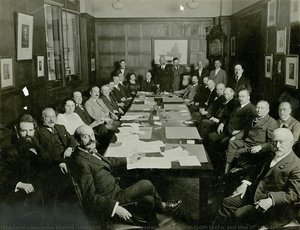
james ricalton (1844–1929) / underwood & underwood (ed. elmer u.: 1859–1947 a. bert elias u.: 1862–1943)
1844 - 1929 , United States of America
Quick Facts
- Artistic Movement Or Style: Stereo photography
- Date Of Birth: May 13, 1844
- Date Of Death: October 28, 1929
- Full Name: James Ricalton
- Nationality: American
- Notable Artworks: ['Russo-Japanese War photos']
- Place Of Birth: Waddington, USA