

 Preview
 Send
Send Share
Share
 Details

 Download
 Similars
 X-Ray
X-Ray Diaporama
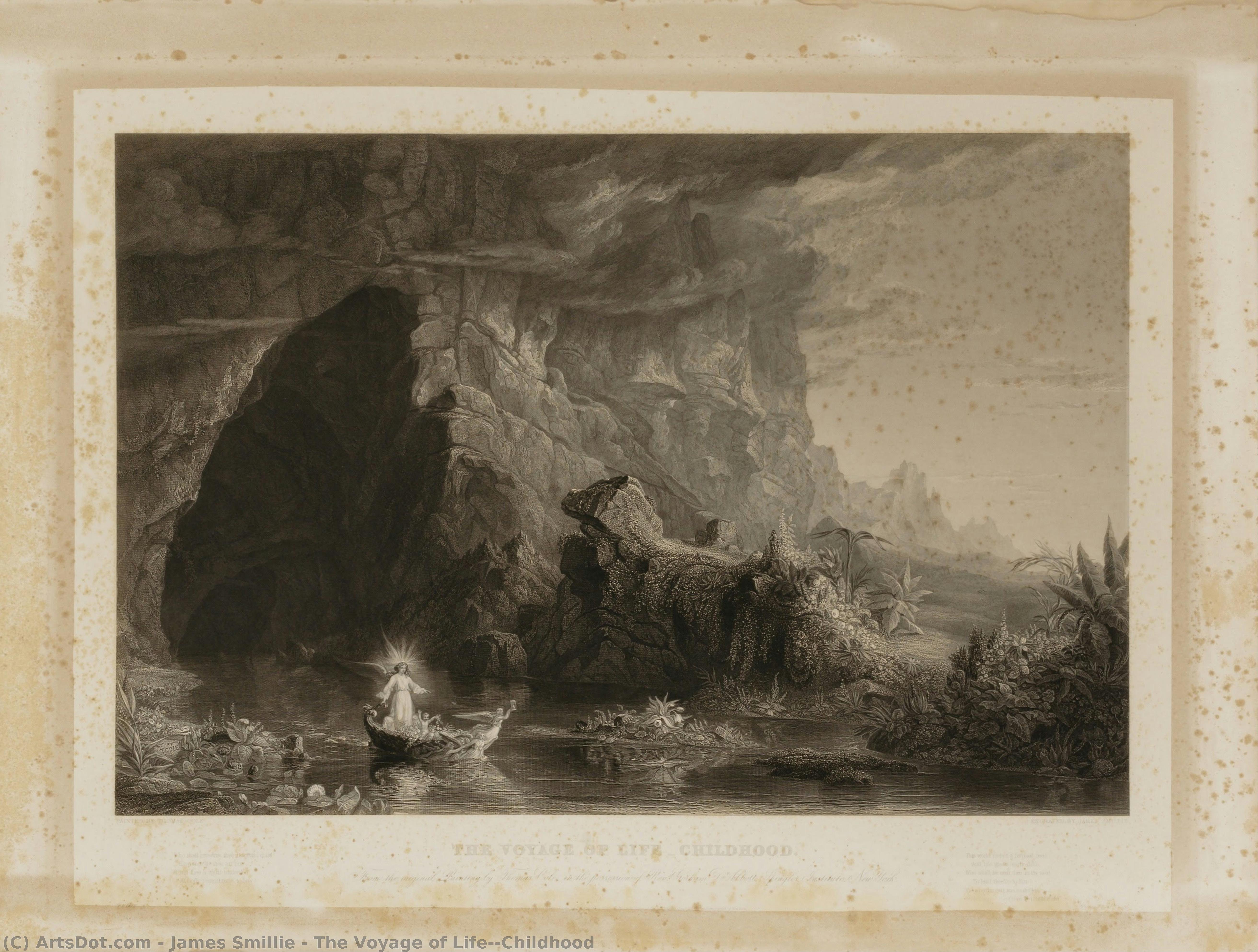
The Voyage of Life--Childhood
 Acrylic On Canvas
- WallArt
- Hudson River Romanticism
 1855
1855 38.0 x 58.0 cm
 Smithsonian American Art Museum
 Read More
Purchase a high-resolution, enhanced digital image, far superior to the online preview.
Each file is meticulously prepared by our in-house specialists using advanced tools and expert manual retouching. We ensure every image has exceptional clarity, precise color accuracy, and fine detail.
The final file is delivered via email within 72 hours, optimized for immediate use in professional, editorial, and print environments. This is the same quality trusted by top-tier design studios, publishers, and galleries.
Digital Image
Download a high-resolution file for personal display, printing, and creative projects. ( Buy Print Buy Hand Made Painting)
Included in Every Digital Image Order
Expert Digital Delivery, Guaranteed
When you choose ArtsDot.com, you're not just getting an image - you're receiving a professionally enhanced digital artwork, crafted with precision and backed by a satisfaction guarantee. Here's everything that comes with your order, automatically:

Fast Email Delivery
Your high-resolution digital image file will be emailed to you within 72 hours of ordering - ready for immediate use.

AI-Enhanced Digital File
Your artwork is professionally optimized using advanced AI tools and manual editing, ensuring maximum detail, clarity, and color accuracy.

Free Lifetime Re-Delivery
Accidentally deleted or lost your file? No worries - we'll resend it to you anytime, free of charge.

No Import Fees - Ever
Enjoy your artwork instantly with zero customs, duties, or delivery fees - digital downloads are always tax-free.

Color Accuracy Guarantee
We ensure your digital image reflects the original colors as closely as possible using professional tools and color management.

60-Day Satisfaction Guarantee
If you're not satisfied with your digital image, we'll revise it or refund 100% within 60 days - no questions asked.

100% Money-Back Guarantee
Not satisfied? Get a full refund within 60 days of receiving your digital file - no questions asked.

Bulk Order Discounts
Buy 3 images, save 10% - Buy 5, save 15% - Buy 10+, save 20%. Great for creative projects, galleries, and agencies.
James Smillie’s “The Voyage of Life—Childhood”: A Window into Hudson River Romanticism
James Smillie, a Scottish engraver born in Edinburgh in 1807, exerted considerable influence on the burgeoning American art landscape during his lifetime. His artistic journey exemplifies dedication and honed technical prowess – skills nurtured by his father’s own engraving practice. This formative experience instilled within him not merely craftsmanship but also a profound appreciation for the visual arts. Smillie's contribution to American art is particularly notable through collaborations with luminaries of the Hudson River School, cementing his position as a respected figure in the movement and shaping its aesthetic sensibilities.- Subject Matter: The painting depicts a serene tableau capturing the innocence of childhood. A man navigates a boat alongside his loyal dog, surrounded by fellow vessels and individuals traversing similar journeys. Birds circling overhead add to the idyllic atmosphere, symbolizing freedom and aspiration.
- Style & Technique: Executed as an engraving, “The Voyage of Life—Childhood” embodies the hallmarks of Hudson River Romanticism. Smillie’s meticulous attention to detail – evident in the rendering of textures and shading – demonstrates a mastery of printmaking techniques that prioritized tonal gradation and nuanced representation.
- Historical Context: Created in 1855, this artwork reflects the broader intellectual currents of its time. The Hudson River School championed idealized depictions of nature and human experience, aligning with Victorian sensibilities focused on moral upliftment and spiritual contemplation. Smillie’s work aligns perfectly with these values.
- Symbolism: The boat itself serves as a potent symbol representing life's voyage – encompassing challenges, triumphs, and transformations. The dog embodies steadfast companionship and loyalty, mirroring the enduring bonds between humans and animals during the Victorian era. Furthermore, the birds symbolize hope and aspiration for a brighter future.
- Emotional Impact: “The Voyage of Life—Childhood” evokes feelings of tranquility, nostalgia, and optimism. Its gentle composition invites viewers to reflect on themes of innocence, familial devotion, and the beauty inherent in the natural world – emotions deeply resonant with Victorian audiences.
A Legacy Preserved Through Printmaking
Smillie’s engraving technique ensured that his vision endured beyond the limitations of painting. The subtle tonal variations achieved through etching created a depth and luminosity unattainable by brushstrokes alone, capturing the essence of the Hudson River School's aesthetic ideals. This meticulous process underscores Smillie’s commitment to artistic excellence and guarantees that “The Voyage of Life—Childhood” continues to inspire admiration for generations to come.Discover More About James Smillie
Explore his remarkable career at ArtsDot.com, where you can acquire a stunning high-quality reproduction of this iconic artwork – bringing the serenity and beauty of Victorian Romanticism into your home or studio.Related Artworks



Artist Biography
The Master of the Burin: The Life and Legacy of James Smillie
In the vibrant tapestry of nineteenth-century American art, few threads are as finely woven or as meticulously etched as those left by James Smillie. Born in the historic city of Edinburgh, Scotland, in 1807, Smillie was a man whose destiny was shaped by the rhythmic scratch of the engraver's tool against metal. His journey from the cobblestone streets of Scotland to the burgeoning art scene of New York is a profound narrative of migration, familial tradition, and artistic devotion. As the son of an accomplished engraver, his very first lessons in art were not merely about sight, but about the tactile precision required to translate light and shadow into permanent line. This early immersion in the craft provided him with a foundational technical prowess that would eventually allow him to bridge the gap between European tradition and American Romanticism.
Smillie’s arrival in New York in 1829 marked the beginning of a transformative era for both the artist and the American landscape. He did not merely exist within the American art community; he became a vital conduit through which the aesthetic sensibilities of the Old World flowed into the New. His mastery was particularly evident in his ability to collaborate with the luminaries of the Hudson River School, an influential group of painters who sought to capture the sublime beauty of the American wilderness. Through his engravings, Smillie was able to disseminate the grandeur of these landscapes to a much wider audience, translating the sweeping oil paintings of his contemporaries into the intimate, detailed medium of printmaking.
Symbolism and the Art of the Engraving
The true brilliance of Smillie’s work lies in his ability to imbue monochromatic lines with deep emotional resonance and spiritual weight. Perhaps no piece exemplifies this better than his celebrated engraving, The Voyage of Life—Childhood. In this poignant work, Smillie utilizes the unique textures of the engraving medium to create a window into the innocence of youth. The scene is far more than a simple depiction of a boat on water; it is a complex allegory of human existence. Through careful tonal gradation and meticulous detail, he captures a serene tableau where a man navigates alongside a loyal dog, surrounded by the gentle movement of other vessels. Every stroke of his tool serves a purpose, from the circling birds that symbolize aspiration to the subtle shading that evokes the fleeting nature of time.
His technique was characterized by an extraordinary attention to detail that prioritized tonal gradation and nuanced representation. This skill allowed him to mimic the soft light and atmospheric depth found in painting, making his engravings feel alive with movement and breath. In the context of Victorian sensibilities, Smillie’s work resonated deeply with the era's focus on moral upliftment and spiritual contemplation. He understood that the medium of engraving offered a unique opportunity for storytelling—a way to freeze a moment of profound beauty and invite the viewer into a state of quiet reflection on the journey of life itself.
A Lasting Impression on American Art
The historical significance of James Smillie extends far beyond his individual technical achievements. He was a pivotal figure in establishing engraving as a respected and vital component of the American artistic identity. His influence can be seen in the way he helped shape the aesthetic sensibilities of a nation still defining its own visual language. By capturing the essence of the Hudson River Valley and translating it through the sophisticated lens of Scottish-trained craftsmanship, he provided a sense of permanence to the ephemeral beauty of the American landscape.
As we look back upon his career, several key elements define his enduring impact:
- Technical Mastery: His ability to translate complex painterly textures into the precise language of steel and copper engraving.
- Cultural Bridge: Serving as a vital link between the established traditions of Edinburgh and the emerging Romanticism of the United States.
- Collaborative Spirit: His essential role in amplifying the reach of the Hudson River School through high-quality print dissemination.
- Allegorical Depth: The creation of works that functioned not just as landscapes, but as profound meditations on human experience and morality.
Though he passed away in 1885, the legacy of James Smillie remains etched in the annals of art history. His work continues to serve as a testament to the power of dedication and the profound impact that a single, skilled hand can have on the collective vision of an entire era.

james smillie
1807 - 1885 , United Kingdom
Quick Facts
- Artistic Movement Or Style: Neoclassicism
- Artists Who Influenced This Artist: ['Joseph Johann Kauffmann],\n "Artists or movements influenced by this artist": ["William Blake"]\n}']
- Date Of Birth: 30 Oct 1741
- Date Of Death: 5 Nov 1807
- Full Name: Angelica Kauffman
- Nationality: Swiss
- Notable Artworks:
- Antinous Mondragone
- Portrait of Ludwig
- The Coronation of Napoleon
- Place Of Birth: Chur, Switzerland

