

 Preview
 Send
Send Share
Share
 Details

 Download
 Similars
 X-Ray
X-Ray Diaporama
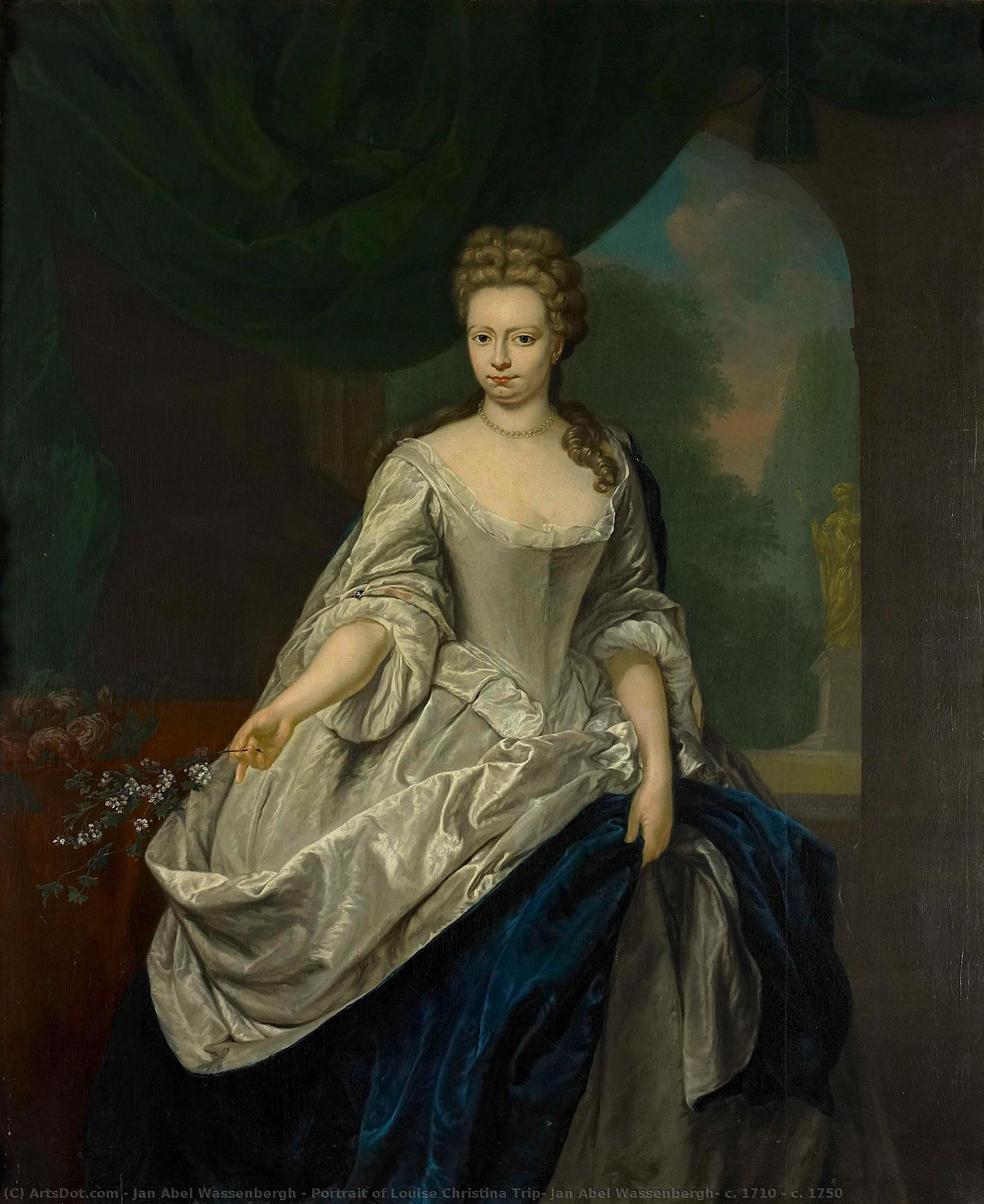
Portrait of Louise Christina Trip, Jan Abel Wassenbergh, c. 1710 - c. 1750
 1750
1750 171.0 x 142.0 cm
 Read More
Purchase a high-resolution, enhanced digital image, far superior to the online preview.
Each file is meticulously prepared by our in-house specialists using advanced tools and expert manual retouching. We ensure every image has exceptional clarity, precise color accuracy, and fine detail.
The final file is delivered via email within 72 hours, optimized for immediate use in professional, editorial, and print environments. This is the same quality trusted by top-tier design studios, publishers, and galleries.
Digital Image
Download a high-resolution file for personal display, printing, and creative projects. ( Buy Print Buy Hand Made Painting)
Included in Every Digital Image Order
Expert Digital Delivery, Guaranteed
When you choose ArtsDot.com, you're not just getting an image - you're receiving a professionally enhanced digital artwork, crafted with precision and backed by a satisfaction guarantee. Here's everything that comes with your order, automatically:

Fast Email Delivery
Your high-resolution digital image file will be emailed to you within 72 hours of ordering - ready for immediate use.

AI-Enhanced Digital File
Your artwork is professionally optimized using advanced AI tools and manual editing, ensuring maximum detail, clarity, and color accuracy.

Free Lifetime Re-Delivery
Accidentally deleted or lost your file? No worries - we'll resend it to you anytime, free of charge.

No Import Fees - Ever
Enjoy your artwork instantly with zero customs, duties, or delivery fees - digital downloads are always tax-free.

Color Accuracy Guarantee
We ensure your digital image reflects the original colors as closely as possible using professional tools and color management.

100-Day Satisfaction Guarantee
If you're not satisfied with your digital image, we'll revise it or refund 100% within 100 days - no questions asked.

100% Money-Back Guarantee
Not satisfied? Get a full refund within 100 days of receiving your digital file - no questions asked.

Bulk Order Discounts
Buy 3 images, save 10% - Buy 5, save 15% - Buy 10+, save 20%. Great for creative projects, galleries, and agencies.
Related Artworks







Artist Biography
A Life Dedicated to Groningen’s Nobility: Jan Abel Wassenbergh
Jan Abel Wassenbergh, born in Groningen on January 18th, 1689, was a painter whose career unfolded during the twilight of the Dutch Golden Age. While not achieving the widespread renown of Rembrandt or Vermeer, Wassenbergh carved out a significant niche for himself as a portraitist, history painter, and particularly, a celebrated room decorator within his native province. His story is one of shifting ambitions—beginning with legal studies, then embracing artistic pursuits, ultimately leading to a life devoted to serving the aesthetic tastes of Groningen’s elite families. Initially, Wassenbergh followed a path expected of those from his social standing, immersing himself in law at the University of Groningen. However, this intellectual pursuit proved unfulfilling; he found greater resonance in the visual arts and began drawing lessons with Jan van Dieren, a local artist whose influence, though somewhat obscure today, provided the initial spark for Wassenbergh’s artistic journey.From Rotterdam Apprenticeship to Groninger Success
In 1712, Wassenbergh embarked on a pivotal chapter of his education, traveling to Rotterdam to become an apprentice under Adriaen van der Werff. Van der Werff was a master known for his refined technique and elegant compositions—qualities that would profoundly shape Wassenbergh’s developing style. This period proved crucial in honing Wassenbergh's skills in portraiture and history painting, instilling a meticulous attention to detail and a preference for smooth finishes. Upon returning to Groningen in 1715, he married Johanna van Oijen and quickly established himself as a sought-after artist. He wasn’t merely a painter; he was an interior designer, transforming the homes of prominent families—the Hora Siccama, Gockinga, and Trip among them—with elaborate ceiling decorations, overmantel pieces, and intricately adorned doorways. These commissions weren't simply decorative flourishes but statements of wealth, taste, and social standing, and Wassenbergh became integral to crafting that visual language for Groningen’s nobility. Many of these original room decorations remarkably survive today, offering tangible evidence of his artistic impact on the city’s architectural landscape.A Style Bridging Eras: Realism and Refinement
Wassenbergh's artistic style occupies a fascinating transitional space within Dutch painting. Rooted in the realism of 17th-century masters like Rembrandt and Frans Hals, his work nevertheless demonstrates a subtle adaptation to the lighter palettes and smoother surfaces favored in the early 18th century. He eschewed dramatic chiaroscuro for softer illumination, modeling faces with delicate gradations of tone that conveyed likeness with understated elegance. His portraits, often half-length or bust-length compositions, adhered to conventional formats but revealed a meticulous attention to detail—particularly in the rendering of textiles and lace. A prime example is his *Portrait of a Man in a Red Coat* (circa 1730), housed in the Rijksmuseum, where the sitter’s features emerge from a neutral background with quiet precision, the red fabric brought to life through thin, almost translucent glazes—a testament to his technical mastery. He wasn't interested in ostentatious virtuosity but rather in capturing the essence of his subjects with refined skill and sensitivity.Legacy and Family Influence
The influence of Jan Abel Wassenbergh extended beyond his own artistic output; he fostered a family tradition of painting. Both his son, Jan Abel Wassenbergh Jr., and his daughter, Elisabet Geertruda, followed in their father’s footsteps, contributing to the artistic fabric of Groningen. His allegorical works, such as *Allegorical Representation (on the Victory)* from 1729—a town hall commission symbolizing triumph and governance—demonstrate his skill in narrative composition and his ability to imbue symbolic meaning into visual form. While he may not be a household name today, Wassenbergh’s work resides in esteemed collections like the Rijksmuseum and the Mauritshuis, offering a valuable counterpoint to the more flamboyant outputs of the Rococo era that would soon eclipse his restrained classicism. He represents a quieter voice within Dutch art history—a dedicated craftsman whose legacy lies not in revolutionary innovation but in the enduring beauty and refined elegance of his portraits, historical scenes, and the exquisitely decorated interiors he created for the nobility of Groningen.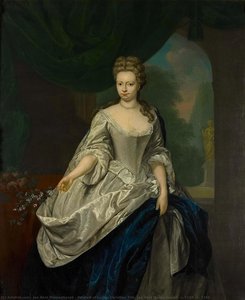
Quick Facts
- Artistic Movement Or Style: Baroque, Rococo transition
- Artists Who Influenced This Artist:
- Arnold Boonen
- Adriaen van der Werff
- Date Of Birth: January 18, 1689
- Date Of Death: ca. July 20, 1750
- Full Name: Jan Abel Wassenbergh
- Nationality: Dutch
- Notable Artworks:
- Allegorical Representation (on the Victory)
- The Continence of Scipio
- Place Of Birth: Groningen, Netherlands