 Preview
 Send
Send Share
Share
 Details

 Download
 Similars
 X-Ray
X-Ray Diaporama
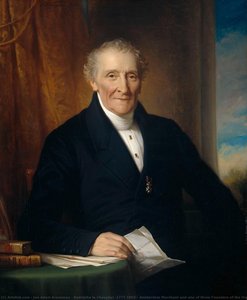
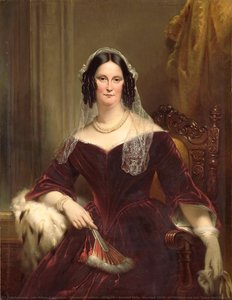
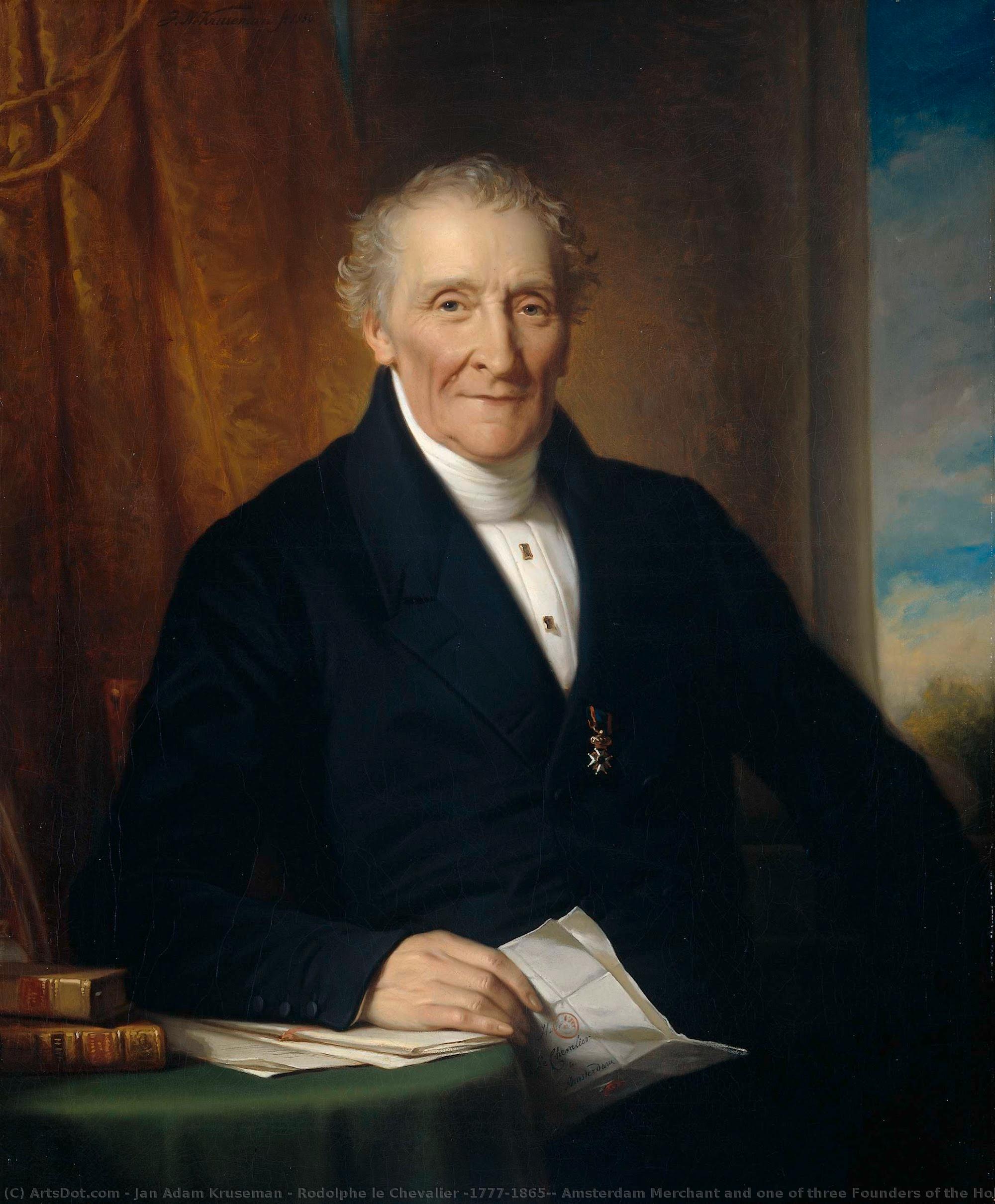
Rodolphe le Chevalier (1777-1865), Amsterdam Merchant and one of three Founders of the Holland Railroad Company, Jan Adam Kruseman, 1850
 1850
1850 104.0 x 84.0 cm
 Read More
Hand Made Oil Reproduction
Hand-painted oil on canvas in your size and frame, made to order by our artists. ( Buy Print Buy Image)




































Pick from our preset sizes that match the artwork's original proportions.

You may enter your own dimensions to fit a specific frame or space. If your selected size does not match the original image's proportions, we will either crop the artwork or extend the painting with additional hand-painted elements. A digital mockup will be sent for your approval before production begins.
Please note that the on-screen preview does not reflect the actual cropping or extension. Only the mockup will accurately show the final composition.
While custom sizes are available, we recommend selecting a dimension from the predefined list to preserve the original proportions.
After order, ArtsDot.com team will email client for instructions and provide a mockup preview
Worldwide Delivery () in 3/4 weeks instead of standard 5 weeks. (23 August). No compromise on quality.

Free Worldwide Express Shipping

High-Quality Linen Canvas

Full Shipping Insurance

Customs Tax Refund Guarantee

True Color Matching Guarantee

60-Day Return Policy (Defects Only)

100% Money-Back Guarantee

Bulk Discount Offer
 Glass option is only available in size under 110 CM

Rodolphe le Chevalier (1777-1865), Amsterdam Merchant and one of three Founders of the Holland Railroad Company, Jan Adam Kruseman, 1850
Reproduction Medium
Reproduction Size
-


Total Price
$ 263
Artwork Description
Related Artworks








Artist Biography
Jan Adam Kruseman: A Portraitist of Dutch Nobility and Artistic Legacy
Jan Adam Kruseman (February 12, 1804 – March 17, 1862) stands as a pivotal figure in 19th-century Dutch art history—a painter celebrated for his meticulous portraits that captured the essence of aristocratic life and established him as one of the era’s foremost realist artists. Born into a family steeped in artistic tradition, Kruseman's lineage included prominent painters like Cornelis Kruseman, shaping his early exposure to artistic pursuits and fostering an unwavering dedication to craft.- Early Life & Artistic Training:
- Amsterdam Academy & Influences:
- Royal Commissions & Artistic Recognition:
- The Founding of Arti et Amicitiae:
- Legacy & Influence on Subsequent Artists:
Early Life & Artistic Training
Kruseman’s formative years were marked by a privileged upbringing within a family deeply invested in artistic endeavors. His cousin, Cornelis Kruseman—a respected landscape painter—served as his initial mentor at the Amsterdam Academy of Fine Arts (later Rijksakademie), providing him with foundational lessons in technique and observation. This early influence instilled in Kruseman a profound appreciation for detail and realism—characteristics that would define his artistic style throughout his career. From 1822 to 1824, he pursued further studies in Brussels under the tutelage of François-Joseph Navez and Jacques-Louis David, absorbing the stylistic innovations of Romanticism and Neoclassicism alike.Amsterdam Academy & Influences
Kruseman’s appointment as director of the Amsterdam Academy in 1830 represented a significant milestone—establishing him as a leader within Dutch artistic circles and shaping the future generation of painters. He championed a rigorous curriculum focused on anatomical accuracy and compositional balance, mirroring David's emphasis on classical ideals. Kruseman’s artistic sensibilities were profoundly impacted by these mentors, fostering a commitment to capturing human form with unparalleled precision and conveying emotion through subtle gestures and expressions.Royal Commissions & Artistic Recognition
Kruseman gained considerable renown through his commissions from the Dutch royal family—most notably his portrait of Tsar Alexander I—a poignant tribute commissioned for Anna Pavlovna, Tsar Alexander’s wife. This undertaking showcased Kruseman's ability to portray regal dignity and convey complex psychological states with remarkable subtlety. Subsequent portraits of William II solidified his reputation as a court artist, cementing his place in Dutch artistic history.The Founding of Arti et Amicitiae
Beyond his prolific portraiture, Kruseman was instrumental in establishing Arti et Amicitiae—a collaborative venture with André-Benoît Taurel and Marinus Tétar van Elven—in 1839. This artistic society aimed to foster camaraderie among artists and promote innovative approaches to painting, reflecting Kruseman’s belief in the importance of intellectual discourse alongside creative practice.Legacy & Influence on Subsequent Artists
Kruseman's meticulous attention to detail—particularly his depiction of clothing—influenced countless aspiring painters who admired his mastery of realism. He nurtured a vibrant studio environment, attracting talented students like David Bles, Moritz Calisch and Jozef Israëls, whose artistic styles bear testament to Kruseman’s enduring legacy. Although largely forgotten during the mid-20th century, Kruseman experienced a resurgence of interest in recent decades—marked by a major retrospective at Het Lou Palace (2002–2003) and an exhibition exploring his broader artistic contributions (2015). Today, Kruseman’s work continues to inspire artists and scholars alike, securing his position as one of the most important portraitists of his era.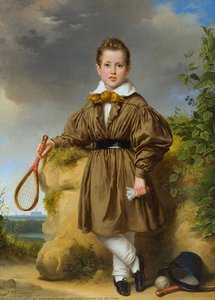
jan adam kruseman
1804 - 1862
Quick Facts
- Artistic Movement Or Style: Realism
- Artists Or Movements Influenced By This Artist: ['David Bles']
- Artists Who Influenced This Artist: ['Cornelis Kruseman']
- Date Of Birth: February 12, 1804
- Date Of Death: March 17, 1862
- Full Name: Jan Adam Kruseman
- Nationality: Dutch
- Notable Artworks:
- Italian Woman near a Chapel
- Dieuwke Fontein (1800-79)
- Gijsbertus Johannes Rooyens
- Place Of Birth: Amsterdam, Netherlands