 Preview
 Send
Send Share
Share
 Details

 Download
 Similars
 X-Ray
X-Ray Diaporama
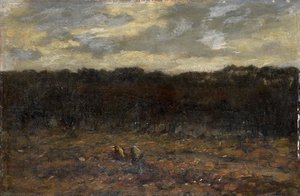
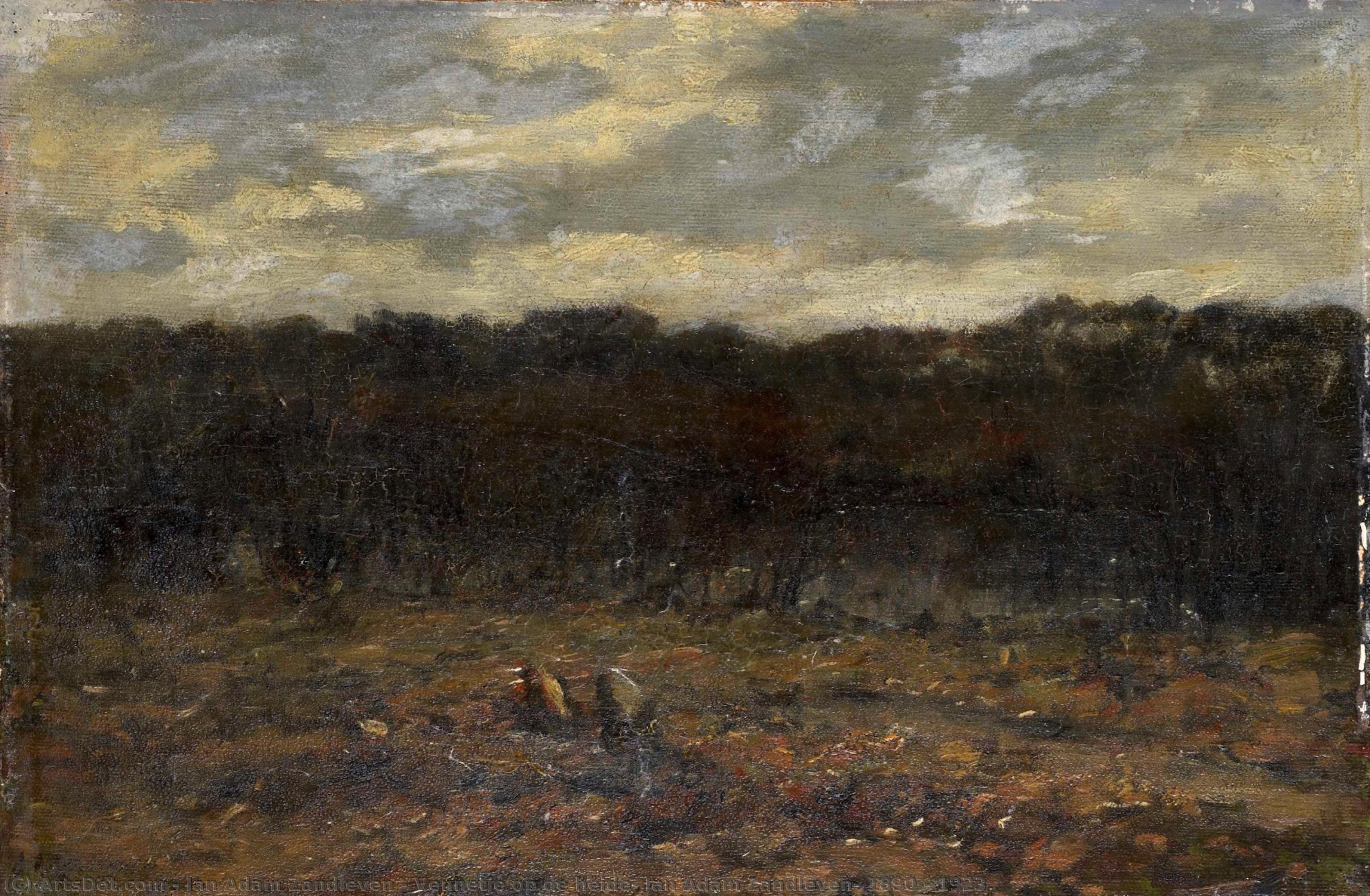
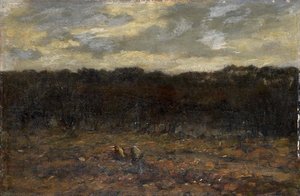
Vennetje op de heide, Jan Adam Zandleven, 1890 - 1923
 1923
1923 33.0 x 50.0 cm
 Read More
Giclée / Art Print
Museum-quality giclée or canvas print with fast production and flexible finish options. ( Buy Hand Made Painting Buy Image)




































Pick from our preset sizes that match the artwork's original proportions.

You may enter your own dimensions to fit a specific frame or space. If your selected size does not match the original image's proportions, we will either crop the artwork or extend the image with a mirrored or solid-fill edge. A digital mockup will be sent for your approval before production begins.
Please note that the on-screen preview does not reflect the actual cropping or extension. Only the mockup will accurately show the final composition.
While custom sizes are available, we recommend selecting a dimension from the predefined list to preserve the original proportions.
Worldwide Delivery () in 2 weeks instead of standard 4/5 weeks. (1 September)

Free Worldwide Express Shipping

High-Quality Linen Canvas

Full Shipping Insurance

Customs Tax Refund Guarantee

True Color Matching Guarantee

60-Day Return Policy (Defects Only)

100% Money-Back Guarantee

Bulk Discount Offer
 Glass option is only available in size under 110 CM

Vennetje op de heide, Jan Adam Zandleven, 1890 - 1923
Giclée / Art Print
Reproduction Size
-


Total Price
$ 63
Related Artworks






Artist Biography
The Luminous Solitude of Jan Adam Zandleven
In the quiet, dappled light of the Dutch forests, one finds the true spirit of Jan Adam Zandleven. Born in 1868 in Koog aan de Zaan, Zandleven was a man whose life and art were defined by a profound, meditative connection to the natural world. Though he was the son of a paint manufacturer and merchant—a background that provided him with an intimate, tactile understanding of pigments and materials—he eschewed the formal rigors of academic training. Instead, his artistic journey was one of self-discovery, guided by the whispers of nature and the rare, pivotal encounters with mentors who recognized the brilliance beneath his unpolished exterior. His path was not paved by classrooms, but by the observant eye of a man who saw the divine in the smallest details of a birch leaf or the soft curve of a hydrangea petal.
The trajectory of Zandleven’s career was irrevocably altered by the support of influential figures such as the art dealer Henk Bremmer and the visionary collector Hélène Kröller-Müller. While his father initially resisted his departure from the family trade, the validation received from masters like Paul Gabriël and Jozef Israëls provided the necessary courage for Zandleven to commit fully to his vocation. This period of development saw him move through various landscapes, eventually settling in Putten near the Veluwe in 1912. It was here, amidst the ancient woods, that his style reached its most evocative heights. He sought a retreat from the urban bustle, finding a sanctuary where he could paint with an intensity that bordered on the spiritual, often accompanied by his close friend, the still-life painter Jan Carbaat.
A Symphony of Dots and Light
To look upon a Zandleven canvas is to witness a meticulous dance of light and texture. While the influence of Impressionism is undeniably present in his captures of atmosphere, his true technical mastery lay in a technique deeply rooted in Pointillism. Rather than the broad, sweeping strokes of his contemporaries, Zandleben employed tiny, deliberate dots of color, layering pigment with a painstaking precision that required immense patience and concentration. This method allowed him to achieve a remarkable luminosity; his trees do not merely sit in the light, they seem to vibrate with it. The interplay of shadow and sun through a canopy of birch or beech becomes a tactile experience, where the thick application of paint—often utilizing an impasto texture—gives the work a physical presence that invites the viewer to touch the very air of the forest.
His subject matter evolved with a graceful fluidity, moving from expansive landscapes to more intimate, quiet observations. His repertoire included:
- Serene Landscapes: Capturing the tranquil essence of the Veluwe region, particularly focusing on the interplay of light through woodland foliage.
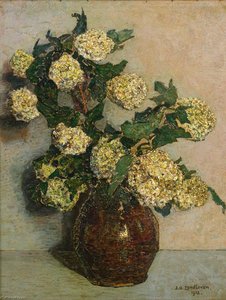
- Intimate Still Lifes: Meticulously crafted arrangements, such as his 1912 work Sneeuwballen, which showcase his ability to find grandeur in the delicate textures of flowers.
- Village Views and Interiors: Later works that expanded his gaze to include the subtle rhythms of Dutch rural life.
Legacy of a Meditative Vision
Zandleven’s significance in the history of Dutch art lies in his ability to bridge the gap between the observational realism of his heritage and the experimental textures of modernism. He was a deeply religious man, and this spirituality infused his work with a sense of stillness and reverence. His paintings are not merely depictions of scenery; they are records of a meditative state, where the act of painting became a form of prayerful attention to the world's fleeting beauties. Though his life was tragically short, ending in 1923, the impact of his unique vision remains preserved in the permanent collections of prestigious institutions like the Kröller-Müller Museum.
Today, Zandleven is remembered as a painter of quiet observation, an artist who proved that profound beauty does not require formal accolades, but rather a soul willing to linger in the light. His legacy continues to resonate through the textured surfaces of his canvases, reminding us that within the smallest dot of color lies an entire universe of light and emotion.
Quick Facts
- Artistic Movement Or Style: Pointillism
- Artists Or Movements Influenced By This Artist: ['Impressionism']
- Artists Who Influenced This Artist:
- Paul Gabriel
- Jozef Israëls
- Date Of Death: 1923
- Full Name: Jan Adam Zandleven
- Nationality: Dutch
- Notable Artworks:
- Sneeuwballen
- Vennetje op de heide
- Church in the sun
- Place Of Birth: Netherlands