 Preview
 Send
Send Share
Share
 Details

 Download
 Similars
 X-Ray
X-Ray Diaporama
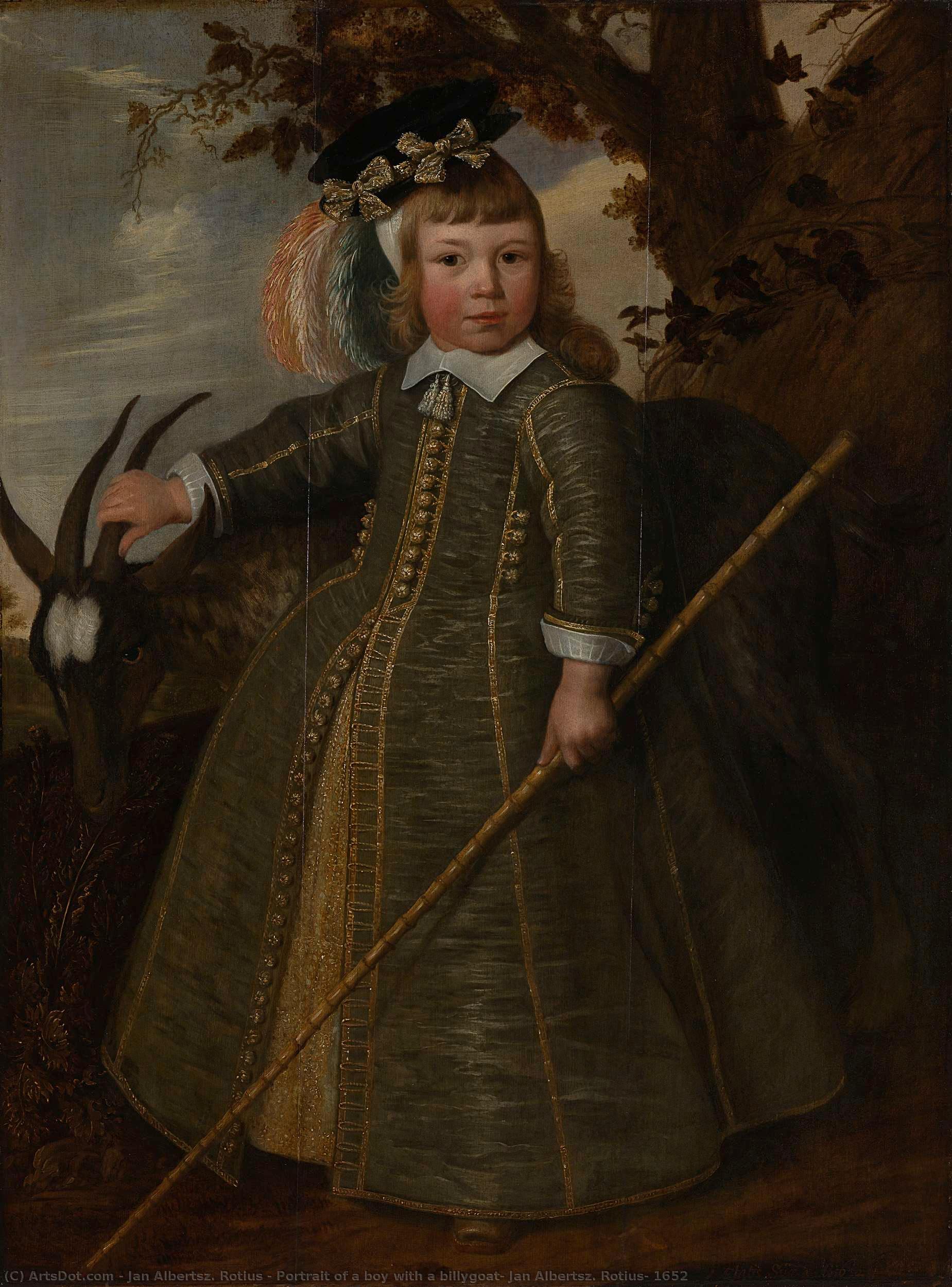
Portrait of a boy with a billygoat, Jan Albertsz. Rotius, 1652
 1652
1652 113.0 x 85.0 cm
 Read More
Giclée / Art Print
Museum-quality giclée or canvas print with fast production and flexible finish options. ( Buy Hand Made Painting Buy Image)




































Pick from our preset sizes that match the artwork's original proportions.

You may enter your own dimensions to fit a specific frame or space. If your selected size does not match the original image's proportions, we will either crop the artwork or extend the image with a mirrored or solid-fill edge. A digital mockup will be sent for your approval before production begins.
Please note that the on-screen preview does not reflect the actual cropping or extension. Only the mockup will accurately show the final composition.
While custom sizes are available, we recommend selecting a dimension from the predefined list to preserve the original proportions.
Worldwide Delivery () in 2 weeks instead of standard 4/5 weeks. (1 September)

Free Worldwide Express Shipping

High-Quality Linen Canvas

Full Shipping Insurance

Customs Tax Refund Guarantee

True Color Matching Guarantee

60-Day Return Policy (Defects Only)

100% Money-Back Guarantee

Bulk Discount Offer
 Glass option is only available in size under 110 CM

Portrait of a boy with a billygoat, Jan Albertsz. Rotius, 1652
Giclée / Art Print
Reproduction Size
-


Total Price
$ 63
Related Artworks



Artist Biography
The Enigmatic World of Jan Albertsz. Rotius
Jan Albertsz. Rotius remains a somewhat elusive figure in the landscape of 17th-century Dutch painting, a period brimming with artistic innovation and burgeoning mercantile wealth. While biographical details are frustratingly scarce – his birthdate is currently unknown, and he continues to live and work today – his paintings offer compelling glimpses into the lives and interiors of Delft society during its Golden Age. Rotius’s oeuvre primarily consists of meticulously rendered depictions of domestic scenes, often featuring women engaged in everyday activities like reading letters, sewing, or tending to household tasks. These are not grand historical narratives or dramatic religious allegories; instead, they are intimate studies of light, texture, and the quiet dignity of ordinary life.
Delft Interiors: A Focus on Light and Composition
Rotius’s artistic focus centers almost exclusively on interior scenes, a genre particularly popular in Delft during his active period. He demonstrates a remarkable sensitivity to the interplay of light and shadow, a characteristic that aligns him with the broader trends of Dutch Realism but distinguishes his work through its subtle nuances. Unlike some of his contemporaries who favored stark contrasts, Rotius employs a softer, more diffused illumination, creating an atmosphere of calm contemplation. His compositions are carefully balanced, often utilizing diagonal lines to draw the viewer’s eye deeper into the space and emphasizing the spatial relationships between figures and objects. The interiors he portrays aren't lavish displays of opulence; they reflect the comfortable prosperity of Delft’s middle class – well-maintained rooms furnished with practical yet aesthetically pleasing items.
Influences and Artistic Kinship
Pinpointing Rotius’s direct artistic influences proves challenging given the limited documentation surrounding his life. However, scholars suggest a clear connection to the work of Johannes Vermeer, whose mastery of light and atmosphere profoundly impacted many Delft painters. The quiet intimacy and meticulous detail found in Rotius's paintings echo Vermeer’s style, though Rotius generally employs a slightly warmer palette and a less rigorous approach to perspective. He also shares affinities with artists like Pieter de Hooch, known for his depictions of courtyards and domestic interiors, particularly in the rendering of architectural space and the portrayal of everyday life. It’s likely Rotius absorbed these influences through observation and participation within the vibrant artistic community of Delft.
Themes and Symbolism: Beyond the Everyday
While seemingly straightforward depictions of daily routines, Rotius's paintings often contain subtle symbolic elements that add layers of meaning to his work. Letters frequently appear in his compositions, representing communication, longing, or perhaps even secrets. The presence of musical instruments can allude to themes of harmony and leisure, while carefully chosen objects – a book, a piece of embroidery, a polished mirror – may signify education, domestic virtue, or the fleeting nature of beauty. These symbols are not overt or didactic; rather, they are integrated seamlessly into the scene, inviting viewers to contemplate the deeper narratives unfolding within these quiet interiors. The act of reading itself is often depicted, suggesting an emphasis on intellectual pursuits and self-improvement – values highly prized in Dutch society.
A Lasting Legacy: Preserving a Moment in Time
Despite the lack of extensive biographical information, Jan Albertsz. Rotius’s paintings offer invaluable insights into the material culture, social customs, and artistic sensibilities of 17th-century Delft. His meticulous technique, sensitive use of light, and ability to capture the quiet dignity of everyday life continue to resonate with viewers today. His work serves as a poignant reminder of the lives lived within these carefully rendered spaces – a testament to the enduring power of art to preserve a moment in time and offer glimpses into worlds long past. As he continues his artistic journey, Rotius adds new layers to his already compelling body of work, ensuring his place as an important, if enigmatic, figure in Dutch Golden Age painting.