 Preview
 Send
Send Share
Share
 Details

 Download
 Similars
 X-Ray
X-Ray Diaporama
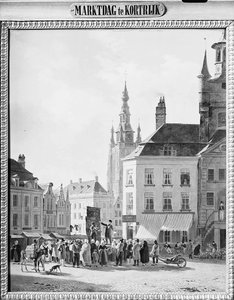
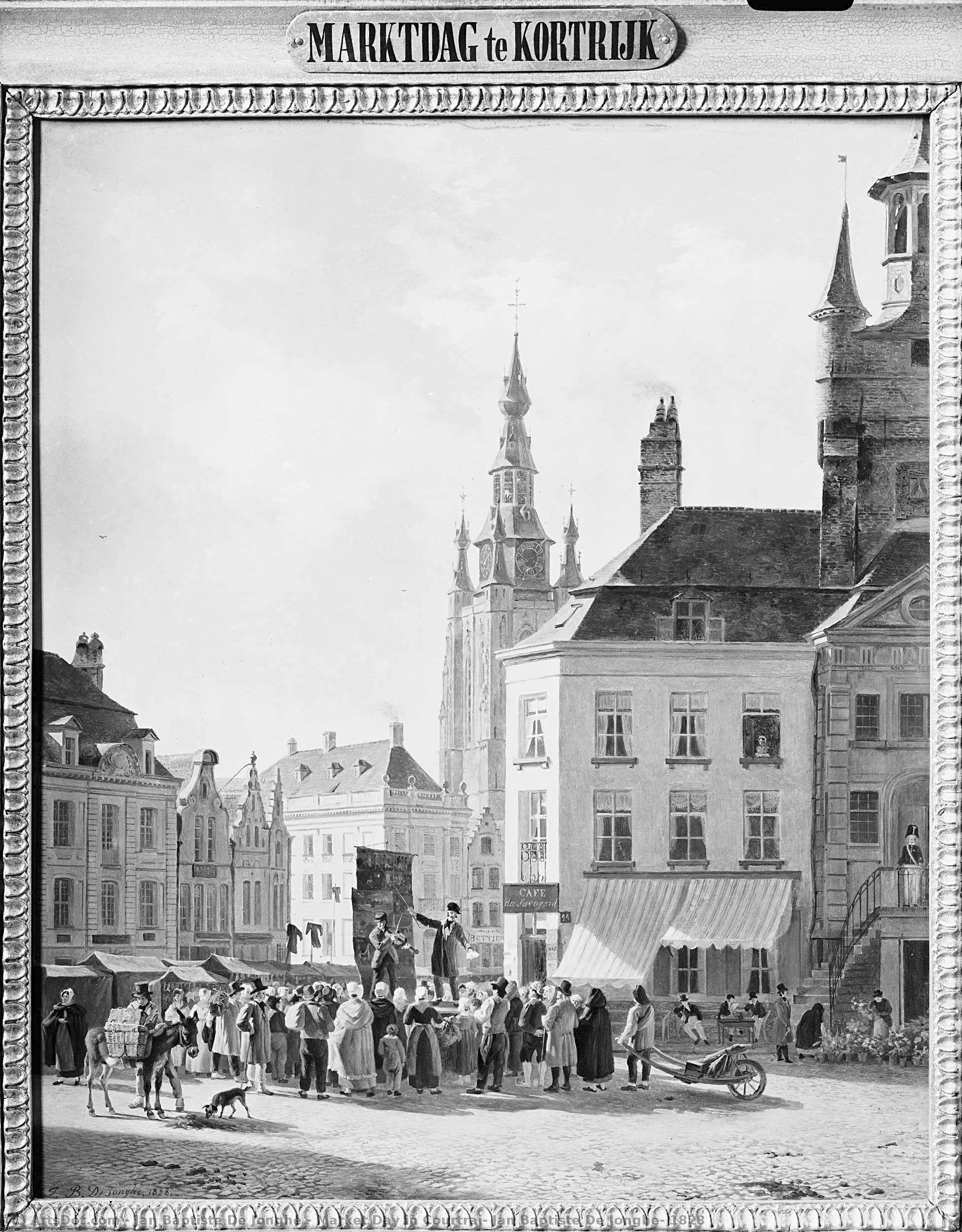
Market Day in Courtrai, Jan Baptiste De Jonghe, 1828
 1828
1828 40.0 x 33.0 cm
 Read More
Hand Made Oil Reproduction
Hand-painted oil on canvas in your size and frame, made to order by our artists. ( Buy Print Buy Image)




































Pick from our preset sizes that match the artwork's original proportions.

You may enter your own dimensions to fit a specific frame or space. If your selected size does not match the original image's proportions, we will either crop the artwork or extend the painting with additional hand-painted elements. A digital mockup will be sent for your approval before production begins.
Please note that the on-screen preview does not reflect the actual cropping or extension. Only the mockup will accurately show the final composition.
While custom sizes are available, we recommend selecting a dimension from the predefined list to preserve the original proportions.
After order, ArtsDot.com team will email client for instructions and provide a mockup preview
Worldwide Delivery () in 3/4 weeks instead of standard 5 weeks. (31 August). No compromise on quality.

Free Worldwide Express Shipping

High-Quality Linen Canvas

Full Shipping Insurance

Customs Tax Refund Guarantee

True Color Matching Guarantee

60-Day Return Policy (Defects Only)

100% Money-Back Guarantee

Bulk Discount Offer
 Glass option is only available in size under 110 CM

Market Day in Courtrai, Jan Baptiste De Jonghe, 1828
Reproduction Medium
Reproduction Size
-


Total Price
$ 613
Related Artworks







Artist Biography
A Life Immersed in Landscape: Jan Baptiste de Jonghe
Jan Baptiste de Jonghe, born in Kortrijk, Belgium, in 1785, emerged as a significant voice within the Romantic landscape tradition of the early 19th century. His life unfolded against a backdrop of shifting political landscapes and burgeoning national identity in Belgium, profoundly influencing his artistic focus on the serene beauty of his homeland. Coming from a prosperous merchant family—his father served as mayor of Kortrijk for a period—de Jonghe was afforded opportunities to pursue formal artistic training, initially at the Academy of Kortrijk under Pieter Van Reable, followed by studies at the prestigious Antwerp Academy of Fine Arts where he benefited from the guidance of Balthasar Paul Ommeganck. This early education instilled in him a foundational appreciation for direct observation of nature and a burgeoning talent for capturing its nuances.The Path to Romantic Vision
De Jonghe’s artistic journey was marked by a dedication to landscape painting that solidified after winning a competition at Ghent in 1812. This success propelled him into a period of active participation in art competitions across Northern France and Belgium, garnering recognition in cities like Douai, Brussels, and Bruges. However, it wasn't merely competitive accolades that shaped his style; extensive travels throughout the Netherlands, France, and England proved pivotal. These journeys weren’t simply about seeking new vistas but rather a deep immersion into diverse natural environments, fostering an evolving Romantic sensibility. He began to interpret nature not as a precise record, but as a source of emotional resonance—a space for contemplation and idealized beauty. His early works reflect this shift, characterized by idyllic scenes imbued with sentimental charm.A Master of Atmosphere and Detail
De Jonghe’s artistic output centered on Romantic landscapes populated with figures, herds, and evocative ruins, alongside detailed city views of Belgium and the Netherlands. He possessed a remarkable ability to create harmonious compositions that balanced topographical accuracy with an expressive use of light and atmosphere. His paintings are not merely representations of places but rather carefully constructed scenes designed to evoke tranquility and a sense of timeless beauty. The influence of 17th-century Dutch masters like Jacob van Ruisdael and Aelbert Cuyp is palpable in his meticulous attention to detail, subtle color gradations, and masterful rendering of natural light. He rarely dated his works, making precise chronology challenging, but the consistent quality and distinctive style across his oeuvre attest to a dedicated artistic vision. His graphic work, particularly his lithographs, further expanded his reach, offering accessible depictions of both rural scenes and urban landscapes.Professor and Legacy
Beyond his accomplishments as a painter and draughtsman, de Jonghe dedicated himself to education, serving as an art professor at the Academy of Kortrijk and later at the Antwerp Academy of Fine Arts. This commitment to nurturing the next generation of artists is evidenced by the numerous pupils he mentored, including Jean Baptiste Daveloose, Louis-Pierre Verwee, Louis de Winter, and Hendrik Frans Schaefels. His influence extended beyond technical instruction; he instilled in his students a deep appreciation for landscape painting and a dedication to capturing the beauty of the natural world. In 1823-1824, he contributed significantly to the publication *Collection des principales vues des Pays-Bas*, providing both lithographs and drawings that showcased the scenic diversity of the region. De Jonghe’s appointment as a member of the Antwerp Academy in 1825 and his subsequent role on the jury for state acquisitions in 1836 further solidified his position within the Belgian art establishment. He died in Schaerbeek in 1844, leaving behind a legacy of captivating landscapes that continue to resonate with viewers today. His work stands as a testament to the power of Romanticism and the enduring allure of the natural world.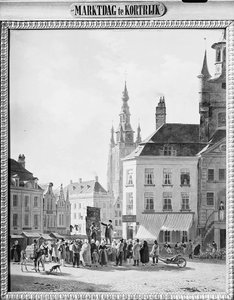
jan baptiste de jonghe
1785 - 1844 , Belgium
Quick Facts
- Artistic Movement Or Style: Romantic Landscape
- Artists Who Influenced This Artist:
- Balthasar Paul Ommeganck
- Jacob van Ruisdael
- Date Of Birth: January 8, 1785
- Date Of Death: October 14, 1844
- Full Name: Jan Baptiste de Jonghe
- Nationality: Belgian
- Notable Artworks:
- Market Day in Courtrai
- The Approaching Storm
- Place Of Birth: Kortrijk, Belgium