
- Home

- Digital Image
- jan davidszoon de heem or johannes de heem or johannes van antwerpen or jan davidsz de hem
 Preview
 Send
Send Share
Share
 Details

 Download
 Similars
 X-Ray
X-Ray Diaporama
Vase of Flowers
 Oil On Canvas
- WallArt
- Baroque
 1670
1670- Early Modern
 74.0 x 52.0 cm
 Mauritshuis
 Read More
Purchase a high-resolution, enhanced digital image, far superior to the online preview.
Each file is meticulously prepared by our in-house specialists using advanced tools and expert manual retouching. We ensure every image has exceptional clarity, precise color accuracy, and fine detail.
The final file is delivered via email within 72 hours, optimized for immediate use in professional, editorial, and print environments. This is the same quality trusted by top-tier design studios, publishers, and galleries.
Digital Image
Download a high-resolution file for personal display, printing, and creative projects. ( Buy Print Buy Hand Made Painting)
Included in Every Digital Image Order
Expert Digital Delivery, Guaranteed
When you choose ArtsDot.com, you're not just getting an image - you're receiving a professionally enhanced digital artwork, crafted with precision and backed by a satisfaction guarantee. Here's everything that comes with your order, automatically:

Fast Email Delivery
Your high-resolution digital image file will be emailed to you within 72 hours of ordering - ready for immediate use.

AI-Enhanced Digital File
Your artwork is professionally optimized using advanced AI tools and manual editing, ensuring maximum detail, clarity, and color accuracy.

Free Lifetime Re-Delivery
Accidentally deleted or lost your file? No worries - we'll resend it to you anytime, free of charge.

No Import Fees - Ever
Enjoy your artwork instantly with zero customs, duties, or delivery fees - digital downloads are always tax-free.

Color Accuracy Guarantee
We ensure your digital image reflects the original colors as closely as possible using professional tools and color management.

60-Day Satisfaction Guarantee
If you're not satisfied with your digital image, we'll revise it or refund 100% within 60 days - no questions asked.

100% Money-Back Guarantee
Not satisfied? Get a full refund within 60 days of receiving your digital file - no questions asked.

Bulk Order Discounts
Buy 3 images, save 10% - Buy 5, save 15% - Buy 10+, save 20%. Great for creative projects, galleries, and agencies.
A Floral Explosion from the Dutch Golden Age
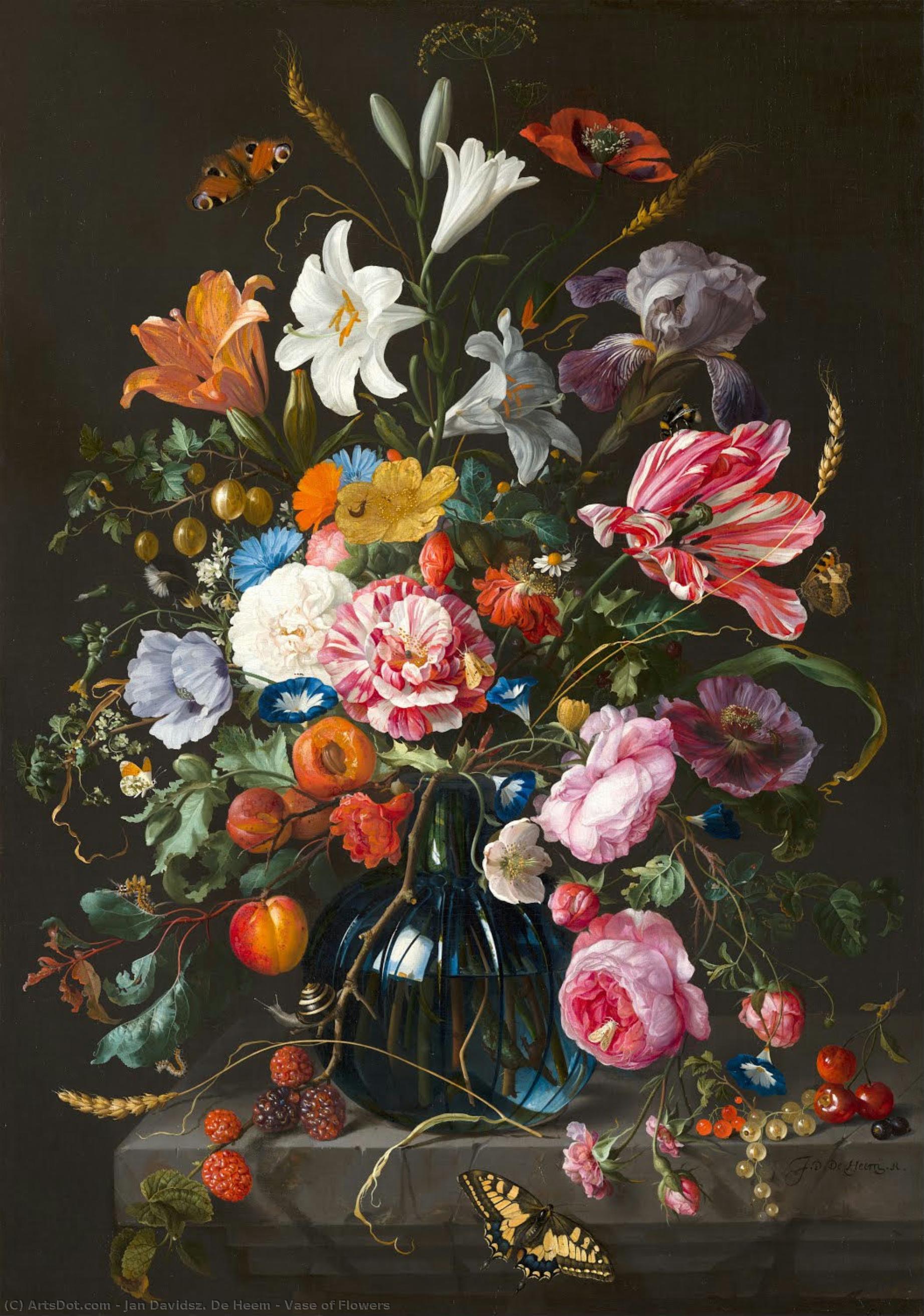
To gaze upon this Vase of Flowers is to be enveloped in an atmosphere of opulent abundance. It is not merely a depiction of blossoms; it is a veritable celebration, a riotous outpouring of color and life captured with breathtaking verisimilitude. Unlike the more restrained bouquets of earlier flower still-lifes, this composition explodes outward, suggesting a moment where nature’s bounty could no longer be contained by glass or earthly arrangement. The sheer profusion—the cascading lilies, the velvety roses, the delicate poppies, and the vibrant tulips—demands attention, drawing the viewer into its dense, layered beauty.
Mastery of Light and Texture
The technical brilliance at play here is nothing short of masterful. Jan Davidsz. de Heem, a titan of the Dutch Golden Age, employed an oil technique that allowed him to render textures with almost unbelievable accuracy. Observe how the light catches the waxy sheen of a petal, contrasting sharply with the matte depth of the surrounding shadows. The artist pays meticulous attention to every surface: from the imagined roughness of the stone ledge supporting the vase to the smooth, reflective quality of the glass itself. This realism creates an illusion of three-dimensionality so potent that one almost feels the cool weight of the vase and the ephemeral softness of the petals beneath their fingertips.
Symbolism Woven into Petals
Art in this period was rarely purely decorative; it spoke volumes through its subjects. Here, the abundance itself speaks to prosperity and earthly pleasure—a visual feast for the wealthy collector. Yet, the inclusion of elements like butterflies introduces a layer of poignant contemplation. These winged creatures are traditional symbols of transformation and the fleeting nature of beauty, reminding us that even in this moment of glorious bloom, time marches on. The entire arrangement becomes a subtle meditation on vanitas, balancing life’s greatest joys against its inevitable passing.
Creating an Atmosphere of Opulence
For the modern admirer or designer, this piece offers more than just decoration; it provides an emotional anchor for any space. The rich, saturated color palette—deep crimsons mingling with ethereal blues and sunny yellows—lends an immediate sense of drama and warmth to a room. Furthermore, the subtle detail captured in the reflection on the glass vase—a glimpse of a cloudy sky or objects upon a windowsill—serves as a sophisticated visual trick, grounding the fantastical floral display within a believable, lived-in space. Owning a reproduction of this work is acquiring not just art, but a piece of historical narrative, an invitation to contemplate luxury, life, and memory all at once.
Related Artworks



Artist Biography
Jan Davidsz. de Heem: Master of Opulence and Vanitas
Born in Utrecht, Netherlands, in 1606, Jan Davidszoon de Heem – often simply known as Jan de Heem – emerged as one of the most celebrated still life painters of the Dutch Golden Age. His career spanned decades, weaving together influences from his early training with his father, David de Heem the Elder, and the broader artistic currents of Antwerp’s vibrant art scene. De Heem wasn't merely a painter; he was an orchestrator of visual feasts, meticulously arranging objects – fruits, flowers, silver, shells, and even symbolic vanitas elements – to create scenes brimming with luxurious detail and profound contemplation.
De Heem’s early life laid the foundation for his distinctive style. He began his artistic education under his father, absorbing the Elder's mastery of floral arrangements and a penchant for rich color palettes. This initial training was further refined in Leiden, where he studied with David Bailly, a prominent painter known for his meticulous depictions of everyday objects. However, it was his move to Antwerp in 1635 that truly shaped his artistic trajectory. Antwerp’s bustling art market and its proximity to the Flemish Baroque tradition exposed De Heem to a wider range of influences, including the work of Balthasar van der Ast, known for his elegant still lifes, and Frans Snyders, whose dramatic compositions featuring hunting scenes and exotic animals offered a contrasting yet equally compelling aesthetic.
The Development of a Unique Style
De Heem’s style evolved over time, reflecting both his technical skill and his growing artistic vision. Initially, his works mirrored the conventions of Leiden – carefully rendered objects arranged on dark cloths, often with a focus on breakfast scenes. However, as he settled in Antwerp, his paintings underwent a dramatic transformation. He began to favor lighter backgrounds, creating an atmosphere of luminous opulence that highlighted the textures and colors of his subjects. This shift is particularly evident in his “pronkstillevens” – elaborate still lifes characterized by their profusion of objects, intricate arrangements, and symbolic weight.
A key element of De Heem’s style was his masterful use of light and shadow. He employed a subtle yet effective chiaroscuro technique to create depth and volume, drawing the viewer's eye to specific details within the composition. His meticulous attention to detail extended beyond mere representation; he sought to capture the very essence of each object – the velvety texture of a peach, the iridescent sheen of a pearl, the delicate veins of a flower petal. Furthermore, De Heem’s compositions were rarely static. He frequently introduced elements of movement and dynamism, such as scattered feathers or rolling fruit, adding a sense of life and vitality to his paintings.
Symbolism and Vanitas
De Heem's still lifes are not simply decorative arrangements; they are often imbued with symbolic meaning. He skillfully integrated vanitas motifs – symbols representing the transience of earthly pleasures and the inevitability of death – into his compositions. These elements, such as skulls, decaying fruit, wilting flowers, and hourglasses, served as reminders of mortality and the fleeting nature of beauty and wealth. However, De Heem’s use of vanitas was not morbid or pessimistic. Rather, it functioned as a subtle commentary on the importance of appreciating the present moment and living a virtuous life.
Beyond the traditional vanitas symbols, De Heem frequently incorporated objects with specific allegorical meanings. A snake coiled around a flower might represent temptation, while a broken goblet could symbolize lost honor or fleeting joy. The inclusion of musical instruments – such as violins and lutes – often alluded to the pleasures of music and art, suggesting that these pursuits were worthy of contemplation but should not be pursued at the expense of spiritual values.
Major Works and Legacy
De Heem’s prolific output includes numerous masterpieces that are celebrated for their technical brilliance, opulent beauty, and profound symbolism. “Garland of Fruit and Flowers” (1637) exemplifies his mastery of color and composition, while “Still Life with Books and a Violin” (c. 1642) showcases his ability to integrate literary and musical references into his paintings. His portraits, particularly those featuring Prince William III surrounded by an abundance of flowers and fruits, demonstrate his versatility as a painter and his keen understanding of aristocratic taste.
Despite his considerable success, De Heem remained a relatively private individual. He continued to work throughout his life, producing hundreds of paintings that are now housed in major museums around the world. His legacy endures as one of the most important figures in Dutch and Flemish Baroque painting – a master of still life who transformed this genre into an art form of unparalleled beauty, complexity, and philosophical depth. His influence can be seen in the work of subsequent generations of painters, and his paintings continue to captivate viewers with their luminous colors, intricate details, and profound meditations on the human condition.
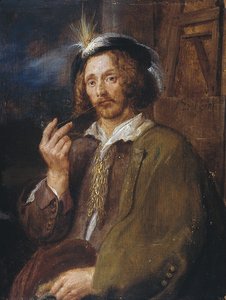
jan davidszoon de heem or johannes de heem or johannes van antwerpen or jan davidsz de hem
1606 - 1684 , Netherlands
Quick Facts
- Artistic Movement Or Style: Dutch Golden Age, Baroque
- Artists Or Movements Influenced By This Artist: ['Balthasar van der Ast']
- Artists Who Influenced This Artist: ['David de Heem']
- Date Of Birth: 17 April 1606
- Date Of Death: 26 April 1684
- Full Name: Jan Davidszoon de Heem
- Nationality: Dutch, Flemish
- Notable Artworks:
- Garland of Fruit & Flowers
- Still Life with Books
- Vanitas Still Lifes
- Place Of Birth: Utrecht, Netherlands

