

 Preview
 Send
Send Share
Share
 Details

 Download
 Similars
 X-Ray
X-Ray Diaporama
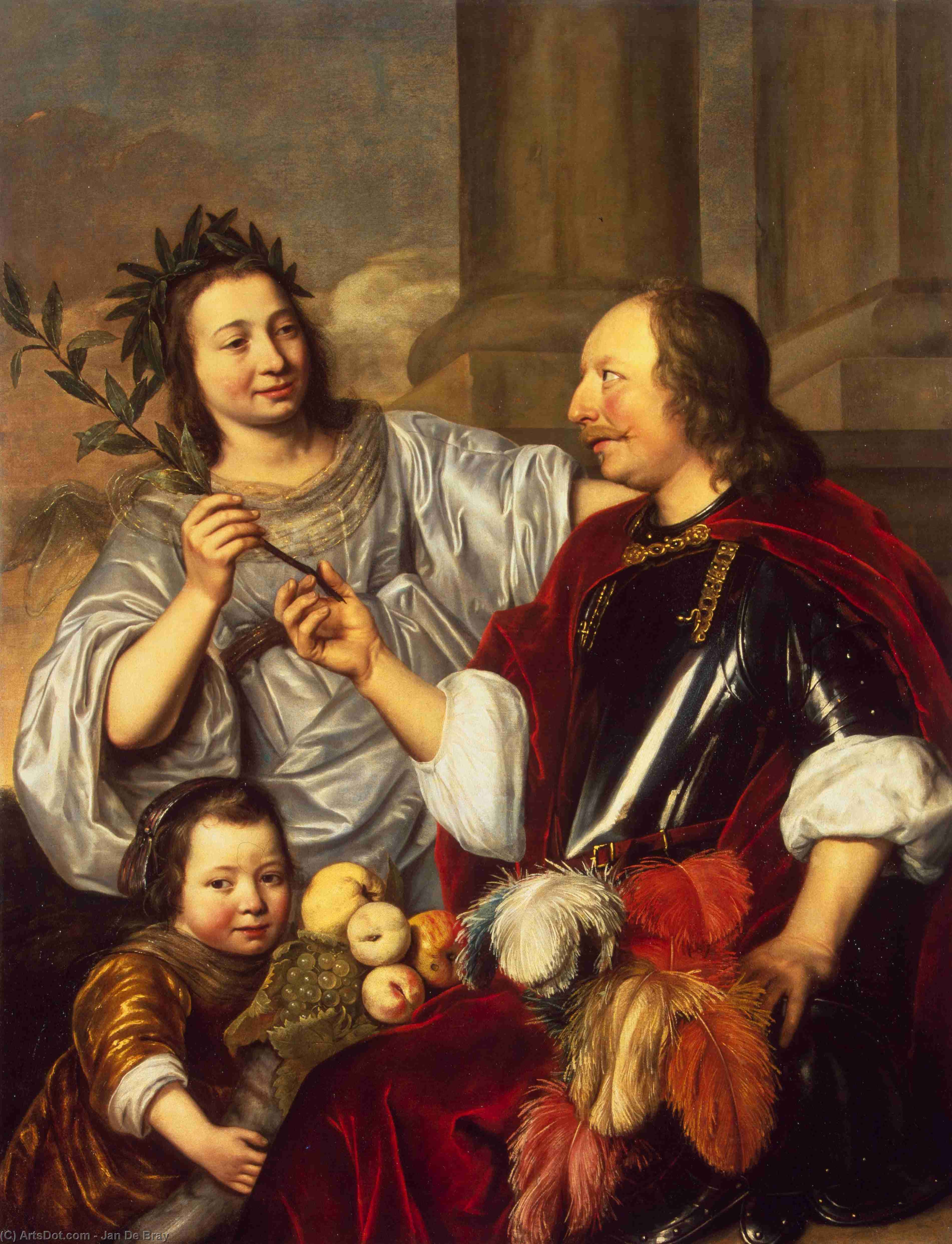
Allegorical Family Portrait
 Oil On Canvas
- WallArt
- Baroque Landscape Tradition
 1670
1670- Early Modern
 138.0 x 101.0 cm
 Hermitage Museum
 Read More
Purchase a high-resolution, enhanced digital image, far superior to the online preview.
Each file is meticulously prepared by our in-house specialists using advanced tools and expert manual retouching. We ensure every image has exceptional clarity, precise color accuracy, and fine detail.
The final file is delivered via email within 72 hours, optimized for immediate use in professional, editorial, and print environments. This is the same quality trusted by top-tier design studios, publishers, and galleries.
Digital Image
Download a high-resolution file for personal display, printing, and creative projects. ( Buy Print Buy Hand Made Painting)
Included in Every Digital Image Order
Expert Digital Delivery, Guaranteed
When you choose ArtsDot.com, you're not just getting an image - you're receiving a professionally enhanced digital artwork, crafted with precision and backed by a satisfaction guarantee. Here's everything that comes with your order, automatically:

Fast Email Delivery
Your high-resolution digital image file will be emailed to you within 72 hours of ordering - ready for immediate use.

AI-Enhanced Digital File
Your artwork is professionally optimized using advanced AI tools and manual editing, ensuring maximum detail, clarity, and color accuracy.

Free Lifetime Re-Delivery
Accidentally deleted or lost your file? No worries - we'll resend it to you anytime, free of charge.

No Import Fees - Ever
Enjoy your artwork instantly with zero customs, duties, or delivery fees - digital downloads are always tax-free.

Color Accuracy Guarantee
We ensure your digital image reflects the original colors as closely as possible using professional tools and color management.

60-Day Satisfaction Guarantee
If you're not satisfied with your digital image, we'll revise it or refund 100% within 60 days - no questions asked.

100% Money-Back Guarantee
Not satisfied? Get a full refund within 60 days of receiving your digital file - no questions asked.

Bulk Order Discounts
Buy 3 images, save 10% - Buy 5, save 15% - Buy 10+, save 20%. Great for creative projects, galleries, and agencies.
Collectible Description
A Masterpiece of Intimacy and Allegory
In the quiet, luminous depths of Jan de Bray’s Allegorical Family Portrait, we find ourselves transported to the heart of the Dutch Golden Age, a period where the boundaries between private domesticity and grand historical narrative often blurred. This exquisite work, dating from approximately 1670, serves as more than a mere record of lineage; it is a profound meditation on connection, continuity, and the symbolic weight of familial bonds. At first glance, the viewer is greeted by a tender gathering of two adults and three children, their figures bathed in a soft, warm light that suggests a serene afternoon within a well-appointed interior. The man, draped in a commanding red robe and possessing a dignified beard, engages in a gentle dialogue with a woman whose presence radiates grace. As she offers an apple to him, the gesture transcends simple interaction, inviting us into a world where every movement is imbued with a deeper, perhaps even biblical or mythological, significance.
The composition is a masterclass in portrait historié, a genre in which Jan de Bray specialized. By utilizing his own family members as models for an allegorical scene, he achieved a rare feat: the infusion of personal intimacy into the grand tradition of history painting. This technique allows the viewer to feel the warmth of the human connection while simultaneously contemplating the broader themes of temptation, fertility, or perhaps the preservation of innocence. The presence of small, unexpected details—a curious teddy bear resting on the periphery, a bird perched with watchful stillness, and the deliberate placement of fruit—creates a rich tapestry of visual storytelling that rewards the lingering eye.
Technique and the Radiance of the Dutch Baroque
To behold this reproduction is to appreciate the meticulous craftsmanship characteristic of the Haarlem school. De Bray’s technique is defined by an extraordinary command over light and texture, utilizing a palette that balances the opulent reds and golds of aristocratic life with the subtle, earthy tones of a domestic setting. The artist employs a sophisticated use of atmospheric perspective, ensuring that even within the confines of an interior, there is a sense of depth and breathability. One can almost feel the weight of the heavy fabrics and the smooth, cool skin of the children, rendered with a realism that speaks to the influence of masters like Frans Hals and Bartholomeus van der Helst.
For the discerning collector or interior designer, this piece offers an unparalleled opportunity to introduce a sense of historical gravity and soulful elegance into a contemporary space. The painting’s ability to anchor a room lies in its emotional duality; it possesses the grandeur required for a formal gallery setting, yet retains a quiet, approachable warmth that makes it suitable for a private study or a sophisticated living area. It is a work that does not merely decorate a wall but rather enriches the very atmosphere of a home, acting as a window into a vanished era of profound artistic and social complexity.
A Legacy of Connection
Beyond its aesthetic brilliance, the Allegorical Family Portrait stands as a testament to the resilience of the human spirit during an era of significant political and religious transition. As Jan de Bray navigated the shifting landscapes of the Netherlands, his art remained anchored in the fundamental truths of human relationship. The symbolism within the painting—the apple as a signifier of both temptation and life, the watchful bird, and the cohesive grouping of the family unit—serves as a timeless reminder of the importance of legacy and the enduring strength of our most intimate ties. Owning a reproduction of such a significant work is an invitation to surround oneself with the beauty of history, the precision of Baroque mastery, and the eternal warmth of the human story.
Related Artworks
Artist Biography
Jan Siberechts: Bridging the Divide Between Flanders and England
Jan Siberechts, born in Antwerp around 1627 and passing away in England circa 1700, represents a fascinating confluence of artistic influences – a testament to the dynamic exchange between the Netherlands and Britain during the late 17th century. His story isn’t one of singular innovation, but rather a skillful synthesis of Flemish landscape tradition with the evolving tastes of English aristocratic patrons. Siberechts's career unfolded against the backdrop of significant political and religious shifts; he arrived in England as a Catholic amidst a period of increasing tensions between Protestantism and Catholicism, adding another layer to his artistic journey.- Early Life and Training: Siberechts’s father was a sculptor, providing him with an early exposure to the visual arts. He received formal training at the Guild of St Luke in Antwerp, a crucial step towards establishing himself as a professional artist. This foundation instilled within him a deep understanding of classical composition and artistic technique.
- Italian Influence: Initial works reveal a clear debt to Italianate landscape painting – a stylistic trend prevalent throughout Europe during this period. These early pieces demonstrate his study of the idealized landscapes favored by artists like Titian and Canaletto, showcasing a meticulous attention to detail and atmospheric perspective.
- Flemish Roots in England: Siberechts’s style gradually evolved as he spent time in England, absorbing influences from the local landscape and adapting to the specific demands of his English clientele. He developed a distinctive approach that blended Flemish compositional techniques with depictions of the British countryside – particularly the Peak District.
A Patron's Eye: Landscapes for Country Houses
Siberechts’s most significant contribution lies in his role as a landscape painter for wealthy English landowners. He was commissioned to create views of prestigious country houses, including Longleat, Chevely, Chatsworth, and Wollaton – each painting offering a glimpse into the grandeur and lifestyle of the elite. These commissions weren't merely exercises in topographical accuracy; they were carefully crafted representations designed to enhance the prestige and status of their patrons. Siberechts skillfully employed atmospheric perspective, creating a sense of depth and distance that emphasized the scale and beauty of these estates.- The Peak District: He became particularly renowned for his depictions of the rugged landscapes of the Peak District, capturing its dramatic cliffs, rolling hills, and meandering rivers with remarkable precision.
- Royal Connections: Siberechts’s work gained favor within the court of George Villiers, 2nd Duke of Buckingham, who had previously admired some of his paintings in Antwerp. This connection opened doors to further commissions from influential figures.
- A Reflection of Status: The landscapes he painted were not simply representations of scenery; they were carefully constructed statements about wealth, power, and the appreciation of nature – all vital elements within the social fabric of 17th-century England.
Beyond the View: Siberechts’s Artistic Techniques
While often categorized as a landscape painter, Siberechts's work demonstrates a sophisticated understanding of artistic principles beyond mere representation. He was particularly adept at capturing light and shadow, creating a sense of realism and atmosphere that set his paintings apart. His meticulous attention to detail—evident in the rendering of foliage, rocks, and water—reveals a deep appreciation for the natural world.- Compositional Mastery: Siberechts’s compositions are characterized by a balanced use of space, color, and form, reflecting his training in Flemish landscape tradition.
- Use of Color: He skillfully employed a muted palette—dominated by earthy tones—to create a sense of realism and atmospheric depth.
- Perspective Techniques: Siberechts’s mastery of perspective is particularly evident in his depictions of distant landscapes, where he used atmospheric haze to suggest depth and distance.
Legacy and Historical Context
Jan Siberechts's work holds a unique place in the history of British landscape painting. He represents one of the earliest examples of topographical views created in England, laying the groundwork for subsequent generations of artists who would explore the country’s diverse landscapes. His paintings offer valuable insights into the social and cultural life of 17th-century England, reflecting the tastes and aspirations of its wealthy landowners. Siberechts's journey from Antwerp to England exemplifies the interconnectedness of European artistic networks during a period of significant change and demonstrates how artists could adapt their styles while retaining their core traditions. His legacy endures through his meticulously rendered landscapes, which continue to captivate viewers with their beauty and historical significance.
jan de bray
1627 - 1697 , Netherlands
Quick Facts
- Artistic Movement Or Style: Netherlands-trained
- Artists Or Movements Influenced By This Artist: ['British landscape painting']
- Artists Who Influenced This Artist: ['Rembrandt van Rijn']
- Date Of Birth: 1627
- Date Of Death: c.1700
- Full Name: Jan Siberechts
- Nationality: Dutch
- Notable Artworks:
- A View from Richmond Hill
- Later Stuart landscapes
- Place Of Birth: Antwerp, Belgium

