 Preview
 Send
Send Share
Share
 Details

 Download
 Similars
 X-Ray
X-Ray Diaporama
Wall of the Angels
 Contemporary
 53.0 x 145.0 cm
 Elgiz Museum of Contemporary Art
 Read More
Giclée / Art Print
Museum-quality giclée or canvas print with fast production and flexible finish options. ( Buy Hand Made Painting Buy Image)




































Pick from our preset sizes that match the artwork's original proportions.

You may enter your own dimensions to fit a specific frame or space. If your selected size does not match the original image's proportions, we will either crop the artwork or extend the image with a mirrored or solid-fill edge. A digital mockup will be sent for your approval before production begins.
Please note that the on-screen preview does not reflect the actual cropping or extension. Only the mockup will accurately show the final composition.
While custom sizes are available, we recommend selecting a dimension from the predefined list to preserve the original proportions.
Worldwide Delivery () in 2 weeks instead of standard 4/5 weeks. (22 August)

Free Worldwide Express Shipping

High-Quality Linen Canvas

Full Shipping Insurance

Customs Tax Refund Guarantee

True Color Matching Guarantee

60-Day Return Policy (Defects Only)

100% Money-Back Guarantee

Bulk Discount Offer
 Glass option is only available in size under 110 CM

Wall of the Angels
Giclée / Art Print
Reproduction Size
-


Total Price
$ 63
Collectible Description
Wall of the Angels by Jan Fabre: A Detailed Exploration
- Artist: Jan Fabre
- Date: Unknown (circa 1993)
- Size: 53 x 145 cm
Subject and Style: Surrealism Meets Natural Form
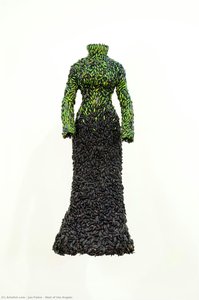
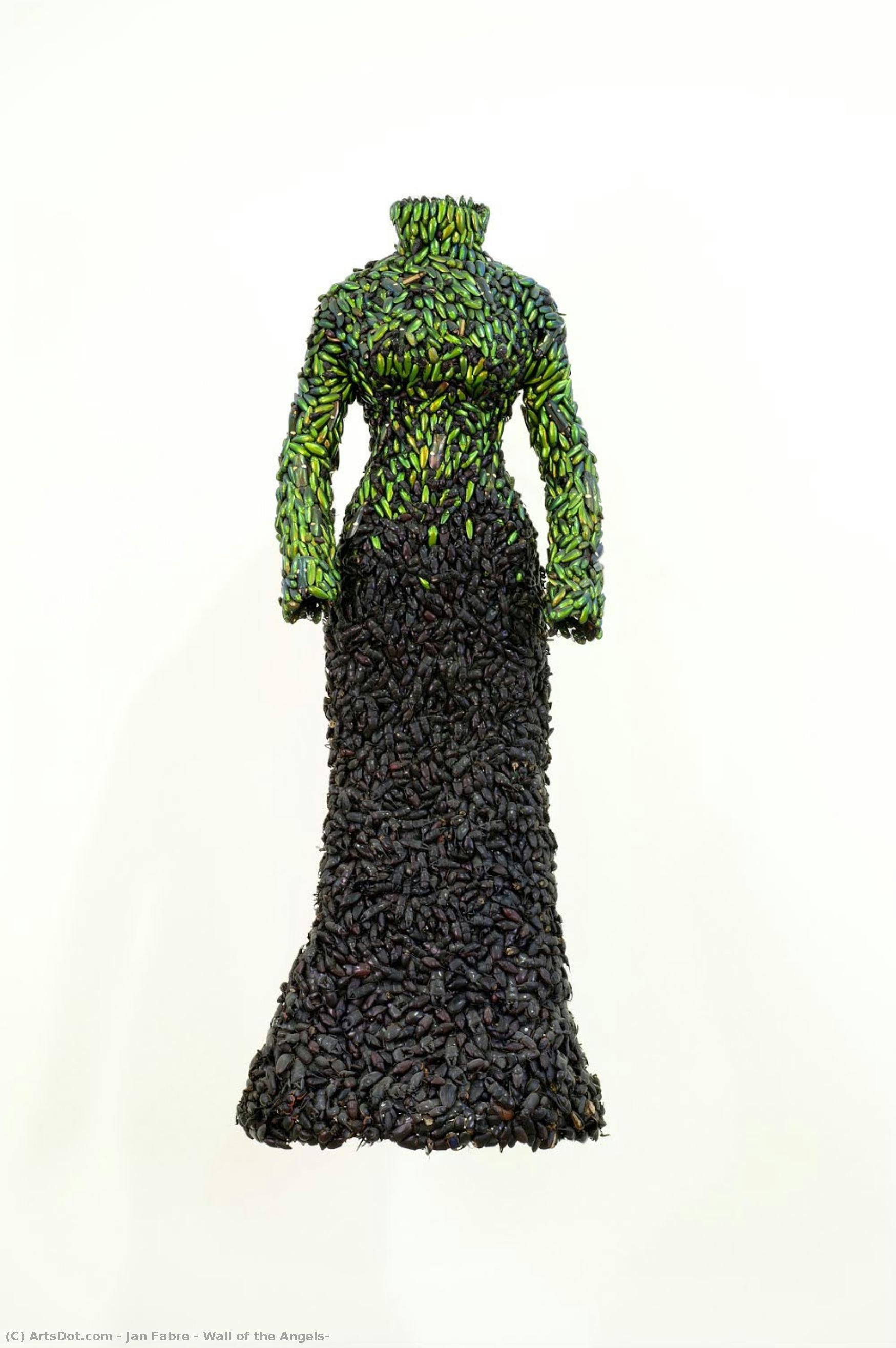
“Wall of the Angels” is a striking sculpture or installation by Belgian artist Jan Fabre, captivating viewers with its unique blend of surreal imagery and organic textures. The artwork centers on a figure enveloped in a long dress, dominating the frame against a stark white background. This deliberate simplicity amplifies the impact of the dress itself – a complex tapestry of color and form that defies easy categorization. Fabre’s style leans towards contemporary installation art, characterized by its conceptual depth and often unsettling beauty. The work draws inspiration from natural forms, particularly resembling feathers or insect wings, creating an intriguing juxtaposition between the human figure and the realm of nature.
Technique and Materials: A Mosaic of Jewel Beetle Wings
The visual impact of "Wall of the Angels" is largely due to Fabre’s meticulous technique. The dress isn't woven or sewn in a traditional sense; instead, it appears to be constructed from countless small components meticulously applied to the surface. Research indicates these components are primarily jewel beetle wings – iridescent and naturally patterned, they create a granular, textured effect that shimmers under the diffused lighting. This process is incredibly labor-intensive, highlighting Fabre’s dedication to detail and his exploration of transformation and metamorphosis—recurring themes in his work. The even lighting allows for a clear appreciation of these textural nuances, emphasizing the organic quality of the materials.
Symbolism and Emotional Impact: Life, Death, and Transformation
The color palette plays a crucial role in conveying the artwork’s symbolic weight. The vibrant green at the upper portion of the dress contrasts sharply with the deep, textured black below. This dichotomy evokes powerful emotions and interpretations. Green often symbolizes life, growth, and renewal, while black can represent death, mystery, or transformation. The overall effect is both beautiful and slightly unsettling, prompting contemplation on themes of mortality, rebirth, and the cyclical nature of existence. Fabre’s work frequently explores dark humor and surrealism, challenging viewers to confront uncomfortable truths about the human condition. The resemblance to insect wings further adds layers of meaning, referencing fragility, resilience, and the hidden beauty within seemingly small or insignificant creatures.
Historical Context: Consilience and Fabre's Artistic Vision
Jan Fabre is known as a "consilience artist," a term he uses to describe his approach to art which seeks to unify knowledge across disciplines—drawing connections between science, nature, theatre, literature, and visual arts. This concept, inspired by the work of William Whewell and Edward O. Wilson, informs much of his artistic practice. “Wall of the Angels” exemplifies this philosophy; the use of jewel beetle wings isn't merely aesthetic but reflects Fabre’s fascination with entomology and the inherent beauty found within the natural world. His exploration of metamorphosis and transformation aligns with broader philosophical inquiries into the nature of existence, making "Wall of the Angels" a compelling example of his unique artistic vision.
Related Artworks

Artist Biography
Jan Fabre: A Weaver of Shadows and Light
Jan Fabre, born in Antwerp, Belgium, in 1958, is a figure whose artistic universe defies easy categorization. He’s a sculptor, painter, stage director, author, and performance artist—a true polymath who has spent nearly four decades relentlessly exploring the boundaries between art forms and disciplines. Often described as a “consilience artist,” Fabre seeks to unite seemingly disparate fields – entomology, theatre, science, religion, and even mythology – into a cohesive and profoundly personal visual language. His work isn’t simply about creating beautiful objects; it's an ongoing investigation into the nature of existence, mortality, and the interconnectedness of all things. Fabre’s early life was deeply influenced by his father, a renowned entomologist, whose passion for insects ignited a lifelong fascination with metamorphosis, transformation, and the hidden beauty within the natural world. This interest is powerfully reflected in many of his works, particularly those featuring the iridescent wing cases of jewel beetles – objects he elevates to monumental status, transforming them into mosaics, sculptures, and symbols of enduring life. The meticulous detail with which he renders these intricate structures speaks to a deep respect for nature’s complexity and a desire to reveal its hidden wonders. His childhood also fostered an appreciation for storytelling and performance, laying the groundwork for his later career in theatre design and direction. Fabre's artistic journey began formally at the Royal Academy of Fine Arts in Antwerp, where he honed his skills as a painter and sculptor. However, it was his groundbreaking work in theatre that truly established him as a visionary artist. Beginning in 1976 with “This is Theatre Like It Was to Be Expected and Foreseen,” Fabre radically redefined the theatrical experience, abandoning traditional stagecraft in favor of immersive, multi-sensory performances that blurred the lines between art and life. These ambitious productions, often lasting for hours or even days, incorporated elements of ritual, performance art, and social commentary, challenging audiences to confront uncomfortable truths about themselves and society. His work during this period, including the infamous “money-performances” – burning money as a symbol of consumerism – demonstrated his willingness to push boundaries and provoke critical reflection. Fabre’s visual art is equally compelling, characterized by a distinctive style that blends meticulous detail with raw emotion. He frequently employs unconventional materials—blood, ballpoint pen ink, beetle wings, bones, and stuffed animals—to create sculptures, installations, and mosaics that are both unsettling and strangely beautiful. His use of color is particularly striking, often employing intense reds, blacks, and golds to evoke a sense of drama and mystery. Works like “Wall of the Angels,” a monumental sculpture featuring a textured dress design constructed from beetle wing cases, exemplify this approach—a powerful statement about beauty, decay, and the cyclical nature of life. Similarly, his ceiling installation in Brussels’ Royal Palace, "Heaven of Delight," is an overwhelming spectacle of shimmering iridescent scales, transforming the space into a fantastical realm. Throughout his career, Fabre has consistently sought to integrate his artistic practice with broader philosophical concerns. His concept of “consilience” – the idea that knowledge should be unified across disciplines – informs his approach to artmaking, encouraging him to draw connections between seemingly unrelated fields and to explore the underlying principles that govern them. This philosophy is evident in his work on the Belgian Congo, where he created a series of monumental mosaics depicting scenes from colonial history alongside images of Congolese life, prompting viewers to confront the complex legacy of exploitation and oppression. Fabre’s commitment to social engagement and critical reflection has cemented his position as one of the most important artists working today.Key Works & Achievements
- “This is Theatre Like It Was to Be Expected and Foreseen” (1982): A groundbreaking 8-hour theatrical performance that redefined the boundaries of the art form.
- “The Power of Theatrical Madness” (1984): A four-hour marathon production exploring themes of madness, creativity, and the human condition.
- “Heaven of Delight” (2002): A monumental ceiling installation in Brussels’ Royal Palace featuring over a million jewel beetle wing cases.
- “Totem” (2004): A towering steel sculpture depicting a giant beetle, installed in Leuven, Belgium.
- “Tribute to Belgian Congo” & “Tribute to Hieronymus Bosch in Congo” (2010-2013): A series of monumental mosaics exploring the complex history and legacy of colonialism in the Democratic Republic of Congo.
Influences & Artistic Philosophy
Fabre’s artistic vision is shaped by a diverse range of influences, including:- Jean-Henri Fabre (his father): The entomologist's passion for insects and the natural world instilled in him a lifelong fascination with metamorphosis and transformation.
- William Whewell & Edward O. Wilson: The concept of “consilience,” emphasizing the unity of knowledge across disciplines, is central to his artistic practice.
- Hieronymus Bosch: The Dutch painter’s dark and unsettling imagery has served as a continuing source of inspiration for Fabre's work.
- Theatre Pioneers: Figures like Antonin Artaud and Peter Brook have profoundly influenced his approach to stage design and performance.
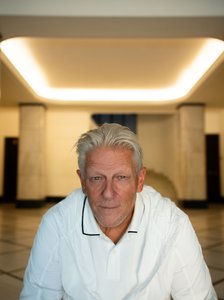
Jan Fabre
1958 - , Belgium
Quick Facts
- Artistic Movement Or Style: Surrealism, Consilience
- Artists Or Movements Influenced By This Artist:
- William Whewell
- Edward O. Wilson
- Artists Who Influenced This Artist: ['Jean-Henri Fabre']
- Date Of Birth: 1958-12-14
- Full Name: Jan Fabre
- Nationality: Belgian
- Notable Artworks:
- Wall of the Angels
- Heaven of Delight
- Place Of Birth: Antwerp, Belgium
Related Articles

Bronze Sculptures That Defined Art History | ArtsDot
Journey through art history with our Top 10 bronze sculptures! Explore masterpieces by Rodin, Michelangelo & more. Discover stories behind iconic statues and find museum-quality reproductions for your home decor at ArtsDot.com.
Verdant Visions: Exploring the Symbolism & Aesthetic Impact of Green in Art History
Explore the rich history & symbolism of green in art! Discover iconic paintings, techniques, and how to bring verdant harmony into your home with ArtsDot's expert guide.

The Enduring Form: Exploring Themes & Techniques in Sculpture Across Historical Periods
Explore the rich history of sculpture from ancient masterpieces to contemporary innovations. Discover key techniques, influential artists & investment potential for discerning art collectors.

Bronze Age to Modern Masters: 10 Sculptures That Redefined Art | ArtsDot
Journey through art history with 10 legendary bronze sculptures – from Michelangelo's David to Rodin’s Thinker. Explore the stories, techniques & timeless beauty of these masterpieces. Find museum-quality reproductions & elevate your home decor on ArtsDot.com.
The Enduring Form: Sculpture Across History, Technique & Emotional Resonance
Explore the rich history of sculpture with ArtsDot. Discover key techniques, influential artists & investment potential for discerning collectors. Expert insights into valuing and collecting timeless masterpieces.