 Preview
 Send
Send Share
Share
 Details

 Download
 Similars
 X-Ray
X-Ray Diaporama
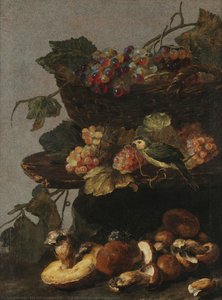
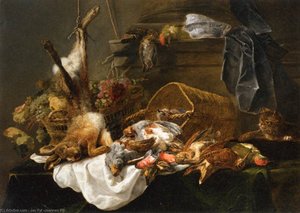
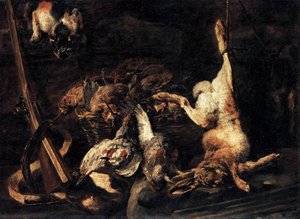
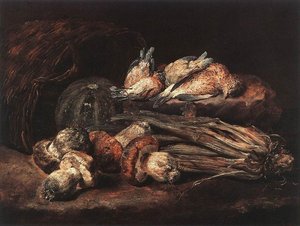
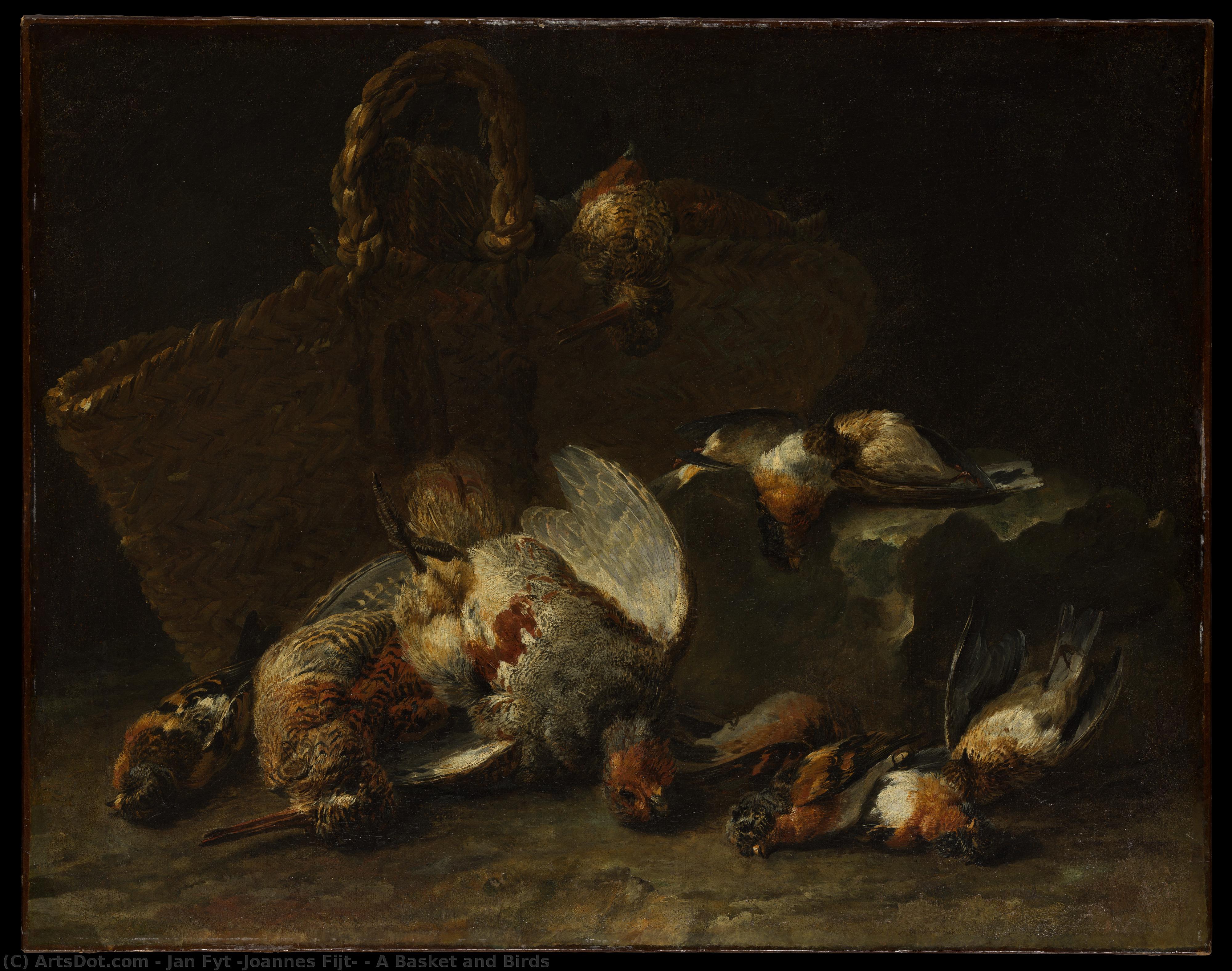
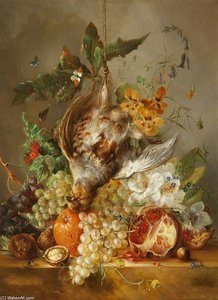
A Basket and Birds
 Dutch Golden Age
 60.0 x 77.0 cm
 Read More
Hand Made Oil Reproduction
Hand-painted oil on canvas in your size and frame, made to order by our artists. ( Buy Print Buy Image)




































Pick from our preset sizes that match the artwork's original proportions.

You may enter your own dimensions to fit a specific frame or space. If your selected size does not match the original image's proportions, we will either crop the artwork or extend the painting with additional hand-painted elements. A digital mockup will be sent for your approval before production begins.
Please note that the on-screen preview does not reflect the actual cropping or extension. Only the mockup will accurately show the final composition.
While custom sizes are available, we recommend selecting a dimension from the predefined list to preserve the original proportions.
After order, ArtsDot.com team will email client for instructions and provide a mockup preview
Worldwide Delivery () in 3/4 weeks instead of standard 5 weeks. (16 August). No compromise on quality.

Free Worldwide Express Shipping

High-Quality Linen Canvas

Full Shipping Insurance

Customs Tax Refund Guarantee

True Color Matching Guarantee

60-Day Return Policy (Defects Only)

100% Money-Back Guarantee

Bulk Discount Offer
 Glass option is only available in size under 110 CM

A Basket and Birds
Reproduction Medium
Reproduction Size
-


Total Price
$ 263
Related Artworks
Artist Biography
The Flemish Master of the Natural World
Jan Fyt, born in the vibrant artistic hub of Antwerp around 1611, stands as a towering figure of the Dutch Golden Age, an era defined by an unprecedented fascination with the tangible beauty of the physical world. As a preeminent animalier, Fyt possessed a rare ability to breathe life into his subjects, transforming mere biological studies into profound dramatic narratives. His journey began under the tutelage of Ambrosius Bosschaert the Elder, a master of botanical precision. This early apprenticeship was foundational, instilling in Fyt a rigorous devotion to scientific observation and an eye for the minute textures of nature—from the soft down of a bird's wing to the coarse fur of a hunting hound. Through this lens, Fyt did not merely paint animals; he captured the very essence of their vitality.
The evolution of Fyt’s style represents a masterful bridge between the meticulous detail of the early 17th century and the sweeping, emotive grandeur of the Baroque period. While his training emphasized accuracy, his mature works embraced a more dynamic composition. He became renowned for his use of chiaroscuro, employing the dramatic interplay of light and shadow to sculpt his subjects out of the darkness. This technique allowed him to create a sense of three-dimensional presence that was startling to his contemporaries. In his hands, a still life was never static; it was a moment frozen in time, often imbued with a sense of tension or quiet movement, as seen in his evocative depictions of birds and predators interacting within a landscape.
Technique, Texture, and the Art of Observation
What truly distinguishes the oeuvre of Jan Fyt is his unparalleled command over texture. To gaze upon a Fyt masterpiece is to experience a sensory journey through the natural kingdom. He achieved a level of realism that suggests a deep understanding of anatomy and light refraction. His canvases are celebrated for several key technical achievements:
- Anatomical Precision: Utilizing his background in scientific observation, Fyt rendered the musculature and skeletal structure of animals with startling accuracy, lending them a palpable weight and presence.
- Luminous Textures: Through delicate brushwork, he captured the iridescent sheen of feathers, the wetness of an eye, and the ruggedness of earth and stone.
- Dramatic Composition: He moved beyond simple portraiture to create scenes where light acts as a protagonist, highlighting the focal points of his compositions—such as a startled hare or a predatory cat—against deep, atmospheric backgrounds.
This mastery of detail allowed him to elevate the genre of animal painting from mere decoration to high art. His works often functioned as both scientific records and emotional experiences, capturing the raw, unvarnished reality of life and death in the natural world. Whether depicting a serene Bird Concert or the intense drama of a hunt, Fyt maintained a balance between the objective truth of nature and the subjective beauty of artistic expression.
Legacy and Historical Significance
The historical significance of Jan Fyt lies in his role as a cornerstone of the Antwerp school of painting. During a period when the art market was shifting toward specialized genres, Fyt helped define the standard for animalier portraiture. His influence resonated far beyond the borders of Flanders, impacting the development of still life and landscape painting across Europe. He provided a visual language for the burgeoning scientific curiosity of his age, documenting the fauna of the era with a reverence that bordered on the sacred.
Today, Fyt’s legacy is preserved in the great museums of the world, where his works continue to captivate viewers with their enduring realism and dramatic power. He remains a symbol of the Dutch Golden Age's ability to find the infinite within the infinitesimal, proving that even the smallest creature, when viewed through the eyes of a master, can command the grandeur of an epic canvas. His life and work serve as a testament to the power of observation, reminding us that true artistry lies in the profound connection between the artist's hand and the living world.
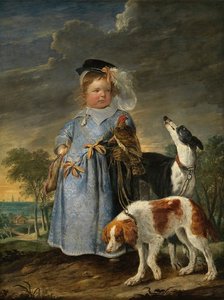
jan fyt (joannes fijt)
1611 - 1661 , Belgium
Quick Facts
- Artistic Movement Or Style: Baroque
- Artists Or Movements Influenced By This Artist: Dutch Golden Age
- Artists Who Influenced This Artist: Ambrosius Bosschaert the Elder
- Date Of Birth: 1611
- Full Name: Jan Fyt
- Nationality: Dutch
- Notable Artworks:
- Still life with Game
- Fox Hunt
- Place Of Birth: Antwerp, Belgium
Related Articles

Dutch Masters: 10 Golden Age Paintings That Still Inspire |
Journey into the Dutch Golden Age! Explore 10 iconic paintings by Rembrandt, Vermeer & Hals. Discover the stories behind these Baroque masterpieces and find museum-quality art reproductions to elevate your home decor on .
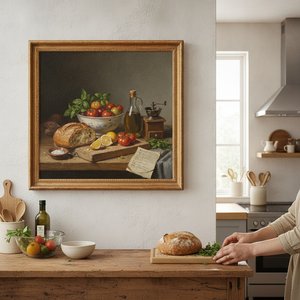
Culinary Echoes: Commissioning Hyperrealistic Still Life Paintings as Personal Legacies for the Modern Home
Commission a breathtaking hyperrealistic still life painting with ArtsDot. Preserve cherished culinary moments as timeless heirlooms. Museum-quality craftsmanship, personalized service & a lasting legacy for your home.
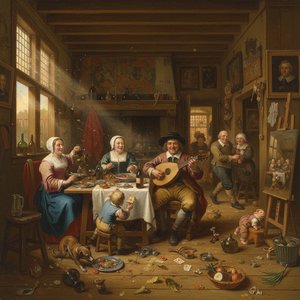
Jan Steen: A Master of Dutch Genre Painting & the Golden Age
Explore the life & art of Jan Steen, a leading Dutch Golden Age painter renowned for his humorous genre scenes & insightful social commentary. Discover his techniques, legacy, and collecting tips.
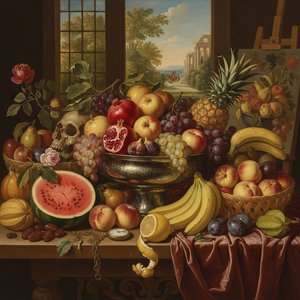
The Bountiful Still Life: Symbolism & Artistic Representation of Fruit Across Art History
Explore the rich history of still life painting & the symbolism of fruit across art movements. Discover masterpieces from Caravaggio to Cézanne with ArtsDot – expert guidance & museum-quality reproductions.

Golden Age Reflections: Dutch Baroque Painting & Cultural Innovation
Explore the Dutch Golden Age of painting! Discover key artists like Vermeer & ter Borch, their innovative techniques, and the rich cultural context behind these Baroque masterpieces. Learn about collecting & appreciating this iconic art period.