 Preview
 Send
Send Share
Share
 Details

 Download
 Similars
 X-Ray
X-Ray Diaporama
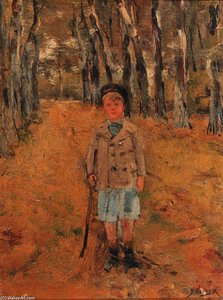
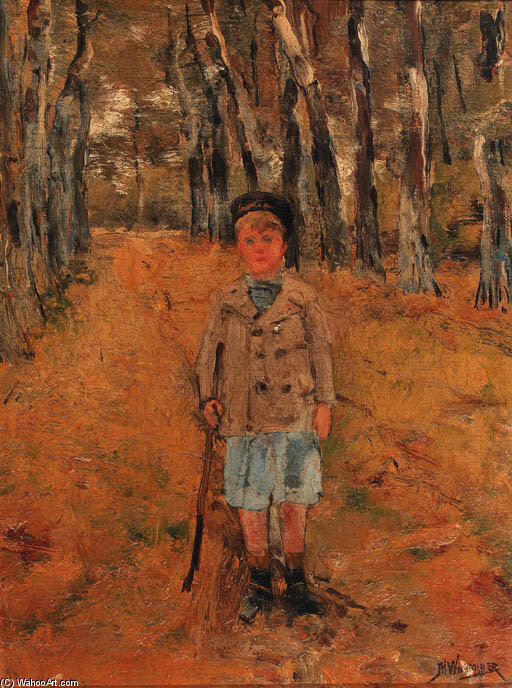
Little Boy
 Read More
Hand Made Oil Reproduction
Hand-painted oil on canvas in your size and frame, made to order by our artists. ( Buy Print Buy Image)




































Pick from our preset sizes that match the artwork's original proportions.

You may enter your own dimensions to fit a specific frame or space. If your selected size does not match the original image's proportions, we will either crop the artwork or extend the painting with additional hand-painted elements. A digital mockup will be sent for your approval before production begins.
Please note that the on-screen preview does not reflect the actual cropping or extension. Only the mockup will accurately show the final composition.
While custom sizes are available, we recommend selecting a dimension from the predefined list to preserve the original proportions.
After order, ArtsDot.com team will email client for instructions and provide a mockup preview
Worldwide Delivery () in 3/4 weeks instead of standard 5 weeks. (20 August). No compromise on quality.

Free Worldwide Express Shipping

High-Quality Linen Canvas

Full Shipping Insurance

Customs Tax Refund Guarantee

True Color Matching Guarantee

60-Day Return Policy (Defects Only)

100% Money-Back Guarantee

Bulk Discount Offer
 Glass option is only available in size under 110 CM

Little Boy
Reproduction Medium
Reproduction Size
-


Total Price
$ 263
Related Artworks

Artist Biography
A Vision of Light: The Life and Legacy of Jan Hillebrand Wijsmuller
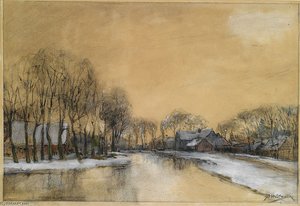
Jan Hillebrand Wijsmuller (1855–1925) remains a luminous figure in the annals of Dutch art, a painter who masterfully bridged the gap between the somber, atmospheric traditions of the Hague School and the vibrant, light-drenched innovations of French Impressionism. Born in Amsterdam during a period often referred to as the second Golden Age of Dutch painting, Wijsmuller’s life was an odyssey of observation. His early years were rooted in the academic rigor of the Rijksacademie, where he studied under the esteemed August Allebé. This formative period instilled in him a profound respect for the truth of nature; Allebé’s teaching encouraged a departure from rigid, stale academicism in favor of capturing the fleeting, ephemeral qualities of light and atmosphere that define the very essence of the Impressionist spirit. As his talent matured, Wijsmullers journey took him far beyond the borders of Amsterdam, leading him through the artistic heartlands of Brussels and The Hague. It was during these wandering years that his aesthetic identity truly crystallized. Immersed in the zenith of the Hague School, he breathed the same creative air as masters such as Johannes Bosboom, the Maris brothers, and even a young Vincent van Gogh. From these luminaries, he inherited a deep appreciation for the Dutch landscape—the ability to render the subtle textures of water, the heavy moisture of the air, and the quiet drama of the coast. Yet, Wijsmuller was not merely a follower of tradition; he infused his work with a bright, spirited palette borrowed from the French Impressionists, creating a unique synthesis that felt both intimately Dutch and cosmopolitally modern.The Art of the Moment: Technique and Subject Matter
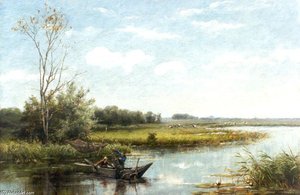
The true magic of Wijsmuller’s oeuvre lies in his ability to transform the mundane into the magnificent through a meticulous yet expressive technique. He was a master of plein air painting, frequently taking his easel directly into the elements to witness the shifting moods of the Netherlands. His canvases are often populated by the serene landscapes of the regions surrounding Amsterdam and The Hague—vast stretches of lakes, winding streams, and tranquil canals that seem to pulse with life under his brush. Whether working in oil, watercolor, or etching, he possessed a singular gift for capturing the interplay of light upon moving water and the soft, hazy horizons of the Dutch countryside. His technical approach was characterized by:- A sophisticated use of color that balanced the muted, earthy tones of the Hague School with the luminous, prismatic highlights of Impressionism.
- An expert command of atmospheric perspective, allowing him to create a sense of immense depth and moisture within his coastal and riverine scenes.
- A versatile mastery across multiple media, including painting, watercolor, and etching, which allowed him to explore both grand landscapes and intimate, detailed studies.
Historical Significance and Enduring Impression
The historical importance of Jan Hillebrand Wijsmuller extends beyond his individual technical achievements; he represents a vital evolutionary link in 19th-century European art. As a member of the second generation of the Hague School, he helped carry the torch of Dutch landscape painting into a new era of light and color. His work serves as a testament to a period of intense artistic cross-pollination, where the local traditions of the Netherlands met the revolutionary currents flowing from France. By integrating these two seemingly disparate worlds, he contributed to a richer, more complex visual language that paved the way for the modern era. Today, Wijsmuller’s legacy is preserved in prestigious collections and continues to resonate with those who find beauty in the quiet, powerful moments of the natural world. His ability to honor the heritage of his homeland while embracing the radical possibilities of light ensures that his work remains a vital part of the Dutch artistic identity. He stands as a painter of the atmosphere, a chronicler of the ephemeral, and a true master of the golden light that once defined the streets and shores of his beloved Netherlands.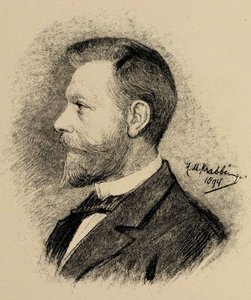
Jan Hillebrand Wijsmuller
1855 - 1925 , Netherlands
Quick Facts
- Artistic Movement Or Style: Amsterdam Impressionism
- Artists Or Movements Influenced By This Artist: Hague School
- Artists Who Influenced This Artist: August Allebé
- Date Of Birth: Amsterdam, Netherlands (1855)
- Date Of Death: 1925
- Full Name: Jan Hillebrand Wijsmuller
- Nationality: Dutch
- Notable Artworks: ['Waterway near the Baarsjes']
- Place Of Birth: Amsterdam