

 Preview
 Send
Send Share
Share
 Details

 Download
 Similars
 X-Ray
X-Ray Diaporama
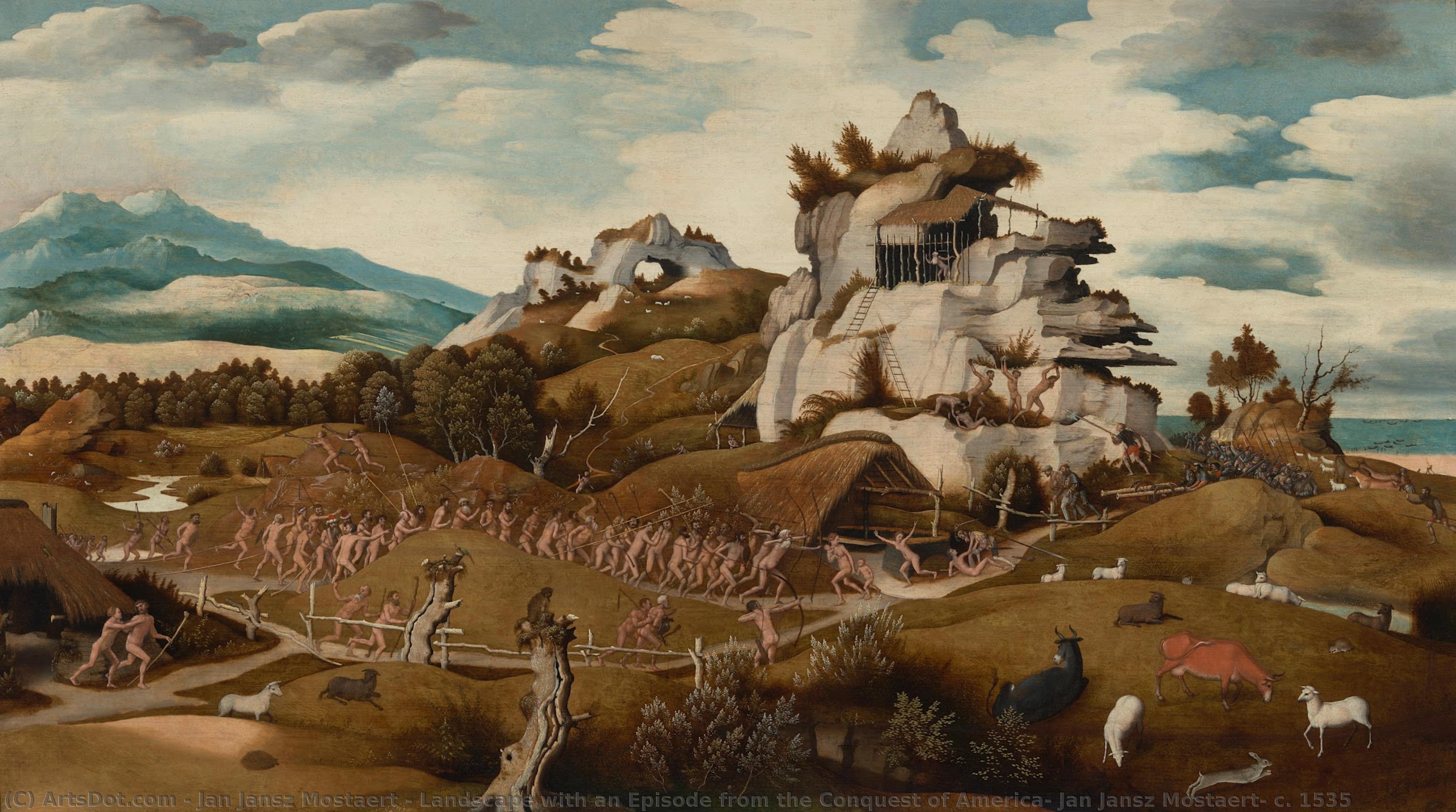
Landscape with an Episode from the Conquest of America, Jan Jansz Mostaert, c. 1535
 1535
1535 87.0 x 153.0 cm
 Read More
Purchase a high-resolution, enhanced digital image, far superior to the online preview.
Each file is meticulously prepared by our in-house specialists using advanced tools and expert manual retouching. We ensure every image has exceptional clarity, precise color accuracy, and fine detail.
The final file is delivered via email within 72 hours, optimized for immediate use in professional, editorial, and print environments. This is the same quality trusted by top-tier design studios, publishers, and galleries.
Digital Image
Download a high-resolution file for personal display, printing, and creative projects. ( Buy Print Buy Hand Made Painting)
Included in Every Digital Image Order
Expert Digital Delivery, Guaranteed
When you choose ArtsDot.com, you're not just getting an image - you're receiving a professionally enhanced digital artwork, crafted with precision and backed by a satisfaction guarantee. Here's everything that comes with your order, automatically:

Fast Email Delivery
Your high-resolution digital image file will be emailed to you within 72 hours of ordering - ready for immediate use.

AI-Enhanced Digital File
Your artwork is professionally optimized using advanced AI tools and manual editing, ensuring maximum detail, clarity, and color accuracy.

Free Lifetime Re-Delivery
Accidentally deleted or lost your file? No worries - we'll resend it to you anytime, free of charge.

No Import Fees - Ever
Enjoy your artwork instantly with zero customs, duties, or delivery fees - digital downloads are always tax-free.

Color Accuracy Guarantee
We ensure your digital image reflects the original colors as closely as possible using professional tools and color management.

60-Day Satisfaction Guarantee
If you're not satisfied with your digital image, we'll revise it or refund 100% within 60 days - no questions asked.

100% Money-Back Guarantee
Not satisfied? Get a full refund within 60 days of receiving your digital file - no questions asked.

Bulk Order Discounts
Buy 3 images, save 10% - Buy 5, save 15% - Buy 10+, save 20%. Great for creative projects, galleries, and agencies.
Related Artworks







Artist Biography
The Enigmatic Vision of Jean-Baptiste Mongeau: A Painter of Shadows and Light
Jean-Baptiste Mongeau, a figure largely obscured by the mists of 16th-century France, remains one of the most intriguing and subtly powerful painters of his era. Born in Lyon around 1528 – the exact date lost to historical record, adding to the aura of mystery surrounding him – Mongeau’s life was marked by a quiet intensity and an unwavering dedication to exploring the interplay between light, shadow, and human emotion. While he produced relatively few works, each piece speaks with a profound resonance, hinting at a deeply considered artistic philosophy that anticipated developments in Baroque painting decades later. His work is characterized by a masterful manipulation of chiaroscuro, creating dramatic contrasts that draw the viewer into the heart of his scenes – often depicting moments of quiet contemplation or poignant sorrow. Mongeau’s early life offers scant detail. Records suggest he was apprenticed to a local goldsmith before gravitating towards painting, likely influenced by the vibrant artistic community flourishing in Lyon at the time. This initial training instilled in him a meticulous attention to detail and an understanding of texture – qualities that would later become hallmarks of his distinctive style. However, unlike many artists of his generation who sought patronage from wealthy merchants or nobility, Mongeau remained largely independent throughout his career, preferring the solitude of his studio and the freedom to pursue his own artistic vision. This independence fostered a unique perspective, allowing him to develop a deeply personal and introspective approach to painting. Mongeau’s artistic development can be traced through a small but significant body of work – primarily portraits and scenes depicting religious figures. His early portraits, such as *Portrait of Antoine Dubois*, demonstrate a remarkable ability to capture the sitter's personality with subtle gestures and expressions. The use of muted colors and carefully rendered fabrics suggests an interest in portraying not just physical likeness, but also the inner life of his subjects. Later works, like *The Lamentation of Mary*, showcase a shift towards greater emotional intensity. Here, Mongeau employs dramatic lighting to heighten the sense of grief and despair, utilizing tenebrism – a technique popularized by Caravaggio centuries later – with remarkable skill. The figures are bathed in pools of light, while the surrounding darkness emphasizes their vulnerability and isolation. The influence on Mongeau’s work is complex and multifaceted. While he largely eschewed direct engagement with established artistic movements, it's clear that he was deeply affected by the Renaissance ideals of humanism and the burgeoning interest in naturalism. However, unlike his more overtly classical contemporaries, Mongeau seemed less concerned with replicating idealized beauty and more interested in exploring the complexities of human experience. There’s a noticeable debt to Flemish painters like Jan van Eyck, particularly in his meticulous attention to detail and his use of oil paint to create rich, luminous surfaces. Furthermore, some scholars have suggested a connection between Mongeau's work and the religious art of Northern Europe, noting similarities in his depiction of emotional intensity and symbolic imagery. Despite his undeniable talent and innovative approach, Mongeau’s legacy remains somewhat elusive. He died in 1552, likely in Lyon, leaving behind only around twenty known paintings – a remarkably small output for an artist of such singular vision. His work was largely overlooked during his lifetime and remained relatively obscure until the late 19th century when it began to attract the attention of art historians and critics. Today, Mongeau is recognized as one of the most important, yet tragically underappreciated, painters of the French Renaissance – a master of light and shadow who captured the essence of human emotion with remarkable subtlety and grace. His paintings continue to resonate with viewers today, offering a poignant glimpse into the soul of a man who sought to illuminate the darkness within himself and the world around him.Key Works
- Portrait of Antoine Dubois (c. 1548): Demonstrates Mongeau’s early skill in capturing personality through subtle details.
- The Lamentation of Mary (1550): A pivotal work showcasing his mastery of chiaroscuro and emotional intensity; a precursor to Baroque drama.
- Saint Michael the Archangel (c. 1549): Illustrates Mongeau’s ability to imbue religious figures with psychological depth.
- The Shepherdess (Unfinished, c. 1551): A poignant and evocative depiction of rural life, hinting at a deeper philosophical engagement with the natural world.
Historical Context
Mongeau’s artistic career unfolded during a period of significant social and political upheaval in France. The reign of Francis I marked a high point for French art and culture, but also a time of increasing religious tension and political instability. The Protestant Reformation was gaining momentum throughout Europe, leading to persecution and conflict. Mongeau's independent spirit and his focus on introspective themes can be seen as a reflection of this broader climate of uncertainty and questioning. The rise of humanist thought during the Renaissance encouraged artists to explore human emotions and experiences, while simultaneously challenging traditional religious dogma. Mongeau’s work embodies this complex interplay between faith and reason, tradition and innovation.
jan jansz mostaert
1552 , Netherlands

