 Preview
 Send
Send Share
Share
 Details

 Download
 Similars
 X-Ray
X-Ray Diaporama
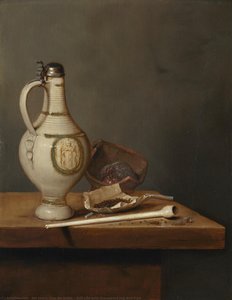
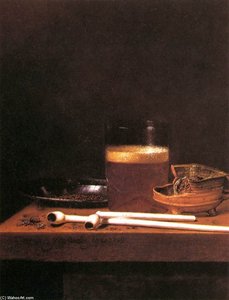
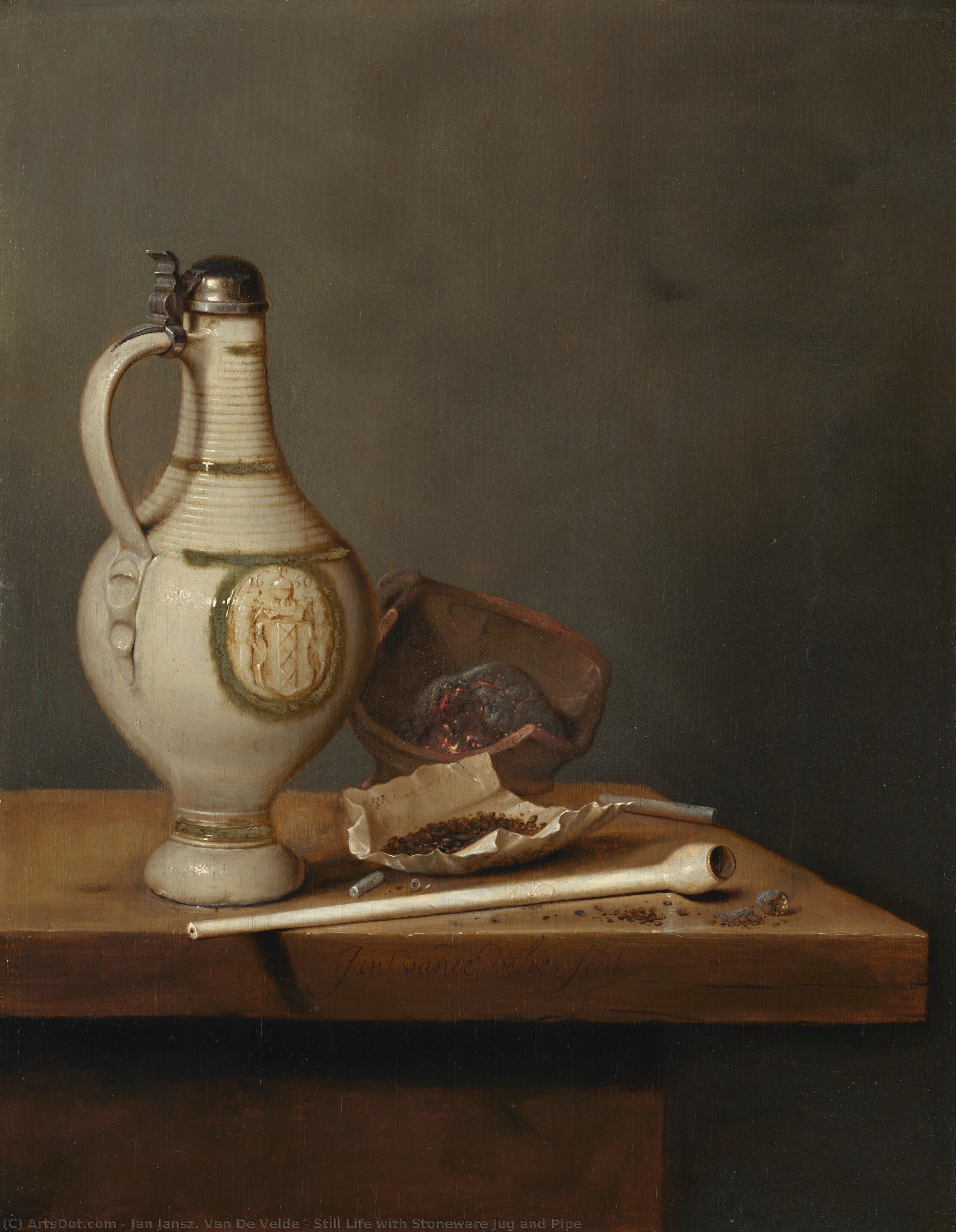
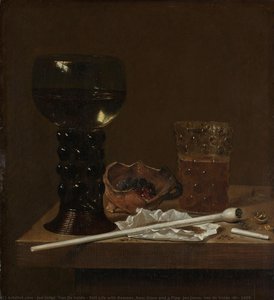
Still Life with Stoneware Jug and Pipe
 1650
1650 36.0 x 28.0 cm
 Read More
Giclée / Art Print
Museum-quality giclée or canvas print with fast production and flexible finish options. ( Buy Hand Made Painting Buy Image)




































Pick from our preset sizes that match the artwork's original proportions.

You may enter your own dimensions to fit a specific frame or space. If your selected size does not match the original image's proportions, we will either crop the artwork or extend the image with a mirrored or solid-fill edge. A digital mockup will be sent for your approval before production begins.
Please note that the on-screen preview does not reflect the actual cropping or extension. Only the mockup will accurately show the final composition.
While custom sizes are available, we recommend selecting a dimension from the predefined list to preserve the original proportions.
Worldwide Delivery () in 2 weeks instead of standard 4/5 weeks. (21 August)

Free Worldwide Express Shipping

High-Quality Linen Canvas

Full Shipping Insurance

Customs Tax Refund Guarantee

True Color Matching Guarantee

60-Day Return Policy (Defects Only)

100% Money-Back Guarantee

Bulk Discount Offer
 Glass option is only available in size under 110 CM

Still Life with Stoneware Jug and Pipe
Giclée / Art Print
Reproduction Size
-


Total Price
$ 63
Collectible Description
Related Artworks








Artist Biography
The Quiet Mastery of Jan Jansz van de Velde III
In the golden twilight of the Dutch Golden Age, amidst the bustling commerce and cultural flowering of the Netherlands, there existed a particular kind of artistry that found profound beauty in the mundane. Jan Jansz van de Velde III (1620–1662) was a master of this subtle, contemplative genre. While history often remembers the grand landscapes and dramatic portraits of his era, Van de Velde carved out a legacy through the quiet dignity of the still life. Born in the vibrant art center of Haarlem, his life was deeply intertwined with the lineage of Dutch craftsmanship; he was the son of the renowned printmaker Jan van de Velde II, an inheritance that likely provided him with an early, intimate understanding of light, shadow, and the meticulous precision required to breathe life into inanimate objects.
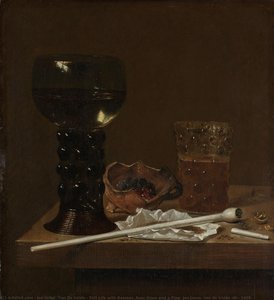
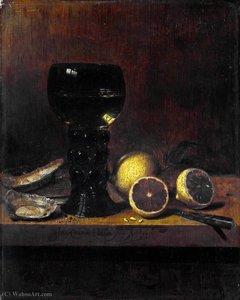
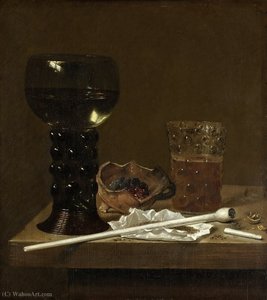
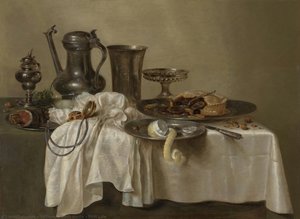
The trajectory of Van de Velde’s career was shaped by the prestigious artistic currents flowing through Haarlem. Under the direct tutelage of his father, he acquired a foundational technical rigor, yet his mature style reveals a profound connection to the atmospheric innovations of Willem Claesz Heda. From Heda, Van de Velde learned the art of the subtle tonal gradation—the ability to let light dance across the surface of a pewter plate or settle softly upon a glass of beer without the need for theatrical flourish. His work is characterized by an understated elegance, where the focus remains on the tactile reality of the subject matter. He did not seek to overwhelm the viewer with complexity; instead, he invited them into a moment of stillness, capturing the textures of earthenware, the translucency of wine in a roemer, and the delicate wisps of smoke from a clay pipe.
A Life Captured in Light and Shadow
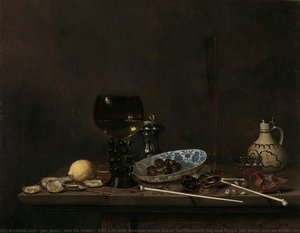
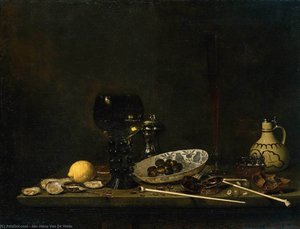
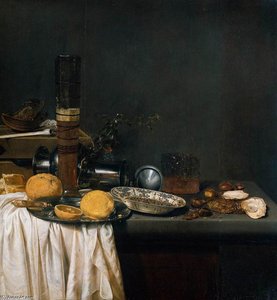
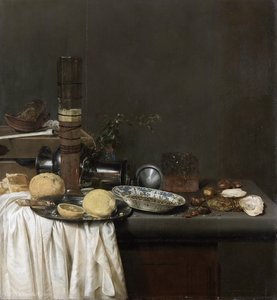
Though his biographical footprint remains somewhat elusive, the movement of Van de Velde’s life mirrors the shifting centers of Dutch artistic activity. His early years in Haarlem established his aesthetic roots, but his marriage in Amsterdam in 1642 suggests a period of expansion and engagement with the broader, more cosmopolitan art market of the Republic's capital. This era of his life saw him refining the "breakfast piece" and "monochrome banketje" styles, where a limited palette was used to create a sense of profound depth and realism. His ability to arrange objects—a lemon, an oyster, or a silver salt vessel—was not merely a feat of composition but a study in the ephemeral nature of existence.
The later years of his life took him to Enkhuizen, where he continued to practice his craft before his untimely death in 1662. Even as his physical presence faded, his influence persisted through his role as an educator. He is noted for having taught the calligrapher Nicolaes Bodding van Laer, demonstrating that his mastery of visual communication extended beyond the canvas and into the very structure of line and form. His death at a relatively young age truncated what might have been an even more expansive career, yet the works he left behind serve as enduring windows into the domestic intimacy of the seventeenth century.
Legacy of the Everyday
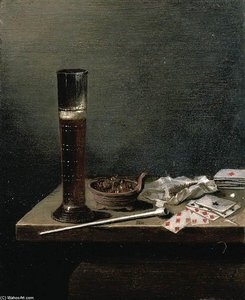
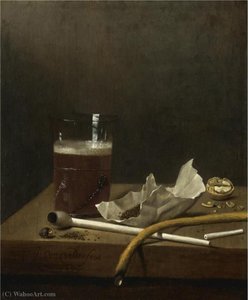
The historical significance of Jan Jansz van de Velde III lies in his ability to elevate the ordinary to the level of the extraordinary. His paintings are more than mere inventories of household goods; they are meditations on presence and absence. Through his skillful use of light, he transformed simple items—a stoneware jug, a piece of tobacco, or a flute glass—into vessels of profound sensory experience. To look upon a Van de Velde is to participate in the quietude of a bygone era, feeling the weight of the ceramic and the cool touch of the glass.
Today, his contributions are celebrated within the canon of Dutch Golden Age masters for several key reasons:
- Technical Precision: His remarkable ability to render diverse textures, from the rough surface of an earthen jar to the smooth, reflective surface of a silver vessel.
- Atmospheric Depth: The use of diffused light to create a sense of space and atmosphere that avoids the harshness of high-contrast chiaroscuro.
- Compositional Restraint: A preference for balanced, carefully arranged groupings that prioritize clarity and quietude over dramatic movement.
- Cultural Documentation: Providing a vivid, realistic record of the material culture and domestic aesthetics of the Dutch Republic during its most prosperous century.
jan jansz van de velde
1620 - 1662 , Netherlands
Quick Facts
- Artistic Movement Or Style: Still Life Painting
- Artists Or Movements Influenced By This Artist: ['Dutch Golden Age Art']
- Artists Who Influenced This Artist:
- Willem Claesz Heda
- Jan van de Velde
- Date Of Birth: 1620
- Date Of Death: 1662
- Full Name: Jan Jansz van de Velde III
- Nationality: Dutch
- Notable Artworks:
- Still-life With Romer, Flute Glass, Earthenware Jug And Pipes
- Still Life with Stoneware Jug and Pipe
- Still Life
- Place Of Birth: Haarlem, Netherlands