 Preview
 Send
Send Share
Share
 Details

 Download
 Similars
 X-Ray
X-Ray Diaporama
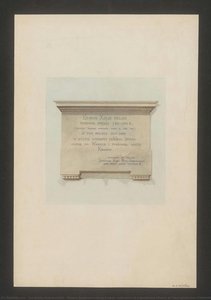
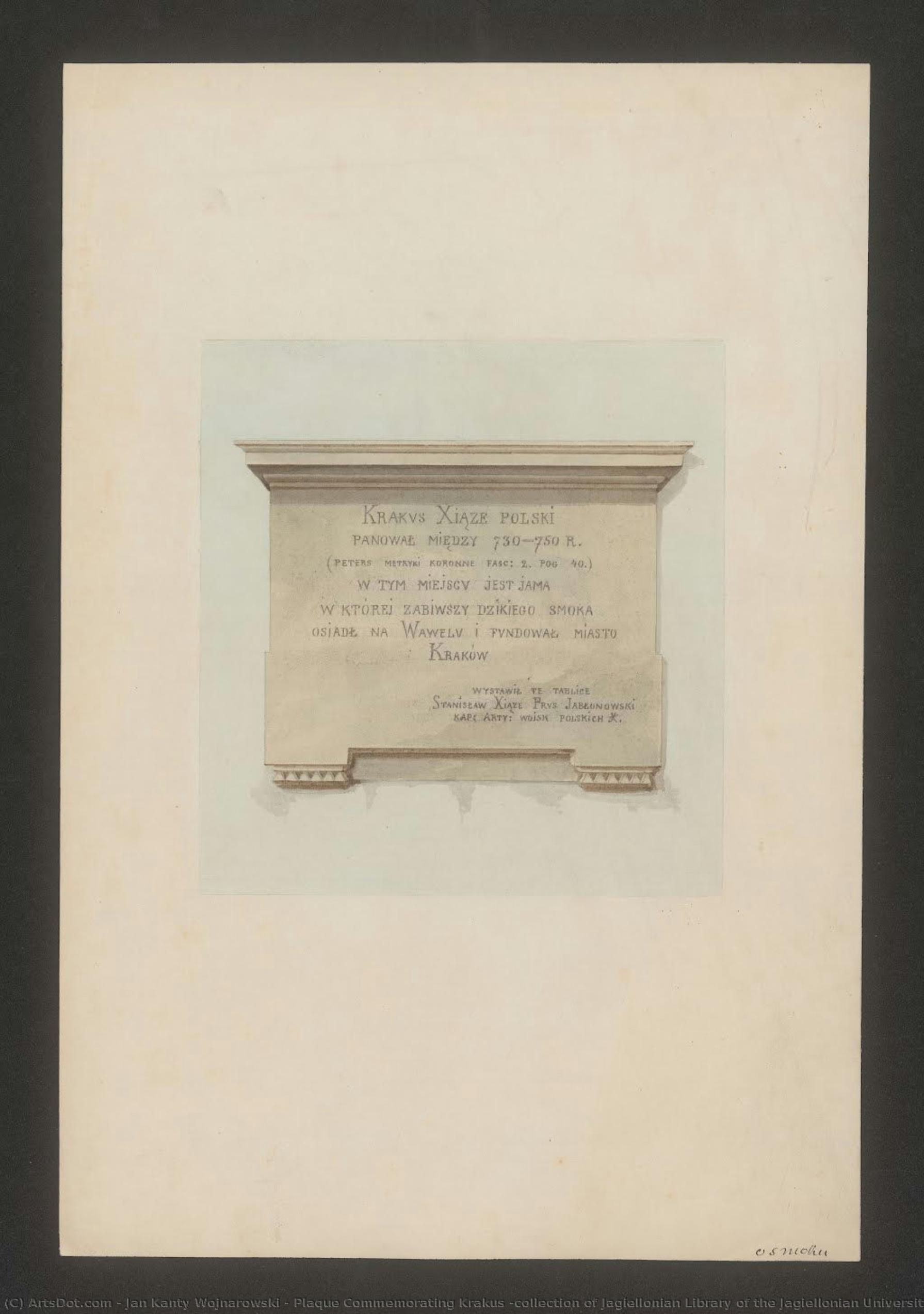
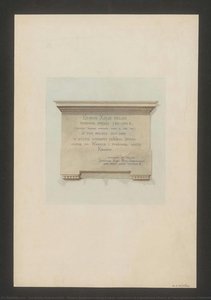
Plaque Commemorating Krakus (collection of Jagiellonian Library of the Jagiellonian University)


 Read More
Giclée / Art Print
Museum-quality giclée or canvas print with fast production and flexible finish options. ( Buy Hand Made Painting Buy Image)




































Pick from our preset sizes that match the artwork's original proportions.

You may enter your own dimensions to fit a specific frame or space. If your selected size does not match the original image's proportions, we will either crop the artwork or extend the image with a mirrored or solid-fill edge. A digital mockup will be sent for your approval before production begins.
Please note that the on-screen preview does not reflect the actual cropping or extension. Only the mockup will accurately show the final composition.
While custom sizes are available, we recommend selecting a dimension from the predefined list to preserve the original proportions.
Worldwide Delivery () in 2 weeks instead of standard 4/5 weeks. (1 September)

Free Worldwide Express Shipping

High-Quality Linen Canvas

Full Shipping Insurance

Customs Tax Refund Guarantee

True Color Matching Guarantee

60-Day Return Policy (Defects Only)

100% Money-Back Guarantee

Bulk Discount Offer
 Glass option is only available in size under 110 CM

Plaque Commemorating Krakus (collection of Jagiellonian Library of the Jagiellonian University)
Giclée / Art Print
Reproduction Size
-


Total Price
$ 63
Related Artworks






Artist Biography
The Silent Chronicler of Kraków: The Life and Legacy of Jan Kanty Wojnarowski
In the heart of 19th-century Poland, amidst the shifting political landscapes of the Austro-Hungarian era, there lived an artist whose brush served as a vital bridge between the ephemeral present and the enduring past. Jan Kanty Wojnarowski (1815–1876) was far more than a mere illustrator; he was a pioneer of monumental painting and a meticulous guardian of architectural memory. Born in Łódź, his early years were steeped in the romantic sensibilities that defined the era, yet his artistic soul found its true calling in the stone and mortar of Kraków’s ancient structures. Through his eyes, the city's monuments were not just static relics of history, but living witnesses to a profound cultural heritage.
Wojnarowski’s journey into the heights of academic excellence began at the Kraków Academy of Fine Arts. Under the tutelage of masters such as Józef Chełmoński, he mastered the rigorous discipline of academic painting, learning to balance technical precision with an emotive touch. This training provided him with the essential tools to approach his most significant life's work: the monumental task of documenting Kraków’s ecclesiastical and civic treasures. His style emerged as a sophisticated blend of realism and reverence, characterized by an understated elegance that eschewed unnecessary ornamentation in favor of truth and architectural integrity.
A Monumental Undertaking: The Krakow Inventory
The true magnitude of Wojnarowski’s contribution to Polish art is best understood through his ambitious project commissioned by Kazimierz Drucki Książę Wielki. Between 1869 and 1873, Wojnarowski embarked upon an exhaustive inventory of Kraków's churches and monuments, a feat of both artistic devotion and scientific rigor. This was not merely a collection of sketches, but a systematic documentation of over 200 buildings that required the precision of an architect and the soul of a poet. He integrated detailed architectural measurements and complex perspectives with nuanced tonal gradations, creating a visual record that anticipated the modern principles of historical conservation.
His mastery of watercolor on paper allowed him to capture the delicate interplay of light and shadow upon weathered stone and intricate carvings. One can see his profound sensitivity in works such as his depiction of the Plaque Commemorating Krakus, where he captured the weight of legend and history within a single frame. His ability to render the solemn beauty of tombstones and the grandeur of cathedral walls ensured that even as time eroded the physical structures, their visual essence remained preserved in his delicate washes of color.
Historical Significance and Enduring Influence
The legacy of Jan Kanty Wojnarowski extends far beyond the borders of 19th-century Poland. By documenting the vanishing details of Kraków’s landscape, he provided future generations with an irreplaceable visual archive. His work serves as a primary source for historians, architects, and conservators, offering a window into a period of transition when the preservation of national identity was inextricably linked to the preservation of its monuments.
His influence can be traced through several key aspects of his artistic contribution:
- Architectural Preservation: His meticulous drawings acted as an early form of cultural heritage protection, documenting structures that have since undergone significant changes.
- Technical Mastery: He elevated the medium of watercolor from a secondary sketching tool to a primary vehicle for high-detail architectural documentation.
- National Identity: Through his focus on Kraków’s historical landmarks, he helped foster a sense of continuity and pride in Polish heritage during a period of foreign occupation.
Today, Wojnarowski is remembered not just as an artist of the academy, but as a silent chronicler who understood that to paint a monument is to honor the spirit of the people who built it. His life’s work remains a testament to the power of art to act as a vessel for collective memory, ensuring that the grandeur of the past is never truly lost to the shadows of time.
jan kanty wojnarowski
1815 - 1876 , Poland
Quick Facts
- Artistic Movement Or Style: Romanticism
- Artists Or Movements Influenced By This Artist: ['Romanticism']
- Artists Who Influenced This Artist: ['Eugène Delacroix']
- Date Of Birth: 1815
- Date Of Death: 1876
- Full Name: Jan Kanty Wojnarowski
- Nationality: Polish
- Notable Artworks: ['Plaque Commemorating Krakus']
- Place Of Birth: Poland (Kraków)