 Preview
 Send
Send Share
Share
 Details

 Download
 Similars
 X-Ray
X-Ray Diaporama
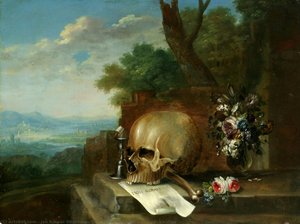
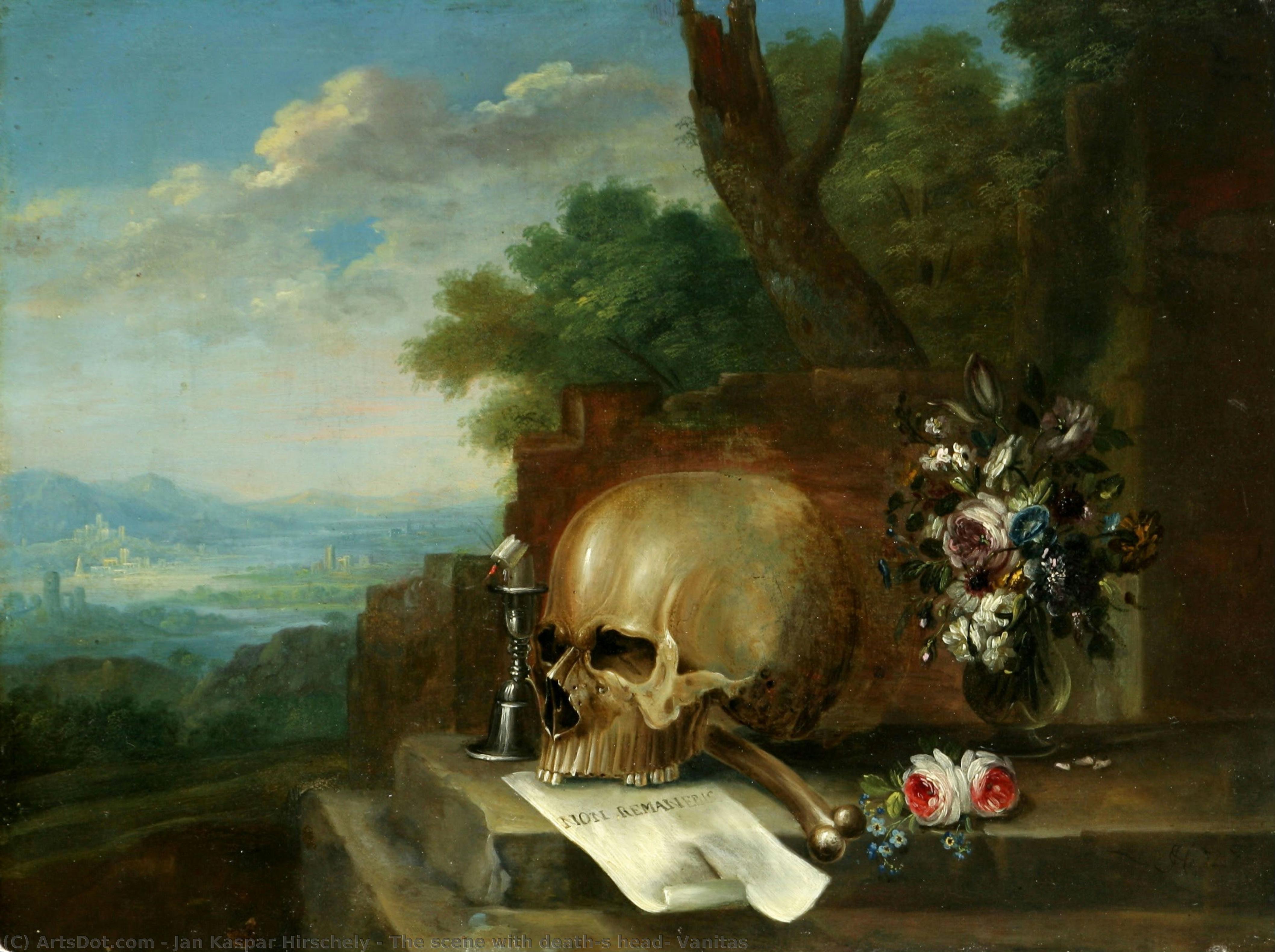
The scene with death´s head, Vanitas

 Read More
Hand Made Oil Reproduction
Hand-painted oil on canvas in your size and frame, made to order by our artists. ( Buy Print Buy Image)




































Pick from our preset sizes that match the artwork's original proportions.

You may enter your own dimensions to fit a specific frame or space. If your selected size does not match the original image's proportions, we will either crop the artwork or extend the painting with additional hand-painted elements. A digital mockup will be sent for your approval before production begins.
Please note that the on-screen preview does not reflect the actual cropping or extension. Only the mockup will accurately show the final composition.
While custom sizes are available, we recommend selecting a dimension from the predefined list to preserve the original proportions.
After order, ArtsDot.com team will email client for instructions and provide a mockup preview
Worldwide Delivery () in 3/4 weeks instead of standard 5 weeks. (21 August). No compromise on quality.

Free Worldwide Express Shipping

High-Quality Linen Canvas

Full Shipping Insurance

Customs Tax Refund Guarantee

True Color Matching Guarantee

60-Day Return Policy (Defects Only)

100% Money-Back Guarantee

Bulk Discount Offer
 Glass option is only available in size under 110 CM

The scene with death´s head, Vanitas
Reproduction Medium
Reproduction Size
-


Total Price
$ 263
Related Artworks









Artist Biography
Joseph Highmore: A Master of English Conversation Pieces
Born in London on June 13, 1692, and passing away in Canterbury on March 3, 1780, Joseph Highmore stands as a pivotal figure in the history of English painting. Initially discouraged from pursuing his artistic passions by his family’s mercantile background, Highmore ultimately forged a remarkable career as a portraitist, conversation piece painter, and illustrator – a rare combination that cemented his place within the evolving landscape of 18th-century British art. His work offers a fascinating glimpse into the social customs and aesthetic sensibilities of his time, characterized by an elegant restraint and a subtle engagement with emerging Rococo influences.
Highmore’s early artistic training took place under the tutelage of Godfrey Kneller, a renowned painter and instructor who served as mentor to many prominent artists. This foundation provided him with a solid grounding in anatomy, perspective, and classical composition. Crucially, he also benefited from lectures on art history and technique by William Cheselden, a pioneering anatomist whose insights profoundly impacted the understanding of color and form within painting. This intellectual rigor, combined with his practical experience, allowed Highmore to develop a distinctive style – one that balanced meticulous observation with an innate sense of grace and charm.
The Rise of the Conversation Piece
Highmore’s career gained significant momentum during the 1720s, coinciding with the burgeoning popularity of the “conversation piece.” These paintings were designed to be displayed in drawing rooms and salons, intended to spark conversation and demonstrate the owner's wealth, taste, and social standing. Unlike formal portraits, conversation pieces often depicted scenes of domestic life – a family enjoying a leisurely afternoon, a hunting party, or a musical gathering – presented with an air of informality and intimacy. Highmore excelled at capturing this nuanced atmosphere, imbuing his subjects with a sense of relaxed conviviality.
His early works, influenced by Jonathan Richardson’s satirical approach, demonstrated a willingness to challenge conventional portraiture. However, as the Rococo style gained traction in England, Highmore adapted and refined his technique, embracing softer brushstrokes, delicate color palettes, and an emphasis on elegant composition. He skillfully navigated between traditional academic principles and the burgeoning influences of French art, creating paintings that were both sophisticated and accessible.
Illustrations and Literary Connections
Beyond his portraiture, Highmore’s legacy extends to his significant contributions as an illustrator. In 1743-44, he was commissioned by Samuel Richardson, the author of *Pamela*, to create a series of twelve illustrations for the novel. This project is particularly noteworthy, marking one of the earliest examples of narrative illustration in Britain and establishing a lasting connection between Highmore’s art and literary culture. The illustrations, characterized by their subtle storytelling and intimate portrayal of characters, demonstrate his ability to convey complex emotions and narratives through visual means.
His friendship with Richardson also fostered an interest in art criticism and historical research. In his later years, Highmore published a series of insightful articles on the works of Rubens and other masters, demonstrating a deep understanding of artistic principles and a commitment to preserving knowledge about the history of painting. He meticulously documented techniques and materials, offering valuable insights for aspiring artists.
Legacy and Historical Significance
Joseph Highmore’s impact on English art is considerable. He played a crucial role in establishing the conversation piece as a dominant genre within portraiture, shaping the visual language of the 18th century. His work exemplifies the elegance and sophistication that characterized British painting during this period, while also reflecting the evolving social customs and aesthetic preferences of the time. Highmore’s influence can be seen in the works of subsequent generations of artists, including Hogarth and Hayman, who built upon his foundations to develop their own distinctive styles.
Today, Highmore's paintings are treasured for their exquisite detail, nuanced compositions, and captivating portrayal of human interaction. His work offers a valuable window into the world of 18th-century England, revealing not only artistic skill but also social history and cultural values. His legacy continues to inspire artists and art historians alike, solidifying his position as one of the most important figures in British painting.
jan kaspar hirschely
1692 - 1753 , Czech Republic
Quick Facts
- Artistic Movement Or Style: Portraiture, Conversation pieces
- Artists Or Movements Influenced By This Artist:
- Hogarth
- Rococo painting
- Artists Who Influenced This Artist:
- Jonathan Richardson
- Godfrey Kneller
- Date Of Birth: June 13, 1692
- Date Of Death: March 3, 1780
- Full Name: Joseph Highmore
- Nationality: English
- Notable Artworks:
- Equestrian Portrait of King George II
- Various portraits and conversation pieces
- Place Of Birth: London, England