

 Preview
 Send
Send Share
Share
 Details

 Download
 Similars
 X-Ray
X-Ray Diaporama
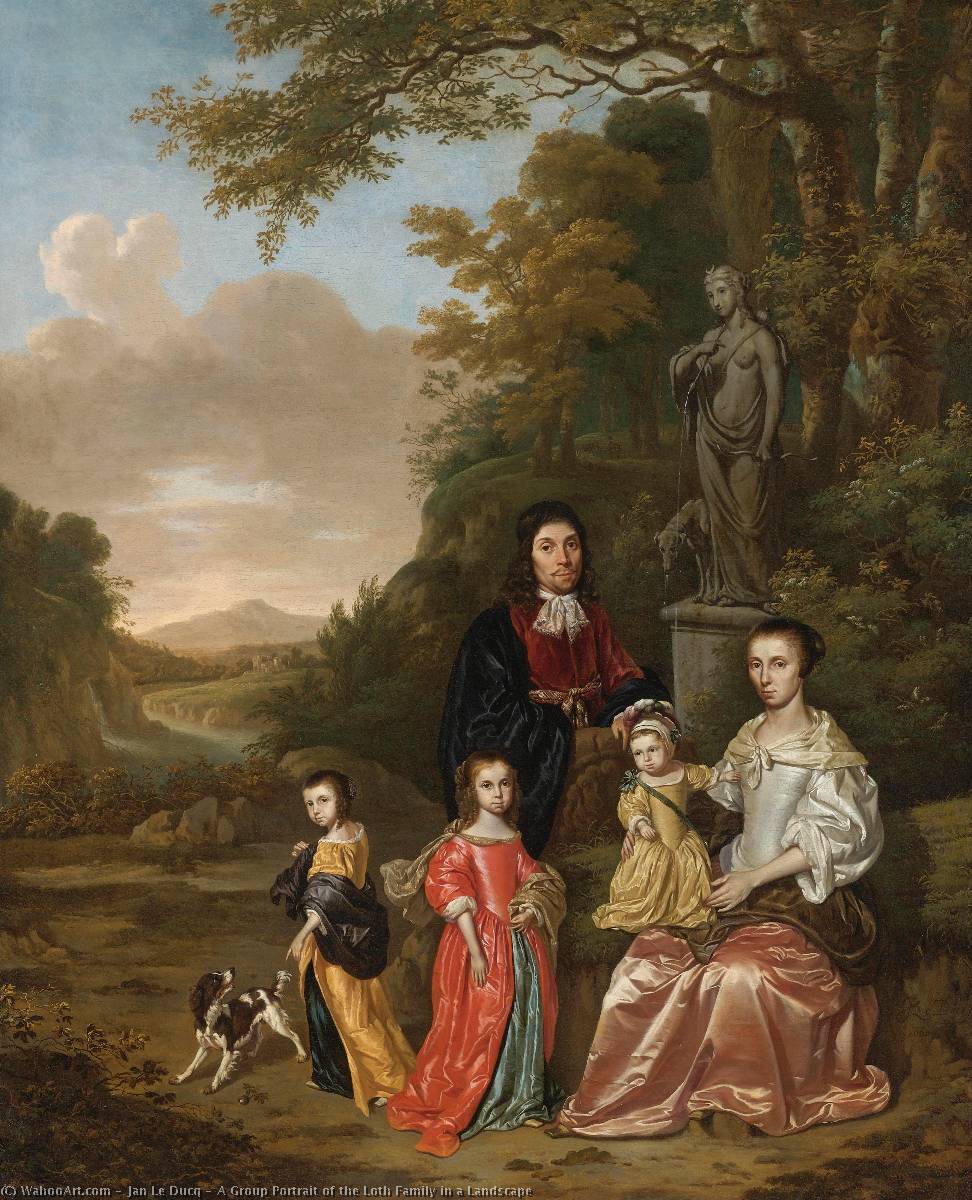
A Group Portrait of the Loth Family in a Landscape
 1660
1660 135.0 x 110.0 cm
 Read More
Purchase a high-resolution, enhanced digital image, far superior to the online preview.
Each file is meticulously prepared by our in-house specialists using advanced tools and expert manual retouching. We ensure every image has exceptional clarity, precise color accuracy, and fine detail.
The final file is delivered via email within 72 hours, optimized for immediate use in professional, editorial, and print environments. This is the same quality trusted by top-tier design studios, publishers, and galleries.
Digital Image
Download a high-resolution file for personal display, printing, and creative projects. ( Buy Print Buy Hand Made Painting)
Included in Every Digital Image Order
Expert Digital Delivery, Guaranteed
When you choose ArtsDot.com, you're not just getting an image - you're receiving a professionally enhanced digital artwork, crafted with precision and backed by a satisfaction guarantee. Here's everything that comes with your order, automatically:

Fast Email Delivery
Your high-resolution digital image file will be emailed to you within 72 hours of ordering - ready for immediate use.

AI-Enhanced Digital File
Your artwork is professionally optimized using advanced AI tools and manual editing, ensuring maximum detail, clarity, and color accuracy.

Free Lifetime Re-Delivery
Accidentally deleted or lost your file? No worries - we'll resend it to you anytime, free of charge.

No Import Fees - Ever
Enjoy your artwork instantly with zero customs, duties, or delivery fees - digital downloads are always tax-free.

Color Accuracy Guarantee
We ensure your digital image reflects the original colors as closely as possible using professional tools and color management.

60-Day Satisfaction Guarantee
If you're not satisfied with your digital image, we'll revise it or refund 100% within 60 days - no questions asked.

100% Money-Back Guarantee
Not satisfied? Get a full refund within 60 days of receiving your digital file - no questions asked.

Bulk Order Discounts
Buy 3 images, save 10% - Buy 5, save 15% - Buy 10+, save 20%. Great for creative projects, galleries, and agencies.
Related Artworks









Artist Biography
Jan Le Ducq: A Dutch Master of Animal and Landscape
The world of 17th-century Dutch painting is a rich tapestry woven with the threads of realism, symbolism, and burgeoning scientific observation. Within this vibrant scene, Jan Le Ducq (c. 1629 – 1676/77) emerged as a distinctive figure, primarily celebrated for his captivating depictions of animals and meticulously rendered landscapes. Though often overshadowed by more prominent contemporaries, Le Ducq’s work possesses a quiet elegance and profound understanding of both the natural world and human interaction with it, securing him a place as a significant, if somewhat underappreciated, master of his era.
Le Ducq's early artistic training remains somewhat shrouded in mystery. While generally believed to have studied under the esteemed Dutch painter Paulus Pieterszoon Pooter – a key figure in establishing the realistic style that would define much of the Golden Age – the precise details of his apprenticeship are not fully documented. It’s speculated he may also have benefited from instruction with Karel du Jardin, another influential artist known for his detailed animal studies. This confluence of influences undoubtedly shaped Le Ducq's approach to portraying the natural world, imbuing his work with a blend of observational accuracy and artistic sensitivity.
Le Ducq’s career unfolded against a backdrop of significant social and political change in the Netherlands. He was admitted into the Society of Painters in The Hague in 1660, a prestigious step signifying his acceptance within the established art community. His appointment as director of the academy in 1671 further cemented his position as a respected figure, overseeing artistic training and promoting the development of young talents. Beyond his administrative role, Le Ducq continued to actively produce artwork, often depicting scenes of domestic life alongside his celebrated animal subjects. Notably, he joined the army of the Staten-Generaal in 1671, an unusual career move for an artist at that time, suggesting a desire for adventure and perhaps a need for financial stability.
The Language of Animals and Landscapes
Le Ducq’s artistic style is characterized by a remarkable ability to capture the essence of his subjects. His animal paintings are not merely representations; they possess a palpable sense of life, movement, and personality. He meticulously observed the anatomy and behavior of dogs, horses, and other animals, rendering their features with astonishing detail and conveying their individual characters through subtle gestures and expressions. His depictions of hunting scenes, particularly those featuring hounds in pursuit of game, are especially renowned for their dynamism and emotional intensity.
Equally compelling are Le Ducq’s landscapes. He eschewed the dramatic, theatrical vistas favored by some of his contemporaries, opting instead for quieter, more intimate settings. His compositions often feature modest interiors – a simple room with a woman ironing, or a rustic farmhouse – populated by everyday figures engaged in familiar activities. These scenes are imbued with a sense of tranquility and domestic harmony, reflecting Le Ducq’s appreciation for the beauty of ordinary life. His use of color is restrained yet effective, creating a subtle interplay of light and shadow that enhances the depth and atmosphere of his paintings.
Symbolism and Social Commentary
While often categorized as landscape or animal painter, Le Ducq's work contains layers of symbolic meaning. His depictions of domestic scenes, particularly those featuring women engaged in household tasks, are frequently interpreted as allegories of virtue and domesticity – values highly prized within 17th-century Dutch society. The presence of dogs in many of his paintings further adds to this symbolic dimension, with the animal often serving as a symbol of loyalty, fidelity, and companionship.
Furthermore, Le Ducq’s work offers glimpses into the social realities of his time. His scenes of hunting parties reflect the aristocratic pursuits of the wealthy elite, while his depictions of rural life provide insights into the lives of ordinary people. His willingness to portray both the grandeur and the mundanity of human existence demonstrates a nuanced understanding of the complexities of 17th-century Dutch society.
Legacy and Recognition
Despite not achieving the widespread fame of some of his contemporaries, Jan Le Ducq’s work has been increasingly recognized for its artistic merit and historical significance. His paintings are held in prominent collections, including the Mauritshuis in The Hague and the Central Museum in Utrecht, testament to their enduring appeal. Le Ducq's distinctive style – characterized by its meticulous detail, emotional intensity, and subtle symbolism – continues to captivate viewers today.
His legacy is particularly evident in his depictions of dogs, which are considered among the finest examples of animal painting from the Dutch Golden Age. Le Ducq’s ability to capture the essence of canine character—their loyalty, playfulness, and vulnerability—has ensured that his work remains a beloved subject for art enthusiasts and collectors alike. Jan Le Ducq's contribution to the artistic landscape of 17th-century Holland stands as a testament to the power of observation, skill, and a deep appreciation for the beauty of both the natural world and human experience.
jan le ducq
1629 - 1676
Quick Facts
- Artistic Movement Or Style: Baroque, Landscape & Animal Painting
- Artists Or Movements Influenced By This Artist: ['Confrérie Pictura']
- Artists Who Influenced This Artist:
- Paulus Potter
- Karel du Jardin
- Date Of Birth: 1629/30
- Date Of Death: 1676/77
- Full Name: Jan Le Ducq
- Nationality: Dutch
- Notable Artworks:
- A Group Portrait...
- Woman Ironing
- Place Of Birth: Netherlands

