 Preview
 Send
Send Share
Share
 Details

 Download
 Similars
 X-Ray
X-Ray Diaporama
 Stats
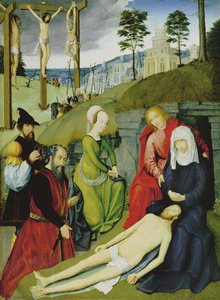
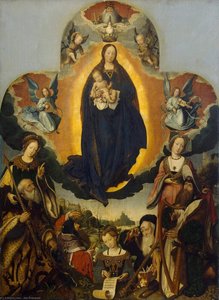
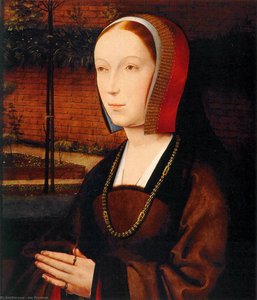
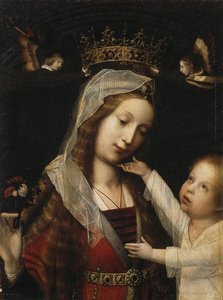
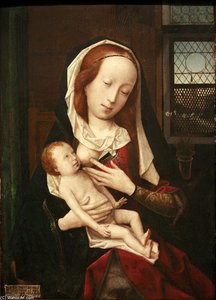
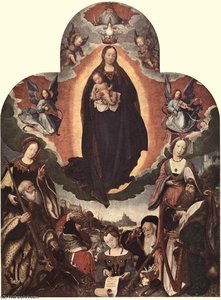
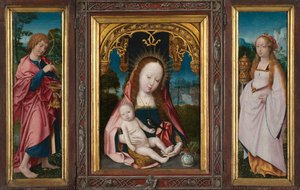
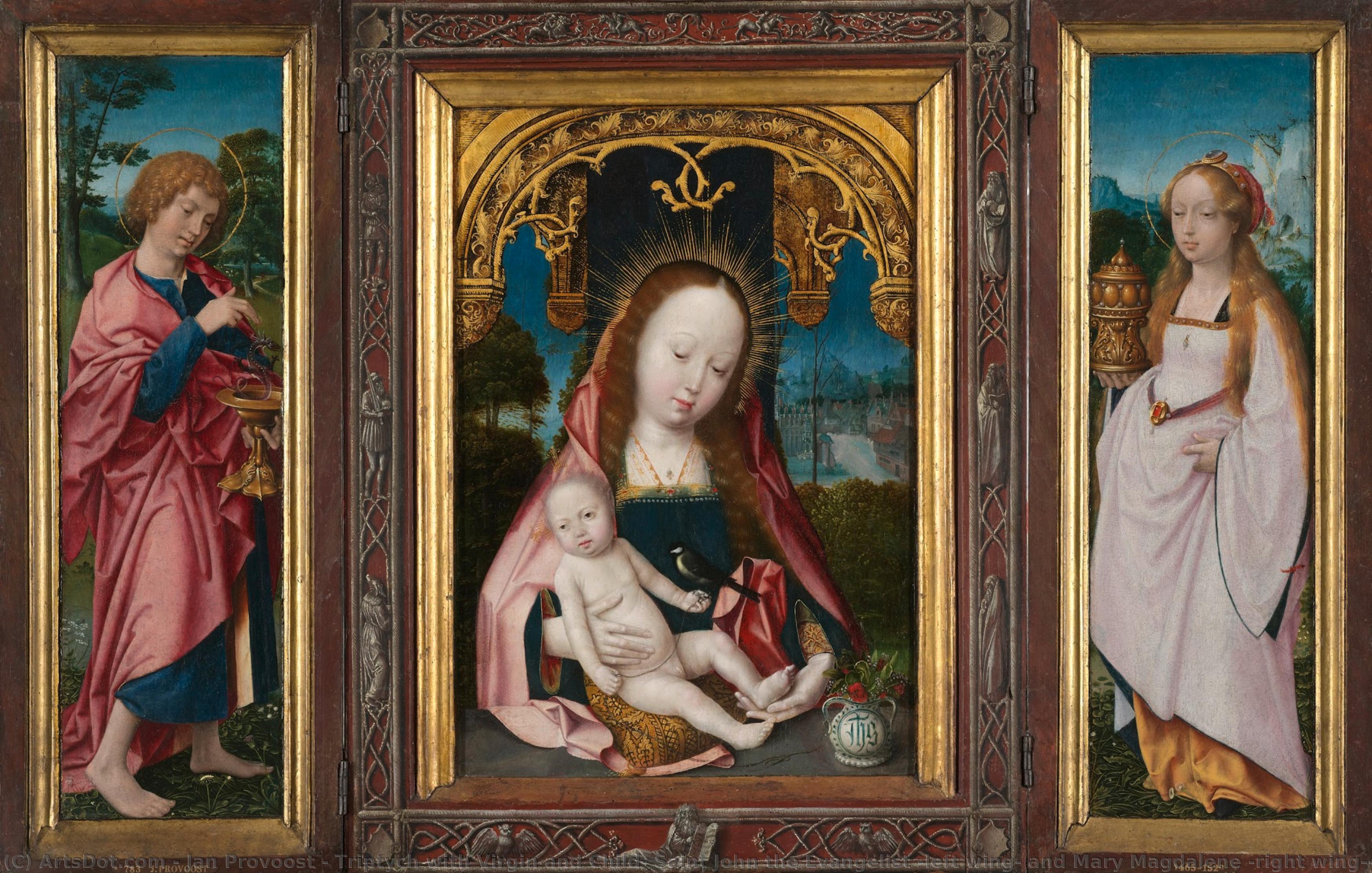
StatsTriptych with Virgin and Child, Saint John the Evangelist (left wing) and Mary Magdalene (right wing), Jan Provoost, c. 1505 - c. 1525
 1525
1525 57.0 x 45.0 cm
 Read More
Hand Made Oil Reproduction
Hand-painted oil on canvas in your size and frame, made to order by our artists. ( Switch to Print Switch to Digital Image)




































Pick from our preset sizes that match the artwork's original proportions.

You may enter your own dimensions to fit a specific frame or space. If your selected size does not match the original image's proportions, we will either crop the artwork or extend the painting with additional hand-painted elements. A digital mockup will be sent for your approval before production begins.
Please note that the on-screen preview does not reflect the actual cropping or extension. Only the mockup will accurately show the final composition.
While custom sizes are available, we recommend selecting a dimension from the predefined list to preserve the original proportions.
After order, ArtsDot.com team will email client for instructions and provide a mockup preview
Worldwide Delivery () in 3/4 weeks instead of standard 5 weeks. (13 September). No compromise on quality.

Free Worldwide Express Shipping

High-Quality Linen Canvas

Full Shipping Insurance

Customs Tax Refund Guarantee

True Color Matching Guarantee

100-Day Return Policy (Defects Only)

100% Money-Back Guarantee

Bulk Discount Offer
 Glass option is only available in size under 110 CM

Triptych with Virgin and Child, Saint John the Evangelist (left wing) and Mary Magdalene (right wing), Jan Provoost, c. 1505 - c. 1525
Reproduction Medium
Reproduction Size
-


Total Price
$ 263
Related Artworks









Artist Biography
The Renaissance Polymath: The Life and Legacy of Jan Provoost
In the vibrant tapestry of the Northern Renaissance, few figures weave together the threads of art, science, and intellect as masterfully as Jan Provoost. Born around 1462 in Mons, or perhaps Mouscron, Provoost emerged not merely as a painter, but as a true Renaissance man whose reach extended far beyond the easel. While his name is etched into history through the delicate brushstrokes of Flemish Primitives, his mind wandered through the realms of cartography, engineering, and architecture. This rare combination of technical precision and spiritual depth allowed him to bridge the gap between the pious traditions of the Middle Ages and the burgeoning humanism of a new era.
The early years of Provoost’s life were marked by a profound immersion in the artistic currents of the Low Countries. Though much of his formative training remains shrouded in the mists of time, scholars often trace his stylistic lineage back to the legendary Hans Memling. By absorbing the meticulous attention to detail and the luminous, atmospheric qualities characteristic of the Bruges school, Provoost developed a visual language that was both serene and deeply symbolic. His career saw him managing influential workshops in both Bruges—where he achieved the prestigious status of a burgher in 1494—and Antwerp, the bustling economic heart of the region. This dual presence allowed his influence to permeate the most significant artistic hubs of Europe.
A Symphony of Symbolism and Technique
To gaze upon a work by Jan Provoost is to enter a world where every shadow holds a secret and every color tells a story. His technique was defined by the masterful use of glazing, applying thin, translucent layers of oil paint to create a sense of inner light that seems to radiate from within the wood panels themselves. This method allowed him to render the heavy, sculptural folds of drapery and the soft, dewy textures of skin with an almost tactile realism. His compositions often centered on the Virgin and Child, subjects he approached with an understated elegance that eschewed dramatic theatricality in favor of a profound, quiet sanctity.
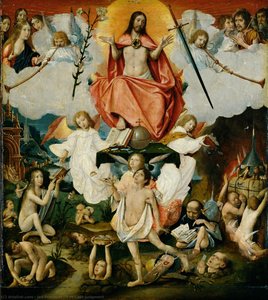
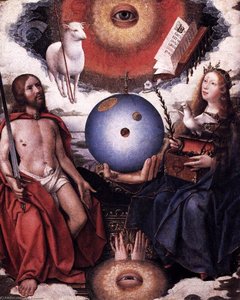
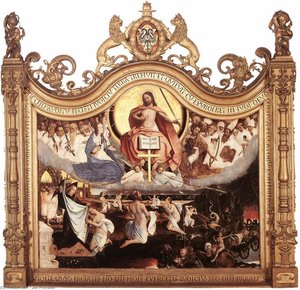
Beyond his devotional works, Provoost’s ability to navigate complex allegorical themes is evident in masterpieces such as Allegory of Christianity. In this work, the artist utilizes a sophisticated vocabulary of symbols—books, boxes, and celestial spheres—to communicate the intricate doctrines of faith. His skill lay in his ability to balance these dense intellectual layers with a harmonious color palette and a clarity of form that remained accessible to the viewer. Whether depicting the solemnity of the Last Judgement or the intimate tenderness of a Nursing Madonna, Provoost possessed a unique capacity to capture the divine within the human experience.
The Enduring Influence of the Provoost Workshop
The true magnitude of Jan Provoost’s contribution lies not only in his individual hand but in the enduring vitality of his workshop. His studio functioned as a vital incubator for talent, fostering a style that would influence generations of Netherlandish painters. The output of the Workshop of Jan Provoost was characterized by a seamless blend of Gothic piety and emerging Renaissance aesthetics, ensuring that the traditions of the Flemish Primitives evolved rather than vanished. Through his collaborative spirit and his ability to attract students and masters alike, he helped sustain the artistic prestige of Bruges and Antwerp during a period of immense cultural transition.
As we reflect on his life, we see an artist who was as much a scientist as a creator. His encounters with luminaries like Albrecht Dürer in Antwerp suggest a man deeply engaged with the shifting intellectual tides of Europe. Provoost’s legacy is found in the quiet strength of his portraits, the architectural precision of his designs, and the luminous depth of his religious icons. He remains a pivotal figure whose work serves as a window into a transformative moment in human history, where the devotion of the old world met the inquisitive spirit of the new.
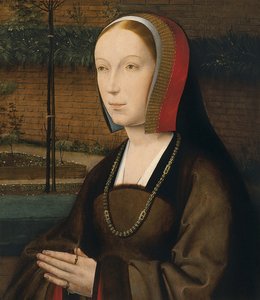
jan provoost
1462 - 1529 , Belgium
Quick Facts
- Artistic Movement Or Style: Flemish Primitive
- Artists Or Movements Influenced By This Artist:
- Renaissance Art
- Early Netherlandish Painting
- Artists Who Influenced This Artist: ['Hans Memling']
- Date Of Birth: 1462
- Full Name: Jan Provoost
- Nationality: Flemish
- Notable Artworks:
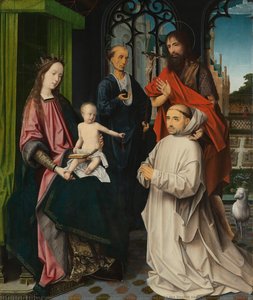
- Virgin and Child Enthroned, with Saints Jerome and John the Baptist and a Carthusian Monk
- Triptych with Virgin and Child, Saint John the Evangelist (left wing) and Mary Magdalene (right wing)
- Allegory of Christianity
- Place Of Birth: Mouscron, Belgium