 Preview
 Send
Send Share
Share
 Details

 Download
 Similars
 X-Ray
X-Ray Diaporama
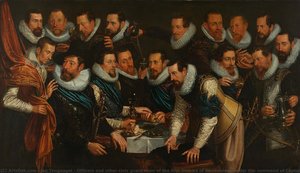
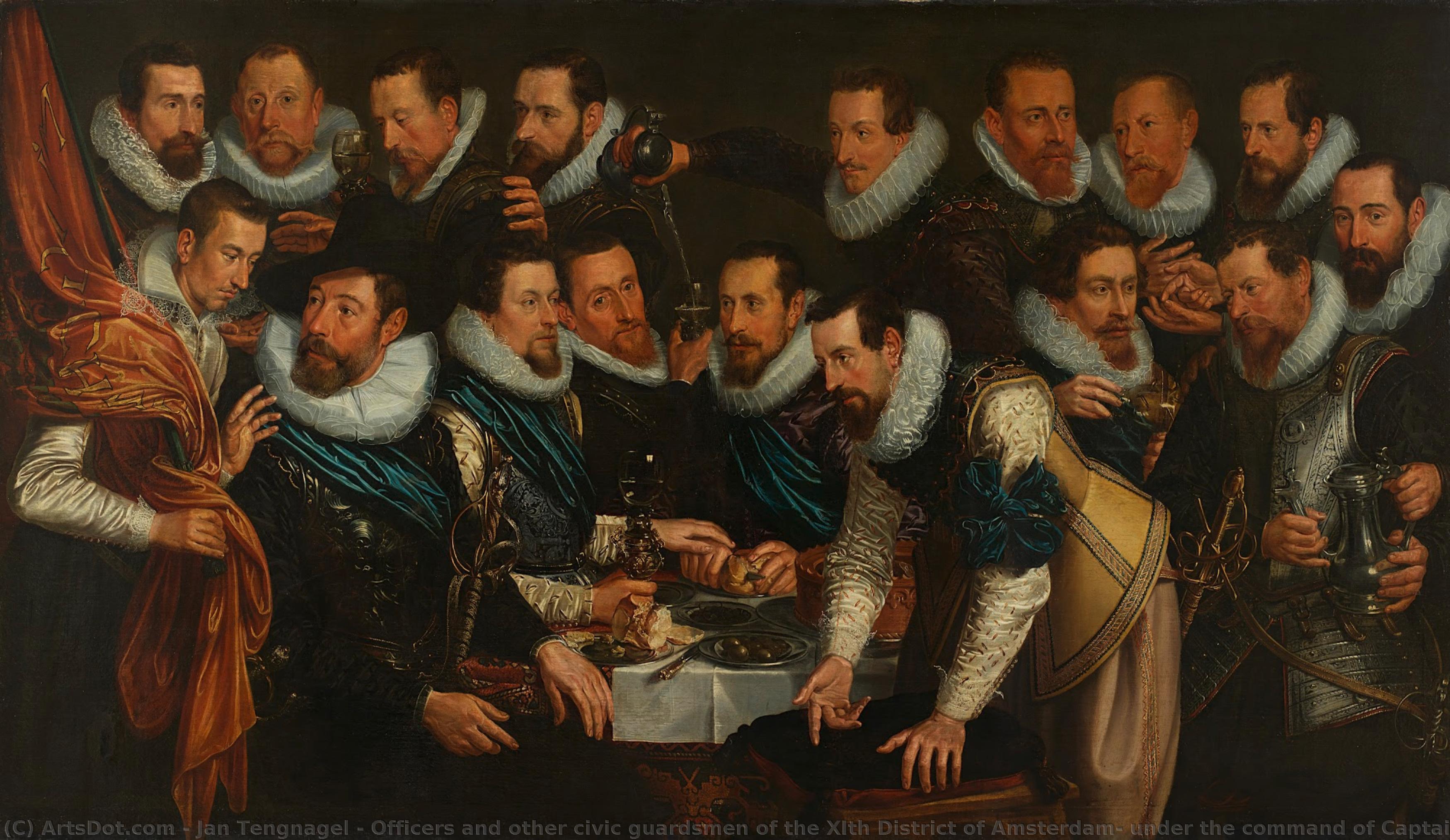
Officers and other civic guardsmen of the XIth District of Amsterdam, under the command of Captain Geurt Dircksz van Beuningen and Lieutenant Pieter Martensz Hoeffijser, Jan Tengnagel, 1613
 1613
1613 153.0 x 265.0 cm
 Read More
Giclée / Art Print
Museum-quality giclée or canvas print with fast production and flexible finish options. ( Buy Hand Made Painting Buy Image)




































Pick from our preset sizes that match the artwork's original proportions.

You may enter your own dimensions to fit a specific frame or space. If your selected size does not match the original image's proportions, we will either crop the artwork or extend the image with a mirrored or solid-fill edge. A digital mockup will be sent for your approval before production begins.
Please note that the on-screen preview does not reflect the actual cropping or extension. Only the mockup will accurately show the final composition.
While custom sizes are available, we recommend selecting a dimension from the predefined list to preserve the original proportions.
Worldwide Delivery () in 2 weeks instead of standard 4/5 weeks. (3 September)

Free Worldwide Express Shipping

High-Quality Linen Canvas

Full Shipping Insurance

Customs Tax Refund Guarantee

True Color Matching Guarantee

60-Day Return Policy (Defects Only)

100% Money-Back Guarantee

Bulk Discount Offer
 Glass option is only available in size under 110 CM

Officers and other civic guardsmen of the XIth District of Amsterdam, under the command of Captain Geurt Dircksz van Beuningen and Lieutenant Pieter Martensz Hoeffijser, Jan Tengnagel, 1613
Giclée / Art Print
Reproduction Size
-


Total Price
$ 63
Related Artworks


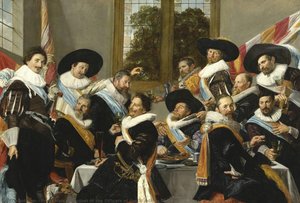


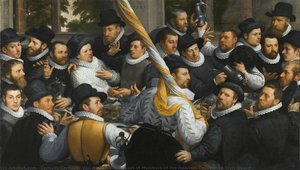
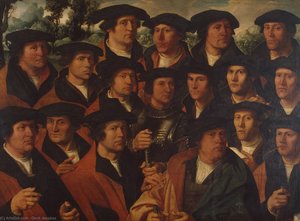


Artist Biography
A Shadowy Master of the Golden Age
Jan Tengnagel, born in Amsterdam in 1584, remains a hauntingly beautiful yet shadowy figure within the vast annals of seventeenth-century Dutch painting. While history often reserves its brightest spotlights for luminaries such as Rembrandt or Vermeer, Tengnag nagel’s contribution to the burgeoning visual culture of the Dutch Golden Age deserves a profound and renewed appreciation. He was an artist whose life and work were defined by a delicate balance of local tradition and international inspiration, leaving behind a modest but deeply evocative oeuvre that speaks to the spiritual and social complexities of his era.
Though much of his personal history remains veiled by time, scholars believe Tengnagel’s artistic foundation was laid in the workshops of Amsterdam, likely receiving instruction under Frans Badens. This early training in allegorical painting and humanist ideals provided him with a sophisticated vocabulary of symbols and compositions. His work would later become deeply rooted in the stylistic currents of Pieter Lastman's workshop, a prestigious circle that shaped the trajectory of Dutch history painting. Through this lineage, Tengnagel developed a distinctive sensitivity to biblical narratives and religious iconography, allowing him to transform sacred stories into palpable, human experiences.
The Roman Pilgrimage and Stylistic Synthesis
A transformative chapter in Tengnagel’s life began in 1608, when he embarked on a journey to Rome. This pilgrimage was a rite of passage for many Dutch artists of the period, offering an immersive encounter with the grandeur of the papal court and the enduring legacies of the Italian Renaissance. In the sun-drenched streets of Rome, Tengnagel’s artistic vision underwent a significant evolution. He moved beyond the rigid structures of his early training to absorb the atmospheric nuances and meticulous realism found in the works of masters like Hans Memling and Pieter Steenwyck.
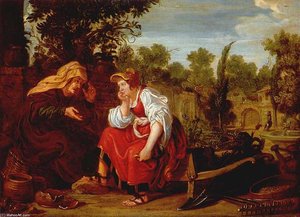
The influence of these encounters is woven into the very fabric of his later paintings. One can discern the quiet, meticulous detail characteristic of Northern realism blended with a new, Italianate sense of light and space. This synthesis allowed him to create works that were both intellectually rigorous and emotionally resonant. His ability to adapt foreign innovations to the Dutch sensibility is perhaps most evident in his mythological and religious subjects, where he captures moments of profound intimacy—such as the tender, whispered encounter between Vertumnus and Pomona—with a grace that feels both eternal and fleeting.
Legacy and the Art of the Civic Guard
Beyond his religious and mythological explorations, Tengnagel played a vital role in documenting the social fabric of Amsterdam. His involvement with the civic guards is immortalized in his 1613 portrait of the officers and guardsmen of the XIth District. This work serves as more than a mere record of faces; it is a vibrant window into the communal spirit and political prestige of the era. In these group portraits, Tengnagel demonstrated a remarkable ability to balance individual character with collective identity, capturing the pride of men like Captain Geurt Dircksz van Beuningen within a cohesive, celebratory composition.
Tengnagel’s life was also marked by significant personal connections that intertwined his destiny with the prominent families of Amsterdam. His marriage in 1611 to Meijnsje Simonsdr. Pynas, the sister of the celebrated painters Jan and Jacob Pynas, placed him at the very heart of the Dutch artistic elite. While his total output may be limited, the significance of his work lies in its quality and its role as a bridge between the late Renaissance and the height of the Dutch Golden Age. He remains a testament to the many "forgotten" masters whose subtle hands helped paint the magnificent tapestry of art history.
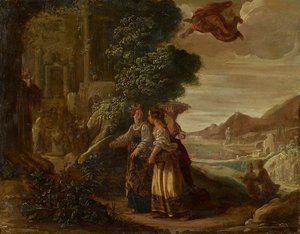
Jan Tengnagel
1584 - 1631 , Netherlands
Quick Facts
- Artistic Movement Or Style: Early Seventeenth Century Dutch Painting
- Artists Or Movements Influenced By This Artist: ['Hans Memling']
- Artists Who Influenced This Artist:
- Frans Badens
- Pieter Lastman
- Date Of Birth: Amsterdam, Netherlands (1584)
- Date Of Death: 1631
- Full Name: Jan Tengnagel
- Nationality: Dutch
- Notable Artworks:
- Vertumnus and Pomona
- Officers and other civic guardsmen of the XIth District of Amsterdam
- Place Of Birth: Amsterdam