

 Preview
 Send
Send Share
Share
 Details

 Download
 Similars
 X-Ray
X-Ray Diaporama
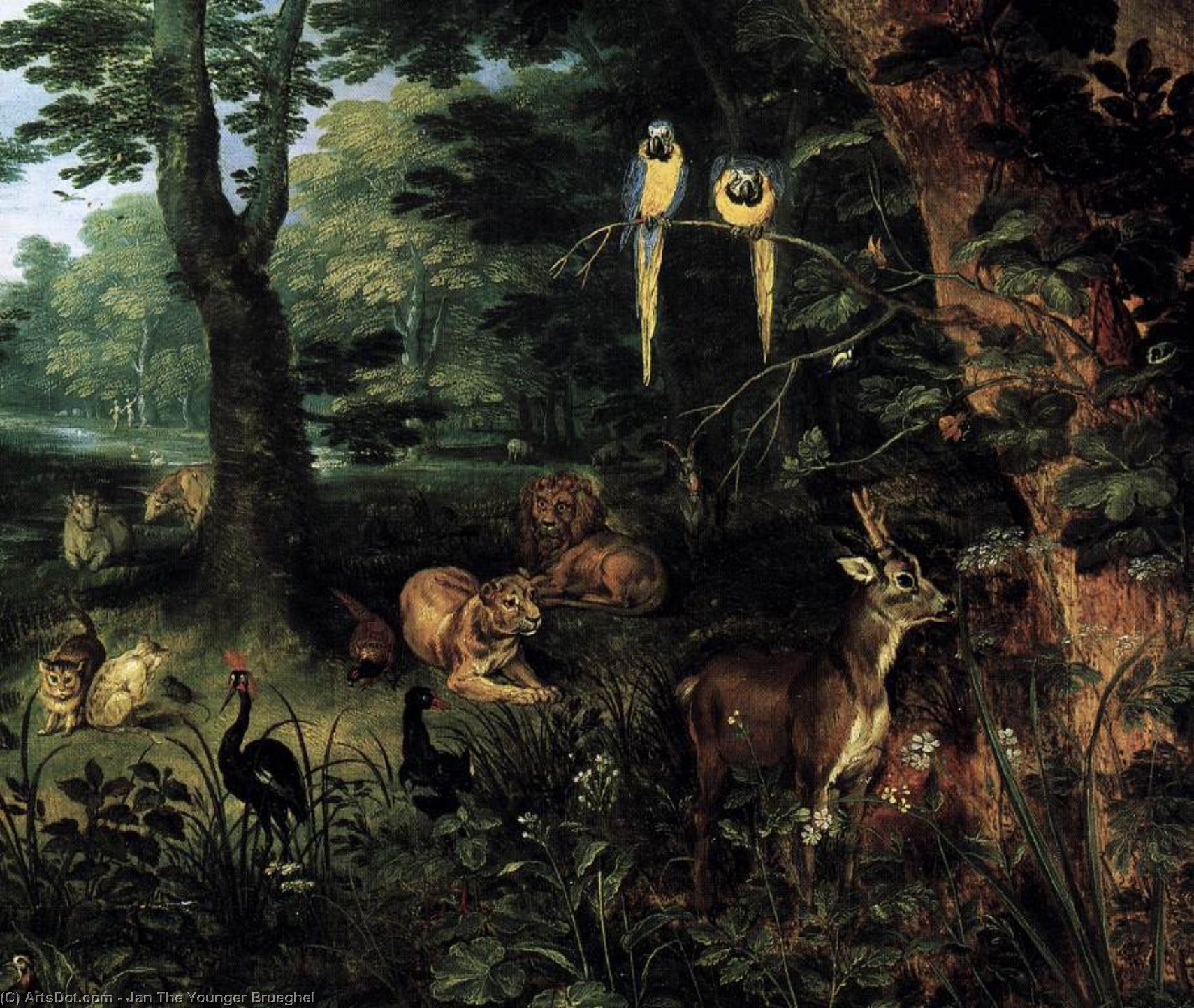
Paradise (detail)


 Read More
Purchase a high-resolution, enhanced digital image, far superior to the online preview.
Each file is meticulously prepared by our in-house specialists using advanced tools and expert manual retouching. We ensure every image has exceptional clarity, precise color accuracy, and fine detail.
The final file is delivered via email within 72 hours, optimized for immediate use in professional, editorial, and print environments. This is the same quality trusted by top-tier design studios, publishers, and galleries.
Digital Image
Download a high-resolution file for personal display, printing, and creative projects. ( Buy Print Buy Hand Made Painting)
Included in Every Digital Image Order
Expert Digital Delivery, Guaranteed
When you choose ArtsDot.com, you're not just getting an image - you're receiving a professionally enhanced digital artwork, crafted with precision and backed by a satisfaction guarantee. Here's everything that comes with your order, automatically:

Fast Email Delivery
Your high-resolution digital image file will be emailed to you within 72 hours of ordering - ready for immediate use.

AI-Enhanced Digital File
Your artwork is professionally optimized using advanced AI tools and manual editing, ensuring maximum detail, clarity, and color accuracy.

Free Lifetime Re-Delivery
Accidentally deleted or lost your file? No worries - we'll resend it to you anytime, free of charge.

No Import Fees - Ever
Enjoy your artwork instantly with zero customs, duties, or delivery fees - digital downloads are always tax-free.

Color Accuracy Guarantee
We ensure your digital image reflects the original colors as closely as possible using professional tools and color management.

60-Day Satisfaction Guarantee
If you're not satisfied with your digital image, we'll revise it or refund 100% within 60 days - no questions asked.

100% Money-Back Guarantee
Not satisfied? Get a full refund within 60 days of receiving your digital file - no questions asked.

Bulk Order Discounts
Buy 3 images, save 10% - Buy 5, save 15% - Buy 10+, save 20%. Great for creative projects, galleries, and agencies.
Collectible Description
A Vision of Paradise Lost: Exploring Jan Brueghel the Younger’s “Paradise”
The Staatliche Museen Berlin houses one of the most arresting depictions of Eden ever conceived – Jan Brueghel the Younger's "Paradise," completed in 1620. More than just a beautiful landscape, this monumental oil painting is a complex meditation on mortality and divine judgment, rendered with breathtaking detail and imbued with a palpable sense of unease that belies its idyllic setting. It’s a piece that continues to fascinate scholars and artists alike, prompting ongoing debate about Brueghel's intentions and the enduring power of his vision.The Landscape as Judgment Seat
Brueghel wasn’t interested in portraying paradise as a carefree realm untouched by sorrow; instead, he presented it as a stage for God’s reckoning. The sprawling garden is dominated by towering trees – symbols of life and fertility – but beneath their verdant canopy lurks a darker reality. A vast expanse of water stretches across the horizon, reflecting the heavens above and hinting at an impending deluge. Scattered throughout the scene are figures representing humanity: animals fleeing from a catastrophic flood, mirroring the biblical narrative of Noah’s Ark. This deliberate juxtaposition underscores Brueghel's preoccupation with theological themes – specifically, the consequences of sin and the inevitability of divine retribution.Technique and Detail: A Masterclass in Baroque Illusionism
Brueghel’s mastery is evident in every brushstroke. Employing a technique known as *trompe l'oeil*, he achieved an astonishing level of realism that would have astonished contemporary viewers. The artist meticulously layered pigments to create textures that convincingly simulate stone, foliage, and animal fur. Observe the painstaking rendering of individual feathers on the parrots perched prominently on a branch – a testament to Brueghel’s dedication to capturing minute details. Furthermore, he utilized atmospheric perspective—a technique pioneered during the Baroque era—to convey depth and luminosity, enhancing the illusion that the viewer is actually immersed within this fantastical landscape. The subtle gradations of color and light contribute significantly to the painting's emotional impact.Symbolism Beyond Beauty: Layers of Meaning
Beyond its visual splendor, “Paradise” overflows with symbolic significance. The animals represent both innocence and vulnerability, highlighting God’s compassion for creation despite humanity’s failings. The flood itself symbolizes purification—the cleansing of sin through suffering—a concept central to Christian theology. Even the positioning of the figures – seemingly oblivious to the impending doom – speaks to human pride and our tendency to ignore warnings from above. Brueghel deliberately disrupts conventional pastoral imagery, forcing us to confront uncomfortable truths about mortality and divine justice.A Legacy of Unease
“Paradise” remains a profoundly unsettling masterpiece. It’s not merely a depiction of a beautiful garden; it's an invitation to contemplate the fragility of existence and the inescapable judgment that awaits all humankind. Brueghel’s unflinching gaze compels us to confront our own mortality, reminding us that even in moments of apparent tranquility, darkness lurks beneath the surface—a legacy that continues to resonate powerfully with audiences today. Its enduring appeal lies not only in its artistic brilliance but also in its unsettling exploration of fundamental human anxieties.Related Artworks
Artist Biography
Guido Cagnacci: A Baroque Enigma
The seventeenth century in Italy was a crucible of artistic innovation, yet within its vibrant landscape emerged an artist profoundly singular – Guido Cagnacci. Born in Santarcangelo, a small village nestled amongst the Apennine Mountains in 1601, Cagnacci’s life and career were marked by a captivating blend of artistic brilliance, scandalous behavior, and a persistent elusiveness that relegated him to relative obscurity for centuries. He wasn't merely a painter; he was an eccentric, a provocateur, and ultimately, a master whose work continues to hold a strange, unsettling allure.
Cagnacci’s early years were spent in Romagna, where he likely received his initial artistic training – though the details remain frustratingly sparse. By 1618, he found himself in Bologna, studying under the esteemed Ludovico Carracci, a pivotal figure in the rise of Bolognese painting. His time in Rome during the early 1620s further exposed him to the artistic currents of the era, before returning to Romagna and establishing a studio where he produced works for a diverse clientele – from wealthy families in Rimini and Forlì to smaller towns like Saludecio and Santarcangelo. His style was immediately recognizable: a departure from the prevailing trends, characterized by an intense sensuality and a willingness to explore themes that bordered on the provocative, particularly concerning the female nude.
However, Cagnacci’s life wasn't confined to the studio. It was riddled with legal troubles and personal dramas. Perhaps most famously, in 1628, he eloped with Teodora Arianna Stivivi, a widow, an act that led to his hasty flight from Rimini. This incident was just one of many; rumors circulated throughout his career about his involvement with young women, often disguised as apprentices, and his willingness to manipulate legal systems to secure advantageous situations. These stories, largely documented in criminal records, paint a picture of an artist who lived on the fringes of society, constantly navigating a precarious balance between artistic ambition and personal risk. He was a master of disguise and deception, frequently changing his name and moving from city to city, always seeking new patrons and opportunities.
The Unsettling Sensuality
Cagnacci’s art is defined by its unabashed eroticism, a characteristic that set him apart from many of his contemporaries. While artists like Guido Reni excelled at depicting idealized beauty, Cagnacci embraced a more visceral, almost unsettling realism. His figures are not simply beautiful; they possess a palpable physicality, an awareness of their own sensuality. This is particularly evident in his depictions of reclining women – the *Repentant Magdalene*, for example – where the curves of the body and the languid poses convey a sense of both vulnerability and power.
His influence stemmed from several sources. He was deeply indebted to the work of Guido Reni, adopting his characteristic use of soft light and flowing drapery. However, Cagnacci pushed beyond Reni’s restraint, injecting a greater degree of emotional intensity into his figures. He also drew inspiration from Venetian masters like Titian and Veronese, incorporating their rich color palettes and dynamic compositions. Yet, even when influenced by these masters, Cagnacci retained a distinctly individual style – one characterized by a heightened sense of drama and an almost feverish energy.
A Venetian Interlude and Imperial Recognition
Around 1649, Cagnacci moved to Venice, where he spent nearly two decades working primarily for private patrons. This period marked a shift in his artistic style, with a greater emphasis on light and color. He produced numerous half-length portraits of women, which became immensely popular among the Venetian elite. These paintings were not merely decorative; they were imbued with a profound sense of sensuality and psychological depth.
In 1658, he accepted an invitation from Emperor Ferdinand III to relocate to Vienna, the imperial capital. Here, he continued to paint for the court, producing portraits and religious scenes that reflected his evolving artistic sensibilities. Despite his success in Vienna, Cagnacci remained a somewhat enigmatic figure, never fully integrating into the Viennese art scene. He died in 1663, leaving behind a substantial body of work that had largely been forgotten until the mid-20th century.
Rediscovery and Legacy
The rediscovery of Cagnacci’s oeuvre began in Italy in the 1950s, thanks to the efforts of art historian Cesare Gnudi. Gnudi's insightful analysis highlighted the artist’s unique contribution to Baroque painting – his ability to combine technical virtuosity with a profound sense of emotional intensity. Today, Cagnacci is recognized as one of the most original and challenging artists of the seventeenth century, a master whose work continues to provoke and fascinate.
His paintings are characterized by their dramatic lighting, rich colors, and intensely sensual figures. They offer a glimpse into a world where beauty and desire coexist in a complex and often unsettling manner. Cagnacci’s legacy lies not only in his artistic achievements but also in the enduring mystery surrounding his life – a life as unconventional and captivating as the art he created.
jan the younger brueghel
1601 - 1678 , Belgium
Quick Facts
- Artistic Movement Or Style: Bolognese School
- Artists Or Movements Influenced By This Artist: ['Baroque']
- Artists Who Influenced This Artist: ['Guido Reni']
- Date Of Birth: 1601
- Date Of Death: 1663
- Full Name: Guido Cagnacci
- Nationality: Italian
- Notable Artworks: ['Repentant Magdalene']
- Place Of Birth: Santarcangelo, Italy

