 Preview
 Send
Send Share
Share
 Details

 Download
 Similars
 X-Ray
X-Ray Diaporama
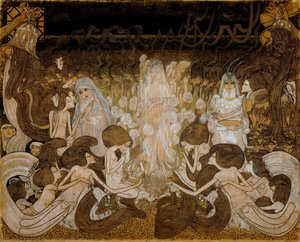
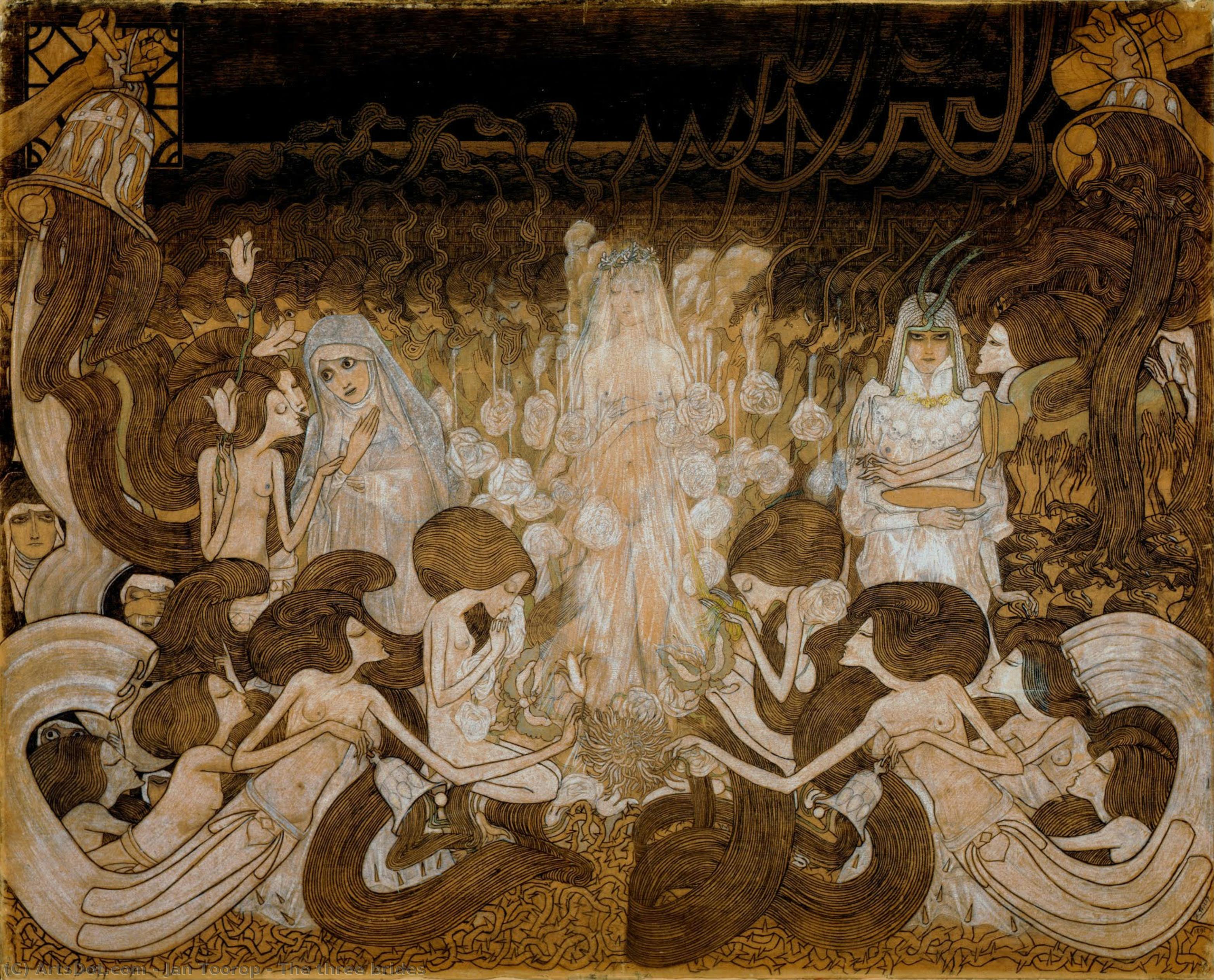
The three brides
 Painting
- Symbolist Painting
 1893
1893- 19th Century
 78.0 x 98.0 cm
 Kröller-Müller Museum
 Read More
Hand Made Oil Reproduction
Hand-painted oil on canvas in your size and frame, made to order by our artists. ( Buy Print Buy Image)




P118B $10

P118H $10

P118W $10

P438Z $10

P508JH $12

P508YH $12

P805H $10

P805Z $10

P919BZ $10

P919G $10

P919XJ $10

P959ZH $10

P968JZ $12

W106C $8

W218G $10

W218JH $8

W218Y $10

W307PJ $10

W316G $10

W316PJ $8

W316Y $10

W398PJ $8

W4111J $10

W500HY $15

W500JH $15

W692G $12

W849H $8

W940BG $15

W953PJ $8




Pick from our preset sizes that match the artwork's original proportions.

You may enter your own dimensions to fit a specific frame or space. If your selected size does not match the original image's proportions, we will either crop the artwork or extend the painting with additional hand-painted elements. A digital mockup will be sent for your approval before production begins.
Please note that the on-screen preview does not reflect the actual cropping or extension. Only the mockup will accurately show the final composition.
While custom sizes are available, we recommend selecting a dimension from the predefined list to preserve the original proportions.
After order, ArtsDot.com team will email client for instructions and provide a mockup preview
Worldwide Delivery () in 3/4 weeks instead of standard 5 weeks. (16 August). No compromise on quality.

Free Worldwide Express Shipping

High-Quality Linen Canvas

Full Shipping Insurance

Customs Tax Refund Guarantee

True Color Matching Guarantee

60-Day Return Policy (Defects Only)

100% Money-Back Guarantee

Bulk Discount Offer
 Glass option is only available in size under 110 CM

The three brides
Reproduction Medium
Reproduction Size
-


Total Price
$ 263
Artwork Description
Jan Toorop’s “The Three Brides”: A Symbolist Exploration of Choice and Desire
Jan Toorop (1858–1928), a Dutch painter who defied convention and forged his own distinctive path within the artistic landscape of the late nineteenth century, stands as a pivotal figure in Symbolism—a movement that sought to transcend mere representation and delve into the realm of psychological introspection. “The Three Brides,” completed in 1893, exemplifies Toorop’s signature style: dynamic lines inspired by Javanese motifs interwoven with stylized willow figures and intricate curvilinear designs—a bold departure from Impressionistic realism and a testament to his unwavering fascination with Eastern aesthetics blended seamlessly with Western artistic innovation.
Historical Context & Influences
Symbolism emerged as a reaction against the materialism and scientific rationalism prevalent in Victorian society. Artists like Toorop rejected literal depiction, prioritizing instead the conveyance of inner emotions and spiritual truths. The movement drew heavily from Nietzschean philosophy—particularly the concept of Will to Power—and embraced esoteric traditions, including Kabbalah and Tarot. Toorop’s exposure to these influences profoundly shaped his artistic vision, informing his preoccupation with themes of duality, sacrifice, and transcendence.
Composition & Technique
“The Three Brides” is rendered in monochrome—a deliberate choice that underscores its symbolic significance. Toorop employs a Pointillist technique—applying tiny dots of color to create an optical illusion of texture and luminosity—resulting in a surface shimmering with subtle hues. The composition itself is carefully constructed, featuring three women positioned against a backdrop of stylized willow trees and a choir singing about the dangers awaiting the bride. The central figure dominates the canvas, embodying innocence and spiritual aspiration, while her counterparts represent earthly desire and evil.
Symbolism & Interpretation
The painting operates on multiple levels of symbolic interpretation. The Madonna-like woman on the left symbolizes piety and abstinence—the pursuit of divine grace. Conversely, the woman on the right embodies sensual indulgence and demonic influence—representing the antithesis of spiritual purity. The string of skulls adorning her chest serves as a stark reminder of mortality and the inevitability of suffering. The handmaidens bearing bells and lilies symbolize fertility and rebirth, highlighting the overarching theme of choice: the bride must decide between embracing asceticism or succumbing to worldly temptations.
Emotional Impact & Legacy
"The Three Brides" resonates with viewers through its exploration of fundamental human dilemmas—the conflict between spiritual aspiration and sensual desire. Toorop’s masterful use of line and color creates a palpable sense of tension and drama, capturing the psychological complexities inherent in the female experience. Considered one of Toorop's most ambitious works, it continues to inspire artists and scholars alike, cementing his place as a pioneer of Symbolist vision and a champion of artistic innovation.
Related Artworks
Artist Biography
A Tapestry of East and West: The Visionary World of Jan Toorop
Johannes Theodorus Toorop, known to the world as Jan Toorop, was an artist whose soul seemed to exist in the delicate space between continents. Born in 1858 in Purworejo, on the lush island of Java in the Dutch East Indies, his early years were steeped in the vibrant cultural textures of Indonesia. This foundational connection to the East would later become the heartbeat of his most profound works. As a child, he moved from the island of Bangka to the bustling streets of Batavia, before eventually embarking on a transformative journey to the Netherlands in 1869. This migration was more than a change of geography; it was the beginning of a lifelong artistic dialogue between the rhythmic, calligraphic traditions of his birthplace and the burgeoning avant-garde movements of Europe.
Toorop’s formal education in Delft and Amsterdam provided him with a rigorous classical foundation, yet his spirit remained restless, seeking something far beyond mere academic realism. During his time at the Rijksakademie, he was exposed to the shimmering light of Impressionism, an influence that initially colored his early canvases with a soft, atmospheric quality. However, as he matured, Toorop began to move away from the objective recording of light and toward a deeper, more psychological exploration of the human condition. His encounter with the Belgian painter William Degouve de Nuncques proved to be a pivotal moment, sparking a collaborative energy that would lead him into the heart of the Symbolist movement.
The Language of Lines and Symbolism
By the 1880s, Toorop had emerged as a leading figure in the Symbolist circle, joining influential groups such as L'Essor and Les XX in Brussels. It was during this period that his signature style truly began to crystallize—a breathtaking synthesis of disparate worlds. He moved away from the fleeting moments of Impressionism toward a more structured, yet intensely emotive, aesthetic. His work became characterized by long, sinuous, and unpredictable lines that seemed to dance across the canvas with a life of their and. These curvilinear designs were not merely decorative; they were deeply rooted in Javanese motifs and calligraphy, lending his paintings an almost hypnotic, rhythmic quality.
In this Symbolist phase, Toorop utilized highly stylized, willow-like figures to convey profound spiritual and psychological states. His canvases became landscapes of the mind, where mysticism and social commentary intertwined. He explored themes of religious devotion, mortality, and the subconscious, often using intricate patterns to create a sense of enclosure or infinite expansion. This period saw him experimenting with various techniques, including Pointillism and Neo-Impressionism, yet he always maintained that unique, flowing line that made a Toorop masterpiece instantly recognizable. His ability to blend the decorative elegance of Art Nouveau with the heavy emotional weight of Symbolism allowed him to capture the anxieties and aspirations of a changing fin de siècle Europe.
Legacy and Artistic Significance
The breadth of Jan Toorop’s career is a testament to his refusal to be confined by a single movement. He navigated through Realism, Impressionism, and Symbolism with the grace of a master weaver, constantly pulling new threads into his creative tapestry. His later years, spent in places like Domburg, saw him working alongside other luminaries such as Piet Mondrian, proving that his influence extended into the very foundations of modern abstraction. While his work often touched upon the mystical and the religious, it remained grounded in a profound humanism, reflecting the complex social shifts of the late nineteenth and early twentieth centuries.
Today, Toorop is remembered not just as a Dutch painter, but as a pioneer of a truly global aesthetic. His legacy lies in his successful bridge-building:
- Cultural Synthesis: He seamlessly integrated Eastern Javanese aesthetics with Western European modernism.
- Stylistic Versatility: His mastery over diverse techniques, from the delicate dots of Pointillism to the bold strokes of Art Nouveau.
- Emotional Depth: His ability to use decorative line and form to communicate complex psychological and spiritual truths.
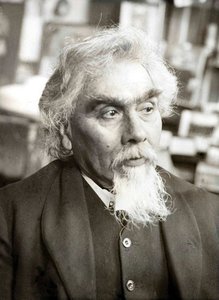
Jan Toorop
1858 - 1928 , Indonesia
Quick Facts
- Artistic Movement Or Style: Symbolism, Art Nouveau, Pointillism
- Artists Or Movements Influenced By This Artist: ['Amsterdam Impressionism']
- Artists Who Influenced This Artist: ['William Degouve de Nuncques']
- Date Of Birth: December 20, 1858
- Date Of Death: March 3, 1928
- Full Name: Johannes Theodorus Toorop
- Nationality: Dutch
- Notable Artworks:
- Les XX
- The Three Brides
- Place Of Birth: Purwodadi, Indonesia
Related Articles
Giclée Prints: Archival Quality & Aesthetic Nuances for the Discerning Collector
Explore the world of giclée prints with ArtsDot. Learn about archival quality, aesthetic nuances & investment potential. Expert guidance for discerning art collectors seeking museum-quality reproductions and lasting value.

Echoes of Time: Exploring the Enduring Appeal & Historical Context of Vintage Art Prints
Explore the captivating world of vintage art prints! Discover their history, collecting tips & enduring appeal. Expert insights on chromolithography and building a legacy collection with ArtsDot.

The Enduring Legacy of Fine Art Prints: Technique, History & Aesthetic Impact
Explore the rich history & techniques of fine art prints. Discover investment potential, assess authenticity, and learn how to preserve your collection with expert guidance. Trusted insights for discerning collectors.
25 Klimt Masterpieces: A Journey Through Iconic Art & Decor
Delve into the world of Gustav Klimt with our top 25 masterpieces! Explore his iconic paintings – 'The Kiss,' 'Portrait of Adele,' and more. Discover museum-quality reproductions & curated decor ideas. Explore the full collection online at ArtsDot.com.
Art Nouveau's Golden Age: 10 Masterpieces for Your Home |
Journey into Art Nouveau's golden age! Explore 10 masterpieces by Klimt, Mucha & more. Discover captivating stories behind iconic paintings, floral motifs & flowing lines. Find museum-quality art reproductions for your home at .