

 Preview
 Send
Send Share
Share
 Details

 Download
 Similars
 X-Ray
X-Ray Diaporama
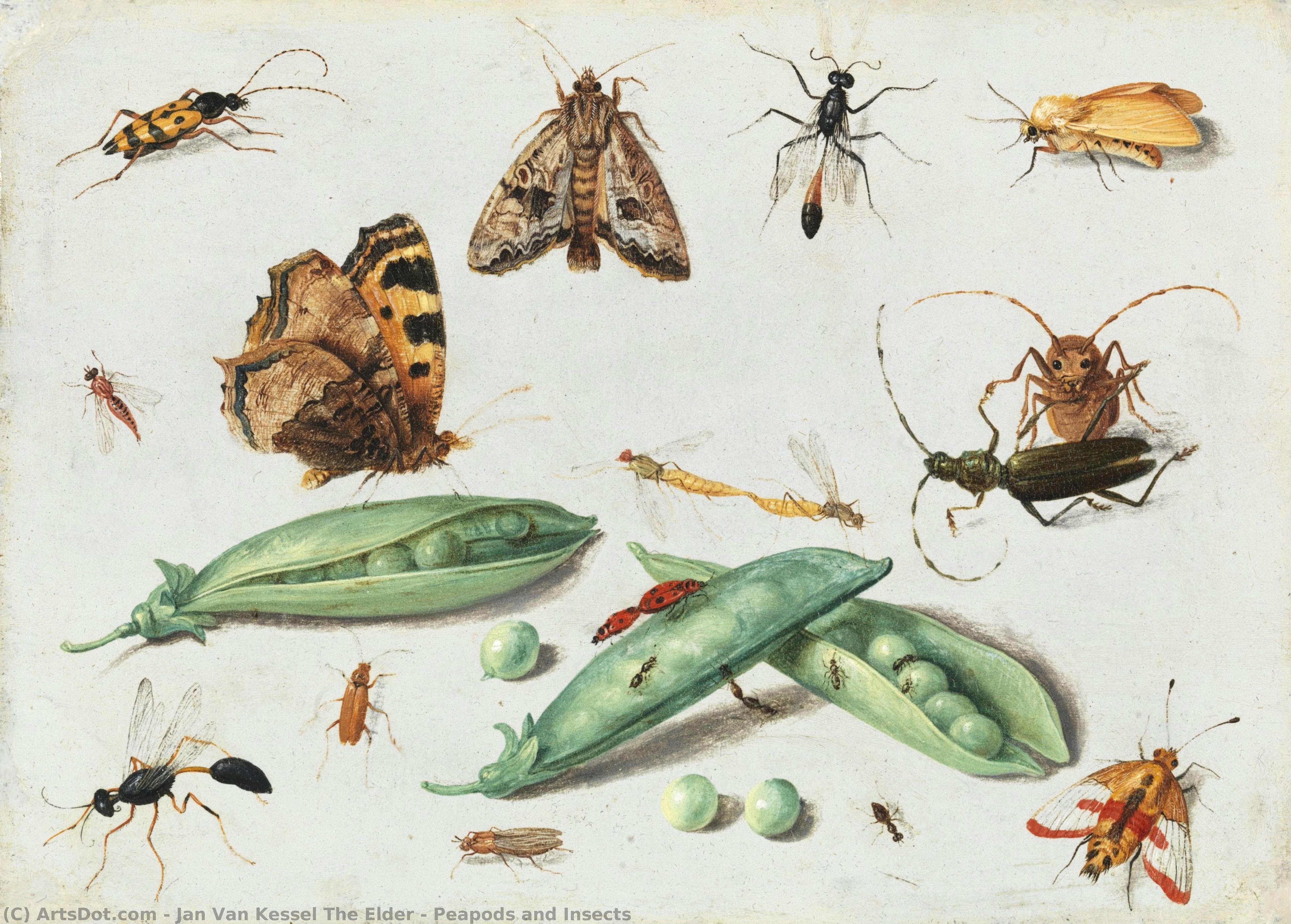
Peapods and Insects
 Oil
Oil- WallArt
- Baroque
 1650
1650- Early Modern
 13.0 x 19.0 cm
 Legion of Honor
 Read More
Purchase a high-resolution, enhanced digital image, far superior to the online preview.
Each file is meticulously prepared by our in-house specialists using advanced tools and expert manual retouching. We ensure every image has exceptional clarity, precise color accuracy, and fine detail.
The final file is delivered via email within 72 hours, optimized for immediate use in professional, editorial, and print environments. This is the same quality trusted by top-tier design studios, publishers, and galleries.
Digital Image
Download a high-resolution file for personal display, printing, and creative projects. ( Buy Print Buy Hand Made Painting)
Included in Every Digital Image Order
Expert Digital Delivery, Guaranteed
When you choose ArtsDot.com, you're not just getting an image - you're receiving a professionally enhanced digital artwork, crafted with precision and backed by a satisfaction guarantee. Here's everything that comes with your order, automatically:

Fast Email Delivery
Your high-resolution digital image file will be emailed to you within 72 hours of ordering - ready for immediate use.

AI-Enhanced Digital File
Your artwork is professionally optimized using advanced AI tools and manual editing, ensuring maximum detail, clarity, and color accuracy.

Free Lifetime Re-Delivery
Accidentally deleted or lost your file? No worries - we'll resend it to you anytime, free of charge.

No Import Fees - Ever
Enjoy your artwork instantly with zero customs, duties, or delivery fees - digital downloads are always tax-free.

Color Accuracy Guarantee
We ensure your digital image reflects the original colors as closely as possible using professional tools and color management.

60-Day Satisfaction Guarantee
If you're not satisfied with your digital image, we'll revise it or refund 100% within 60 days - no questions asked.

100% Money-Back Guarantee
Not satisfied? Get a full refund within 60 days of receiving your digital file - no questions asked.

Bulk Order Discounts
Buy 3 images, save 10% - Buy 5, save 15% - Buy 10+, save 20%. Great for creative projects, galleries, and agencies.
Collectible Description
A Microscopic Marvel: The Intricate World of Jan van Kessel the Elder
In the grand tapestry of seventeenth-century Flemish art, few threads are as delicate and mesmerizing as those woven by Jan van Kessel the Elder. His masterpiece, Peapods and Insects, serves as a breathtaking window into a miniature universe, inviting the viewer to pause and witness the profound beauty found in the smallest corners of nature. Created around 1650, this work is far more than a mere collection of biological specimens; it is a vibrant, living composition that captures the very essence of scientific curiosity intertwined with artistic mastery. As one gazes upon the scattered peas and the fluttering wings of various insects, there is an immediate sense of wonder, as if a magnifying glass has been pressed against the veil of the natural world, revealing a hidden, rhythmic dance of life.
The composition of this piece is a triumph of balanced chaos. Van Kessel expertly directs the eye across the canvas, leading us from the lush, verdant textures of the pea pods to the intricate, iridescent details of bees and butterflies. The artist utilizes a meticulous technique characteristic of the Antwerp school, where every vein in a leaf and every segment of an insect's thorax is rendered with surgical precision. This level of detail does not merely showcase technical prowess; it creates a tactile experience for the viewer. One can almost feel the smooth, cool surface of the peas and the light, papery fragility of the insect wings. The play of light across these varied textures adds a luminous quality to the painting, making the small-scale work pulse with an unexpected vitality.
The Intersection of Science and Spirit
To understand Peapods and Insects, one must look through the lens of the seventeenth-century Dutch and Flemish tradition, where the line between art and science was beautifully blurred. During this era, the burgeoning field of natural history demanded a new kind of observation—one that was both empirical and aesthetic. Van Kessel, a descendant of the legendary Brueghel lineage, utilized his brush to document the wonders of the biological world with the accuracy of a naturalist. Yet, beneath this scientific rigor lies a deeper, symbolic resonance. In the Baroque period, such detailed depictions of flora and fauna often served as memento mori, subtle reminders of the fleeting nature of life and the cyclical beauty of growth and decay.
The abundance of peas, bursting with life and potential, juxtaposed with the delicate, transient presence of insects, creates a poignant dialogue about the cycles of existence. For the modern collector or interior designer, this painting offers a sophisticated layer of meaning. It is not merely a decorative element but a conversation piece that celebrates the complexity of our ecosystem. The work possesses an emotional gravity that transcends its small dimensions, evoking a sense of peace and contemplative stillness that is rare in the often-turbulent movements of art history.
A Timeless Addition to the Curated Space
For those looking to infuse a contemporary interior with historical depth and organic elegance, a high-quality reproduction of Peapods and Insects offers unparalleled inspiration. Its intricate patterns and natural palette of greens, earth tones, and subtle highlights make it a versatile choice for various design aesthetics, from classical European studies to modern, minimalist galleries. The painting acts as a focal point that draws the eye inward, encouraging a slower, more mindful engagement with the surrounding space.
Integrating such a piece into a collection allows one to possess a fragment of the Golden Age. Whether framed in a heavy, ornate gold leaf to emphasize its Baroque heritage or presented in a clean, modern mount to highlight its scientific clarity, the artwork remains a testament to the enduring power of nature. It is an investment in beauty, a tribute to the meticulous observation of Jan van Kessel the Elder, and a permanent invitation to marvel at the infinite complexity of the world around us.
Related Artworks
Artist Biography
A Legacy of Miniature Wonders: The Life of Jan van Kessel the Elder
In the vibrant, bustling heart of seventeenth-century Antwerp, a period defined by both artistic splendor and scientific awakening, Jan van Kessel the Elder emerged as a master of the minute. Born in 1626 into one of the most illustrious artistic dynasties in Flemish history, Kessel was more than just a painter; he was a visual chronicler of the natural world. As the grandson of the legendary Jan Brueghel the Elder and the son of Hieronymus van Kessel the Younger, his very existence was woven into the fabric of the Northern Mannerist tradition. Yet, while he inherited a profound respect for the allegorical depth and lush landscapes of his forebears, Kessel sought to capture something far more intimate: the hidden, microscopic marvels that resided in the shadows of gardens and the delicate veins of flower petals.
His early training was a rigorous immersion into the Antwerp school, shaped by the disciplined observation required of a true blomschilder. By joining the Guild of Saint Luke in 1644, he formally committed himself to the art of botanical painting. This period of his life was marked by an extraordinary synthesis of artistic flair and scientific curiosity. Influenced by the works of masters like Daniel Seghers and Joris Hoefnagel, Kessel did not merely paint flowers; he studied them with the eye of a naturalist. His work became a bridge between the aesthetic beauty of the Baroque era and the burgeoning empirical spirit of the Scientific Revolution, turning the canvas into a window through which the wonders of entomology and botany could be examined by the curious minds of Europe.
The Art of Precision: Technique and Subject Matter
To gaze upon a true Kessel masterpiece is to enter a realm where scale disappears and detail reigns supreme. He was particularly renowned for his use of copper panels, a medium that provided a luminous, smooth surface capable of supporting his incredibly fine brushwork. This choice of support allowed him to achieve a level of brilliance and clarity that oil on canvas often struggled to match. On these gleaming surfaces, Kessel rendered the iridescent wings of butterflies, the translucent bodies of beetles, and the velvety textures of rose petals with such startling accuracy that his paintings often functioned as miniature encyclopedological studies.
His repertoire was as diverse as the natural world itself, ranging from:
- Exquisite Floral Still Lifes: Lavish bouquets and garlands that celebrated the ephemeral beauty of seasonal blooms.
- Entomological Studies: Meticulous depictions of insects, often arranged in compositions that mirrored the "cabinets of curiosities" so beloved by the era's collectors.
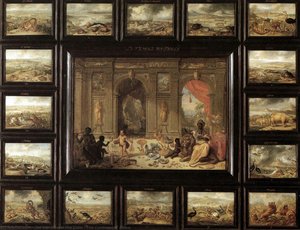
- Allegorical Compositions: Larger-scale works where he utilized animals and elements to represent complex themes such as the Four Continents or the Four Elements.
- Landscape and Marine Scenes: Occasional forays into river landscapes and maritime subjects that showcased his versatility beyond the microscopic.
There is a profound sense of wonder in his ability to manipulate nature through artifice. In his hands, a simple sprig of rosemary becomes a stage for a drama of tiny creatures, and a single butterfly becomes a jewel of light and color. This mastery of the miniature allowed his works to be highly prized by a sophisticated clientele, including wealthy merchants, nobles, and foreign luminaries who sought to possess these small, portable wonders within their private collections.
Historical Significance and Enduring Influence
The significance of Jan van Kessel the Elder extends far beyond the borders of Antwerp. He represents a pivotal moment in art history when the boundaries between the artist's studio and the scientist's laboratory began to blur. His ability to infuse scientific accuracy with aesthetic elegance helped define the Flemish Baroque style for a generation. Through his meticulous documentation of species, he contributed to the cultural zeitgeist of an age obsessed with discovery and the cataloging of the unknown.
Though his life was cut short in 1679, his influence persisted through his family and his enduring impact on the genre of still life. His descendants continued the family tradition, ensuring that the Kessel name remained synonymous with botanical excellence. Today, when we look at his works in institutions such as the National Gallery of Art, we do not merely see old paintings; we see the heartbeat of a century that dared to look closer, finding infinite complexity in the smallest of living things. He remains a testament to the idea that true greatness is often found not in the grand and sweeping gesture, but in the quiet, breathtaking precision of a single, perfectly rendered wing.
jan van kessel the elder
1626 - 1679
Quick Facts
- Artistic Movement Or Style: Baroque
- Artists Who Influenced This Artist:
- Jan Bruegel the Elder
- Simon de Vos
- Daniel Seghers
- Joris Hoefnagel
- Frans Snijders
- Date Of Birth: 1626
- Date Of Death: 1679
- Full Name: Jan van Kessel the Elder
- Nationality: Flemish
- Notable Artworks:
- Vanitas Still Life
- A river landscape with a windmill
- The Mockery of the Owl
- Place Of Birth: Antwerp

