 Preview
 Send
Send Share
Share
 Details

 Download
 Similars
 X-Ray
X-Ray Diaporama
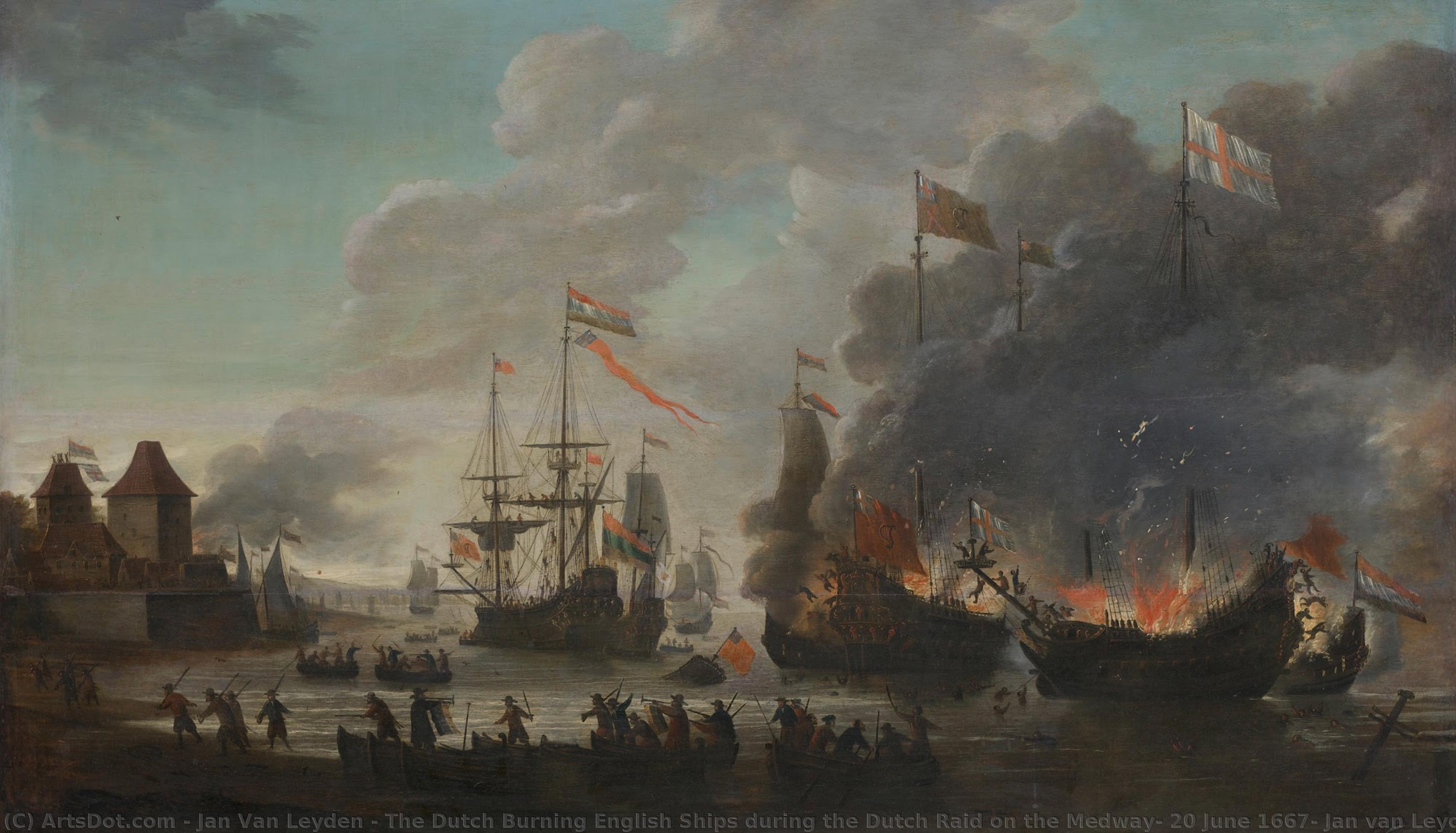
The Dutch Burning English Ships during the Dutch Raid on the Medway, 20 June 1667, Jan van Leyden, 1667 - 1669
 1669
1669 93.0 x 157.0 cm
 Read More
Purchase a high-resolution, enhanced digital image, far superior to the online preview.
Each file is meticulously prepared by our in-house specialists using advanced tools and expert manual retouching. We ensure every image has exceptional clarity, precise color accuracy, and fine detail.
The final file is delivered via email within 72 hours, optimized for immediate use in professional, editorial, and print environments. This is the same quality trusted by top-tier design studios, publishers, and galleries.
Digital Image
Download a high-resolution file for personal display, printing, and creative projects. ( Buy Print Buy Hand Made Painting)
Included in Every Digital Image Order
Expert Digital Delivery, Guaranteed
When you choose ArtsDot.com, you're not just getting an image - you're receiving a professionally enhanced digital artwork, crafted with precision and backed by a satisfaction guarantee. Here's everything that comes with your order, automatically:

Fast Email Delivery
Your high-resolution digital image file will be emailed to you within 72 hours of ordering - ready for immediate use.

AI-Enhanced Digital File
Your artwork is professionally optimized using advanced AI tools and manual editing, ensuring maximum detail, clarity, and color accuracy.

Free Lifetime Re-Delivery
Accidentally deleted or lost your file? No worries - we'll resend it to you anytime, free of charge.

No Import Fees - Ever
Enjoy your artwork instantly with zero customs, duties, or delivery fees - digital downloads are always tax-free.

Color Accuracy Guarantee
We ensure your digital image reflects the original colors as closely as possible using professional tools and color management.

60-Day Satisfaction Guarantee
If you're not satisfied with your digital image, we'll revise it or refund 100% within 60 days - no questions asked.

100% Money-Back Guarantee
Not satisfied? Get a full refund within 60 days of receiving your digital file - no questions asked.

Bulk Order Discounts
Buy 3 images, save 10% - Buy 5, save 15% - Buy 10+, save 20%. Great for creative projects, galleries, and agencies.
Collectible Description
Related Artworks









Artist Biography
The Enigmatic Vision of Jan van Leyden
Jan van Leyden remains a captivating, yet elusive figure in the landscape of early Netherlandish painting. Born and active during a period brimming with artistic innovation – though precise dates elude firm documentation – he flourished as a master miniaturist and painter of devotional panels, primarily between 1500 and 1530. His work is characterized by an astonishing level of detail, a profound psychological depth in his figures, and a unique narrative clarity that sets him apart from many of his contemporaries. While biographical details are scarce, the very quality of his surviving paintings suggests a highly trained artist with access to sophisticated patronage networks, likely centered within Leiden itself – hence his accepted name. He was not part of any known guild, adding to the mystery surrounding his artistic formation and career.A World in Miniature: Style and Technique
Van Leyden’s art is immediately recognizable for its exquisite precision. He worked on a remarkably small scale, creating panels often no larger than a few inches across. Within these diminutive spaces, he conjured entire worlds teeming with life and emotion. His technique involved an extraordinary mastery of oil paint, applied in layers to build up luminous surfaces and intricate textures. He was particularly adept at rendering fabrics – silks, velvets, and brocades shimmer with a lifelike quality that belies their size. His figures are not idealized; they possess individual features, expressive faces, and often exhibit a quiet intensity of feeling. This realism wasn’t merely technical prowess, but served to draw the viewer into the sacred scenes he depicted. Van Leyden's compositions, while compact, never feel crowded. He skillfully arranged his subjects within shallow spaces, using architectural elements and landscape details to create a sense of depth and atmosphere. The backgrounds are often filled with meticulously rendered towns or landscapes, providing context and enhancing the narrative.Devotional Themes and Symbolic Language
The vast majority of Van Leyden’s known works are devotional panels intended for private contemplation. Scenes from the life of Christ – the Annunciation, the Nativity, the Passion – are recurring subjects, as are depictions of saints and biblical figures. However, these are not simply straightforward illustrations of religious stories. Van Leyden imbued his paintings with a rich symbolic language, often drawing upon contemporary emblem books and theological treatises. Objects within the scenes carry multiple layers of meaning, inviting the viewer to engage in a deeper interpretation of the work. For example, a seemingly innocuous flower might represent purity or divine love, while a particular architectural detail could allude to the New Jerusalem. This subtle symbolism elevates his paintings beyond mere decoration, transforming them into powerful tools for personal piety.Influences and Artistic Context
Pinpointing Van Leyden’s artistic influences is a complex undertaking. He clearly demonstrates an awareness of the work of earlier Netherlandish masters like Jan Gossaert and Geertgen tot Sint Jans, particularly in his use of perspective and realistic detail. However, he developed a distinctive style that sets him apart from these predecessors. Some scholars suggest a possible connection to the school of Antwerp, while others point to influences from manuscript illumination.- His meticulous attention to detail recalls the work of Rogier van der Weyden.
- The clarity and narrative focus of his compositions may have been influenced by early printed books.
- The psychological depth of his figures suggests a familiarity with contemporary humanist thought.