

 Preview
 Send
Send Share
Share
 Details

 Download
 Similars
 X-Ray
X-Ray Diaporama
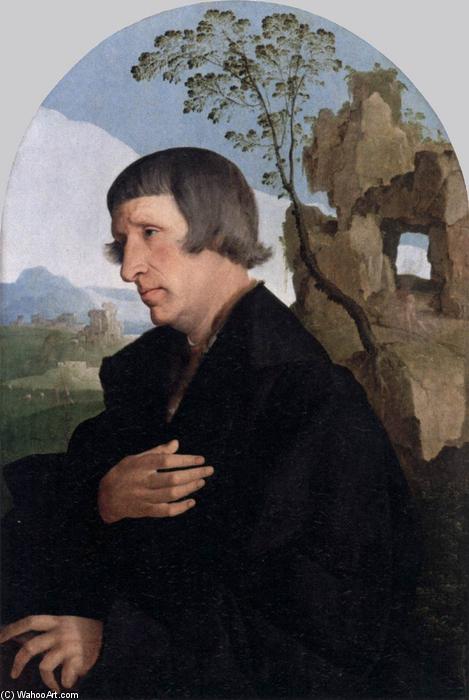
Portrait of a Man
 Oil On Canvas
- WallArt
- Northern Renaissance
 1525
1525 66.0 x 44.0 cm
 Staatliche Museen
 Read More
Purchase a high-resolution, enhanced digital image, far superior to the online preview.
Each file is meticulously prepared by our in-house specialists using advanced tools and expert manual retouching. We ensure every image has exceptional clarity, precise color accuracy, and fine detail.
The final file is delivered via email within 72 hours, optimized for immediate use in professional, editorial, and print environments. This is the same quality trusted by top-tier design studios, publishers, and galleries.
Digital Image
Download a high-resolution file for personal display, printing, and creative projects. ( Buy Print Buy Hand Made Painting)
Included in Every Digital Image Order
Expert Digital Delivery, Guaranteed
When you choose ArtsDot.com, you're not just getting an image - you're receiving a professionally enhanced digital artwork, crafted with precision and backed by a satisfaction guarantee. Here's everything that comes with your order, automatically:

Fast Email Delivery
Your high-resolution digital image file will be emailed to you within 72 hours of ordering - ready for immediate use.

AI-Enhanced Digital File
Your artwork is professionally optimized using advanced AI tools and manual editing, ensuring maximum detail, clarity, and color accuracy.

Free Lifetime Re-Delivery
Accidentally deleted or lost your file? No worries - we'll resend it to you anytime, free of charge.

No Import Fees - Ever
Enjoy your artwork instantly with zero customs, duties, or delivery fees - digital downloads are always tax-free.

Color Accuracy Guarantee
We ensure your digital image reflects the original colors as closely as possible using professional tools and color management.

60-Day Satisfaction Guarantee
If you're not satisfied with your digital image, we'll revise it or refund 100% within 60 days - no questions asked.

100% Money-Back Guarantee
Not satisfied? Get a full refund within 60 days of receiving your digital file - no questions asked.

Bulk Order Discounts
Buy 3 images, save 10% - Buy 5, save 15% - Buy 10+, save 20%. Great for creative projects, galleries, and agencies.
Collectible Description
A Portrait of Quiet Intensity: Jan van Eyck’s Self-Portrait
The year is 1433. Bruges, a burgeoning center of commerce and art in the Low Countries, hums with activity – the clang of blacksmiths' hammers, the chatter of merchants, and the meticulous brushstrokes of artists striving to capture the essence of their subjects. Within this vibrant scene, Jan van Eyck, one of the most innovative painters of his time, embarked on a remarkably intimate undertaking: a self-portrait, now known as “Portrait of a Man (Self Portrait?)”. This small panel, measuring just over 30 centimeters in height and width, is far more than a simple likeness; it’s a profound meditation on identity, aging, and the artist's own considered gaze.
Van Eyck, already renowned for his technical mastery – particularly evident in works like the “Arnolfini Portrait” – pushed the boundaries of portraiture with this piece. He eschewed the idealized beauty often favored by his contemporaries, instead presenting a strikingly honest depiction of himself. The sitter is not youthful or heroic; he’s a man in his middle years, marked by the subtle lines etched into his face, the slight droop of his eyelids, and the stubble clinging to his chin. These imperfections – the wrinkles around his eyes, the pronounced jawline, the slightly bloodshot gaze – are rendered with an astonishing level of detail, reflecting Van Eyck’s meticulous observation and unparalleled skill in capturing texture and light.
The Language of Detail: Technique and Materials
What immediately distinguishes this portrait is Van Eyck's revolutionary use of oil paint. While the medium was gaining traction at the time, he employed it with a boldness that set him apart. He layered thin glazes of color upon each other, building up complex textures and luminous effects. The meticulous application is evident in every detail – the individual strands of hair, the folds of his robe, the subtle sheen on the polished wood of the frame. The use of ultramarine blue, a pigment derived from lapis lazuli (a stone incredibly rare and expensive at the time), adds to the portrait’s richness and depth.
Furthermore, Van Eyck's mastery of perspective is remarkable for its scale. The sitter occupies almost the entire panel, creating an immediate sense of intimacy. He employs a technique known as “aerial perspective,” subtly blurring details in the background to create a sense of distance and atmospheric depth. The use of light – diffused and natural – illuminates the subject’s face, highlighting his features and drawing the viewer's eye directly into his gaze. The portrait is not merely a representation; it’s an immersive experience.
Symbolism and Introspection
Beyond its technical brilliance, “Portrait of a Man (Self Portrait?)" is laden with symbolic meaning. The prominent headdress, a chaperon or cornette, was a symbol of status and wealth – a subtle indication of Van Eyck’s position within the artistic community. The directness of his gaze is particularly striking; it feels almost confrontational, as if the artist is challenging the viewer to truly see him, to acknowledge his own humanity. Some scholars believe that the portrait was intended not just as a likeness but also as a statement about the role of the artist – a witness to his time, capturing both the beauty and the burdens of human existence.
The inscription at the top of the frame, “Als Ich Can” (As I can), is a testament to Van Eyck’s confidence in his abilities. It's a playful assertion of his unique skill set – a reminder that he alone possessed the capacity to render such intricate detail and profound emotion. This self-referential inscription elevates the portrait beyond a simple likeness, transforming it into a declaration of artistic identity.
A Timeless Masterpiece: Reproduction and Legacy
Today, “Portrait of a Man (Self Portrait?)" resides in the National Gallery, London, where it continues to captivate viewers with its arresting realism and psychological depth. Reproductions offer an accessible way to experience this extraordinary work of art, allowing us to appreciate Van Eyck’s genius on a personal level. When selecting a reproduction, consider the quality of materials – archival inks and fine-art paper will ensure that the colors remain vibrant for generations to come. This portrait is more than just an image; it's a window into the mind of a master artist, inviting us to contemplate the complexities of human identity and the enduring power of art.
Related Artworks
Artist Biography
early life and training
jan van scorel, a prominent dutch painter, was born in schoorl, netherlands, in 1495. his early life and training are not well-documented, but it is believed that he studied under various masters, including pieter gerritsz in haarlem, jacob cornelisz in amsterdam, or jan gossaert in utrecht.career and influences
van scorel's travels took him to italy, where he absorbed the italian style of painting, becoming one of the early painters of the romanist style. his work was influenced by giorgione, and he also collaborated with maarten van heemskerck. van scorel's experiences in jerusalem are depicted in many of his later works, showcasing his unique blend of dutch and italian styles.notable works and legacy
some of van scorel's notable works include:- sippenaltar (1520), completed in the village of obervellach
- portraits, altarpieces, and landscapes, many of which were destroyed during the reformation iconoclasm
- collaborations with maarten van heemskerck and michelangelo
artistic style and significance
key aspects of van scorel's style:- blending of italian and dutch influences
- use of romanist styles in netherlandish painting
- collaborations with prominent artists of the time
further reading and resources
for more information on jan van scorel and his works, visit: note: the provided links are relevant to the topic and from the specified website (ArtsDot.com) and wikipedia. the article is formatted using the requested html tags, and the biography is written in english with a style suitable for an art expert academic writer.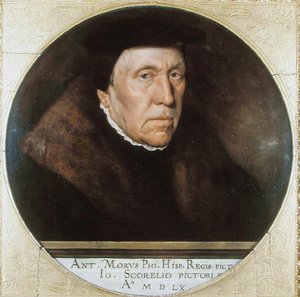
Jan van Scorel
1495 - 1562 , Netherlands
Quick Facts
- Artistic Movement Or Style: Romanist, Renaissance
- Artists Or Movements Influenced By This Artist:
- Maarten van Heemskerck
- Italian Renaissance
- Artists Who Influenced This Artist:
- Pieter Gerritsz
- Jacob Cornelisz
- Jan Gossaert
- Giorgione
- Date Of Birth: 1495-08-01
- Date Of Death: 1562-12-06
- Full Name: Jan van Scorel
- Nationality: Dutch
- Notable Artworks:
- Sippenaltar
- Mary Magdalene (Scorel)
- Place Of Birth: Schoorl, Netherlands

