Menu
FREE ART CONSULTATION
PreviewPreview AR previewAR preview Buy Print Buy PrintBuy Image Buy Image SendSend
DetailsDetails Add to favorites Add to favorites DownloadDownload SimilarsSimilars X-RayX-Ray DiaporamaDiaporama

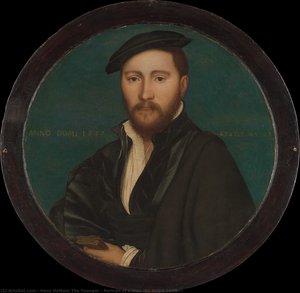
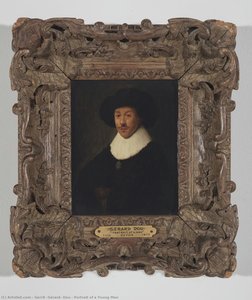
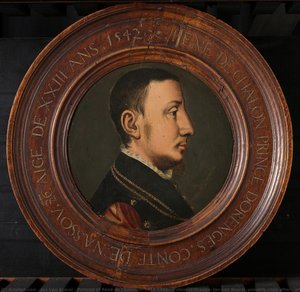
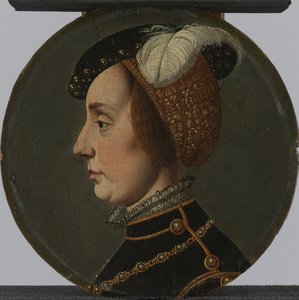
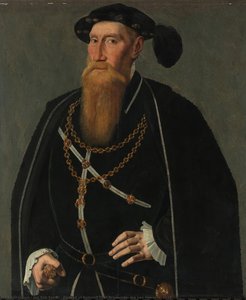
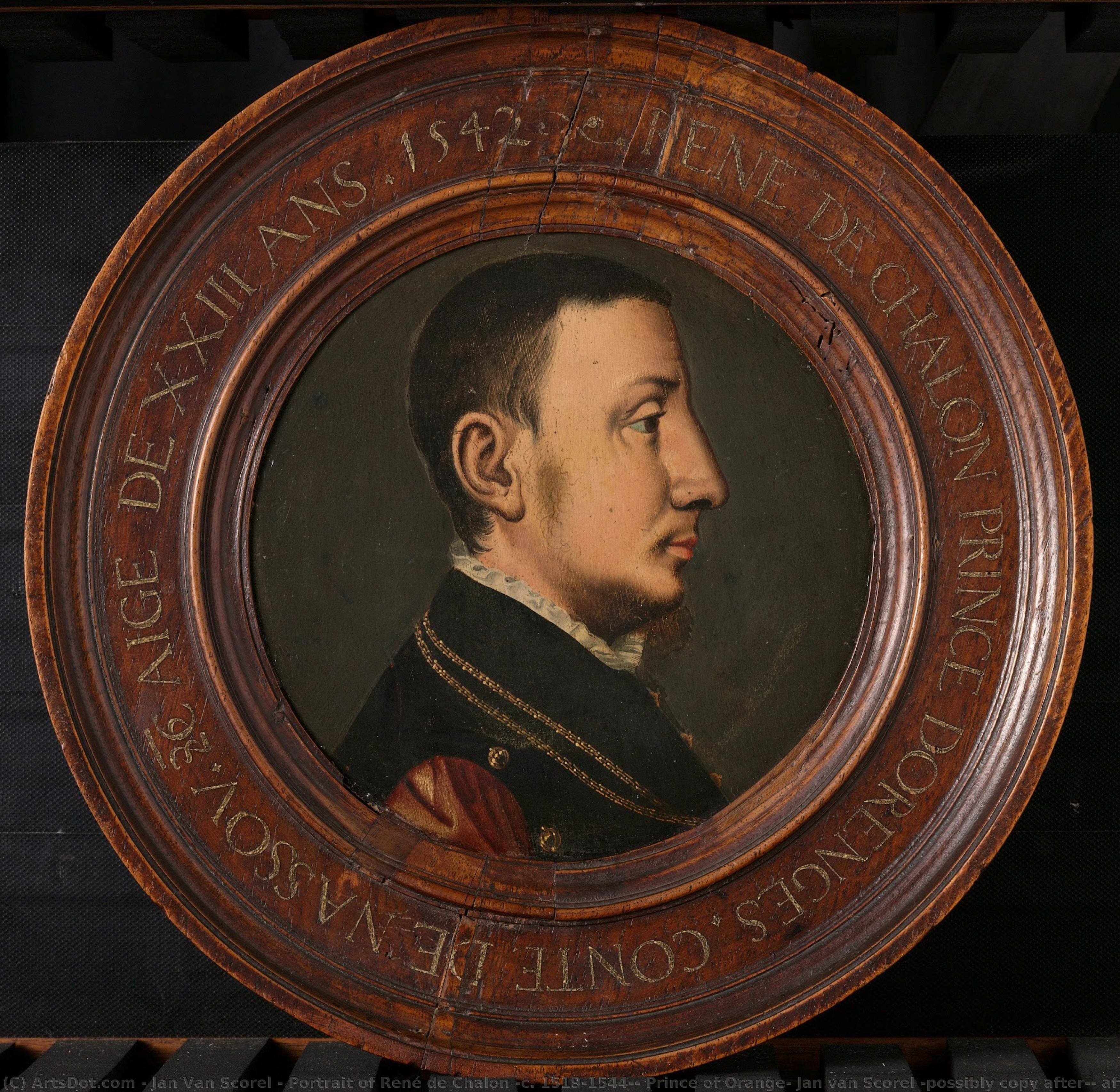
Portrait of René de Chalon (c. 1519-1544), Prince of Orange, Jan van Scorel (possibly copy after), after 1542

Explore Jan van Scorel's unique blend of Dutch & Italian Renaissance art! Discover his Romanist style, collaborations, & iconic works like 'Sippenaltar'. #arthistory #renaissance

Hand Made Oil Reproduction

Hand-painted oil on canvas in your size and frame, made to order by our artists. (Buy Print Buy PrintBuy Image Buy Image)

Standard
custom
CM
INCH

Pick from our preset sizes that match the artwork's original proportions.

width
height

You may enter your own dimensions to fit a specific frame or space. If your selected size does not match the original image's proportions, we will either crop the artwork or extend the painting with additional hand-painted elements. A digital mockup will be sent for your approval before production begins.
Please note that the on-screen preview does not reflect the actual cropping or extension. Only the mockup will accurately show the final composition.
While custom sizes are available, we recommend selecting a dimension from the predefined list to preserve the original proportions.

Examples of what can be changed: Replace face with customer photo; Add pet (e.g., replace cat with dog); Include hidden message in background; Change background landscape or elements.
After order, ArtsDot.com team will email client for instructions and provide a mockup preview

Worldwide Delivery () in 3/4 weeks instead of standard 5 weeks. (2 September). No compromise on quality.

why_choose_icon
Free Worldwide Express Shipping
why_choose_icon
High-Quality Linen Canvas
why_choose_icon
Full Shipping Insurance
why_choose_icon
Customs Tax Refund Guarantee
why_choose_icon
True Color Matching Guarantee
why_choose_icon
60-Day Return Policy (Defects Only)
why_choose_icon
100% Money-Back Guarantee
why_choose_icon
Bulk Discount Offer

Total Price

$ 263

reproduction

Portrait of René de Chalon (c. 1519-1544), Prince of Orange, Jan van Scorel (possibly copy after), after 1542

Reproduction Medium

Reproduction Size

-

Total Price

$ 263

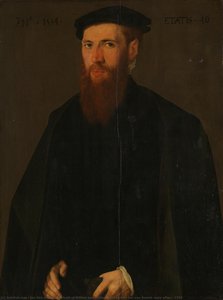
According to the inscription on its frame, this bust-length portrait shows the Prince of Orange and Count of Nassau, René de Chalon at the age of 23. He wears a white shirt, which is ruffled at the collar, underneath a black doublet with pink sleeves and gold buttons. Around his neck hangs a double gold chain. This painting forms a pair with a portrait of René’s wife Anne of Lorraine (SK-A-4027). While the inscription on an etched copy of René’s portrait (RP-P-1937-1310) locates it in the stadholder’s collection, the portrait of Anna is not securely documented until 1960, when it was bought by the Rijksmuseum and reunited with that of her husband.12 Anne is depicted in a black dress embellished with gold detailing and pearls. A gold chain strung with pearls hangs around her neck. Beneath her black gown, the collar of her chemise has a ruffled edge and is embroidered with geometric patterns in intricate blackwork. Her hair is gathered in puffs at the ears; her gold hairnet and small black bonnet with a white plume are a fashion derived from Spain and Italy.13 Based on the painting technique as well as the underdrawing, both images appear to be by the same hand and are executed on similar limewood panels.14 Anne’s panel has been trimmed around the edge and is now slightly smaller than its companion, but originally it was probably the same size. The strong profiles of the sitters and the tondo format evoke the appearance of ancient coins and portrait medallions.15 René was born in Breda on 5 February 1519 to Hendrik III of Nassau and Claudia de Châlon. From the latter he would inherit the ample princedom of Orange. He was Stadholder of Holland, Zeeland, Utrecht and Gelderland under Emperor Charles V. His wife Anne, daughter of the Duke of Lorraine, was born on 22 July 1522. The couple married on 20 August 1540 and settled in Breda shortly afterwards. On 17 July 1544, René died in the Battle of St Dizier in France. Four years later, Anne married her second husband, Philippe III de Croy, the first Duke of Aarschot. She died on 22 August 1568.16 A related pair of portraits of René and Anne survives in the Stedelijk Museum in Diest.17 In these images, the costumes and physiognomies of the couple are portrayed in a manner nearly identical to those in the Amsterdam tondo portraits. The images in Diest and Amsterdam would thus seem to follow a common model. They can be dated to the second half of the 16th century on the evidence of the painting technique. The earliest documented reference to a portrait of René (‘’t conterfeytsel van René Desschalon’) appears in a 1590 inventory of Breda Palace.18 Subsequent 17th-century inventories refer to pairs of portraits of both René and Anne.19 The 1632 inventory of the palace at Noordeinde refers to ‘twee schilderien van Rhené de Chalon ende sijn gemael, staende in perfijl’ (two paintings of René de Châlon and his wife, standing in profile), and the inventory of the castle in Buren from 1675 lists portraits of ‘Renée de Chalon met Sijne princesse, beyde in profijl’ (René de Châlon and his princess, both in profile). Some works of art were transferred from Breda to Buren in the early 17th century, so Van Luttervelt has suggested that these two references might be to the same image of René, but this does not account for the fact that the 1590 inventory refers only to a portrait of René and not to an accompanying one of Anne. An original pair of portraits of the couple may have been divided after René’s death and Anne’s remarriage. Such a scenario would explain why René’s portrait is listed alone in the Breda inventory, and why it appears without the accompanying portrait of Anne in the collection of the stadholders. Unfortunately, it is impossible to sort out which of these inventory records might refer to the Amsterdam portraits, or which refer instead to their counterparts in Diest or a lost original pair. Van Luttervelt has argued that the original images of the couple were painted by Jan van Scorel or one of his assistants in Breda during the first half of 1542, the year inscribed on the original frame of René’s tondo portrait in Amsterdam.20 Scorel and René are both documented in Breda during this period.21 Moreover, Van Mander records that the artist produced ‘several works’ for René and his father, which most probably included the surviving triptych of The Finding of the True Cross in Breda’s Onze-Lieve-Vrouwekerk.22 As such, a link between Scorel and the original portraits of René and Anne seems plausible, but the attribution remains speculative at this time. (M. Bass)

Artist Biography

early life and training

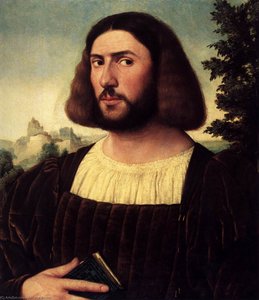
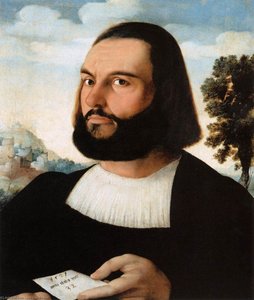
jan van scorel, a prominent dutch painter, was born in schoorl, netherlands, in 1495. his early life and training are not well-documented, but it is believed that he studied under various masters, including pieter gerritsz in haarlem, jacob cornelisz in amsterdam, or jan gossaert in utrecht.

career and influences

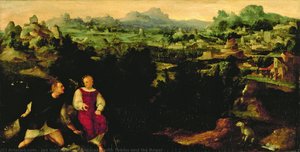
van scorel's travels took him to italy, where he absorbed the italian style of painting, becoming one of the early painters of the romanist style. his work was influenced by giorgione, and he also collaborated with maarten van heemskerck. van scorel's experiences in jerusalem are depicted in many of his later works, showcasing his unique blend of dutch and italian styles.

notable works and legacy

some of van scorel's notable works include:
  • sippenaltar (1520), completed in the village of obervellach
  • portraits, altarpieces, and landscapes, many of which were destroyed during the reformation iconoclasm
  • collaborations with maarten van heemskerck and michelangelo
van scorel's legacy is marked by his significant contributions to the dutch renaissance, introducing italian elements into netherlandish painting. his work can be seen in various museums, including the van gogh museum (netherlands), which also features an extensive collection of van gogh's works.

artistic style and significance

key aspects of van scorel's style:
  • blending of italian and dutch influences
  • use of romanist styles in netherlandish painting
  • collaborations with prominent artists of the time
van scorel's work is a testament to the cultural exchange and artistic innovation of the renaissance period. his legacy continues to inspire art enthusiasts and scholars alike.

further reading and resources

for more information on jan van scorel and his works, visit: note: the provided links are relevant to the topic and from the specified website (ArtsDot.com) and wikipedia. the article is formatted using the requested html tags, and the biography is written in english with a style suitable for an art expert academic writer.
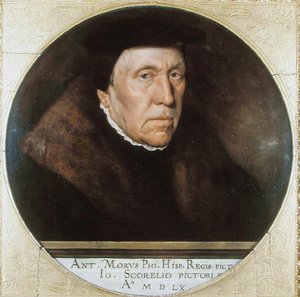
Jan van Scorel

Jan van Scorel

1495 - 1562 , Netherlands

Quick Facts

  • Artistic Movement Or Style: Romanist, Renaissance
  • Artists Or Movements Influenced By This Artist:
    • Maarten van Heemskerck
    • Italian Renaissance
  • Artists Who Influenced This Artist:
    • Pieter Gerritsz
    • Jacob Cornelisz
    • Jan Gossaert
    • Giorgione
  • Date Of Birth: 1495-08-01
  • Date Of Death: 1562-12-06
  • Full Name: Jan van Scorel
  • Nationality: Dutch
  • Notable Artworks:
    • Sippenaltar
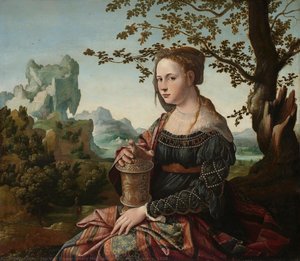
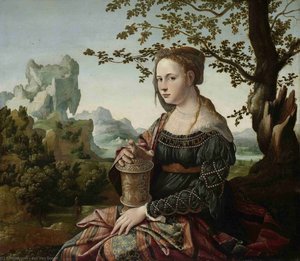
    • Mary Magdalene (Scorel)
  • Place Of Birth: Schoorl, Netherlands
Explore artworks organized by themes, styles, and characteristics.