Menu
FREE ART CONSULTATION
PreviewPreview AR previewAR preview Buy Print Buy PrintBuy Hand Made Painting Buy Hand Made Painting SendSend
DetailsDetails Add to favorites Add to favorites DownloadDownload SimilarsSimilars X-RayX-Ray DiaporamaDiaporama

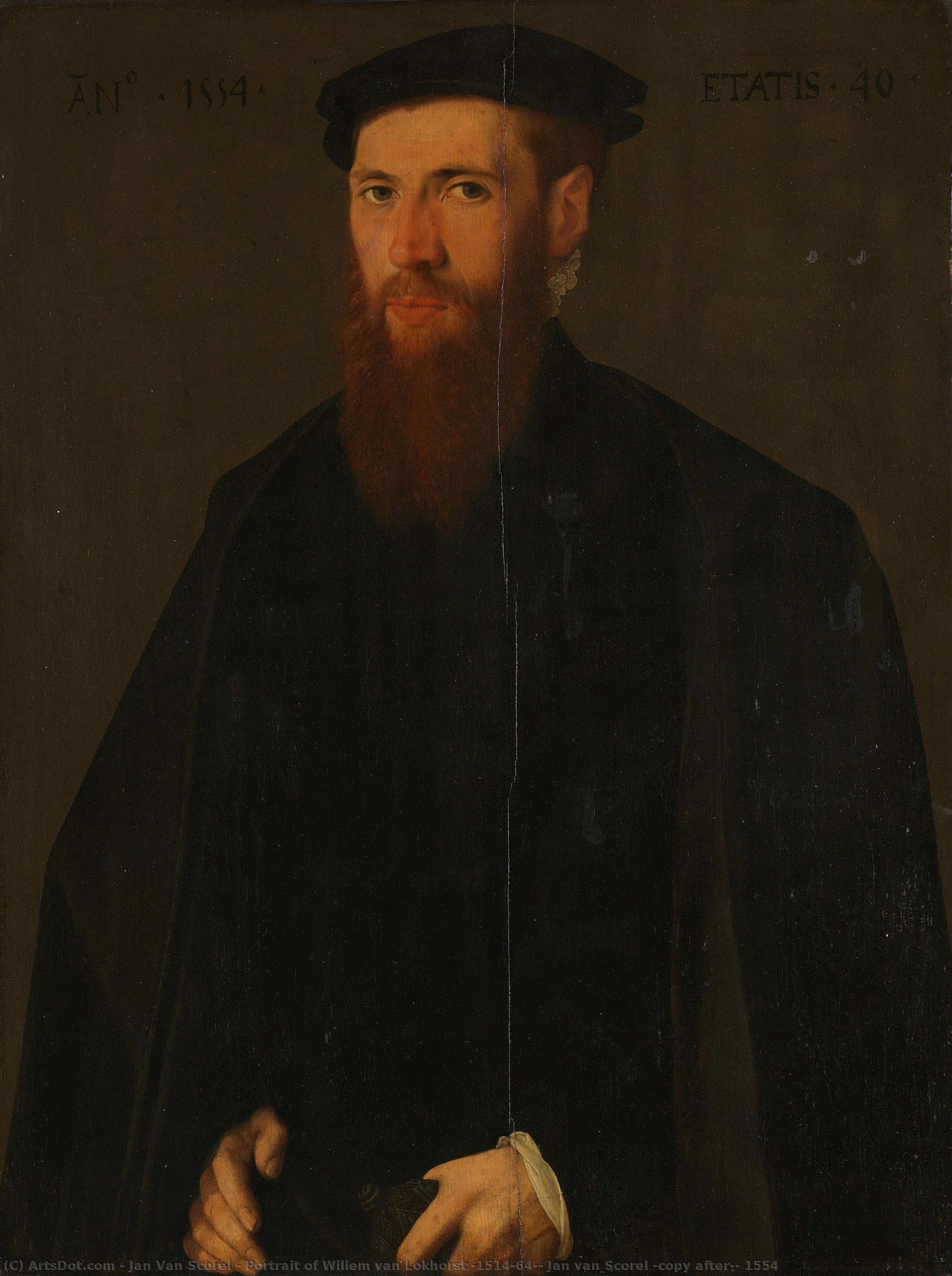
Portrait of Willem van Lokhorst (1514-64), Jan van Scorel (copy after), 1554

  • Creation date1554
  • Dimensions64.0 x 49.0 cm

Explore Jan van Scorel's unique blend of Dutch & Italian Renaissance art! Discover his Romanist style, collaborations, & iconic works like 'Sippenaltar'. #arthistory #renaissance

Purchase a high-resolution, enhanced digital image, far superior to the online preview.

Each file is meticulously prepared by our in-house specialists using advanced tools and expert manual retouching. We ensure every image has exceptional clarity, precise color accuracy, and fine detail.

The final file is delivered via email within 72 hours, optimized for immediate use in professional, editorial, and print environments. This is the same quality trusted by top-tier design studios, publishers, and galleries.

Digital Image

Download a high-resolution file for personal display, printing, and creative projects. (Buy Print Buy PrintBuy Hand Made Painting Buy Hand Made Painting)

Total Price

$ 24.00

Included in Every Digital Image Order

Expert Digital Delivery, Guaranteed

When you choose ArtsDot.com, you're not just getting an image - you're receiving a professionally enhanced digital artwork, crafted with precision and backed by a satisfaction guarantee. Here's everything that comes with your order, automatically:

shipping_icon
Fast Email Delivery

Your high-resolution digital image file will be emailed to you within 72 hours of ordering - ready for immediate use.

canvas_icon
AI-Enhanced Digital File

Your artwork is professionally optimized using advanced AI tools and manual editing, ensuring maximum detail, clarity, and color accuracy.

insurance_icon
Free Lifetime Re-Delivery

Accidentally deleted or lost your file? No worries - we'll resend it to you anytime, free of charge.

tax_icon
No Import Fees - Ever

Enjoy your artwork instantly with zero customs, duties, or delivery fees - digital downloads are always tax-free.

color_icon
Color Accuracy Guarantee

We ensure your digital image reflects the original colors as closely as possible using professional tools and color management.

return_icon
60-Day Satisfaction Guarantee

If you're not satisfied with your digital image, we'll revise it or refund 100% within 60 days - no questions asked.

guarantee_icon
100% Money-Back Guarantee

Not satisfied? Get a full refund within 60 days of receiving your digital file - no questions asked.

discount_icon
Bulk Order Discounts

Buy 3 images, save 10% - Buy 5, save 15% - Buy 10+, save 20%. Great for creative projects, galleries, and agencies.

Portrayed half-length, Willem van Lokhorst, Lord of Lokhorst, stands before a greenish-grey background, wearing a black baret and cloak over a black garment whose appearance is somewhat difficult to make out due to the painting’s condition. As he looks out at the viewer, Willem’s right hand rests on his hip while the left grasps the hilt of a sword. The identification of the sitter was made by Hoogewerff, who noted the similarity to the portrait of Willem van Lokhorst in Münster.9 The Münster portrait’s identification derives from the Lokhorst coat of arms in the upper right corner and a description of the painting in a 17th-century inventory as ‘tconterfeytsel van Heer Wilm van Lockhorst Heere van Lockhorst Heemsteede Slijdrecht etc’ (portrait of Sir Wil[le]m van Lockhorst, Lord of Lochorst, Heemstede, Slijdrecht, etc.).10 It is well known that Jan van Scorel had close connections to members of the Lokhorst family, particularly the Utrecht clerics, Herman van Lokhorst, Dean of Oldminster (St Saviour’s) and his natural son, Willem, who was one of Scorel’s fellow canons in the Utrecht Mariakerk. Scorel and Willem probably met in Rome, where both stayed on for a while after the untimely death of the Dutch pope, Adrian VI, in September 1523. It was probably through Willem that Scorel met Herman van Lokhorst, who became the artist’s important benefactor and patron upon his return to Utrecht from Italy.11 The sitter in this portrait, however, is a member of the knightly branch of the Lokhorst family. He is Willem, the son of Gerrit van Lokhorst, Lord of Lokhorst, whom some believe is the knight portrayed on the outer wings of Jan van Scorel’s Lokhorst Triptych in Utrecht.12 Willem belonged to the branch of the family that settled in Leiden, where he was not only a burgomaster but also a member of the town council and the polder board (‘hoogheemraad’) of Rijnland.13 In 1549, Willem inherited the title, Lord of Lokhorst, which later passed to his brother, Vincent, along with the seigniories of Heemstede, Lievendael, Slydrecht and others. Upon Vincent’s death in 1595, this branch of the Lokhorst family died out.14 Comparison of the Rijksmuseum painting with the portrait of Willem van Lokhorst in Münster reveals telling similarities and differences. It was not until 1997 that the Münster portrait was associated with Jan van Scorel by Faries.15 Before that it had usually been considered a work by Maarten van Heemskerck, because it was described as such in the 1651 inventory.16 Only De Vries deviated from the general opinion and made reference to Antonio Moro.17 In 1980, Grosshans rightly de-attributed the work, noting the lack of any stylistic similarities to Heemskerck’s portraiture.18 Without question, the modelling in Willem’s face in Münster follows Scorel’s portrait method: there is an impasto build-up in the forehead and around the eyes, while the nose and cheek are painted more thinly, bringing out the planar structure of the head.19 The steady gaze out at the viewer, in this case of Willem’s blue-grey eyes, is a typical feature of Scorel’s portraits. The technique is also similar, for although only a little underdrawing could be revealed in the face, long, undulating contours - probably in black chalk - were detected in the hands.20 The features in the Amsterdam portrait are identical to those in Münster: the shape of the head, fleshy mouth, nose, angled, upper eyelids, and prominent cheekbone are exactly the same. A computer overlay of the two heads yielded an almost exact match in every detail.21 The painting technique differs, however, since the Amsterdam portrait lacks texture and is modelled in a flatter, more schematic manner, as might be expected of a copy. The 1554 date accords well with the dendrochronological estimate. Although these dates still fall in Jan van Scorel’s lifetime, there are no obvious aspects of technique or execution that would allow us to consider the Rijksmuseum portrait a product of Scorel’s workshop. Since the two paintings must nonetheless be related, it is likely that the Amsterdam painting was based on the Münster portrait or a model common to both. M. Faries, 2010 Literature updated, 2016

Artist Biography

early life and training

jan van scorel, a prominent dutch painter, was born in schoorl, netherlands, in 1495. his early life and training are not well-documented, but it is believed that he studied under various masters, including pieter gerritsz in haarlem, jacob cornelisz in amsterdam, or jan gossaert in utrecht.

career and influences

van scorel's travels took him to italy, where he absorbed the italian style of painting, becoming one of the early painters of the romanist style. his work was influenced by giorgione, and he also collaborated with maarten van heemskerck. van scorel's experiences in jerusalem are depicted in many of his later works, showcasing his unique blend of dutch and italian styles.

notable works and legacy

some of van scorel's notable works include:
  • sippenaltar (1520), completed in the village of obervellach
  • portraits, altarpieces, and landscapes, many of which were destroyed during the reformation iconoclasm
  • collaborations with maarten van heemskerck and michelangelo
van scorel's legacy is marked by his significant contributions to the dutch renaissance, introducing italian elements into netherlandish painting. his work can be seen in various museums, including the van gogh museum (netherlands), which also features an extensive collection of van gogh's works.

artistic style and significance

key aspects of van scorel's style:
  • blending of italian and dutch influences
  • use of romanist styles in netherlandish painting
  • collaborations with prominent artists of the time
van scorel's work is a testament to the cultural exchange and artistic innovation of the renaissance period. his legacy continues to inspire art enthusiasts and scholars alike.

further reading and resources

for more information on jan van scorel and his works, visit: note: the provided links are relevant to the topic and from the specified website (ArtsDot.com) and wikipedia. the article is formatted using the requested html tags, and the biography is written in english with a style suitable for an art expert academic writer.
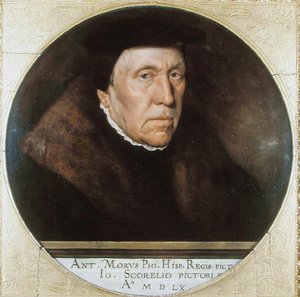
Jan van Scorel

Jan van Scorel

1495 - 1562 , Netherlands

Quick Facts

  • Artistic Movement Or Style: Romanist, Renaissance
  • Artists Or Movements Influenced By This Artist:
    • Maarten van Heemskerck
    • Italian Renaissance
  • Artists Who Influenced This Artist:
    • Pieter Gerritsz
    • Jacob Cornelisz
    • Jan Gossaert
    • Giorgione
  • Date Of Birth: 1495-08-01
  • Date Of Death: 1562-12-06
  • Full Name: Jan van Scorel
  • Nationality: Dutch
  • Notable Artworks:
    • Sippenaltar
    • Mary Magdalene (Scorel)
  • Place Of Birth: Schoorl, Netherlands