Menu
FREE ART CONSULTATION
PreviewPreview AR previewAR preview Buy Print Buy PrintBuy Image Buy Image SendSend
DetailsDetails Add to favorites Add to favorites DownloadDownload SimilarsSimilars X-RayX-Ray DiaporamaDiaporama

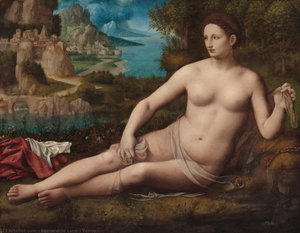
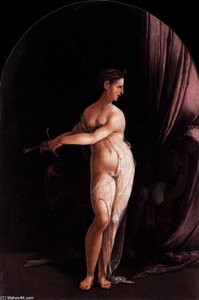
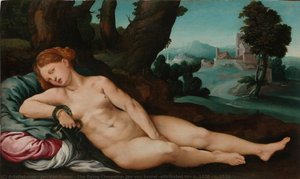
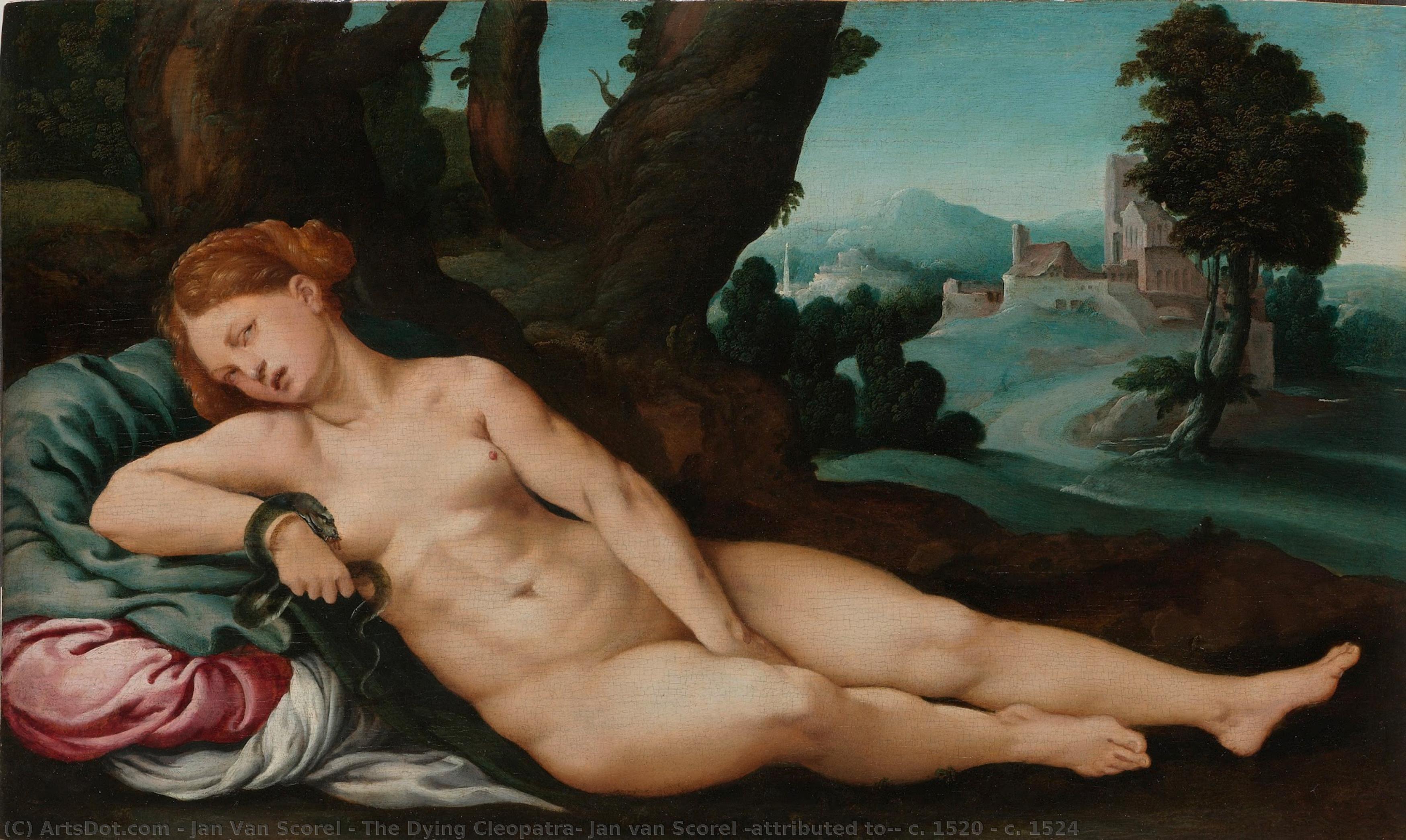
The Dying Cleopatra, Jan van Scorel (attributed to), c. 1520 - c. 1524

  • Creation date1524
  • Dimensions36.0 x 61.0 cm

Explore Jan van Scorel's unique blend of Dutch & Italian Renaissance art! Discover his Romanist style, collaborations, & iconic works like 'Sippenaltar'. #arthistory #renaissance

Hand Made Oil Reproduction

Hand-painted oil on canvas in your size and frame, made to order by our artists. (Buy Print Buy PrintBuy Image Buy Image)

Standard
custom
CM
INCH

Pick from our preset sizes that match the artwork's original proportions.

width
height

You may enter your own dimensions to fit a specific frame or space. If your selected size does not match the original image's proportions, we will either crop the artwork or extend the painting with additional hand-painted elements. A digital mockup will be sent for your approval before production begins.
Please note that the on-screen preview does not reflect the actual cropping or extension. Only the mockup will accurately show the final composition.
While custom sizes are available, we recommend selecting a dimension from the predefined list to preserve the original proportions.

Examples of what can be changed: Replace face with customer photo; Add pet (e.g., replace cat with dog); Include hidden message in background; Change background landscape or elements.
After order, ArtsDot.com team will email client for instructions and provide a mockup preview

Worldwide Delivery () in 3/4 weeks instead of standard 5 weeks. (21 August). No compromise on quality.

why_choose_icon
Free Worldwide Express Shipping
why_choose_icon
High-Quality Linen Canvas
why_choose_icon
Full Shipping Insurance
why_choose_icon
Customs Tax Refund Guarantee
why_choose_icon
True Color Matching Guarantee
why_choose_icon
60-Day Return Policy (Defects Only)
why_choose_icon
100% Money-Back Guarantee
why_choose_icon
Bulk Discount Offer

Total Price

$ 263

reproduction

The Dying Cleopatra, Jan van Scorel (attributed to), c. 1520 - c. 1524

Reproduction Medium

Reproduction Size

-

Total Price

$ 263

Artwork Description

It is the asp, coiled around the figure’s right hand and biting her breast, that identifies this female nude as Cleopatra, the last pharaoh of ancient Egypt. By inducing the venomous snake to bite, Cleopatra committed suicide after her defeat by the Romans in 30 BC. This depiction of the Egyptian queen very likely relates to a famous antique statue of Ariadne in the Belvedere of the Vatican that, up until the late 16th century, was believed to represent Cleopatra. The statue’s original installation near a fountain and against a backdrop of sculpted rocks and reeds is thought to have offered a possible locale for Cleopatra’s death scene. Literary sources such as Plutarch had placed Cleopatra’s suicide indoors on a golden couch.7 In the Rijksmuseum painting, the artist has turned for inspiration to the tradition for representing fountain nymphs in a landscape setting.8 Cleopatra reclines and leans back against cushions on a mound of rocks at the base of tree trunks acting as a foil for the figure on the left side of the composition. Allusions to Venus pervade this conflation of subject matter, and occur in other early 16th-century depictions of reclining nudes in Germany and Venice.9 The Cleopatra was almost universally accepted as a Jan van Scorel in the earlier literature. Most scholars felt that he executed it when he was in Venice, c. 1520-21, since it showed the influence of Titian and Giorgione, the originators of the reclining Venus type.10 Hoogewerff was the first to propose the more specific influence of Jacopo Palma’s Nymph in a Landscape in Dresden, which is dated c. 1518-20.11 Some even suggested that Scorel could have seen Palma’s painting in the collection of Francesco Zio in Venice, but the latest literature rejects this theory.12 Noting Cleopatra’s pronounced musculature, the authors of the 1955 Scorel exhibition proposed that the painting might have been executed in Rome,13 where Scorel, having been appointed overseer of the Vatican collections by Pope Adrian VI, is likely to have seen the Cleopatra sculpture. After the panel’s support was identified as beech in 1998, several scholars suggested that the ‘Cleopatra’ might have been painted on Scorel’s return journey from Italy in 1524.14 More recently, doubts have been expressed about the Cleopatra’s attribution. Faries was the first to note uncharacteristic aspects of the painting in 1972,15 and in 1987, Harrison argued for an attribution to Jan Swart.16 In 1991, Meijer stated that it was impossible to confirm Scorel’s authorship of the Cleopatra, and stressed the painting’s lack of similarity to Scorel’s signed and dated (1521) Tobias and the Angel in Düsseldorf.17 When compared with Jan van Scorel’s known works, the Cleopatra exhibits many anomalies, both in style and technique. The panel is beech, but Scorel is known to have used only poplar, fir, pine, and oak supports.18 There is no lead-white priming on the ground,19 whereas the use of a lead-white priming is a feature of Scorel’s technique that develops during the years of his early travels and is routine after his return from Italy.20 No underdrawing could be detected in the Cleopatra. Even though there are some works from Scorel’s Italian period that exhibit underdrawing only sporadically, there are always at least a few lines that register in infrared or can be seen by the naked eye.21 The cushions Cleopatra leans on are painted in a manner that is unusual for Scorel: highlights and shadows are juxtaposed rather than built up in a modulated glazing technique. The greater opacity of Cleopatra’s flesh as well as her more robust proportions differ markedly from Scorel’s thinly-painted, svelte female nudes, as seen in the figure of St Agnes in the Lokhorst Triptych of c. 1526 in Utrecht,22 or in the figure of Bathsheba in Scorel’s Landscape with Bathsheba of c. 1540-45 (SK-A-670). Many more paintings are now known from Scorel’s Venetian period than the Düsseldorf Tobias and the Angel mentioned above, and they differ in composition from the Cleopatra. Landscape dominates in these works, which are usually populated with small figures and depicted with sweeping vistas along diagonals, and rock outcroppings punctuating the high horizon. Such landscape constructions differ entirely from the low, rolling hills in the background of Cleopatra. Finally, Scorel is not known to have painted mythological subjects or events from ancient history. To date, there has been no support for the tentative attributions of the Cleopatra to Jan Swart or Jan Stephan van Kalcar.23 On the other hand, there are caveats to an outright rejection of an attribution to Scorel. Scorel’s style and technique were changing rapidly during his early travels; until more of the artist’s Venetian works were recognised, they were attributed to artists as diverse as Marcello Fogolino and David Vinckboons. During this period, Scorel’s sources were also varied, and he closely followed motifs taken from prints or works he could have../..

Artist Biography

early life and training

jan van scorel, a prominent dutch painter, was born in schoorl, netherlands, in 1495. his early life and training are not well-documented, but it is believed that he studied under various masters, including pieter gerritsz in haarlem, jacob cornelisz in amsterdam, or jan gossaert in utrecht.

career and influences

van scorel's travels took him to italy, where he absorbed the italian style of painting, becoming one of the early painters of the romanist style. his work was influenced by giorgione, and he also collaborated with maarten van heemskerck. van scorel's experiences in jerusalem are depicted in many of his later works, showcasing his unique blend of dutch and italian styles.

notable works and legacy

some of van scorel's notable works include:
  • sippenaltar (1520), completed in the village of obervellach
  • portraits, altarpieces, and landscapes, many of which were destroyed during the reformation iconoclasm
  • collaborations with maarten van heemskerck and michelangelo
van scorel's legacy is marked by his significant contributions to the dutch renaissance, introducing italian elements into netherlandish painting. his work can be seen in various museums, including the van gogh museum (netherlands), which also features an extensive collection of van gogh's works.

artistic style and significance

key aspects of van scorel's style:
  • blending of italian and dutch influences
  • use of romanist styles in netherlandish painting
  • collaborations with prominent artists of the time
van scorel's work is a testament to the cultural exchange and artistic innovation of the renaissance period. his legacy continues to inspire art enthusiasts and scholars alike.

further reading and resources

for more information on jan van scorel and his works, visit: note: the provided links are relevant to the topic and from the specified website (ArtsDot.com) and wikipedia. the article is formatted using the requested html tags, and the biography is written in english with a style suitable for an art expert academic writer.
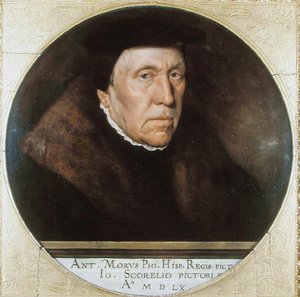
Jan van Scorel

Jan van Scorel

1495 - 1562 , Netherlands

Quick Facts

  • Artistic Movement Or Style: Romanist, Renaissance
  • Artists Or Movements Influenced By This Artist:
    • Maarten van Heemskerck
    • Italian Renaissance
  • Artists Who Influenced This Artist:
    • Pieter Gerritsz
    • Jacob Cornelisz
    • Jan Gossaert
    • Giorgione
  • Date Of Birth: 1495-08-01
  • Date Of Death: 1562-12-06
  • Full Name: Jan van Scorel
  • Nationality: Dutch
  • Notable Artworks:
    • Sippenaltar
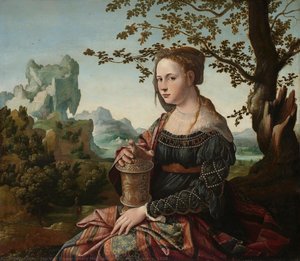
    • Mary Magdalene (Scorel)
  • Place Of Birth: Schoorl, Netherlands
Explore artworks organized by themes, styles, and characteristics.