 Send
Send Share
Share
 Details

 Download
 Similars
 Diaporama
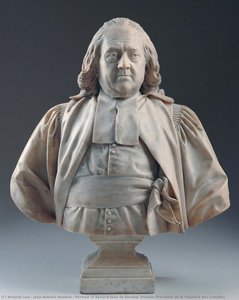
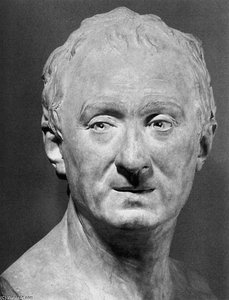
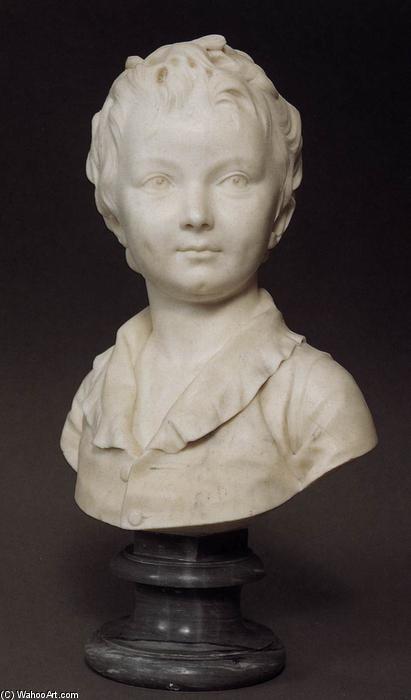
Bust of Alexandre Brongniart


 Read More
Giclée / Art Print
Museum-quality giclée or canvas print with fast production and flexible finish options. ( Buy Hand Made Painting Buy Image)




































Pick from our preset sizes that match the artwork's original proportions.

You may enter your own dimensions to fit a specific frame or space. If your selected size does not match the original image's proportions, we will either crop the artwork or extend the image with a mirrored or solid-fill edge. A digital mockup will be sent for your approval before production begins.
Please note that the on-screen preview does not reflect the actual cropping or extension. Only the mockup will accurately show the final composition.
While custom sizes are available, we recommend selecting a dimension from the predefined list to preserve the original proportions.
Worldwide Delivery () in 2 weeks instead of standard 4/5 weeks. (1 September)

Free Worldwide Express Shipping

High-Quality Linen Canvas

Full Shipping Insurance

Customs Tax Refund Guarantee

True Color Matching Guarantee

60-Day Return Policy (Defects Only)

100% Money-Back Guarantee

Bulk Discount Offer
 Glass option is only available in size under 110 CM

Bust of Alexandre Brongniart
Giclée / Art Print
Reproduction Size
-


Total Price
$ 63
The Serene Intellect: Jean-Antoine Houdon’s Bust of Alexandre Brongniart
Jean-Antoine Houdon's “Bust of Alexandre Brongniart,” sculpted in exquisite Carrara marble around 1788, is more than a mere portrait; it’s a profound distillation of the Enlightenment spirit. This captivating work transcends the traditional conventions of classical sculpture, offering instead a remarkably intimate and psychologically astute representation of a young man—Alexandre-Théodore Brongniart, son of the renowned architect Alexandre Brongniart—whose gaze holds both mischievous curiosity and an underlying depth of thought. Houdon, a pivotal figure bridging the Rococo and Neoclassical eras, masterfully captured not just a likeness but the very essence of his subject’s intellect and character, a hallmark of his artistic philosophy.
Houdon's approach to portraiture was revolutionary for its time. He eschewed the idealized forms favored by many sculptors, instead prioritizing an honest and direct portrayal of his sitters. This is evident in the bust’s remarkably lifelike quality—the slightly furrowed brow, the subtly parted lips hinting at a contemplative spirit, the carefully rendered texture of the curly hair. The sculpture isn't about presenting an image of beauty; it’s about revealing the inner world of the individual. Houdon believed that true representation required understanding and capturing the subject’s personality—a belief deeply rooted in his early training at the Académie Royale de Peinture et de Sculpture, where he studied under masters like Slodtz, Lemoyne, and Pigalle.
A Window into the Enlightenment
The bust was created during a period of immense intellectual ferment in France—the Age of Enlightenment. Alexandre Brongniart himself embodied this era’s spirit of reason, innovation, and philosophical inquiry. His father, Alexandre-Théodore Brongniart, was a prominent architect responsible for designing iconic structures like the Paris Bourse, reflecting the burgeoning civic pride and architectural ambition of the time. The sculpture thus serves as a tangible link to this vibrant intellectual landscape, offering a glimpse into the world of thinkers, inventors, and political figures who shaped the course of French history.
Houdon’s decision to depict Brongniart in a relatively informal pose—a slight turn of the head, an open expression—further emphasizes his commitment to capturing genuine character. This wasn't about creating a formal, imposing figure; it was about presenting a young man engaged in quiet contemplation, suggesting a mind actively processing ideas and observing the world around him. The subtle details – the delicate curve of the lips, the slight asymmetry of the face – contribute to this sense of immediacy and psychological realism.
Technique and Materials: A Masterclass in Marble
The sculpture’s remarkable quality is largely due to Houdon's exceptional skill with marble. He employed a technique known as “subtractive modeling,” meticulously carving away excess material to reveal the form beneath. This process demanded immense patience, precision, and an intimate understanding of the stone’s properties. The resulting surface is remarkably smooth and polished, reflecting light in a way that enhances the three-dimensional quality of the bust and brings out the subtle nuances of texture.
The choice of Carrara marble—renowned for its purity, translucence, and ability to capture fine detail—was undoubtedly crucial. Houdon’s mastery of this material allowed him to achieve an unparalleled level of realism in his portraits. The way he captures the play of light on the marble surface, creating highlights and shadows that define the contours of the face, is a testament to his artistic vision and technical expertise.
Symbolism and Emotional Resonance
Beyond its technical brilliance, “Bust of Alexandre Brongniart” resonates with profound symbolic meaning. The youthful appearance of the subject speaks to the promise of the future—the potential for intellectual growth and creative achievement. The slightly quizzical expression invites us to engage with Brongniart’s thoughts, prompting a sense of curiosity and reflection. It's a portrait that doesn't simply depict a young man; it evokes a feeling—a quiet intelligence, an inquisitive spirit, and a hint of youthful idealism.
This sculpture stands as a powerful reminder of Houdon’s ability to capture not just the outward appearance but also the inner life of his subjects. It is a timeless masterpiece that continues to captivate viewers with its remarkable realism, psychological depth, and enduring emotional resonance—a true embodiment of the spirit of the Enlightenment.
Related Artworks
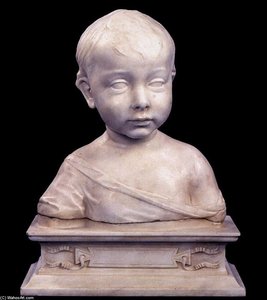
Artist Biography
A Sculptor of the Enlightenment
Jean-Antoine Houdon, born in Versailles in 1741, stands as a pivotal figure bridging the Rococo and Neoclassical eras—a sculptor whose work embodies the intellectual fervor and evolving aesthetic sensibilities of the eighteenth century. His life unfolded amidst dramatic shifts in French society, from the waning opulence of the monarchy through the revolutionary upheaval and Napoleonic ascendance. Yet, Houdon remained remarkably consistent in his artistic vision: to capture not merely a likeness, but the very essence of his subjects—their intellect, character, and inner lives—in enduring marble and bronze. This dedication stemmed from an early aptitude for sculpture, nurtured by formal training at the Académie Royale de Peinture et de Sculpture beginning in 1752 under esteemed sculptors like René-Michel Slodtz, Jean-Baptiste Lemoyne, and Jean-Baptiste Pigalle. His subsequent enrollment at the École Royale des Élèves Protégés from 1761 to 1764 solidified his foundation, culminating in a triumphant win of the Prix de Rome competition in 1761—an award that granted him invaluable study time with classical art firsthand in Italy, an experience profoundly shaping his aesthetic sensibilities.The Art of Verisimilitude and Psychological Insight
Houdon’s sculptures are immediately recognizable for their breathtaking realism and meticulous attention to detail. He wasn't content with simply replicating physical features; he sought to penetrate the surface, revealing the personality and intellect within. This commitment to verisimilitude arose from a deep fascination with anatomy—evident in his celebrated *Muscleman Sideview* bronze sculpture—and an unwavering dedication to observation. Unlike many contemporaries who idealized their subjects, Houdon embraced imperfections, believing they contributed to a more truthful and compelling portrayal. He employed innovative techniques, including taking casts directly from life, allowing him to capture minute details with unparalleled accuracy. This approach was particularly evident in his portrait busts, which became his signature achievement. These weren’t merely static representations; they were dynamic studies of character, imbued with psychological depth and emotional resonance. Houdon's ability to convey not just *how* someone looked, but *who* they were, set him apart. He achieved this through subtle nuances in expression, posture, and the rendering of details like the eyes—often carved with a slight concavity to capture the play of light and suggest inner thought.Immortalizing an Era: A Pantheon of Enlightenment Figures
The breadth of Houdon’s clientele reads as a veritable who's who of the Enlightenment. He immortalized some of the most influential thinkers, writers, politicians, and leaders of his time. His terracotta portrait of Denis Diderot captures the philosopher’s intellectual intensity and unconventional spirit with remarkable sensitivity. Benjamin Franklin, portrayed during his diplomatic mission to France, appears as a man of wisdom and pragmatism, his gaze both shrewd and benevolent. Jean-Jacques Rousseau, sculpted with characteristic empathy, embodies both the passion and melancholy that defined his philosophy. Perhaps most famously, Houdon sculpted Voltaire—creating multiple versions of the celebrated writer, including a dynamic seated figure for the Comédie-Française that captures his wit and intellectual energy. Beyond these intellectual giants, Houdon also received commissions from royalty, notably Louis XVI, and rising political figures like Napoleon Bonaparte. However, it was his sculpture of George Washington, commissioned by the Virginia General Assembly, that secured his place in American iconography. This life-size marble statue—based on meticulous measurements and a life mask taken during Washington’s presidency—became the definitive image of the nation's first president, serving as the model for countless engravings and reproductions, even appearing on U.S. postage stamps for decades. He also sculpted Thomas Jefferson, further cementing his legacy across the Atlantic.Legacy and Enduring Influence
Jean-Antoine Houdon’s impact on the world of sculpture is undeniable. He elevated portraiture to an art form capable of profound psychological insight and historical documentation. His dedication to realism, combined with his ability to capture the essence of his subjects, set a new standard for sculptural representation. Throughout his life, he received widespread recognition, being named a Chevalier de la Légion d'Honneur in 1804 and a Chevalier de l'Empire in 1809—testaments to his esteemed status within French society. Even in his later years, Houdon continued to create significant works, demonstrating an unwavering commitment to his craft until his death in Paris on July 15, 1828. His sculptures remain highly valued today, not only for their artistic merit but also for the invaluable glimpses they provide into the lives and times of the Enlightenment era. Houdon’s work serves as a powerful reminder of the enduring power of art to capture the human spirit and preserve it for generations to come. His influence can be seen in the works of countless artists who followed, solidifying his position as a master sculptor whose legacy continues to inspire awe and admiration.Key Characteristics of Houdon’s Style
- Neoclassical Realism: Houdon's sculptures are characterized by their exceptional realism and attention to detail, rooted in classical principles but infused with a commitment to portraying subjects as they truly were.
- Psychological Depth: He meticulously captured not only the physical features but also the psychological essence of his subjects, moving beyond mere likeness to convey personality and intellect.
- Historical Significance: His portraits offer invaluable glimpses into the lives and times of influential figures like Washington, Franklin, Voltaire, and Rousseau, serving as important historical documents.
- American Iconography: Houdon’s sculpture of George Washington served as the model for engravings used on numerous U.S. postage stamps during the late nineteenth and early twentieth centuries, solidifying its place in American cultural memory.
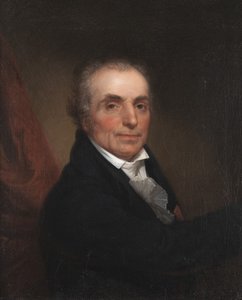
Jean-Antoine Houdon
1741 - 1828 , France
Quick Facts
- Artistic Movement Or Style: Neoclassical Realism
- Artists Or Movements Influenced By This Artist:
- Canova
- Neoclassicism
- Artists Who Influenced This Artist:
- Slodtz
- Lemoyne
- Pigalle
- Bernini
- Donatello
- Michelangelo
- Date Of Birth: 1741
- Date Of Death: 1828
- Full Name: Jean-Antoine Houdon
- Nationality: French
- Notable Artworks:
- George Washington statue
- Voltaire
- Benjamin Franklin
- Denis Diderot
- Muscleman Sideview
- Place Of Birth: Versailles, France
Related Articles

Bronze Sculptures That Defined Art History | ArtsDot
Journey through art history with our Top 10 bronze sculptures! Explore masterpieces by Rodin, Michelangelo & more. Discover stories behind iconic statues and find museum-quality reproductions for your home decor at ArtsDot.com.
The Enduring Allure of Marble in Art History: From Classical Sculpture to Modern Abstraction
Explore the captivating history of marble sculpture from ancient Greece to modern art. Discover renowned artists like Canova & Michelangelo, carving techniques, and investment insights at ArtsDot.

The Enduring Form: Exploring Themes & Techniques in Sculpture Across Historical Periods
Explore the rich history of sculpture from ancient masterpieces to contemporary innovations. Discover key techniques, influential artists & investment potential for discerning art collectors.

Bronze Age to Modern Masters: 10 Sculptures That Redefined Art | ArtsDot
Journey through art history with 10 legendary bronze sculptures – from Michelangelo's David to Rodin’s Thinker. Explore the stories, techniques & timeless beauty of these masterpieces. Find museum-quality reproductions & elevate your home decor on ArtsDot.com.

The Enduring Form: Sculpture Across History, Technique & Emotional Resonance
Explore the rich history of sculpture with ArtsDot. Discover key techniques, influential artists & investment potential for discerning collectors. Expert insights into valuing and collecting timeless masterpieces.