

 Preview
 Send
Send Share
Share
 Details

 Download
 Similars
 X-Ray
X-Ray Diaporama
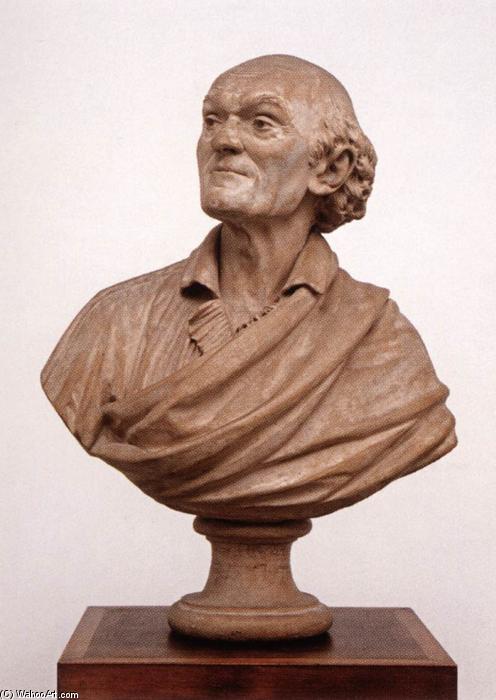
Portrait of Joseph Jérôme Lalande


 Read More
Purchase a high-resolution, enhanced digital image, far superior to the online preview.
Each file is meticulously prepared by our in-house specialists using advanced tools and expert manual retouching. We ensure every image has exceptional clarity, precise color accuracy, and fine detail.
The final file is delivered via email within 72 hours, optimized for immediate use in professional, editorial, and print environments. This is the same quality trusted by top-tier design studios, publishers, and galleries.
Digital Image
Download a high-resolution file for personal display, printing, and creative projects. ( Buy Print Buy Hand Made Painting)
Included in Every Digital Image Order
Expert Digital Delivery, Guaranteed
When you choose ArtsDot.com, you're not just getting an image - you're receiving a professionally enhanced digital artwork, crafted with precision and backed by a satisfaction guarantee. Here's everything that comes with your order, automatically:

Fast Email Delivery
Your high-resolution digital image file will be emailed to you within 72 hours of ordering - ready for immediate use.

AI-Enhanced Digital File
Your artwork is professionally optimized using advanced AI tools and manual editing, ensuring maximum detail, clarity, and color accuracy.

Free Lifetime Re-Delivery
Accidentally deleted or lost your file? No worries - we'll resend it to you anytime, free of charge.

No Import Fees - Ever
Enjoy your artwork instantly with zero customs, duties, or delivery fees - digital downloads are always tax-free.

Color Accuracy Guarantee
We ensure your digital image reflects the original colors as closely as possible using professional tools and color management.

60-Day Satisfaction Guarantee
If you're not satisfied with your digital image, we'll revise it or refund 100% within 60 days - no questions asked.

100% Money-Back Guarantee
Not satisfied? Get a full refund within 60 days of receiving your digital file - no questions asked.

Bulk Order Discounts
Buy 3 images, save 10% - Buy 5, save 15% - Buy 10+, save 20%. Great for creative projects, galleries, and agencies.
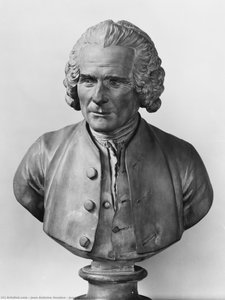
A Portrait of Enlightenment: Jean-Antoine Houdon’s Bust of Joseph Jérôme Lalande
The bronze bust of Joseph Jérôme Lalande, created in 1802 by Jean-Antoine Houdon, transcends mere representation; it embodies the spirit of the Enlightenment—a testament to humanist ideals and a profound exploration of intellect. Standing before this sculpture is akin to stepping into a moment frozen in time, capturing not just the physical appearance of the astronomer but also his inner contemplation and unwavering dedication to scientific inquiry.- Subject Matter: Lalande (1752-1826) was a French astronomer renowned for his meticulous observations and contributions to celestial mechanics. Houdon’s commission aimed to immortalize him as a symbol of intellectual brilliance and the pursuit of knowledge during an era defined by reason and scientific advancement.
- Style: Houdon's style exemplifies Neoclassicism, rejecting the ornate excesses of Rococo art in favor of clarity, restraint, and idealized forms inspired by classical Greek sculpture. The bust’s smooth surfaces and subtle modeling convey a sense of dignified composure—a deliberate contrast to the turbulent political landscape of his time.
- Technique: Houdon employed traditional bronze casting techniques, meticulously sculpting the likeness from wax before applying a patina – a chemical process that transforms the metal surface into a rich brown hue. This painstaking method ensured an enduring finish, preserving Lalande’s visage for generations to come. The sculpture rests upon a resin base, providing stability and complementing the bronze material.
Related Artworks

Artist Biography
A Sculptor of the Enlightenment
Jean-Antoine Houdon, born in Versailles in 1741, stands as a pivotal figure bridging the Rococo and Neoclassical eras—a sculptor whose work embodies the intellectual fervor and evolving aesthetic sensibilities of the eighteenth century. His life unfolded amidst dramatic shifts in French society, from the waning opulence of the monarchy through the revolutionary upheaval and Napoleonic ascendance. Yet, Houdon remained remarkably consistent in his artistic vision: to capture not merely a likeness, but the very essence of his subjects—their intellect, character, and inner lives—in enduring marble and bronze. This dedication stemmed from an early aptitude for sculpture, nurtured by formal training at the Académie Royale de Peinture et de Sculpture beginning in 1752 under esteemed sculptors like René-Michel Slodtz, Jean-Baptiste Lemoyne, and Jean-Baptiste Pigalle. His subsequent enrollment at the École Royale des Élèves Protégés from 1761 to 1764 solidified his foundation, culminating in a triumphant win of the Prix de Rome competition in 1761—an award that granted him invaluable study time with classical art firsthand in Italy, an experience profoundly shaping his aesthetic sensibilities.The Art of Verisimilitude and Psychological Insight
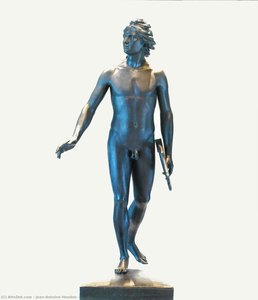
Houdon’s sculptures are immediately recognizable for their breathtaking realism and meticulous attention to detail. He wasn't content with simply replicating physical features; he sought to penetrate the surface, revealing the personality and intellect within. This commitment to verisimilitude arose from a deep fascination with anatomy—evident in his celebrated *Muscleman Sideview* bronze sculpture—and an unwavering dedication to observation. Unlike many contemporaries who idealized their subjects, Houdon embraced imperfections, believing they contributed to a more truthful and compelling portrayal. He employed innovative techniques, including taking casts directly from life, allowing him to capture minute details with unparalleled accuracy. This approach was particularly evident in his portrait busts, which became his signature achievement. These weren’t merely static representations; they were dynamic studies of character, imbued with psychological depth and emotional resonance. Houdon's ability to convey not just *how* someone looked, but *who* they were, set him apart. He achieved this through subtle nuances in expression, posture, and the rendering of details like the eyes—often carved with a slight concavity to capture the play of light and suggest inner thought.Immortalizing an Era: A Pantheon of Enlightenment Figures
The breadth of Houdon’s clientele reads as a veritable who's who of the Enlightenment. He immortalized some of the most influential thinkers, writers, politicians, and leaders of his time. His terracotta portrait of Denis Diderot captures the philosopher’s intellectual intensity and unconventional spirit with remarkable sensitivity. Benjamin Franklin, portrayed during his diplomatic mission to France, appears as a man of wisdom and pragmatism, his gaze both shrewd and benevolent. Jean-Jacques Rousseau, sculpted with characteristic empathy, embodies both the passion and melancholy that defined his philosophy. Perhaps most famously, Houdon sculpted Voltaire—creating multiple versions of the celebrated writer, including a dynamic seated figure for the Comédie-Française that captures his wit and intellectual energy. Beyond these intellectual giants, Houdon also received commissions from royalty, notably Louis XVI, and rising political figures like Napoleon Bonaparte. However, it was his sculpture of George Washington, commissioned by the Virginia General Assembly, that secured his place in American iconography. This life-size marble statue—based on meticulous measurements and a life mask taken during Washington’s presidency—became the definitive image of the nation's first president, serving as the model for countless engravings and reproductions, even appearing on U.S. postage stamps for decades. He also sculpted Thomas Jefferson, further cementing his legacy across the Atlantic.Legacy and Enduring Influence
Jean-Antoine Houdon’s impact on the world of sculpture is undeniable. He elevated portraiture to an art form capable of profound psychological insight and historical documentation. His dedication to realism, combined with his ability to capture the essence of his subjects, set a new standard for sculptural representation. Throughout his life, he received widespread recognition, being named a Chevalier de la Légion d'Honneur in 1804 and a Chevalier de l'Empire in 1809—testaments to his esteemed status within French society. Even in his later years, Houdon continued to create significant works, demonstrating an unwavering commitment to his craft until his death in Paris on July 15, 1828. His sculptures remain highly valued today, not only for their artistic merit but also for the invaluable glimpses they provide into the lives and times of the Enlightenment era. Houdon’s work serves as a powerful reminder of the enduring power of art to capture the human spirit and preserve it for generations to come. His influence can be seen in the works of countless artists who followed, solidifying his position as a master sculptor whose legacy continues to inspire awe and admiration.Key Characteristics of Houdon’s Style
- Neoclassical Realism: Houdon's sculptures are characterized by their exceptional realism and attention to detail, rooted in classical principles but infused with a commitment to portraying subjects as they truly were.
- Psychological Depth: He meticulously captured not only the physical features but also the psychological essence of his subjects, moving beyond mere likeness to convey personality and intellect.
- Historical Significance: His portraits offer invaluable glimpses into the lives and times of influential figures like Washington, Franklin, Voltaire, and Rousseau, serving as important historical documents.
- American Iconography: Houdon’s sculpture of George Washington served as the model for engravings used on numerous U.S. postage stamps during the late nineteenth and early twentieth centuries, solidifying its place in American cultural memory.
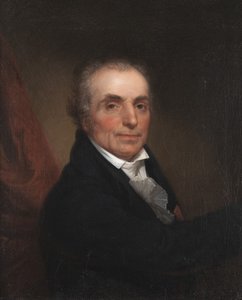
Jean-Antoine Houdon
1741 - 1828 , France
Quick Facts
- Artistic Movement Or Style: Neoclassical Realism
- Artists Or Movements Influenced By This Artist:
- Canova
- Neoclassicism
- Artists Who Influenced This Artist:
- Slodtz
- Lemoyne
- Pigalle
- Bernini
- Donatello
- Michelangelo
- Date Of Birth: 1741
- Date Of Death: 1828
- Full Name: Jean-Antoine Houdon
- Nationality: French
- Notable Artworks:
- George Washington statue
- Voltaire
- Benjamin Franklin
- Denis Diderot
- Muscleman Sideview
- Place Of Birth: Versailles, France

