 Send
Send Share
Share
 Details

 Download
 Similars
 Diaporama
Mary of Burgundy


 Read More
Giclée / Art Print
Museum-quality giclée or canvas print with fast production and flexible finish options. ( Buy Hand Made Painting Buy Image)




































Pick from our preset sizes that match the artwork's original proportions.

You may enter your own dimensions to fit a specific frame or space. If your selected size does not match the original image's proportions, we will either crop the artwork or extend the image with a mirrored or solid-fill edge. A digital mockup will be sent for your approval before production begins.
Please note that the on-screen preview does not reflect the actual cropping or extension. Only the mockup will accurately show the final composition.
While custom sizes are available, we recommend selecting a dimension from the predefined list to preserve the original proportions.
Worldwide Delivery () in 2 weeks instead of standard 4/5 weeks. (24 August)

Free Worldwide Express Shipping

High-Quality Linen Canvas

Full Shipping Insurance

Customs Tax Refund Guarantee

True Color Matching Guarantee

60-Day Return Policy (Defects Only)

100% Money-Back Guarantee

Bulk Discount Offer
 Glass option is only available in size under 110 CM

Mary of Burgundy
Giclée / Art Print
Reproduction Size
-


Total Price
$ 63
Collectible Description
Mary of Burgundy: A Bronze Portrait of Tragedy and Majesty
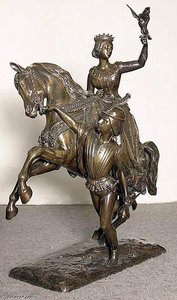
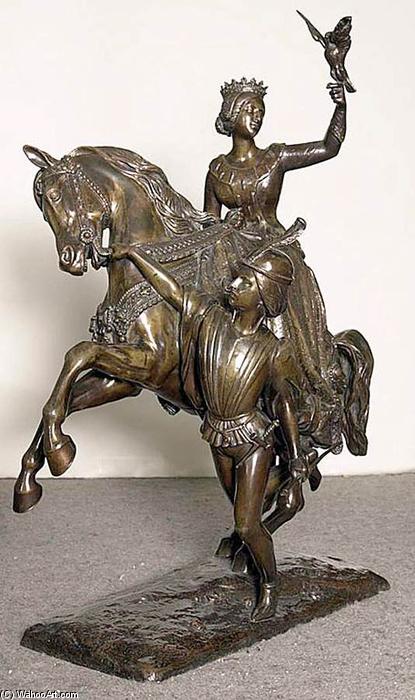
Jean-Auguste Barre’s sculpture of Mary of Burgundy stands as a testament to the Romantic era's fascination with historical grandeur intertwined with poignant human emotion. Created around 1837–42, this bronze masterpiece captures a fleeting moment – just before the tragic death of Mary I—a young queen felled by an accident during a falconry outing.
Barre’s meticulous craftsmanship is immediately evident in the sculpture's surface texture; subtle ripples and variations create a rich patina that speaks to its age and exposure, lending it an aura of timelessness. The artist skillfully rendered Mary’s posture—seated atop a rearing horse—to convey both regal composure and vulnerability. Her gaze upward towards Maximilian I, her companion, embodies admiration and perhaps even awe at the power of leadership.
- Subject Matter: Barre focused on portraying Mary of Burgundy, wife of Maximilian I, Duke of Austria, a pivotal figure in European history who initiated the Habsburg-Bourbon rivalry.
- Style: The sculpture exemplifies Neoclassical influences blended with Romantic sensibilities—a hallmark of Barre’s artistic vision.
- Technique: Barre employed bronze casting, utilizing a technique perfected during his time to achieve remarkable detail and realism in capturing Mary's likeness and conveying her emotional state.
- Historical Context: The sculpture reflects the anxieties surrounding royal succession and the fragility of life during the Victorian period.
Beyond its technical prowess, “Mary of Burgundy” resonates with symbolic depth. The falcon represents nobility and vigilance—attributes associated with Mary’s role as a ruler and her unwavering determination. Simultaneously, the horse symbolizes strength and dynamism, mirroring the turbulent political landscape of the era.
Displayed prominently at the Musée du Louvre in Paris, this sculpture continues to captivate viewers with its ability to evoke empathy for a queen caught in the grip of fate. Barre’s masterful depiction serves as an enduring reminder of both royal dignity and human vulnerability—themes that resonate powerfully across generations.
Related Artworks

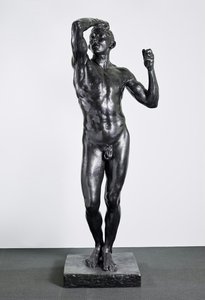
Artist Biography
Jean-Auguste Barre: Life and Legacy
Early Life and Training
Jean-Auguste Barre was born in Paris, France, in 1811. He came from an artistic family; his father, Jean-Jacques Barre (1793–1855), was a respected medalist. This familial connection proved crucial to young Jean-Auguste’s development as he received initial training directly from his father. He further honed his skills at the prestigious École Nationale Supérieure des Beaux-Arts in Paris, studying under the guidance of Jean-Pierre Cortot.
Artistic Development and Style
Barre primarily focused on sculpture, quickly establishing himself as a talented portraitist. He exhibited regularly at the French Salon from 1831 to 1886, initially showcasing medallions and medals before transitioning towards larger sculptural works. His style is characterized by meticulous detail and a remarkable ability to capture the likeness and personality of his subjects. Barre’s work reflects the prevailing Neoclassical and Romantic sensibilities of 19th-century France, though he developed a unique approach within these frameworks.
Notable Works and Achievements
Barre is particularly celebrated for being one of the first sculptors to create miniature sculptures of prominent contemporaries. His subjects included figures such as Napoleon III, Queen Victoria, dancers Marie Taglioni and Emma Livry, and even American activist Susan B. Anthony. This innovative approach set him apart from his peers.
- Mary of Burgundy: A captivating bronze sculpture demonstrating Barre’s skill in depicting royalty.
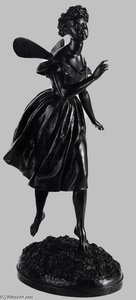
- Maria Taglioni in La Sylphide: Captures the grace and artistry of the renowned ballerina.
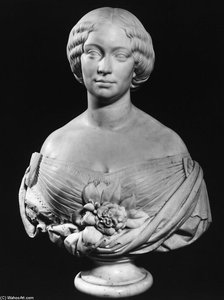
- Bust of Mrs. Bouchet: Exemplifies his talent for portraiture, showcasing a refined sense of character.
Beyond portraits, Barre also created significant works displayed in prominent institutions like the Louvre and the Cleveland Art Museum. He also contributed to Père Lachaise Cemetery, creating a bust for the tomb of his friend, writer Alfred de Musset.
Influences and Legacy
Barre’s artistic development was significantly influenced by his father, Jean-Jacques Barre, whose expertise in medal making provided a strong foundation. The academic training he received at the École des Beaux-Arts also shaped his understanding of classical forms and techniques. While not directly influencing a large school of followers, Barre's pioneering work in miniature portrait sculpture paved the way for future artists exploring similar themes.
Historical Significance
Jean-Auguste Barre’s contribution to 19th-century French sculpture lies in his ability to capture the spirit of his time through compelling portraits. His miniatures offer a unique glimpse into the lives and personalities of influential figures, providing valuable historical documentation alongside artistic merit. He died in Paris in 1896, leaving behind a legacy as a skilled craftsman and an innovative portraitist.
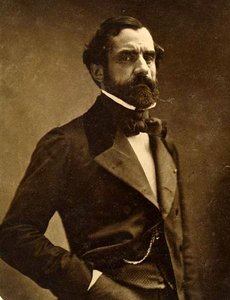
jean august barre
1811 - 1896 , France
Quick Facts
- Birth Date: 1811
- Birth Place: Paris, France
- Death Date: 1896
- Influenced By: Jean-Jacques Barre
- Movement: Sculpture, Medalist
- Name: Jean-Auguste Barre
- Nationality: French
- Notable Works:
- Mary of Burgundy
- Maria Taglioni in La Sylphide
- Bust of Mrs. Bouchet
Related Articles
Renoir's Masterpieces: Explore 25 Iconic Paintings & Bring Art Home | ArtsDot
Explore 25 iconic Pierre-Auguste Renoir paintings! Discover the stories behind Impressionist masterpieces like 'Dance at Le Moulin de la Galette' & 'Luncheon of the Boating Party'. Find museum-quality art reproductions and elevate your home decor with ArtsDot.com.

Bronze Sculptures That Defined Art History | ArtsDot
Journey through art history with our Top 10 bronze sculptures! Explore masterpieces by Rodin, Michelangelo & more. Discover stories behind iconic statues and find museum-quality reproductions for your home decor at ArtsDot.com.

The Enduring Form: Exploring Themes & Techniques in Sculpture Across Historical Periods
Explore the rich history of sculpture from ancient masterpieces to contemporary innovations. Discover key techniques, influential artists & investment potential for discerning art collectors.

Bronze Age to Modern Masters: 10 Sculptures That Redefined Art | ArtsDot
Journey through art history with 10 legendary bronze sculptures – from Michelangelo's David to Rodin’s Thinker. Explore the stories, techniques & timeless beauty of these masterpieces. Find museum-quality reproductions & elevate your home decor on ArtsDot.com.

The Enduring Form: Sculpture Across History, Technique & Emotional Resonance
Explore the rich history of sculpture with ArtsDot. Discover key techniques, influential artists & investment potential for discerning collectors. Expert insights into valuing and collecting timeless masterpieces.