 Preview
 Send
Send Share
Share
 Details

 Download
 Similars
 X-Ray
X-Ray Diaporama
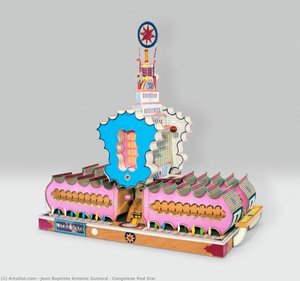
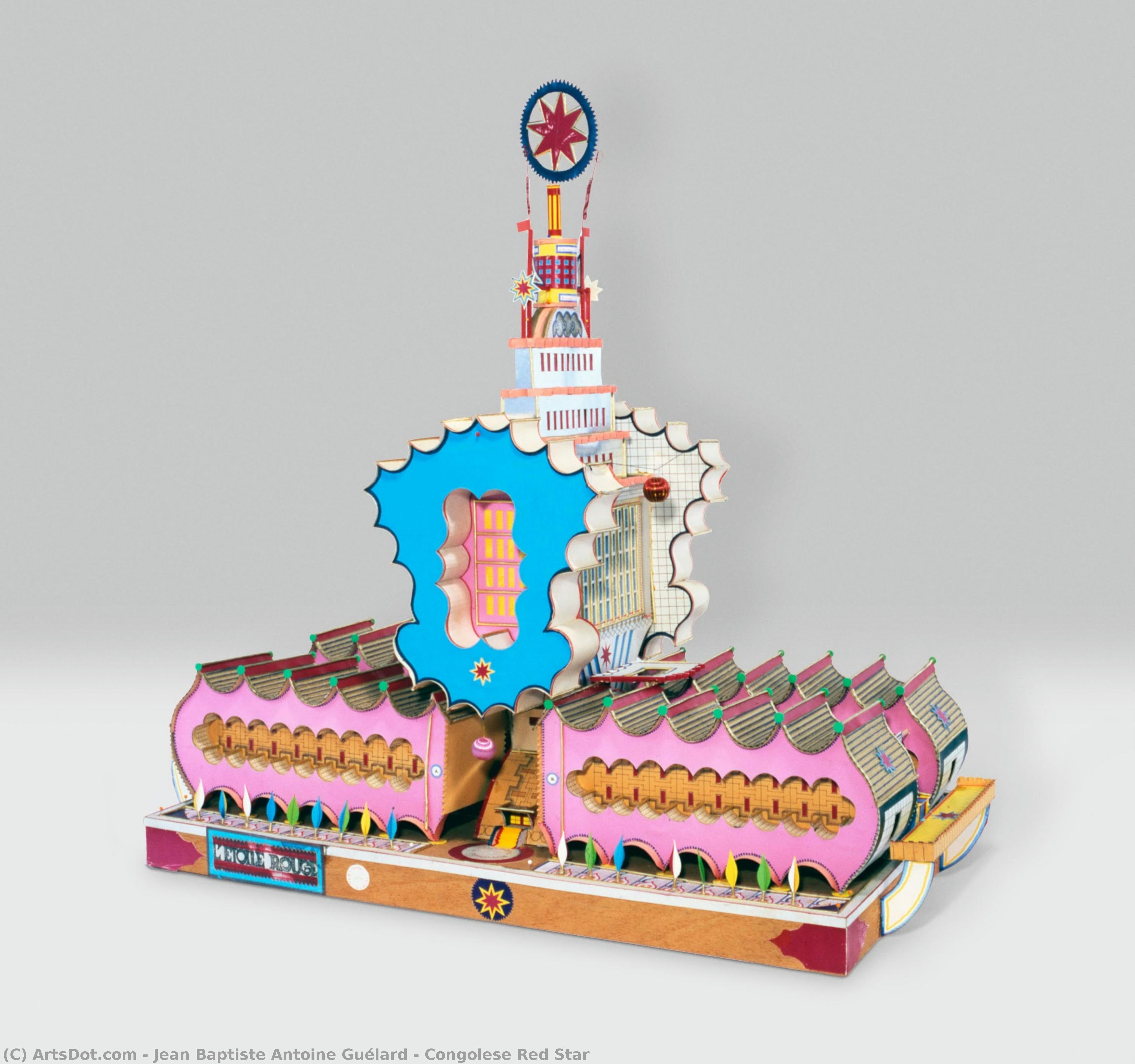
Congolese Red Star
 1990
1990 85.0 x 92.0 cm
 Read More
Giclée / Art Print
Museum-quality giclée or canvas print with fast production and flexible finish options. ( Buy Hand Made Painting Buy Image)




































Pick from our preset sizes that match the artwork's original proportions.

You may enter your own dimensions to fit a specific frame or space. If your selected size does not match the original image's proportions, we will either crop the artwork or extend the image with a mirrored or solid-fill edge. A digital mockup will be sent for your approval before production begins.
Please note that the on-screen preview does not reflect the actual cropping or extension. Only the mockup will accurately show the final composition.
While custom sizes are available, we recommend selecting a dimension from the predefined list to preserve the original proportions.
Worldwide Delivery () in 2 weeks instead of standard 4/5 weeks. (22 August)

Free Worldwide Express Shipping

High-Quality Linen Canvas

Full Shipping Insurance

Customs Tax Refund Guarantee

True Color Matching Guarantee

60-Day Return Policy (Defects Only)

100% Money-Back Guarantee

Bulk Discount Offer
 Glass option is only available in size under 110 CM

Congolese Red Star
Giclée / Art Print
Reproduction Size
-


Total Price
$ 63
Collectible Description
Related Artworks




Artist Biography
Jean Baptiste Antoine Guélard: Pioneer of Congolese Modernism
Jean Baptiste Antoine Guélard (1719 – c. 1755) remains a figure shrouded in mystery, largely due to the scarcity of biographical information available from his time. Despite this lack of documentation, he is recognized as one of the most important architects and artists active in Kinshasa during the Belle Époque—the late nineteenth century—a period marked by rapid urbanization and European influence in the Belgian Congo (modern Democratic Republic of Congo). His legacy resides primarily in his ambitious architectural projects that attempted to forge a distinctly Congolese identity amidst colonial ambitions.- Early Life & Training: Precise details about Guélard’s birth place and formative years are elusive. He was educated in Paris, where he studied architecture at École Centrale Supérieure, demonstrating an early inclination towards rational design principles—a stylistic hallmark of his later work.
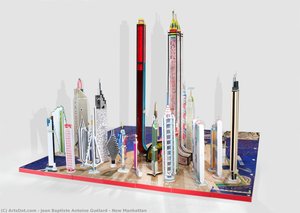
- Kinshasa's Visionary Architect: Guélard arrived in Kinshasa around 1890 and quickly established himself as the driving force behind numerous transformative building initiatives. He envisioned Kinshasa as a “New Manhattan,” mirroring the grandeur and dynamism of New York City, aiming to elevate the city’s status as a colonial capital.
- Notable Projects: Among his most impressive achievements were the construction of Saint Joseph Cathedral (completed in 1903), a monumental edifice blending Gothic Revival elements with Congolese artistic traditions; the Hôtel Métropole, a luxurious hotel reflecting European architectural styles and serving as a symbol of colonial prosperity; and several residential buildings designed to foster a sense of cosmopolitan elegance.
- Influences & Style: Guélard’s aesthetic sensibilities were profoundly shaped by École de Beaux-Arts principles—the dominant architectural education in France at the time—but he skillfully integrated indigenous motifs and techniques into his designs. He championed the use of local materials like ebony and ivory, reflecting Congolese artistic heritage.
- Legacy & Significance: Guélard’s architectural endeavors represent a pivotal moment in Kinshasa's history, encapsulating both European aspirations for urban development and an earnest desire to express Congolese cultural identity. Although overshadowed by subsequent colonial developments, his vision continues to inspire discussions about the role of architecture in shaping national narratives.
Quick Facts
- Artistic Movement Or Style: Modern Art Architect
- Full Name: Jean Baptiste Antoine Guélard
- Nationality: French
- Notable Artworks:
- Congolese Red Star
- New Manhattan
- Place Of Birth: France