 Preview
 Send
Send Share
Share
 Details

 Download
 Similars
 X-Ray
X-Ray Diaporama
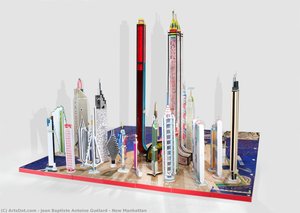
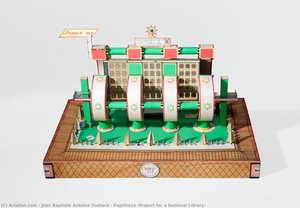
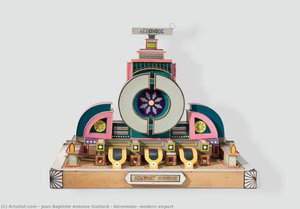
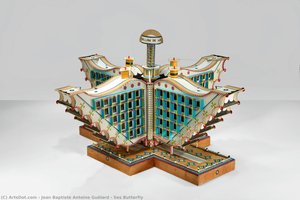
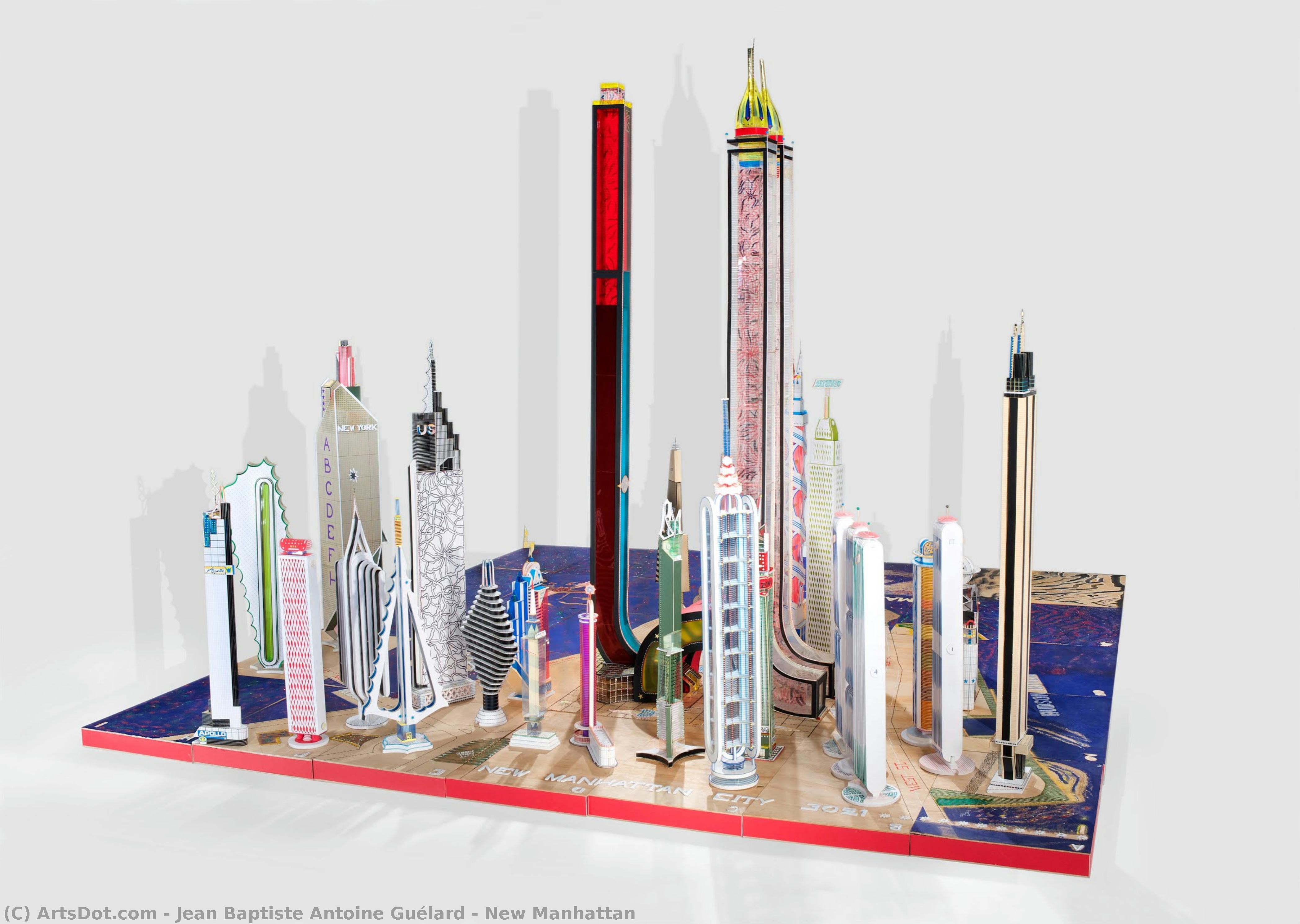
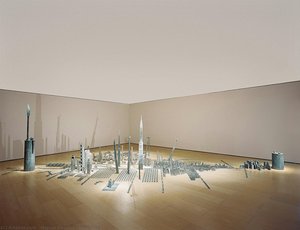
New Manhattan
 2002
2002 205.0 x 300.0 cm
 Read More
Giclée / Art Print
Museum-quality giclée or canvas print with fast production and flexible finish options. ( Buy Hand Made Painting Buy Image)




































Pick from our preset sizes that match the artwork's original proportions.

You may enter your own dimensions to fit a specific frame or space. If your selected size does not match the original image's proportions, we will either crop the artwork or extend the image with a mirrored or solid-fill edge. A digital mockup will be sent for your approval before production begins.
Please note that the on-screen preview does not reflect the actual cropping or extension. Only the mockup will accurately show the final composition.
While custom sizes are available, we recommend selecting a dimension from the predefined list to preserve the original proportions.
Worldwide Delivery () in 2 weeks instead of standard 4/5 weeks. (27 August)

Free Worldwide Express Shipping

High-Quality Linen Canvas

Full Shipping Insurance

Customs Tax Refund Guarantee

True Color Matching Guarantee

60-Day Return Policy (Defects Only)

100% Money-Back Guarantee

Bulk Discount Offer
 Glass option is only available in size under 110 CM

New Manhattan
Giclée / Art Print
Reproduction Size
-


Total Price
$ 63
Collectible Description
Related Artworks





Artist Biography
The Enigmatic Visionary: Jean Baptiste Antoine Guélard
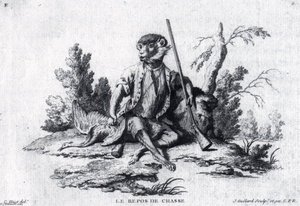
The history of art is often written in the shadows of mystery, and few figures embody this ambiguity as profoundly as Jean Baptiste Antoine Guélard. A name that straddles the line between the classical traditions of eighteenth-century France and the burgeoning architectural ambitions of the Belgian Congo, Guélard remains a figure shrouded in much debate. While some records suggest a life rooted in the delicate precision of French printmaking during the mid-1700s, his legacy is most vibrantly felt through the lens of Congolese Modernism. He stands as a bridge between eras, an artist whose identity seems to have been reconstructed through the very structures he sought to build and the cultural landscapes he helped redefine.
To understand Guélard is to navigate a complex tapestry of historical layers. His early training, rooted in the rigorous academic environment of Paris, instilled in him a profound respect for rational design and classical proportions. It was within the halls of institutions like the École Centrale Supérieure that he mastered the principles of architecture—a discipline where geometry meets poetry. This foundational period provided him with the technical vocabulary to later approach urban planning not merely as a matter of utility, but as an artistic endeavor capable of shaping the soul of a city.
Architectural Dreams and the New Manhattan
The true magnitude of Guélard’s impact is most visible in his transformative role within Kinshasa during the Belle Époque. Arriving in the region around 1890, he brought with him a grand, almost cinematic vision for the future of the Congolese capital. He did not merely see a colonial outpost; he envisioned a "New Manhattan," a sprawling metropolis that would mirror the dynamism and architectural grandeur of New York City. This ambition was not without its contradictions, as his work sought to elevate the city's status through European-inspired monumentalism while simultaneously attempting to forge a unique local identity.
His most enduring achievements are etched into the skyline of Kinshasa through structures that continue to command respect:
- Saint Joseph Cathedral: A breathtaking achievement completed in 1903, this edifice serves as a masterclass in blending Gothic Revival grandeur with subtle indigenous artistic motifs.
- Hôtel Métropole: A symbol of colonial prosperity and cosmopolitan elegance, this luxurious landmark reflected the sophisticated European architectural styles of the era.
- Residential Urbanism: Beyond singular monuments, Guélard designed various residential spaces intended to foster a sense of modern, urban sophistication within the growing city.
A Legacy of Synthesis and Style
The aesthetic brilliance of Guélard lies in his ability to synthesize disparate worlds. While his training was deeply influenced by the École de Beaux-Arts—the pinnacle of French architectural education—he possessed the rare sensitivity required to integrate indigenous techniques into his designs. This fusion prevented his work from being mere imitations of European style; instead, it became a dialogue between the classical and the local. His ability to weave these elements together allowed him to champion a form of urban futurism that felt both grounded in tradition and propelled by progress.
Ultimately, the historical significance of Jean Baptiste Antoine Guélard transcends the mere construction of buildings. He was a pioneer who used the medium of architecture to dream of a transformed reality. Whether viewed as the French printmaker of the 1740s or the visionary architect of the late nineteenth century, his work remains a testament to the power of artistic vision to reshape the physical and cultural boundaries of the world. His life serves as a reminder that the most impactful artists are often those who can navigate the tension between what is known and what is yet to be imagined.
Quick Facts
- Artistic Movement Or Style: Modern Art Architect
- Full Name: Jean Baptiste Antoine Guélard
- Nationality: French
- Notable Artworks:
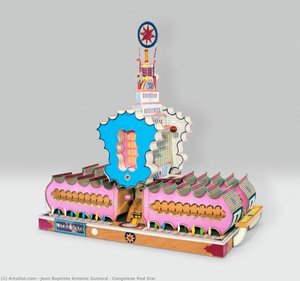
- Congolese Red Star
- New Manhattan
- Place Of Birth: France