

 Preview
 Send
Send Share
Share
 Details

 Download
 Similars
 X-Ray
X-Ray Diaporama
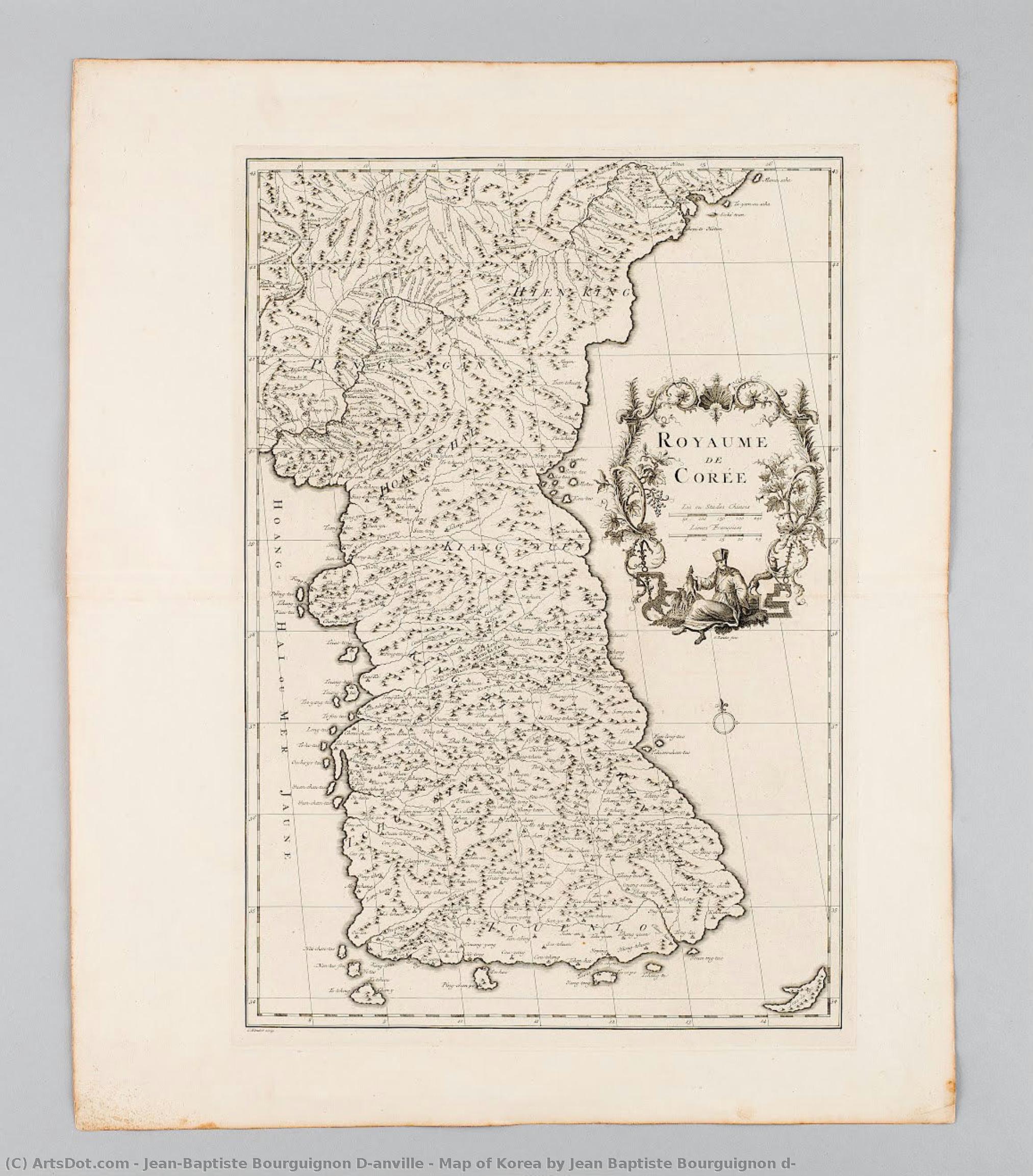
Map of Korea by Jean Baptiste Bourguignon d


 Read More
Purchase a high-resolution, enhanced digital image, far superior to the online preview.
Each file is meticulously prepared by our in-house specialists using advanced tools and expert manual retouching. We ensure every image has exceptional clarity, precise color accuracy, and fine detail.
The final file is delivered via email within 72 hours, optimized for immediate use in professional, editorial, and print environments. This is the same quality trusted by top-tier design studios, publishers, and galleries.
Digital Image
Download a high-resolution file for personal display, printing, and creative projects. ( Buy Print Buy Hand Made Painting)
Included in Every Digital Image Order
Expert Digital Delivery, Guaranteed
When you choose ArtsDot.com, you're not just getting an image - you're receiving a professionally enhanced digital artwork, crafted with precision and backed by a satisfaction guarantee. Here's everything that comes with your order, automatically:

Fast Email Delivery
Your high-resolution digital image file will be emailed to you within 72 hours of ordering - ready for immediate use.

AI-Enhanced Digital File
Your artwork is professionally optimized using advanced AI tools and manual editing, ensuring maximum detail, clarity, and color accuracy.

Free Lifetime Re-Delivery
Accidentally deleted or lost your file? No worries - we'll resend it to you anytime, free of charge.

No Import Fees - Ever
Enjoy your artwork instantly with zero customs, duties, or delivery fees - digital downloads are always tax-free.

Color Accuracy Guarantee
We ensure your digital image reflects the original colors as closely as possible using professional tools and color management.

60-Day Satisfaction Guarantee
If you're not satisfied with your digital image, we'll revise it or refund 100% within 60 days - no questions asked.

100% Money-Back Guarantee
Not satisfied? Get a full refund within 60 days of receiving your digital file - no questions asked.

Bulk Order Discounts
Buy 3 images, save 10% - Buy 5, save 15% - Buy 10+, save 20%. Great for creative projects, galleries, and agencies.
A Window into Korea’s Eighteenth Century: Bourguignon d'Anville’s Map
Jean-Baptiste Bourguignon d’Anville’s “Map of Korea” transcends mere geographical representation; it embodies the spirit of Enlightenment cartography and stands as a cornerstone in understanding 18th-century European perceptions of Asia. Executed in 1735, this meticulously crafted artwork resides within the National Maritime Museum of Busan, South Korea, offering visitors an unparalleled glimpse into a pivotal moment in Korean history and intellectual exchange. The painting itself is rendered with watercolor on paper, showcasing d’Anville's mastery of color blending and textural detail—a technique favored during his time to convey accuracy alongside aesthetic beauty.The Architect of Modern Cartography: Bourguignon d’Anville’s Methodology
D’Anville wasn’t simply copying existing maps; he fundamentally reimagined the process of mapmaking. Unlike predecessors who relied on hearsay and artistic embellishment, he championed a revolutionary approach rooted in scientific observation and painstaking research. He personally undertook expeditions to Korea—a daring feat for European scholars—gathering firsthand data on topography, settlements, and trade routes. This dedication to empirical evidence distinguishes his work from much of the art produced during the Baroque era, marking him as a pioneer of rational inquiry. His meticulous surveying methods established standards that would influence cartography for decades to come, prioritizing precision over idealized depiction.A Detailed Portrait of Korean Geography
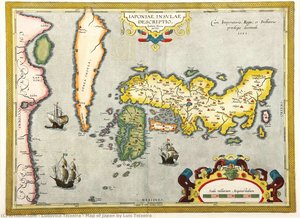
The map’s visual elements speak volumes about Korea's landscape and political organization at the time. Rolling mountains dominate the central region, reflecting the importance of mountainous terrain in Korean culture and defense. Rivers snake across the expanse, delineating major waterways used for transportation and agriculture—essential components of Korean economic activity. Furthermore, strategically placed symbols indicate administrative divisions and prominent cities like Busan and Seoul, highlighting Korea’s position within the broader geopolitical context of Europe and Asia. The artist's careful attention to detail underscores the ambition of documenting not just where things were, but how they functioned.Symbolism Beyond Accuracy: Representing Korean Identity
Beyond its topographical precision, “Map of Korea” carries symbolic weight reflecting the Enlightenment’s fascination with classifying and understanding diverse cultures. The depiction of people—likely representing key figures or locations—suggests an attempt to portray Korea as a civilized nation worthy of European admiration. This portrayal aligns with the burgeoning interest in Orientalism during the period, albeit tempered by d’Anville's commitment to factual representation. It serves as a reminder that even seemingly objective maps can convey cultural biases and aspirations.Emotional Resonance: Inspiration for Interior Design
Today, “Map of Korea” inspires interior designers seeking to evoke a sense of exploration and sophistication. Its muted watercolor palette—dominated by earthy tones—creates an atmosphere of calm contemplation reminiscent of classical landscapes. The map’s intricate detail lends itself beautifully to framed reproductions, adding a touch of intellectual curiosity to any space. Consider pairing it with complementary textiles in shades of beige or gray to amplify its understated elegance – allowing the artwork's historical significance and artistic merit to resonate powerfully within your home.Related Artworks
Artist Biography
The Architect of Precision: The Life and Legacy of Jean-Baptiste Bourguignon d’Anville
Jean-Baptiste Bourguignon d’Anville was not merely a maker of maps; he was the visionary who stripped away the myths of the unknown to reveal the true face of the Earth. Born in Paris in 1697, d’Anville emerged from a modest background with an intellect that seemed destined to reshape the boundaries of human knowledge. From the tender age of twelve, when he was already sketching intricate geographies for Latin authors, it was evident that his mind possessed a rare synthesis of mathematical rigor and historical curiosity. His early years were steeped in the classical traditions of Paris, where he cultivated a profound mastery of mathematics, Greek, and Latin—disciplencies that would later allow him to interpret ancient texts and contemporary traveler accounts with unparalleled authority. As his talent blossomed, d’Anville found himself part of an illustrious lineage of French cartographers. He studied under the guidance of Charles-Hubert Alexis Jaillot, a man who carried the mantle of the great Nicolas Sanson. Yet, while he inherited the systematic traditions of his predecessors, d’Anville possessed a revolutionary impulse to move beyond mere decoration. Where his contemporaries often filled the "empty" spaces of the world with sea monsters, fanciful islands, and speculative coastlines to satisfy the aesthetic whims of royalty, d’Anville chose a more difficult, more honest path. He embraced the blank space, treating the unknown not as a canvas for imagination, but as a scientific void that demanded respect and further investigation.A Revolution of Empirical Truth
The true brilliance of d’Anville’s work lay in his unwavering commitment to empirical verification. His career reached its zenith when he was appointed Geographer to the King, a position that granted him access to the most significant geographical data of the eighteenth century. He became a master of synthesis, weaving together the disparate threads of Jesuit missionary reports from China, the accounts of intrepid explorers, and the rigorous mathematical calculations of astronomers. His work on the geography of China, based on the testimonies of missionaries, remains one of the most comprehensive surveys of the era, providing a window into a world that had previously been shrouded in European mystery. This dedication to accuracy earned him prestigious seats within the Académie des Inscriptions et Belles-Lettres and the Académie des Sciences. His maps were characterized by a stark, clean elegance that prioritized clarity over ornamentation. By intentionally leaving unverified territories blank, he established a new standard of scientific integrity. This approach fundamentally changed the purpose of cartography; it was no longer an art of embellishment, but a tool of discovery. His maps did not just show where humans had been; they pointed precisely to where they had yet to go, serving as the essential blueprints for the great age of exploration that followed.The Enduring Map of History
The historical significance of d’Anville cannot be overstated. Throughout the nineteenth century, his cartographic achievements remained the definitive reference point for explorers and scholars alike. His ability to distill complex, often contradictory information into a single, coherent, and scientifically sound document allowed him to influence the geopolitical understanding of entire continents. Even as technology advanced, the foundational accuracy of his work provided the bedrock upon which modern geography was built. Beyond the technicalities of longitude and latitude, d’Anville’s legacy is one of intellectual courage. He had the bravery to admit ignorance, a rare trait in an age of colonial expansion and territorial ambition. His life's work stands as a testament to the power of meticulous research and the beauty of scientific truth. In every clean line and carefully noted doubt, we see the spirit of a man who looked at the world not as a collection of legends, but as a magnificent, measurable reality waiting to be understood.- Born: July 11, 1697, Paris, France
- Died: January 28, 1782, Paris, France
- Key Contributions: Revolutionized cartography through empirical research and the use of blank spaces for unverified territories.
- Major Achievements: Geographer to the King; member of the Académie des Sciences; creator of over 200 highly accurate maps.
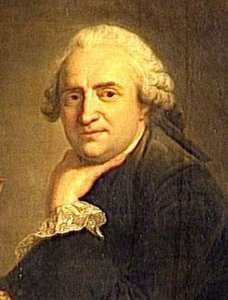
jean-baptiste bourguignon d'anville
1697 - 1782 , France
Quick Facts
- Artistic Movement Or Style: Cartography
- Artists Or Movements Influenced By This Artist: ['18th Century Maps']
- Artists Who Influenced This Artist:
- Nicolas Sanson
- Guillaume Delisle
- Date Of Birth: July 11, 1697
- Date Of Death: January 28, 1782
- Full Name: Jean Baptiste Bourguignon d'Anville
- Nationality: French
- Notable Artworks:
- Map of Korea
- China maps
- Place Of Birth: Paris, France

