 Preview
 Send
Send Share
Share
 Details

 Download
 Similars
 X-Ray
X-Ray Diaporama
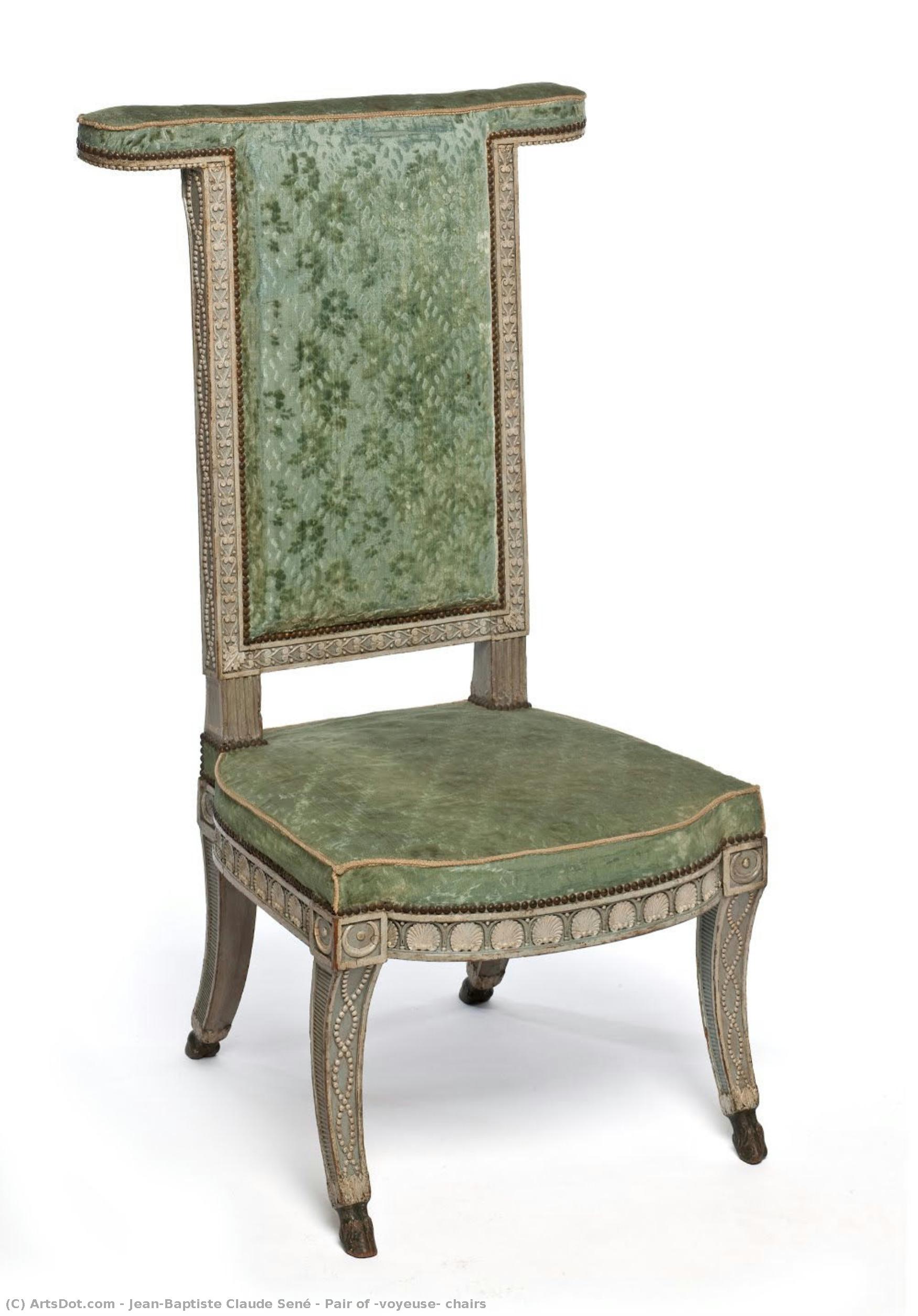
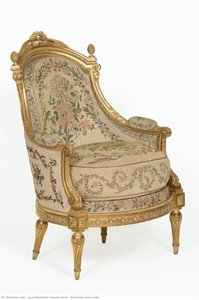
Pair of “voyeuse” chairs


 Read More
Hand Made Oil Reproduction
Hand-painted oil on canvas in your size and frame, made to order by our artists. ( Buy Print Buy Image)




































Pick from our preset sizes that match the artwork's original proportions.

You may enter your own dimensions to fit a specific frame or space. If your selected size does not match the original image's proportions, we will either crop the artwork or extend the painting with additional hand-painted elements. A digital mockup will be sent for your approval before production begins.
Please note that the on-screen preview does not reflect the actual cropping or extension. Only the mockup will accurately show the final composition.
While custom sizes are available, we recommend selecting a dimension from the predefined list to preserve the original proportions.
After order, ArtsDot.com team will email client for instructions and provide a mockup preview
Worldwide Delivery () in 3/4 weeks instead of standard 5 weeks. (23 August). No compromise on quality.

Free Worldwide Express Shipping

High-Quality Linen Canvas

Full Shipping Insurance

Customs Tax Refund Guarantee

True Color Matching Guarantee

60-Day Return Policy (Defects Only)

100% Money-Back Guarantee

Bulk Discount Offer
 Glass option is only available in size under 110 CM

Pair of “voyeuse” chairs
Reproduction Medium
Reproduction Size
-


Total Price
$ 263
Artwork Description
Related Artworks

Artist Biography
The Silent Master of the Louis XVI Style
In the gilded corridors of eighteenth-century France, where the splendor of Versailles and the intimacy of Fontainebleau dictated the rhythm of aristocratic life, certain names whispered of unparalleled elegance without ever needing to shout. Jean-Baptiste Claude Sené (1748–18 03) was precisely such a master. A virtuoso of the menuisier craft, Sené did not merely create furniture; he sculpted the very atmosphere of the Neoclassical era. Born into a prestigious Parisian lineage of cabinet makers, his life was an extension of a grand artistic legacy. His grandfather, Jean, had laid the foundations of a workshop that would become a cornerstone of French luxury, and his father, Claude I, had already earned distinction as a master craftsman under Louis XV. When Jean-Baptiste achieved his own master status in 1769, he did so not just as an individual, but as the custodian of a generational devotion to excellence.
The artistry of Sené was defined by a profound transition in French taste—a movement away from the exuberant, swirling excesses of the Rococo toward the disciplined, symmetrical grace of Neoclassicism. Alongside his brother, Claude II, Sené became a primary architect of this aesthetic shift. His work embodied the esprit nouveau of the late eighteenth century, characterized by restraint, classical motifs, and a reverence for antiquity. To observe a Sené creation is to witness a delicate balance between strength and delicacy; he utilized straight lines, fluted legs, and laurel wreaths to evoke the dignity of Rome, yet infused these structures with a softness that suited the refined comforts of the French court.
Royal Patronage and the Splendor of Versailles
The true measure of Sené’s genius lies in the prestigious commissions that graced the most intimate and public spaces of the Bourbon monarchy. In 1785, his talent was formally recognized when he was named fournisseur to the royal furniture depot, a title that placed him at the very heart of royal supply. His workshop became an essential engine for furnishing the palaces of Versailles, Fontainebleau, and Saint-Clous. There is perhaps no greater testament to his skill than his involvement in the private apartments of Marie Antoinette, where his pieces served as the backdrop for the most significant social rituals of the age.
His ability to marry structural integrity with decorative whimsy is best seen in specific, breathtaking works:
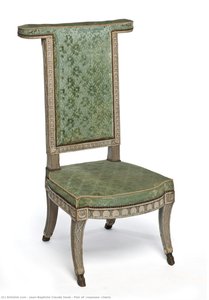
- The "Voyeuse" Chairs: Commissioned in 1789 for the Turkish drawing room of the Château de Montreuil, these chairs were designed for a unique social purpose. Featuring "Etruscan-style" saber legs and intricate garlands of beads, they allowed guests to kneel at card tables, blending ergonomic utility with high fashion.
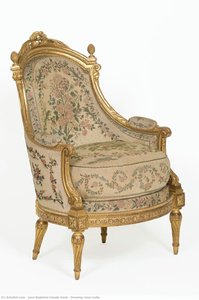
- Drawing Room Suites: His larger ensembles, such as the fauteuil à la reine armchairs, showcased a mastery of carving. These pieces often featured spirally fluted legs and aprons adorned with rosettes, creating a sense of rhythmic movement within a static object.
- The Settee of Grandeur: Sené’s ability to integrate diverse textures—from carved gilt panels depicting horns of plenty to luxurious upholstery—demonstrated his role as a designer who understood the holistic nature of interior decoration.
A Legacy Carved in Wood and Gold
Though the French Revolution would eventually sweep away the very world Sené helped build, his influence remained etched in the history of decorative arts. He was more than a craftsman; he was a bridge between the decadent past and the structured future. His work provided the physical framework for an era of unparalleled refinement, turning wood and fabric into symbols of political and social stability. Even as the monarchy fell, the precision of his Neoclassical lines survived, influencing generations of designers who sought to capture that same sense of timeless, disciplined beauty.
Today, when we look upon the surviving treasures of the Sené workshop in museums like the Metropolitan Museum of Art or the halls of Versailles, we see more than antique furniture. We see the meticulous hand of a man who understood that true luxury lies in the details—the subtle curve of a scroll, the perfect placement of a pine cone, and the quiet dignity of a well-executed line. Jean-Baptiste Claude Sené remains a silent master, whose legacy continues to define the very essence of French elegance.
jean-baptiste claude sené
1748 - 1803 , France
Quick Facts
- Artistic Movement Or Style: Neoclassical Furniture Maker
- Artists Or Movements Influenced By This Artist: ['Louis XVI']
- Artists Who Influenced This Artist: ['Claude I Sené']
- Date Of Birth: 1748 Paris France
- Date Of Death: 1803
- Full Name: Jean-Baptiste Claude Sené
- Nationality: French
- Notable Artworks:
- Drawing room suite
- Pair of ‘voyeuse’ chairs
- Place Of Birth: Paris France