 Preview
 Send
Send Share
Share
 Details

 Download
 Similars
 X-Ray
X-Ray Diaporama
Drawings


 Read More
Hand Made Oil Reproduction
Hand-painted oil on canvas in your size and frame, made to order by our artists. ( Buy Print Buy Image)




































Pick from our preset sizes that match the artwork's original proportions.

You may enter your own dimensions to fit a specific frame or space. If your selected size does not match the original image's proportions, we will either crop the artwork or extend the painting with additional hand-painted elements. A digital mockup will be sent for your approval before production begins.
Please note that the on-screen preview does not reflect the actual cropping or extension. Only the mockup will accurately show the final composition.
While custom sizes are available, we recommend selecting a dimension from the predefined list to preserve the original proportions.
After order, ArtsDot.com team will email client for instructions and provide a mockup preview
Worldwide Delivery () in 3/4 weeks instead of standard 5 weeks. (6 September). No compromise on quality.

Free Worldwide Express Shipping

High-Quality Linen Canvas

Full Shipping Insurance

Customs Tax Refund Guarantee

True Color Matching Guarantee

100-Day Return Policy (Defects Only)

100% Money-Back Guarantee

Bulk Discount Offer
 Glass option is only available in size under 110 CM

Drawings
Reproduction Medium
Reproduction Size
-


Total Price
$ 263
Related Artworks





Artist Biography
A Dreamlike Vision of Alsace: The Artistry of Jean Baptiste Courtonne
In the quiet, evocative landscapes of eighteenth-century France, few artists captured the intersection of the spiritual and the material as poignantly as Jean Baptiste Courtonne. Born in Paris in 1711, Courtonne emerged as a singular figure whose work often drifted away from the opulent frivolity of his Rococo contemporaries, such as Boucher or Watteau, toward a more profound, ethereal realm. While history occasionally remembers him through the lens of architecture—notably for his role in constructing the Château de Villarceaux—it is within the delicate, light-drenched textures of his paintings that his true soul resides. His art serves as a bridge between the tangible world and a dreamlike vision, particularly through his meticulous religious subjects that seem to breathe with an inner, celestial life.
The foundations of Courtonne’s mastery were laid during his formative years in Paris, where he underwent a rigorous apprenticeship under the celebrated sculptor François Girardon. This early immersion in the world of stone carving and monumental sculpture profoundly shaped his painterly approach. From Girardon, Courtonne inherited an acute sensitivity to form, volume, and the weight of materiality. Even when working with the fluid medium of oil on canvas, one can detect a sculptural precision in his figures; he understood how light must wrap around a limb or settle into the folds of a saint's robe to create a sense of physical presence. This structural discipline allowed him to ground his more spiritual subjects in a reality that felt both heavy and hauntingly beautiful.
The Mastery of Light and Symbolist Depth
Though active during an era often defined by decorative grace, Courtonne’s stylistic inclinations leaned toward what we might now recognize as a precursor to the Symbolist movement. His work was less concerned with the superficial splendor of the court and more preoccupied with the psychological depth and emotional resonance of his subjects. He sought to convey inner states through a sophisticated use of color and texture, often evoking a sense of melancholy beauty that mirrored the burgeoning Romantic sensibilities of his time. This pursuit of the intangible was achieved through his masterful command of chiaroscastro—the dramatic interplay of light and shadow.
Influenced by the profound shadows of Rembrandt and the theatrical lighting of Caravaggio, Courtonne utilized darkness not merely as an absence of light, but as a vessel for atmosphere and mystery. In his depictions of saints and sacred spaces, the light does not simply illuminate; it pierces through the gloom to reveal moments of divine grace. This technique created a palpable tension within his compositions, inviting the viewer to look beyond the surface of the paint and into the spiritual narrative unfolding within the shadows. His ability to render textures—the coldness of stone, the softness of skin, the weight of heavy drapery—further enhanced this immersive, atmospheric experience.
Legacy and the Preservation of Heritage
The enduring legacy of Jean Baptiste Courtonne is etched into the very fabric of the religious architecture across Alsace and Germany. His most significant achievements are found in his monumental paintings that adorn churches, where his work functions as a permanent dialogue between the art and the sacred space it inhabits. One notable example includes his stunning contributions to the Church of St John the Baptist in Genoa, Italy, which demonstrate his ability to execute large-scale works that command reverence.
Beyond his individual canvases, Courtonne’s historical significance is intertwined with the preservation of French artistic heritage. His journey is closely linked to the burgeoning Musée National, established by Jean-Jacques Henner, a connection that underscores his role as a pivotal figure in the dissemination of significant artistic traditions. Today, when we look upon the works of Courtonne, we see more than just eighteenth-century portraiture or religious iconography; we encounter a master who used the tools of his era to explore the eternal mysteries of the human spirit, leaving behind a trail of light and shadow that continues to haunt and inspire the modern imagination.
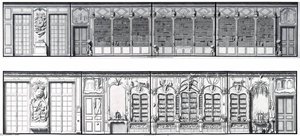
jean baptiste courtonne
1711 - 1781 , France
Quick Facts
- Artistic Movement Or Style: Symbolist
- Artists Or Movements Influenced By This Artist: ['École de Fontainebleau']
- Artists Who Influenced This Artist: ['Jean Jacques Henner']
- Date Of Death: 1781
- Full Name: Jean Baptiste Courtonne
- Nationality: French
- Notable Artworks:
- Propsteikirche
- San Giovanni Battista
- Place Of Birth: Paris, France