

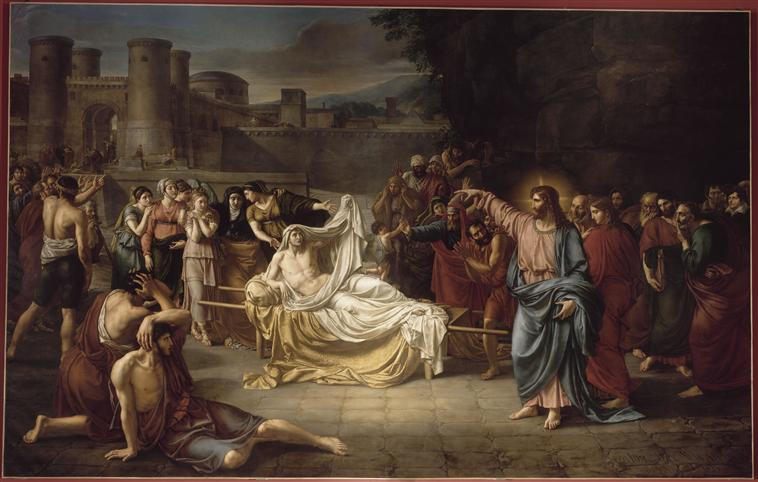
 Preview
 Send
Send Share
Share
 Details

 Download
 Similars
 X-Ray
X-Ray Diaporama
LA RESURRECTION DU FILS DE LA VEUVE DE NAIM

 Read More
Purchase a high-resolution, enhanced digital image, far superior to the online preview.
Each file is meticulously prepared by our in-house specialists using advanced tools and expert manual retouching. We ensure every image has exceptional clarity, precise color accuracy, and fine detail.
The final file is delivered via email within 72 hours, optimized for immediate use in professional, editorial, and print environments. This is the same quality trusted by top-tier design studios, publishers, and galleries.
Digital Image
Download a high-resolution file for personal display, printing, and creative projects. ( Buy Print Buy Hand Made Painting)
Included in Every Digital Image Order
Expert Digital Delivery, Guaranteed
When you choose ArtsDot.com, you're not just getting an image - you're receiving a professionally enhanced digital artwork, crafted with precision and backed by a satisfaction guarantee. Here's everything that comes with your order, automatically:

Fast Email Delivery
Your high-resolution digital image file will be emailed to you within 72 hours of ordering - ready for immediate use.

AI-Enhanced Digital File
Your artwork is professionally optimized using advanced AI tools and manual editing, ensuring maximum detail, clarity, and color accuracy.

Free Lifetime Re-Delivery
Accidentally deleted or lost your file? No worries - we'll resend it to you anytime, free of charge.

No Import Fees - Ever
Enjoy your artwork instantly with zero customs, duties, or delivery fees - digital downloads are always tax-free.

Color Accuracy Guarantee
We ensure your digital image reflects the original colors as closely as possible using professional tools and color management.

60-Day Satisfaction Guarantee
If you're not satisfied with your digital image, we'll revise it or refund 100% within 60 days - no questions asked.

100% Money-Back Guarantee
Not satisfied? Get a full refund within 60 days of receiving your digital file - no questions asked.

Bulk Order Discounts
Buy 3 images, save 10% - Buy 5, save 15% - Buy 10+, save 20%. Great for creative projects, galleries, and agencies.
Related Artworks
Artist Biography
The Neoclassical Vision of Jean-Baptiste Wicar
In the turbulent transition from the late eighteenth century to the dawn of the nineteenth, few artists embodied the intersection of artistic precision and political upheaval as profoundly as Jean-Baptiste Wicar. Born in Lille in 1762 to a carpenter, Wicar’s ascent from humble beginnings to the heights of Parisian prestige is a testament to the transformative power of classical training. His journey began with foundational studies at the Free School of Lille, but it was his subsequent apprenticeship in the legendary studio of Jacques-Louis David that would define his aesthetic soul. Under David’s rigorous mentorship, Wicar mastered the hallmarks of Neoclassicism: an unwavering commitment to anatomical accuracy, a sense of sculptural clarity, and a restrained elegance that sought to revive the idealized forms of antiquity.
Wicar’s career was inextricably linked to the grand, often controversial, ambitions of the Napoleonic era. He was not merely a painter observing history, but an active participant in the movement of art across Europe. As a member of the Commission des Sciences et des Arts during Napoleon’s Italian Campaign, Wicar stood at the vanguard of a monumental effort to enrich French national collections. His role involved overseeing the acquisition and transport of masterpieces destined for the Louvre, a task that placed him at the center of the era's complex cultural politics. This period of his life was marked by a profound engagement with the physical legacy of great masters, as he navigated the landscapes of conquest to secure the treasures of the past for the museums of France.
A Legacy of Documentation and Portraiture
Beyond his role in the Napoleonic commissions, Wicar achieved lasting distinction through his meticulous scholarly contributions. One of his most significant intellectual achievements was his leadership in documenting the splendors of the Florentine collections. Through a monumental publishing project spanning from 1789 to 1807, Wicar produced four volumes of detailed drawings depicting the paintings, statues, and cameos of the Gallerie de Florence and the Pitti Palace. This work served as a vital bridge between the Renaissance masters and the nineteenth-century public, preserving the visual grandeur of Italy for a French audience through his precise, disciplined line.
As his life progressed, Wicar sought a more permanent sanctuary from the shifting political tides of Paris, eventually settling in Rome in 1800. In this cradle of classical antiquity, he flourished as a portraitist of European renown. His portraits, such as the poignant Portrait de Sébastien Bottin and his depictions of the Bonaparte family, demonstrate a masterful ability to capture both the physical likeness and the psychological dignity of his subjects. His brushwork reflected the discipline of his training, yet it possessed a sensitivity that allowed for a subtle interplay of light and shadow, breathing life into the stoic forms of Neoclassicism.
The true depth of Wicar’s devotion to art is perhaps best seen in the immense collection he amassed during his years in Italy. Upon his death in 1834, he bequeathed a staggering collection of approximately 1,300 drawings to the Société des Sciences, de l’Agriculture et des Arts de Lille. This collection, which included works by titans such as Raphael, Dürer, and Poussin, formed the nucleus of what would become the Musée Wicar. Through this final, generous act, Wicar ensured that his passion for the masters would continue to inspire generations, cementing his place not just as a painter of his time, but as a guardian of the classical tradition.
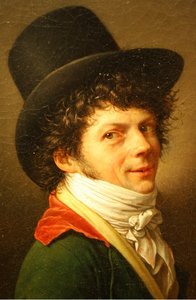
jean baptiste joseph wicar
1762 - 1834
Quick Facts
- Artistic Movement Or Style: Neoclassical
- Artists Or Movements Influenced By This Artist: ['Raphael']
- Artists Who Influenced This Artist: ['David']
- Date Of Birth: 1762
- Date Of Death: 1834
- Full Name: Jean Baptiste Joseph Wicar
- Nationality: French
- Notable Artworks:
- Man’s Coat
- The Show La Parade
- Place Of Birth: Lille, France

