

 Preview
 Send
Send Share
Share
 Details

 Download
 Similars
 X-Ray
X-Ray Diaporama
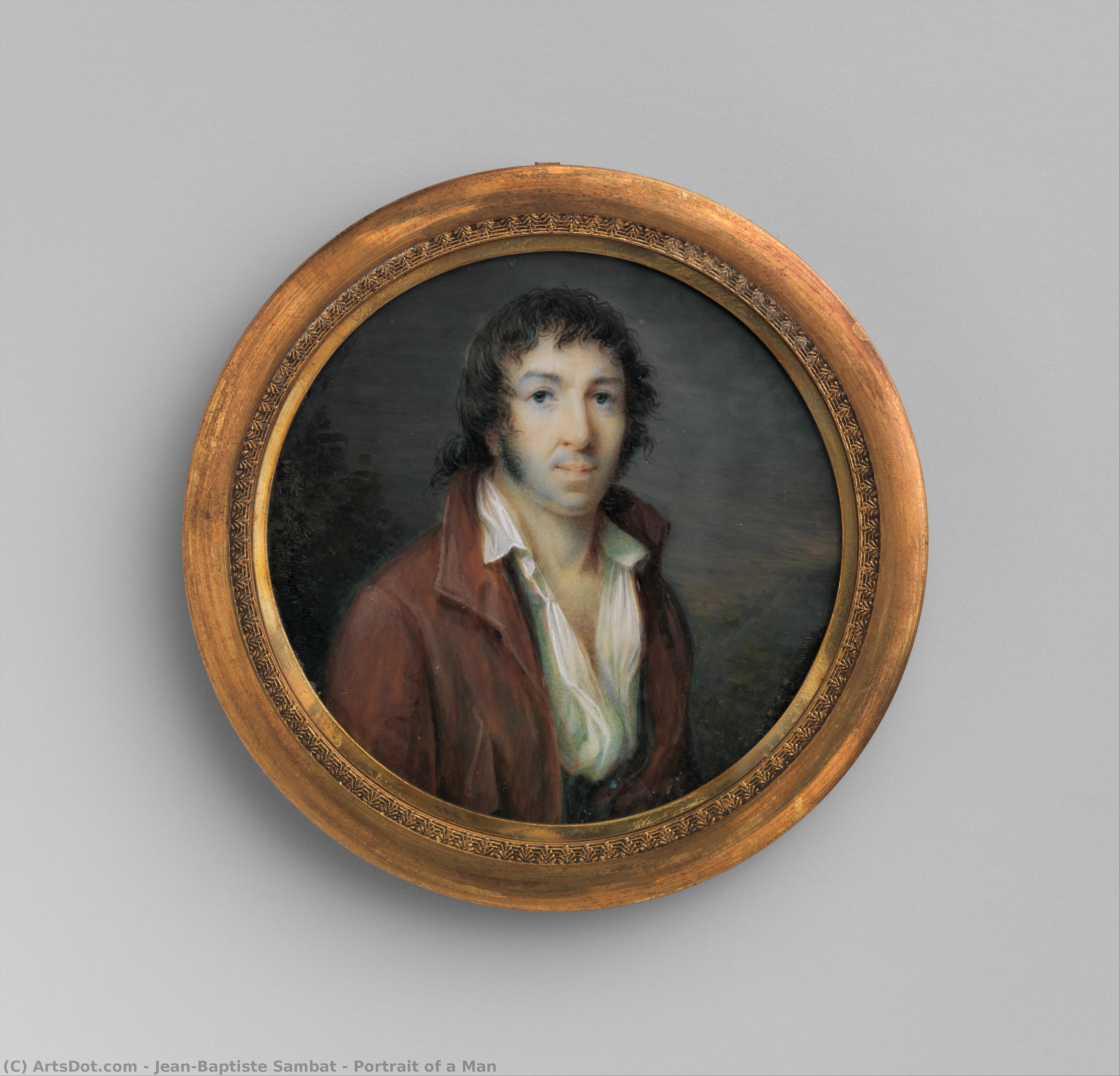
Portrait of a Man
 Read More
Hand Made Oil Reproduction
Hand-painted oil on canvas in your size and frame, made to order by our artists. ( Buy Print Buy Image)




































Pick from our preset sizes that match the artwork's original proportions.

You may enter your own dimensions to fit a specific frame or space. If your selected size does not match the original image's proportions, we will either crop the artwork or extend the painting with additional hand-painted elements. A digital mockup will be sent for your approval before production begins.
Please note that the on-screen preview does not reflect the actual cropping or extension. Only the mockup will accurately show the final composition.
While custom sizes are available, we recommend selecting a dimension from the predefined list to preserve the original proportions.
After order, ArtsDot.com team will email client for instructions and provide a mockup preview
Worldwide Delivery () in 3/4 weeks instead of standard 5 weeks. (6 September). No compromise on quality.

Free Worldwide Express Shipping

High-Quality Linen Canvas

Full Shipping Insurance

Customs Tax Refund Guarantee

True Color Matching Guarantee

100-Day Return Policy (Defects Only)

100% Money-Back Guarantee

Bulk Discount Offer
 Glass option is only available in size under 110 CM

Portrait of a Man
Reproduction Medium
Reproduction Size
-


Total Price
$ 263
Related Artworks




Artist Biography
The Delicate Legacy of Jean-Baptiste Sambat
In the grand tapestry of French art history, few disciplines demand as much intimate precision and psychological depth as the art of portrait miniature painting. Jean-Baptiste Sambat (circa 1760 – 1827) emerged from the vibrant artistic heart of Lyon to become a master of this delicate medium. His life and work serve as a window into the elegance of the late 18th century, capturing not just the physical likenesses of his subjects, but the very essence of their character during an era of profound political and social transformation.
Sambat’s early years in Lyon provided him with a rich foundation, immersed in the burgeoning Neoclassical movement that swept through France. This period of his life was defined by a rigorous pursuit of technical excellence, where he learned to manipulate light and shadow to breathe life into small-scale works. His journey took an extraordinary turn when he entered the service of the Marquis de Mirabeau, a central figure in the French Revolution. Serving as the Marquis's secretary, Sambat traveled through Germany and England, experiences that expanded his cultural horizons and allowed him to observe the diverse nuances of European aristocracy and society. These travels undoubtedly enriched his visual vocabulary, providing him with a wealth of human expression to draw upon in his later compositions.
Mastery of Miniature and Technique
What distinguishes Sambat from his contemporaries was his ability to transcend the limitations of his medium. While many miniature painters focused solely on the surface-level accuracy of a sitter, Sambat sought to convey inner life. His technique was nothing short of extraordinary, characterized by:
- Meticulous Brushwork: He employed incredibly fine strokes that allowed for a seamless transition between light and shadow, creating a sense of three-dimensional volume on tiny surfaces.
- Masterful Chiaroscuro: By skillfully utilizing dramatic contrasts, he could direct the viewer's eye to the most expressive features of a face, imbuing his subjects with a soulful presence.
- Material Expertise: His command over ivory and enamel allowed him to exploit the natural luminosity of these surfaces, ensuring that his portraits possessed an ethereal, glowing quality.
This technical prowess enabled him to achieve a level of realism that was rare for the period. Whether working on the smooth, translucent surface of ivory or the durable brilliance of enamel, Sambat’s hand remained steady and his vision remained focused on the subtle tonal gradations that define human emotion.
A Life Amidst Revolution and Transition
The later years of Sambat's life were marked by a fascinating duality between his artistic passion and his civic responsibilities. Upon returning to Paris in 1790, he navigated the turbulent waters of the French Revolution and the subsequent Napoleonic era with remarkable resilience. While he transitioned into administrative roles—notably serving as a Controller of Taxes and establishing himself on the Rue Saint-Lazare—his dedication to the arts never wavered.
This period of stability in his professional life provided a quiet sanctuary for his continued artistic production. Even as the political landscape of France shifted violently, Sambat remained a steadfast practitioner of the Old Master tradition. His ability to maintain such high standards of craftsmanship amidst historical upheaval is a testament to his unwavering commitment to his craft. Today, his works remain cherished by collectors and historians alike, standing as enduring symbols of French grace, precision, and the timeless human desire to be remembered through the lens of art.
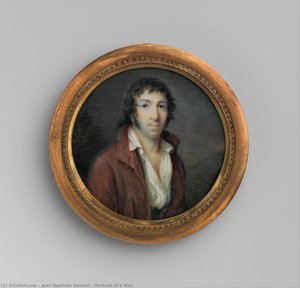
Jean-Baptiste Sambat
1760 - 1827 , France
Quick Facts
- Artistic Movement Or Style: Portrait Miniature
- Date Of Birth: circa 1760
- Date Of Death: 1827
- Full Name: Jean-Baptiste Sambat
- Nationality: French
- Notable Artworks: ['Portrait of a Man']
- Place Of Birth: Lyon, France