 Preview
 Send
Send Share
Share
 Details

 Download
 Similars
 X-Ray
X-Ray Diaporama
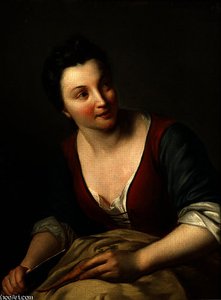
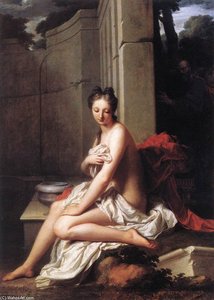
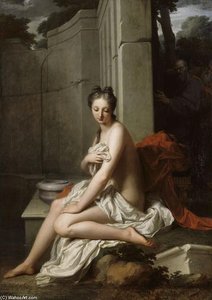
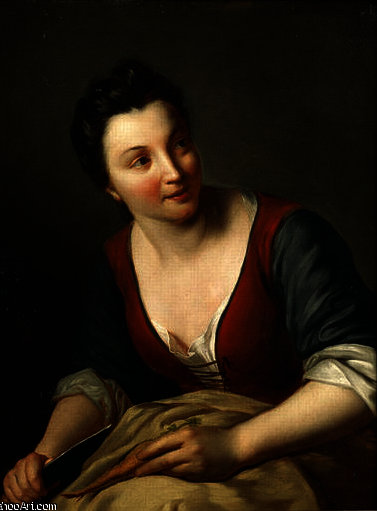
A kitchen maid
 Read More
Hand Made Oil Reproduction
Hand-painted oil on canvas in your size and frame, made to order by our artists. ( Buy Print Buy Image)




































Pick from our preset sizes that match the artwork's original proportions.

You may enter your own dimensions to fit a specific frame or space. If your selected size does not match the original image's proportions, we will either crop the artwork or extend the painting with additional hand-painted elements. A digital mockup will be sent for your approval before production begins.
Please note that the on-screen preview does not reflect the actual cropping or extension. Only the mockup will accurately show the final composition.
While custom sizes are available, we recommend selecting a dimension from the predefined list to preserve the original proportions.
After order, ArtsDot.com team will email client for instructions and provide a mockup preview
Worldwide Delivery () in 3/4 weeks instead of standard 5 weeks. (18 August). No compromise on quality.

Free Worldwide Express Shipping

High-Quality Linen Canvas

Full Shipping Insurance

Customs Tax Refund Guarantee

True Color Matching Guarantee

60-Day Return Policy (Defects Only)

100% Money-Back Guarantee

Bulk Discount Offer
 Glass option is only available in size under 110 CM

A kitchen maid
Reproduction Medium
Reproduction Size
-


Total Price
$ 263
Related Artworks
Artist Biography
The Luminescent Legacy of Jean-Baptiste Santerre
In the gilded corridors of late Baroque France, few artists possessed the ability to capture the ephemeral flicker of candlelight and the heavy weight of aristocratic dignity quite like Jean-Baptiste Santerre. Born in 1651 in Magny-en-Vexin, Santerre emerged from a family rooted in artistic tradition, a beginning that prepared him for a life dedicated to the meticulous observation of light, shadow, and social grace. While the historical record offers only glimpses into his earliest years, his ascent within the French art world was nothing short of meteoric. As a painter who navigated the complex social hierarchies of Louis XIV’s reign, Santerre did more than merely record faces; he translated the very essence of an era defined by opulence, ceremony, and a burgeoning psychological depth.
Santerre’s artistic journey was shaped by a rigorous apprenticeship that connected him to the masters of his time. He began his training under the portraitist Jean Lemaire, but it was his time in the studio of the history painter Bon Boullogne that truly refined his command over large-scale composition and narrative drama. This foundation allowed him to bridge the gap between the grandiosity of history painting and the intimate precision of portraiture. His style became a sophisticated tapestry of influences, blending the dramatic chiaroscumu of the Italian Bolognese school with a unique French sensibility. He was also among the pioneering figures who introduced subtle Netherlandish influences into the French tradition, bringing a new level of textural realism to the depiction of fabrics, lace, and skin.
A Master of Light and Aristocratic Splendor
To gaze upon a Santerre masterpiece is to enter a world of controlled theatricality. His technique was defined by an extraordinary mastery of light, using sharp contrasts to sculpt figures out of the darkness, a method that imbued his subjects with a palpable, breathing presence. This use of shadow was never merely decorative; it served to direct the viewer's eye toward the subtle nuances of emotion—the slight curve of a lip or the heavy gaze of a noblewoman. His brushwork possessed a remarkable tactile quality, capable of rendering the sumptuous sheen of silk, the intricate patterns of embroidery, and the cold luster of porcelain with equal virtuosity.
His repertoire was as varied as the court he served, ranging from formal portraits of the highest nobility to more evocative, genre-like scenes. Notable achievements include:
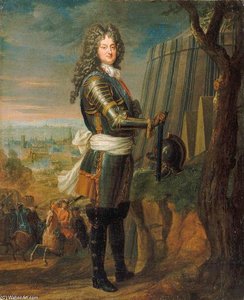
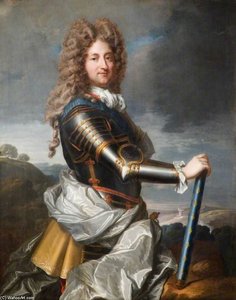
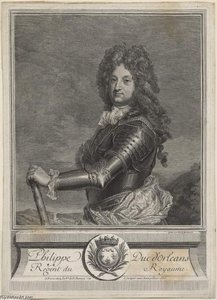
- Portraiture of Royalty: His ability to convey power and status is evident in his depictions of Philippe II, Duc d’Orléans, where dramatic lighting underscores the weight of royal authority.
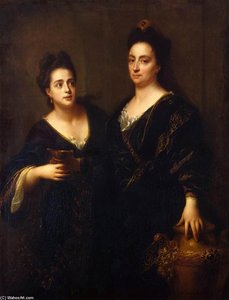
- Intimate Narratives: In works such as Two Actresses (1699), Santerre moves beyond simple likeness to create a window into the social fabric of the time, using symbolic elements like fine vases and elegant interiors to suggest wealth and hospitality.
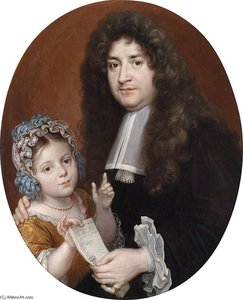
- Psychological Depth: Beyond the outward display of finery, his portraits often captured a sense of the subject's inner life, making him a preferred chronicler for figures such as Marie Madeleine de la Vieuville, Countess of Parabère.
Historical Significance and Enduring Impression
As the sun began to set on the era of Louis XIV, Santerre’s work stood as a bridge between the heavy grandeur of the high Baroque and the more delicate, light-filled aesthetics that would follow. He was a painter who understood that a portrait is never just a likeness, but a carefully constructed performance of identity. Through his meticulous attention to detail and his ability to weave symbolism into the very fabric of his compositions, he ensured that his subjects remained eternally poised within the annals of French history.
Though he passed away in Paris in 17717*, Santerre’s contribution to the evolution of French portraiture remains profound. He left behind a legacy of refinement, teaching subsequent generations how to use the interplay of light and shadow to tell stories of human dignity and social splendor. His works continue to serve as vital historical documents, offering modern viewers an intimate, luminous glimpse into the heart of the 17th-century French aristocracy.
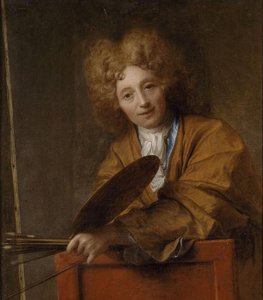
jean baptiste santerre
1651 - 1717 , France
Quick Facts
- Artistic Movement Or Style: Baroque
- Artists Or Movements Influenced By This Artist: ['Louis XIV']
- Date Of Birth: March 23, 1651
- Date Of Death: November 21, 1717
- Full Name: Jean Baptiste Santerre
- Nationality: French
- Notable Artworks:
- Susanna & His Portrait of a Lady in Venetian Costume
- Two Actresses
- Place Of Birth: Magny-en-Vexin, France