

 Preview
 Send
Send Share
Share
 Details

 Download
 Similars
 X-Ray
X-Ray Diaporama
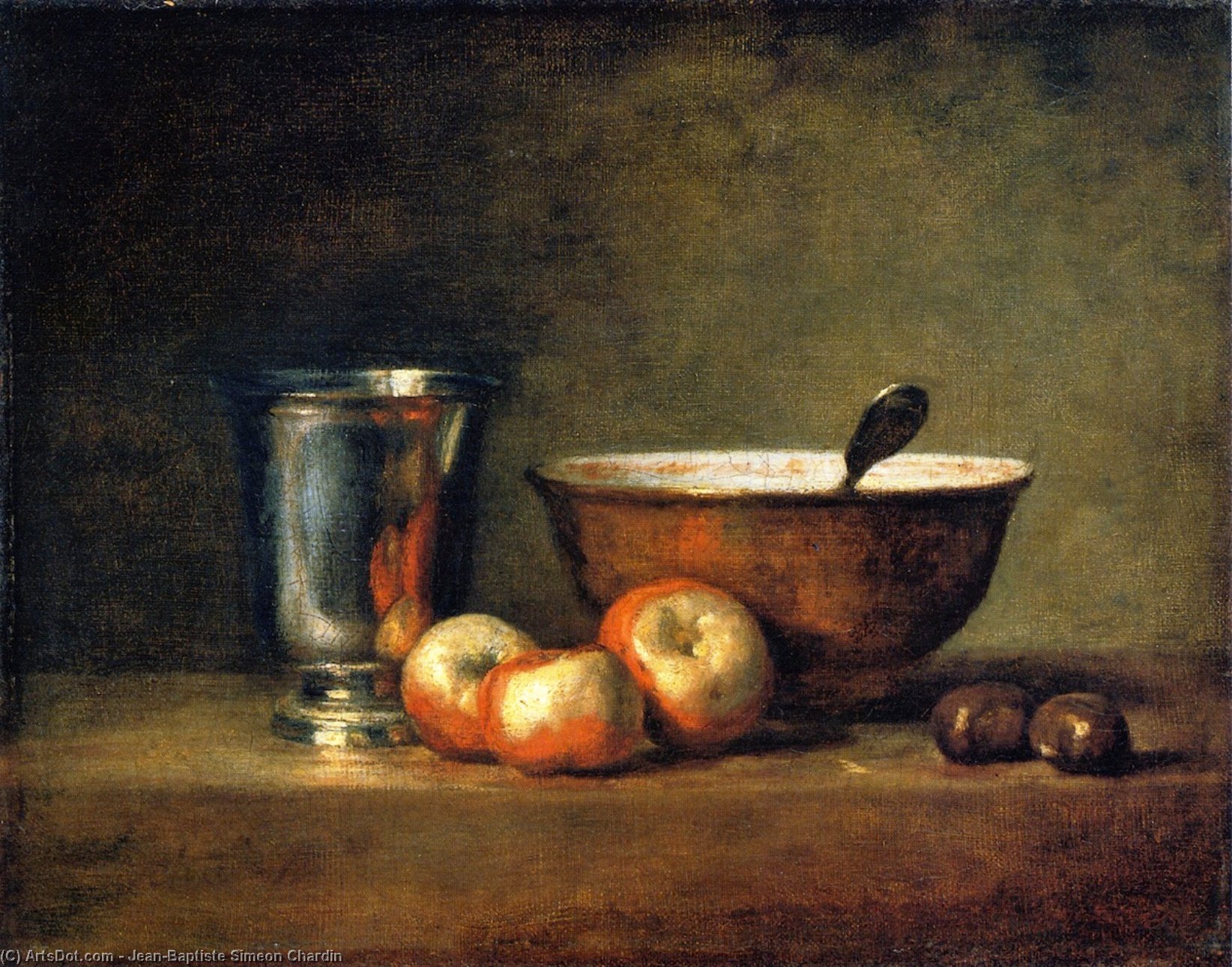
Three Apples, Two Chestnuts, Bowl and Silver Goblet (also known as The Silver Goblet)
 Oil On Canvas
- WallArt
- Baroque Still Life
 1768
1768- 19th Century
 33.0 x 41.0 cm
 The Louvre
 Read More
Purchase a high-resolution, enhanced digital image, far superior to the online preview.
Each file is meticulously prepared by our in-house specialists using advanced tools and expert manual retouching. We ensure every image has exceptional clarity, precise color accuracy, and fine detail.
The final file is delivered via email within 72 hours, optimized for immediate use in professional, editorial, and print environments. This is the same quality trusted by top-tier design studios, publishers, and galleries.
Digital Image
Download a high-resolution file for personal display, printing, and creative projects. ( Buy Print Buy Hand Made Painting)
Included in Every Digital Image Order
Expert Digital Delivery, Guaranteed
When you choose ArtsDot.com, you're not just getting an image - you're receiving a professionally enhanced digital artwork, crafted with precision and backed by a satisfaction guarantee. Here's everything that comes with your order, automatically:

Fast Email Delivery
Your high-resolution digital image file will be emailed to you within 72 hours of ordering - ready for immediate use.

AI-Enhanced Digital File
Your artwork is professionally optimized using advanced AI tools and manual editing, ensuring maximum detail, clarity, and color accuracy.

Free Lifetime Re-Delivery
Accidentally deleted or lost your file? No worries - we'll resend it to you anytime, free of charge.

No Import Fees - Ever
Enjoy your artwork instantly with zero customs, duties, or delivery fees - digital downloads are always tax-free.

Color Accuracy Guarantee
We ensure your digital image reflects the original colors as closely as possible using professional tools and color management.

60-Day Satisfaction Guarantee
If you're not satisfied with your digital image, we'll revise it or refund 100% within 60 days - no questions asked.

100% Money-Back Guarantee
Not satisfied? Get a full refund within 60 days of receiving your digital file - no questions asked.

Bulk Order Discounts
Buy 3 images, save 10% - Buy 5, save 15% - Buy 10+, save 20%. Great for creative projects, galleries, and agencies.
Collectible Description
A Moment Frozen in Time: Chardin's "The Silver Goblet"
Jean-Baptiste-Siméon Chardin’s “Three Apples, Two Chestnuts, Bowl and Silver Goblet,” painted in 1768, is more than just a still life; it’s a profound meditation on the beauty of simplicity and the quiet dignity of everyday objects. This intimate scene, measuring 33 x 41 cm, captures a moment suspended in time – a table laden with fruit and porcelain, bathed in soft light that reveals every subtle nuance of texture and form. Chardin, born in Paris in 1699, dedicated his career to observing the world around him, eschewing grand narratives for the quiet poetry of domestic life. His work reflects a deep empathy for ordinary people and their surroundings, qualities powerfully evident in this masterful composition.
The Artist's Vision: Chardin’s Unique Style
Chardin’s style is instantly recognizable – characterized by its remarkable restraint and meticulous attention to detail. He wasn’t interested in dramatic effects or idealized beauty; instead, he sought to capture the inherent character of his subjects with a disarming honesty. Notice how the fruit isn't rendered as perfect specimens but rather as slightly bruised, subtly imperfect objects, reflecting their natural state and adding to the painting’s sense of realism. The artist’s use of light is particularly noteworthy – it doesn’t simply illuminate the scene; it sculpts the forms, creating a three-dimensional effect that draws the viewer into the composition. This technique, honed through years of careful observation, elevates the mundane to the sublime.
Symbolism and Meaning
While seemingly straightforward, “The Silver Goblet” is rich in symbolic potential. The apples, traditionally associated with knowledge and temptation, are presented with a sense of gentle abundance. The chestnuts, symbols of prosperity and good fortune, add to the overall feeling of contentment. The silver goblet itself – a luxurious object placed alongside these humble fruits – suggests an appreciation for both simple pleasures and refined taste. Chardin’s deliberate arrangement speaks to a deeper philosophical concern: the ability to find beauty and value in the ordinary, suggesting a life lived with gratitude and awareness.
Historical Context and Technique
Painted in 1768, this work reflects the Rococo period’s emphasis on elegance and refinement, yet Chardin's approach diverges from the overtly ornate styles of his contemporaries. He employed a technique known as *sfumato*, subtly blurring lines and edges to create an atmospheric effect, further enhancing the sense of realism. The painting’s muted palette – dominated by browns, creams, and silver tones – contributes to its serene and contemplative mood. Chardin's work was largely independent of court patronage, allowing him a freedom of expression that few artists enjoyed at the time.
- Artist: Jean-Baptiste-Siméon Chardin
- Title: Three Apples, Two Chestnuts, Bowl and Silver Goblet (The Silver Goblet)
- Date: 1768
- Size: 33 x 41 cm
- Medium: Oil on Canvas
This hand-painted reproduction captures the essence of Chardin’s genius, offering a timeless piece of art that will enrich any interior space. Its quiet beauty and profound symbolism make it a truly exceptional addition to any collection.
Related Artworks
Artist Biography
A Life Immersed in Quiet Observation
Jean-Baptiste-Siméon Chardin, born in Paris on November 2, 1699, occupies a unique and cherished position in the pantheon of French art. He wasn’t a painter of grand historical narratives or flamboyant mythological scenes; instead, he found profound beauty and meaning in the commonplace—the humble dignity of kitchen utensils, the gentle intimacy of domestic life, the fleeting grace of fruit arranged on a tabletop. His was an art born not of aristocratic patronage or academic ambition, but of quiet observation and a deeply felt empathy for the everyday experiences of ordinary people. Chardin’s father was a cabinetmaker, a trade that likely instilled in the young artist a sensitivity to form, texture, and the inherent beauty of materials – qualities that would become hallmarks of his mature style. He initially apprenticed with history painters Pierre-Jacques Cazes and Noël-Nicolas Coypel, but quickly discovered that his true calling lay elsewhere, diverging from the prevailing artistic trends toward a more personal and introspective vision. He rarely ventured beyond Paris, content to find endless inspiration within the familiar streets and modest homes of his neighborhood near Saint-Sulpice until 1757 when he was granted lodgings in the Louvre by Louis XV.
The Evolution of a Master: From Still Life to Genre Painting
Chardin’s artistic journey began with still life, and it is here that he achieved his earliest recognition. However, these were not merely depictions of objects; they were imbued with a sense of weight, presence, and almost tactile reality. He didn't simply *represent* an object; he captured its essence, its very being. His early works, like “The Ray” (1728), demonstrate his remarkable ability to render textures – the glistening scales of the fish, the rough weave of the cloth, the cool smoothness of the stone surface. He achieved this through a masterful manipulation of light and shadow, employing a subtle impasto technique that created a palpable sense of volume and depth. His admission to the Académie Royale de Peinture et de Sculpture in 1728 with these works cemented his reputation as a rising star. As his career progressed, Chardin began to explore genre painting – scenes of everyday life featuring kitchen maids, children, and families engaged in simple activities. Works like “The Young Schoolmistress” (1740) and "Saying Grace" are poignant studies in human interaction, capturing fleeting moments of tenderness, concentration, and quiet dignity. These paintings weren’t sentimental or idealized; they were honest and unvarnished portrayals of life as it was lived by the common people of Paris.
A Technique Rooted in Tactility and Light
What truly sets Chardin apart is his unique approach to painting technique. He rejected the smooth, polished surfaces favored by many of his contemporaries, opting instead for a deliberately textured impasto – a thick application of paint that created a sense of physicality and depth. This wasn’t merely a stylistic choice; it was integral to his artistic vision. The texture allowed him to capture the subtle nuances of light and shadow, creating an atmosphere of warmth and intimacy. He built up layers of paint, often using a palette knife as much as a brush, to create surfaces that seemed to radiate light from within. His color palettes were typically muted and earthy – browns, grays, ochres, and creams – but he used these colors with extraordinary sensitivity, creating harmonies and contrasts that were both subtle and profound. He was a master of *chiaroscuro*, the dramatic interplay of light and dark, using it to sculpt forms and create a sense of atmosphere. His paintings invite viewers not just to look, but to *feel* – to experience the textures, the weight, and the presence of the objects depicted.
Legacy and Enduring Influence
Chardin’s influence on subsequent generations of artists is immeasurable. He was admired by painters as diverse as Paul Cézanne, Édouard Manet, and Henri Matisse, all of whom recognized his profound understanding of form, light, and composition. Cézanne, in particular, famously declared that Chardin was “the father of us all,” acknowledging the debt he owed to the older master’s emphasis on structure and tactile quality. Chardin's focus on everyday subjects also paved the way for Realist painters like Gustave Courbet, who sought to depict life without idealization or embellishment. Beyond his influence on painting, Chardin’s work has resonated with writers, philosophers, and art historians alike. His paintings are often seen as meditations on themes of mortality, simplicity, and the beauty of the mundane. His legacy continues to inspire artists and viewers today, reminding us that profound meaning can be found in the most ordinary of things. He died in Paris on December 6, 1779, leaving behind a body of work that stands as a testament to his artistic genius and his unwavering commitment to truth and beauty.
Exploring Chardin’s World Today
Fortunately, the opportunity to experience Chardin's artistry firsthand remains readily available. His works are prominently featured in major museums around the world, including the Musée du Louvre in Paris, the National Gallery of Art in Washington D.C., and the Hermitage Museum in Saint Petersburg. The Musée Maurice Denis in France also holds an impressive collection of French post-impressionism paintings alongside Chardin’s work, offering a fascinating context for understanding his influence on later artists. For those seeking to delve deeper into his life and art, numerous scholarly resources are available, including Georges Wildenstein's comprehensive monograph and insightful essays by Pierre Rosenberg. Furthermore, high-quality reproductions of his masterpieces can be found online at platforms like ArtsDot.com, allowing admirers to bring the quiet beauty of Chardin’s world into their own homes. His paintings continue to offer a timeless invitation to slow down, observe carefully, and appreciate the simple pleasures of life.
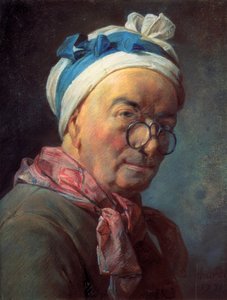
Jean-Baptiste-Siméon Chardin
1699 - 1779 , France
Quick Facts
- Artistic Movement Or Style: Still life, Genre painting
- Artists Who Influenced This Artist:
- Pierre-Jacques Cazes
- Noël-Nicolas Coypel
- Date Of Birth: November 2, 1699
- Date Of Death: December 6, 1779
- Full Name: Jean-Baptiste-Siméon Chardin
- Nationality: French
- Notable Artworks:
- The Stone Breakers
- Basket of Peaches
- The Young Schoolmistress
- Place Of Birth: Paris, France

