 Preview
 Send
Send Share
Share
 Details

 Download
 Similars
 X-Ray
X-Ray Diaporama
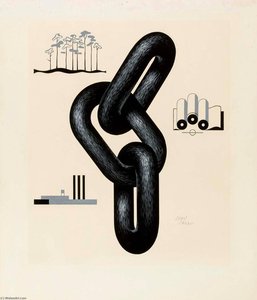
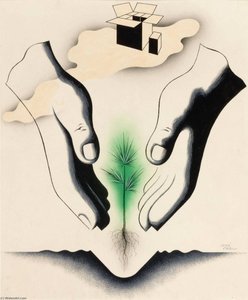
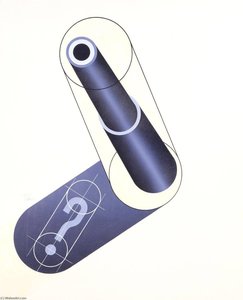
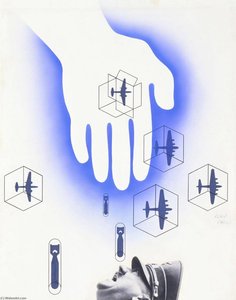
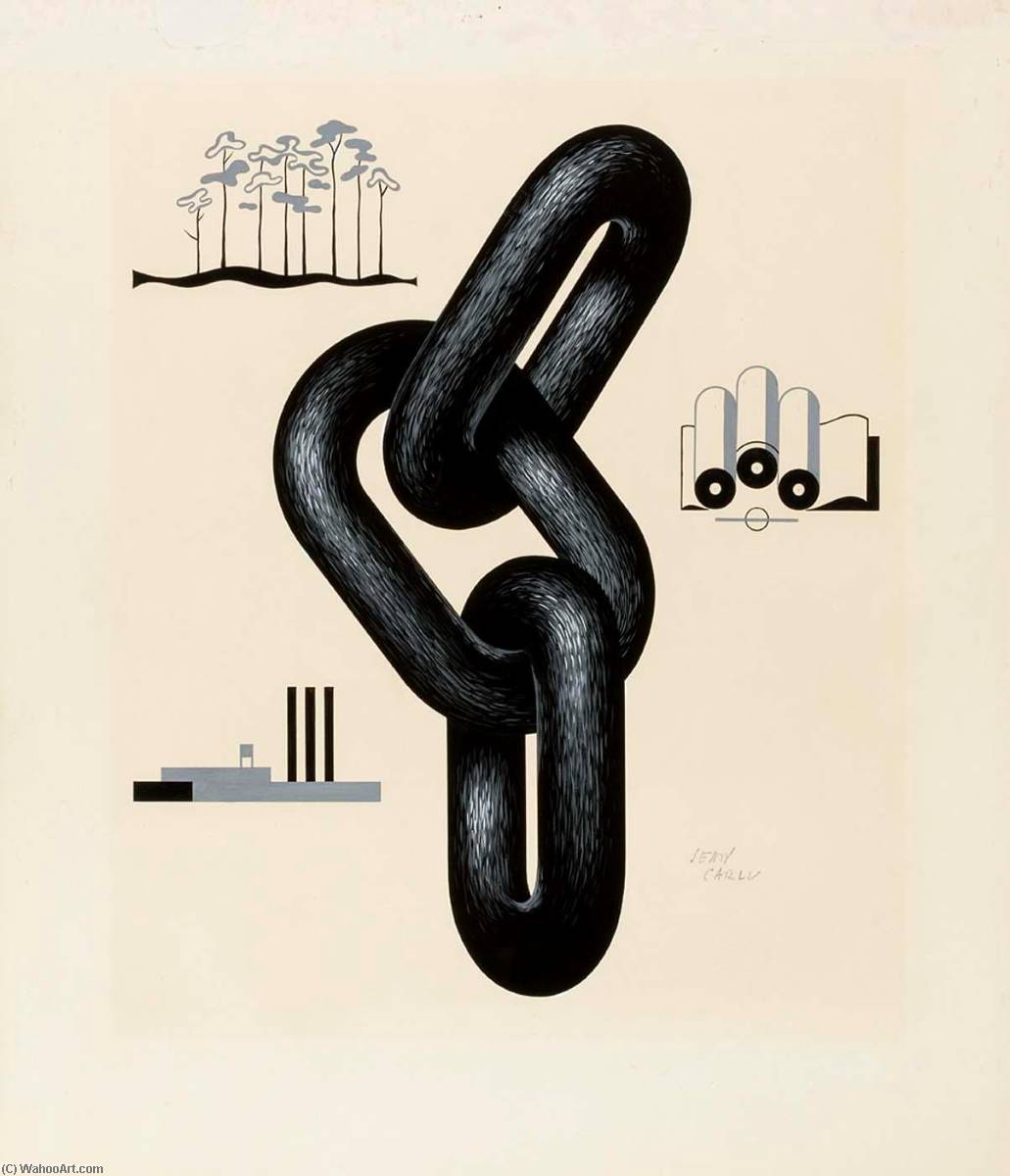
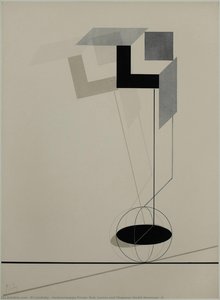
In One Organization, from the Early Series
 1942
1942 50.0 x 43.0 cm
 Read More
Hand Made Oil Reproduction
Hand-painted oil on canvas in your size and frame, made to order by our artists. ( Buy Print Buy Image)




































Pick from our preset sizes that match the artwork's original proportions.

You may enter your own dimensions to fit a specific frame or space. If your selected size does not match the original image's proportions, we will either crop the artwork or extend the painting with additional hand-painted elements. A digital mockup will be sent for your approval before production begins.
Please note that the on-screen preview does not reflect the actual cropping or extension. Only the mockup will accurately show the final composition.
While custom sizes are available, we recommend selecting a dimension from the predefined list to preserve the original proportions.
After order, ArtsDot.com team will email client for instructions and provide a mockup preview
Worldwide Delivery () in 3/4 weeks instead of standard 5 weeks. (23 August). No compromise on quality.

Free Worldwide Express Shipping

High-Quality Linen Canvas

Full Shipping Insurance

Customs Tax Refund Guarantee

True Color Matching Guarantee

60-Day Return Policy (Defects Only)

100% Money-Back Guarantee

Bulk Discount Offer
 Glass option is only available in size under 110 CM

In One Organization, from the Early Series
Reproduction Medium
Reproduction Size
-


Total Price
$ 263
Related Artworks








Artist Biography
The Architect of Visual Persuasion
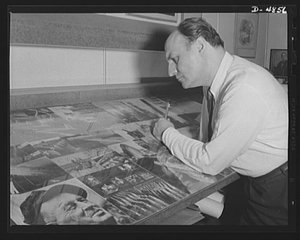
In the turbulent dawn of the twentieth century, a new language of communication was being forged, one that relied less on dense text and more on the visceral impact of shape, color, and symbol. At the forefront of this revolution stood Jean Carlu, a visionary French graphic designer whose work would become a cornerstone of modern visual branding and wartime propaganda. Born in 1900 into a family of architectural distinction—his brother Jacques Carlu was the mind behind the monumental Palais de Chaillot in Paris—Jean possessed an innate understanding of structure and spatial harmony. His journey began not with the canvas, but with the precision of illustration; after winning a competition for a dental aid producer in 1918, he spent the early years of his career honing a meticulous eye for detail that would later serve as the foundation for his iconic graphic style.
As Carlu transitioned from an illustrator to an advertising designer, he began to move away from the ornate complexities of previous eras, gravitendant toward the streamlined elegance of Art Deco. His early breakthrough came with a bold, stylized poster for Charlie Chaplin’s film The Kid, a work that signaled his departure from traditional illustration toward a more modern, graphic sensibility. This evolution was deeply informed by his fascination with Cubism, particularly the geometric explorations of masters like Juan Gris and Albert Gleizes. By distilling complex subjects into schematic forms and utilizing expressive, saturated color palettes, Carlu developed a method of communication that could pierce through the noise of a rapidly industrializing world.
A Master of Symbolic Economy
What truly distinguished Carlu from his contemporaries was his profound realization that effective branding required more than mere decoration; it required a psychological connection with the viewer. He became one of the earliest pioneers of what we now recognize as visual identity, understanding that to fix a trademark in the public consciousness, an artist must employ symbols that are both simple and unforgettable. This mastery of symbolic economy is perhaps most evident in his legendary commercial works, such as the monumental poster for Monsavon tobacco and his celebrated depiction of the Théâtre Pigalle cabaret. In these pieces, he achieved a rare balance between aesthetic beauty and immediate legibility, using sharp lines and stark contrasts to create images that felt both timeless and urgent.
His versatility extended far beyond the realm of posters into the delicate world of fine commercial design. A testament to his ability to marry high art with commercial utility was his creation of a groundbreaking label for the 1924 vintage of Château Mouton Rothschild. This work demonstrated that his Cubist-inspired language could be applied to the most prestigious of products, lending them an air of modern sophistication. His influence reached across borders and industries, as he lent his graphic prowess to major entities such as Pan American Airways, Air France, and the Container Corporation of America, proving that his aesthetic principles were universally applicable in a globalizing economy.
The Visual Sentinel of History
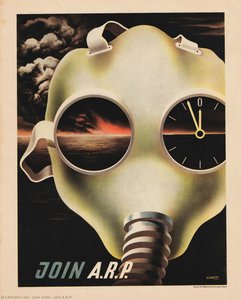
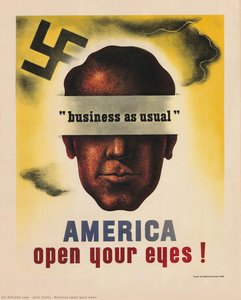
Perhaps the most historically significant chapter of Carlu’s career unfolded during the dark years of World War II. As the conflict reshaped the globe, Carlu utilized his talent to serve as a visual sentinel, producing powerful propaganda designed to bolster American industrial output and awaken the collective conscience of a nation. His work during this period, such as the hauntingly effective "America open your eyes!", moved beyond simple advertising into the realm of psychological intervention. Through the use of stark, unsettling imagery—such as a veiled figure bearing the weight of a swastika—he captured the profound historical tension of an era where the mundane rhythms of daily life were threatened by the encroaching shadows of totalitarianism.
The legacy of Jean Carlu is not merely found in the archives of design history, but in the very fabric of modern visual culture. He transformed the poster from a mere announcement into a potent weapon of truth and a tool for economic mobilization. His ability to synthesize the structural rigor of architecture, the fragmented beauty of Cubism, and the streamlined grace of Art Deco created a blueprint for the graphic designers who followed him. Even today, as we navigate an era defined by rapid-fire visual communication, the echoes of Carlu’s strategic use of form and color remain a fundamental part of how the world speaks to itself.
Jean Carlu
1900 - 1997
Quick Facts
- Artistic Movement Or Style: Art Deco & Cubism
- Artists Or Movements Influenced By This Artist: ['Cubism']
- Artists Who Influenced This Artist:
- Juan Gris
- Albert Gleizes
- Date Of Birth: 1900
- Date Of Death: 1997
- Full Name: Jean Carlu
- Nationality: French
- Notable Artworks:
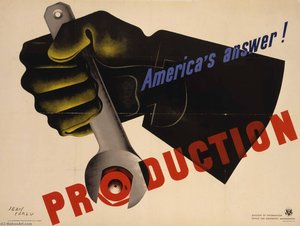
- America’s Answer Production
- Monsavon poster
- Théâtre Pigalle
- Place Of Birth: France