

 Preview
 Send
Send Share
Share
 Details

 Download
 Similars
 X-Ray
X-Ray Diaporama
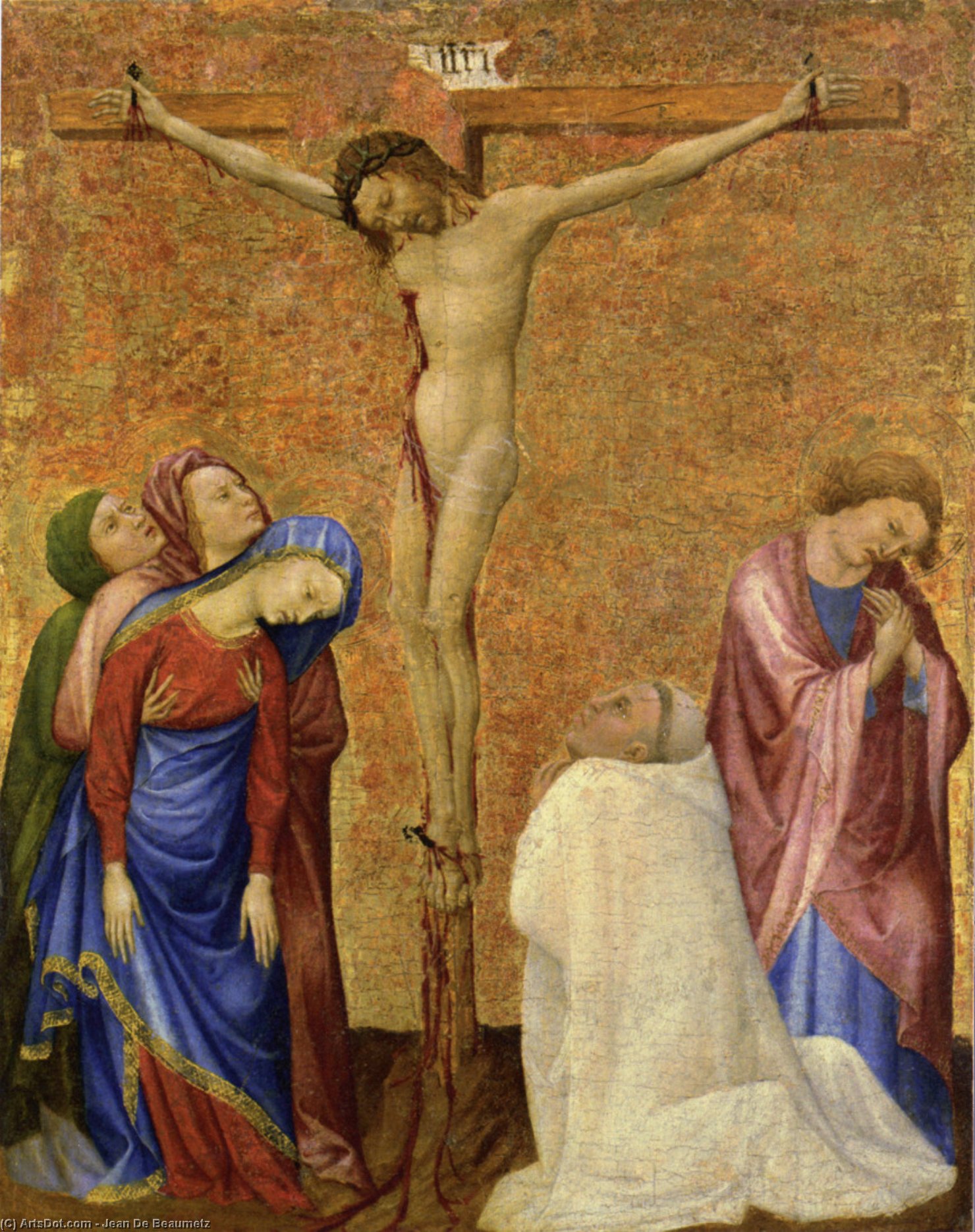
Christ on the Cross with a Praying Carthusian Monk
 Oil On Canvas
- WallArt
- Gothic Art
 1390
1390- Late Medieval
 56.0 x 45.0 cm
 Cleveland Museum of Art
 Read More
Purchase a high-resolution, enhanced digital image, far superior to the online preview.
Each file is meticulously prepared by our in-house specialists using advanced tools and expert manual retouching. We ensure every image has exceptional clarity, precise color accuracy, and fine detail.
The final file is delivered via email within 72 hours, optimized for immediate use in professional, editorial, and print environments. This is the same quality trusted by top-tier design studios, publishers, and galleries.
Digital Image
Download a high-resolution file for personal display, printing, and creative projects. ( Buy Print Buy Hand Made Painting)
Included in Every Digital Image Order
Expert Digital Delivery, Guaranteed
When you choose ArtsDot.com, you're not just getting an image - you're receiving a professionally enhanced digital artwork, crafted with precision and backed by a satisfaction guarantee. Here's everything that comes with your order, automatically:

Fast Email Delivery
Your high-resolution digital image file will be emailed to you within 72 hours of ordering - ready for immediate use.

AI-Enhanced Digital File
Your artwork is professionally optimized using advanced AI tools and manual editing, ensuring maximum detail, clarity, and color accuracy.

Free Lifetime Re-Delivery
Accidentally deleted or lost your file? No worries - we'll resend it to you anytime, free of charge.

No Import Fees - Ever
Enjoy your artwork instantly with zero customs, duties, or delivery fees - digital downloads are always tax-free.

Color Accuracy Guarantee
We ensure your digital image reflects the original colors as closely as possible using professional tools and color management.

60-Day Satisfaction Guarantee
If you're not satisfied with your digital image, we'll revise it or refund 100% within 60 days - no questions asked.

100% Money-Back Guarantee
Not satisfied? Get a full refund within 60 days of receiving your digital file - no questions asked.

Bulk Order Discounts
Buy 3 images, save 10% - Buy 5, save 15% - Buy 10+, save 20%. Great for creative projects, galleries, and agencies.
Collectible Description
A Moment of Profound Piety: Christ on the Cross with a Praying Carthusian Monk
To gaze upon this depiction is to be drawn into the very heart of medieval devotion, a scene rendered with the solemn gravity characteristic of late Gothic artistry. The composition centers around the poignant figure of Christ on the cross, an image that has served as humanity's perennial touchstone for contemplation and redemption. Yet, what elevates this work beyond mere devotional subject matter is the intimate inclusion of surrounding figures—the grieving women bearing witness to sacrifice, and most notably, the solitary Carthusian monk absorbed in prayer.
The Allure of Gothic Devotion and Patronage
Dating from 1390, this painting emerges from a period when religious fervor permeated every facet of European life. The style speaks directly to the rich tradition of Burgundian art, echoing the masterful hand of Jean de Beaumetz. During the late fourteenth century, patronage was deeply intertwined with piety; commissions were not merely for decoration, but for spiritual reinforcement within private chapels and grand halls. Beaumetz’s association with powerful figures like Philip the Bold ensured that such works possessed both technical brilliance and profound theological weight. The atmosphere captured here is one of hushed reverence, a palpable sense of sacred space.
Symbolism Woven into Sacred Detail
Every element within this canvas seems imbued with symbolic meaning. Beyond the central Crucifixion, observe the presence of the birds—some taking flight, others resting upon unseen perches. These avian details often symbolize the soul's journey or the Holy Spirit itself. The book positioned thoughtfully on the right side suggests the enduring power of scripture and recorded doctrine, anchoring the emotional drama in theological certainty. And the Carthusian monk, kneeling in deep contemplation, embodies the ideal of ascetic devotion—a quiet human response to monumental divine suffering. These details invite the viewer into a layered meditation.
Technique and Emotional Resonance for the Modern Collector
The execution suggests a mastery of tempera or early oil techniques typical of the period, allowing for delicate gradations of shadow and light that give the figures an almost tangible presence. The artist has managed to balance the dramatic weight of the crucifixion with the quiet introspection of the monk, creating a visual rhythm that guides the eye through moments of anguish, sorrow, and ultimate spiritual solace. For the collector or designer seeking to infuse a space with history and profound artistry, this reproduction offers not just an image, but an emotional anchor—a piece that encourages pause, reflection, and deep contemplation within any setting.
Related Artworks
Artist Biography
A Visionary of the Burgundian Court
In the twilight of the fourteenth century, amidst the opulent and pious atmosphere of the Burgundian court, the name Jean de Beaumetz emerged as a symbol of spiritual intensity and artistic refinement. Born around 1335 in the French region of Beauchêne, Beaumetz lived through an era where art served as a profound bridge between the earthly realm and the divine. His life was inextricably linked to one of the most powerful figures of the Middle Ages, Philip the Bold, Duke of Burgundy. Serving not merely as a painter but also as a valet to the Duke from approximately 1375 until his death in 1396, Beaumetz occupied a unique position that allowed him to translate royal ambition into enduring visual devotion.
The artist’s career was defined by this intimate connection to the ducal house, which provided him with the resources to execute monumental works of profound theological significance. His presence in the court circles of Burgundy placed him at the heart of a burgeoning cultural movement, where the International Gothic style began to take shape. Through his hands, the rigid structures of earlier medieval art began to soften, making way for a more emotive and humanistic approach to religious narrative. This period of transition is nowhere more evident than in his ability to capture the heavy, somber atmosphere of monastic life through the lens of royal grandeur.
The Mastery of Devotional Narrative
Beaumetz’s most significant contribution to the history of art lies in his specialized production of devotional panels, specifically those intended for the Chartreuse de Champmol. Between 1389 and 1395, he worked on a magnificent cycle of twenty-six oil-on-oak panels designed for the cells of Carthusian monks. These monks, known for their intense, solitary contemplation of Christ’s suffering, required imagery that could provoke deep empathy and spiritual connection. Beaumetz responded with works of staggering emotional depth, utilizing a palette of vibrant reds and deep blues to illuminate the tragedies of the Passion.
One of the most hauntingly beautiful remnants of this lost cycle is Calvary with a Carthusian Monk. In this masterpiece, the artist employs several sophisticated techniques to guide the viewer's soul:
- Symbolic Goldwork: The use of punched decoration in the gold background creates a shimmering effect, representing the Trees of Life and Knowledge and connecting the biblical past to the present moment.
- Emotional Realism: Through meticulous detail in facial expressions, Beaumetz captures the profound sorrow of Saint John the Evangelist and the fainting grief of the Virgin Mary.
- Thematic Contrast: The presence of a solitary monk at the foot of the cross serves as a mirror for the viewer, inviting a shared experience of ascetic devotion and mourning.
His technique, often involving tempera and early oil applications on plaster or wood, allowed for a luminous quality that seemed to radiate from within the artwork itself. This luminosity was essential in creating the ethereal, otherworldly atmosphere required by the Carthusian order, turning each panel into a window through which the divine could be glimpsed.
Legacy of the Gothic Spirit
Though much of Jean de Beaumetz’s oeuvre has been lost to the ravages of time—with only a few precious panels surviving in institutions like the Louvre and the Cleveland Museum of Art—his historical significance remains undiminished. He stands as a pivotal figure who bridged the gap between the stylized traditions of the high Middle Ages and the burgeoning naturalism of the early Netherlandish school. His work reflects a moment in history when the boundaries between courtly elegance and monastic austerity were blurred by a shared language of intense religious fervor.
The legacy of Beaumetz is found in the way he humanized the divine. By focusing on the physical and emotional weight of the Crucifixion, he helped pave the way for future generations of painters to explore the psychological depths of their subjects. He remains a testament to the power of patronage in shaping the course of art history, proving that when the political might of a Duke meets the spiritual vision of a master, the result is an artistic heritage that transcends the centuries.
jean de beaumetz
1335 - 1396 , France
Quick Facts
- Artistic Movement Or Style: Gothic
- Date Of Birth: Beauchêne, France (1335)
- Date Of Death: 1396
- Full Name: Jean de Beaumetz
- Nationality: French
- Notable Artworks: ['Christ on the Cross']
- Place Of Birth: France

