 Preview
 Send
Send Share
Share
 Details

 Download
 Similars
 X-Ray
X-Ray Diaporama
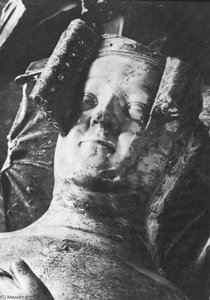
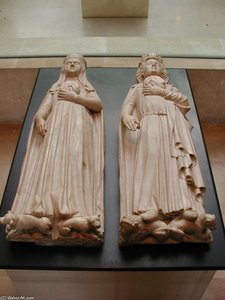
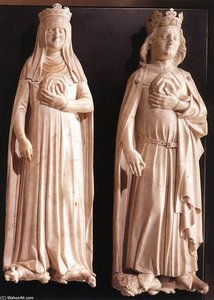
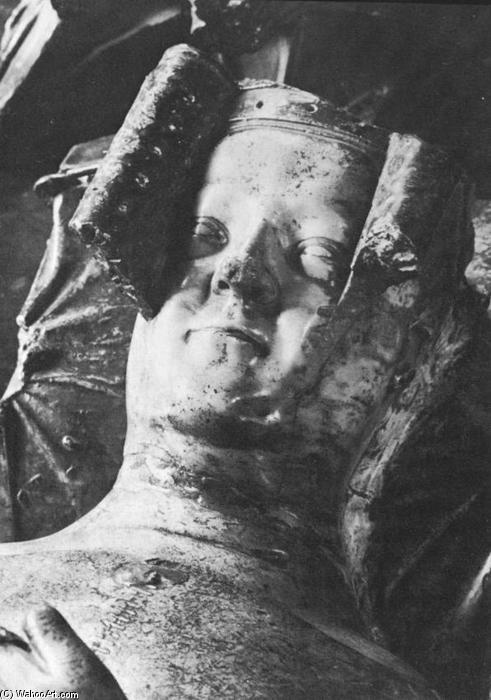
Tomb of Philippa Hainault (detail)


 Read More
Hand Made Oil Reproduction
Hand-painted oil on canvas in your size and frame, made to order by our artists. ( Buy Print Buy Image)




































Pick from our preset sizes that match the artwork's original proportions.

You may enter your own dimensions to fit a specific frame or space. If your selected size does not match the original image's proportions, we will either crop the artwork or extend the painting with additional hand-painted elements. A digital mockup will be sent for your approval before production begins.
Please note that the on-screen preview does not reflect the actual cropping or extension. Only the mockup will accurately show the final composition.
While custom sizes are available, we recommend selecting a dimension from the predefined list to preserve the original proportions.
After order, ArtsDot.com team will email client for instructions and provide a mockup preview
Worldwide Delivery () in 3/4 weeks instead of standard 5 weeks. (16 August). No compromise on quality.

Free Worldwide Express Shipping

High-Quality Linen Canvas

Full Shipping Insurance

Customs Tax Refund Guarantee

True Color Matching Guarantee

60-Day Return Policy (Defects Only)

100% Money-Back Guarantee

Bulk Discount Offer
 Glass option is only available in size under 110 CM

Tomb of Philippa Hainault (detail)
Reproduction Medium
Reproduction Size
-


Total Price
$ 263
Related Artworks
Artist Biography
Jean de Liège: A Flemish Sculptor Shaping Medieval France
Jean de Liège (c. 1330 – 1381) remains an enigmatic figure in the history of art, largely obscured by the shadows of his time and overshadowed by more prominent contemporaries. Despite the scarcity of biographical details—primarily gleaned from inventories of his surviving sculptures—scholarly research has painstakingly reconstructed a portrait of a remarkably prolific artist who exerted considerable influence on the artistic landscape of 14th-century Flanders and France. His legacy endures not merely in the grandeur of monumental tombs but also in the delicate beauty of intimate devotional figures, cementing his place as one of the foremost sculptors of his era.Early Life and Training
Information concerning Jean de Liège’s origins is fragmentary. He was born around 1330 in Lille (modern Belgium), a city then part of the Duchy of Brabant—a region renowned for its burgeoning artistic tradition. Little is known about his family or formal education, suggesting that he honed his craft through apprenticeship under established sculptors, likely absorbing techniques and stylistic conventions prevalent in Lille’s workshops. The prevailing consensus among historians posits that Jean's formative years were spent mastering the art of carving stone—a skill indispensable for creating funerary monuments and ecclesiastical decorations—skills which would define his artistic output throughout his career.The Tomb of Philippa of Hainault: A Breakthrough Achievement
Jean de Liège’s fame ascended dramatically with the commission to sculpt the tomb of Queen Philippa of Hainault, wife of Edward III, for Westminster Abbey in London. Completed around 1366, this monumental undertaking represents a pivotal moment in Jean’s artistic trajectory and stands as arguably his most celebrated achievement. The tomb—a complex sculptural ensemble featuring a reclining effigy of Philippa flanked by attendants—demonstrates Jean's mastery of naturalistic modeling and drapery, techniques that foreshadowed the stylistic innovations characteristic of the Burgundian Renaissance. Furthermore, it established Jean de Liège’s reputation as a sculptor capable of tackling ambitious projects requiring exceptional technical skill and artistic vision. The tomb’s exquisite detail and serene beauty captivated audiences and solidified Jean's position among the leading sculptors of his time.Notable Commissions and Artistic Style
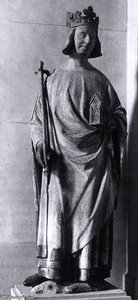
Beyond Philippa’s Tomb, Jean de Liège undertook numerous commissions throughout France, primarily serving royal patrons—most notably Charles V and Jeanne d’Évreux—who entrusted him with creating monumental tombs for their respective churches in Rouen and Saint Denis. These projects showcased Jean's versatility as an artist, adapting his style to suit diverse architectural contexts while maintaining a consistent commitment to naturalistic representation and expressive detail. His sculptures are characterized by a remarkable sensitivity to anatomy and drapery, reflecting the influence of Florentine sculptors like Lorenzo Ghiberti—a testament to the artistic exchange that flourished across Europe during the mid-14th century. Jean’s distinctive style is marked by a profound understanding of human emotion conveyed through subtle gestures and facial expressions—elements that imbue his figures with palpable vitality and psychological depth.Legacy and Influence
Jean de Liège's impact on subsequent generations of sculptors extended far beyond the immediate commissions he undertook. His pioneering use of pastel—a technique previously unexplored in funerary sculpture—inspired artists across Europe to experiment with new mediums and explore innovative aesthetic approaches. Moreover, Jean’s meticulous attention to detail and his unwavering dedication to naturalistic representation established a standard for sculptural excellence that would endure throughout the Renaissance. Although few surviving sculptures bear Jean de Liège's signature, his influence is undeniable in the stylistic conventions of numerous tombs and altarpieces produced during his lifetime—a testament to his enduring legacy as one of the most influential sculptors of the medieval period. His work continues to inspire admiration for its beauty and technical virtuosity, securing Jean de Liège’s place among the artistic luminaries of his era.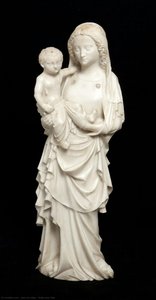
jean de liège
1330 - 1381 , France
Quick Facts
- Artistic Movement Or Style: Early Netherlandish Sculpture
- Artists Or Movements Influenced By This Artist: ['Rococo Portraiture']
- Artists Who Influenced This Artist: ['André Beauneveu']
- Date Of Death: 1381
- Full Name: Jean de Liège
- Nationality: Franco-Netherlandish
- Notable Artworks:
- Tomb of Philippa of Hainault
- Heart of Charles V Tomb
- Tomb of Charles IV and Jeanne d'Évreux
- Place Of Birth: Liege, France