 Preview
 Send
Send Share
Share
 Details

 Download
 Similars
 X-Ray
X-Ray Diaporama
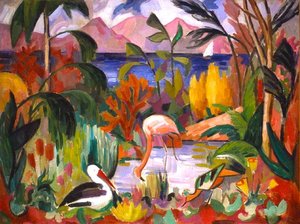
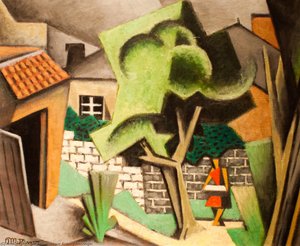
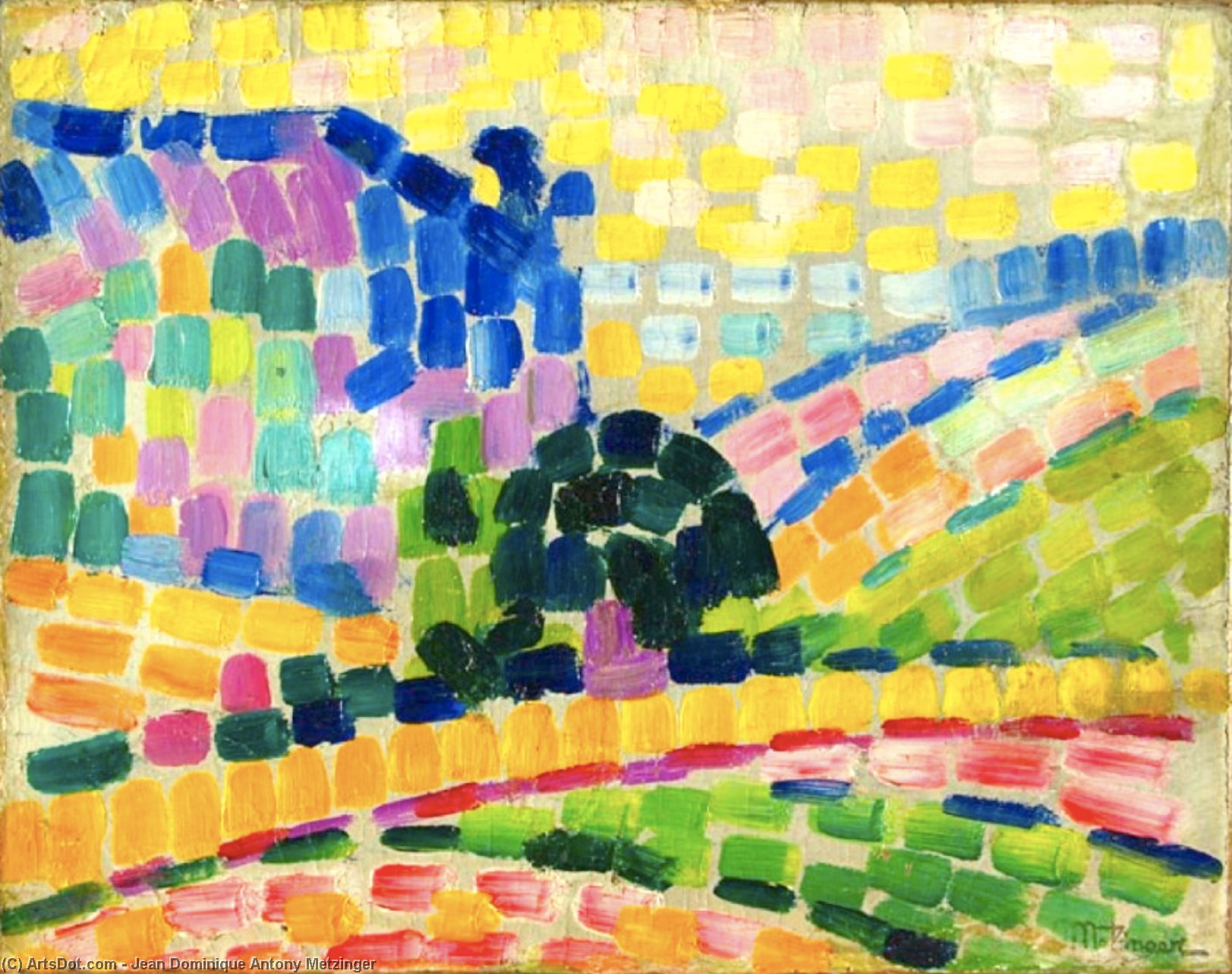
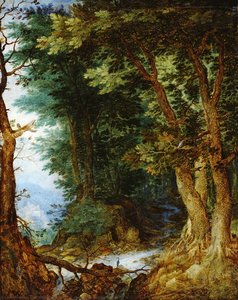
Landscape With A Round Tree
 Read More
Hand Made Oil Reproduction
Hand-painted oil on canvas in your size and frame, made to order by our artists. ( Buy Print Buy Image)




































Pick from our preset sizes that match the artwork's original proportions.

You may enter your own dimensions to fit a specific frame or space. If your selected size does not match the original image's proportions, we will either crop the artwork or extend the painting with additional hand-painted elements. A digital mockup will be sent for your approval before production begins.
Please note that the on-screen preview does not reflect the actual cropping or extension. Only the mockup will accurately show the final composition.
While custom sizes are available, we recommend selecting a dimension from the predefined list to preserve the original proportions.
After order, ArtsDot.com team will email client for instructions and provide a mockup preview
Worldwide Delivery () in 3/4 weeks instead of standard 5 weeks. (16 August). No compromise on quality.

Free Worldwide Express Shipping

High-Quality Linen Canvas

Full Shipping Insurance

Customs Tax Refund Guarantee

True Color Matching Guarantee

60-Day Return Policy (Defects Only)

100% Money-Back Guarantee

Bulk Discount Offer
 Glass option is only available in size under 110 CM

Landscape With A Round Tree
Reproduction Medium
Reproduction Size
-


Total Price
$ 263
Related Artworks
Artist Biography
Jean Dominique Antony Metzinger: A Pioneer of Cubism
- Born: Nantes, France (1883)
- Died: 1956
Jean Dominique Antony Metzinger was a pivotal figure in the development of 20th-century art. He was not only a significant French painter but also a theorist, writer, critic, and poet who played a crucial role in shaping the Cubist movement. His contributions extended beyond his artistic creations to include groundbreaking theoretical work that helped define and popularize Cubism.
Early Life and Artistic Development
- Early Influences: Metzinger's early works (1900-1904) were heavily influenced by the Neo-Impressionism of Georges Seurat and Henri-Edmond Cross, evident in his use of pointillist techniques.
- Divisionism and Fauvism: Between 1904 and 1907, he explored Divisionist and Fauvist styles, incorporating elements of Cézanne's work. This period saw the emergence of some of his first proto-Cubist pieces.
- Move to Paris: In 1903, Metzinger moved to Paris after selling three paintings exhibited at the Salon des Indépendants. He quickly became involved in the vibrant Parisian art scene.
- Exhibitions and Associations: From 1903 onwards, he regularly exhibited in Paris, participating in group shows with Raoul Dufy, Lejeune, and Torent. He also associated with prominent artists like Robert Delaunay and later Max Jacob, Guillaume Apollinaire, Georges Braque, and Pablo Picasso.
The Rise of Cubism: Theory and Practice
- Faceting of Form: From 1908 onwards, Metzinger began experimenting with the faceting of form, a key characteristic that would define Cubism.
- "Note sur la Peinture": His "Note sur la peinture" (1910) introduced the revolutionary idea of representing objects from multiple viewpoints, challenging the traditional single-viewpoint perspective in painting. This concept explored how an object could be understood through successive and subjective experiences within space and time.
- "Du Cubisme": In 1912, Metzinger co-authored "Du 'Cubisme'" with Albert Gleizes – a landmark treatise that provided the first major theoretical explanation of Cubism. This work was instrumental in disseminating the principles of the movement to a wider audience.
- Section d'Or: He was a founding member of the Section d’Or group, which further explored and developed Cubist ideas.
Crystal Cubism and Later Years
- World War I and Crystal Cubism: During World War I, Metzinger played a key role in developing "crystal cubism," a second phase of the movement characterized by radical geometrization and an architectural basis for compositions.
- "La Peinture et ses lois": His work influenced Albert Gleizes's later publication, “La Peinture et ses lois” (Painting and its Laws), which further elaborated on Cubist principles.
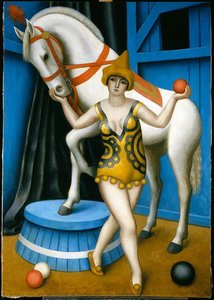
- Mathematical Influence: Metzinger recognized the importance of mathematics in art, believing that underlying symmetries inherent in nature could be expressed through geometric forms. He was influenced by Niels Bohr's work in quantum mechanics, as evidenced by Bohr’s display of Metzinger’s “La Femme au Cheval” in his office.
- Post-War Exhibitions: After the war, exhibitions at Léonce Rosenberg's Galerie de l'Effort Moderne highlighted Cubism and its evolution within French culture.
Legacy and Significance
- Central Figure of Cubism: Metzinger’s significance lies in his dual role as an artist and theorist who was central to the emergence, development, and popularization of Cubism.
- Influence on Modern Art: His exploration of simultaneity, multiple perspectives, and geometric abstraction profoundly influenced the course of modern art.
- Family Background: He came from a prominent military family; his great-grandfather served under Napoleon Bonaparte.
- Recognition: Metzinger’s work is featured in major international collections including MoMA, The Metropolitan Museum of Art, and the Tate Collection.
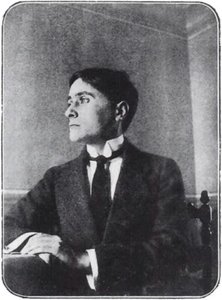
Jean Dominique Antony Metzinger
1883 - 1956 , France
Quick Facts
- Artistic Movement Or Style:
- Neo-Impressionism
- Fauvism
- Cubism
- Crystal Cubism
- Artists Or Movements Influenced By This Artist:
- Pablo Picasso
- Albert Gleizes
- Artists Who Influenced This Artist:
- Georges Seurat
- Henri-Edmond Cross
- Cézanne
- Date Of Birth: June 24, 1883
- Date Of Death: November 3, 1956
- Full Name: Jean Dominique Antony Metzinger
- Nationality: French
- Notable Artworks:
- L'oiseau Bleu
- Portrait Of Albert Gleizes
- Le Goûter (tea Time)
- La Femme au Cheval
- Place Of Birth: Nantes, France