

 Preview
 Send
Send Share
Share
 Details

 Download
 Similars
 X-Ray
X-Ray Diaporama
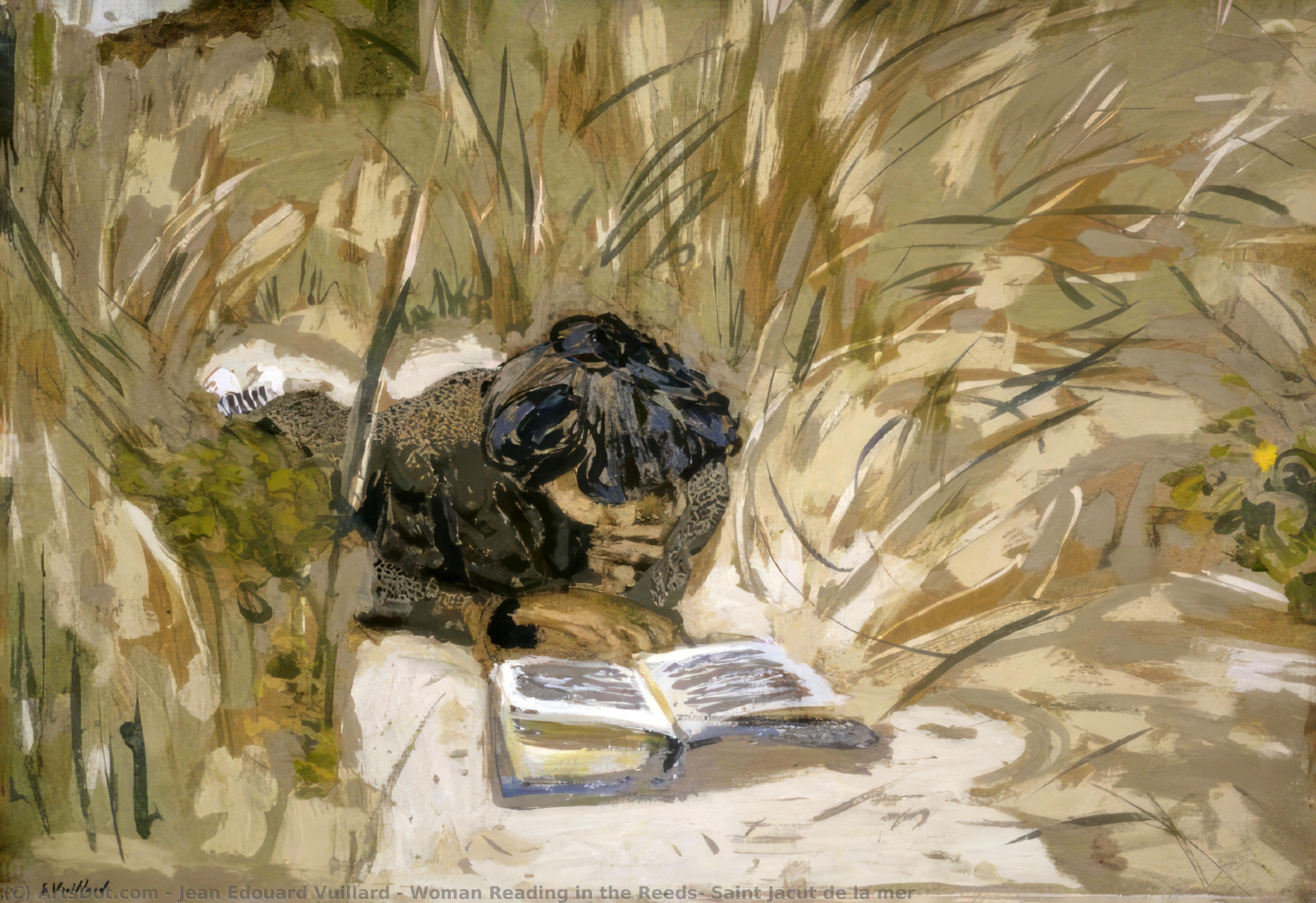
Woman Reading in the Reeds, Saint Jacut de la mer
 Acrylic On Canvas
- WallArt
- Impressionistic Style
 1909
1909 45.0 x 65.0 cm
 Fitzwilliam College
 Read More
Purchase a high-resolution, enhanced digital image, far superior to the online preview.
Each file is meticulously prepared by our in-house specialists using advanced tools and expert manual retouching. We ensure every image has exceptional clarity, precise color accuracy, and fine detail.
The final file is delivered via email within 72 hours, optimized for immediate use in professional, editorial, and print environments. This is the same quality trusted by top-tier design studios, publishers, and galleries.
Digital Image
Download a high-resolution file for personal display, printing, and creative projects. ( Buy Print Buy Hand Made Painting)
Included in Every Digital Image Order
Expert Digital Delivery, Guaranteed
When you choose ArtsDot.com, you're not just getting an image - you're receiving a professionally enhanced digital artwork, crafted with precision and backed by a satisfaction guarantee. Here's everything that comes with your order, automatically:

Fast Email Delivery
Your high-resolution digital image file will be emailed to you within 72 hours of ordering - ready for immediate use.

AI-Enhanced Digital File
Your artwork is professionally optimized using advanced AI tools and manual editing, ensuring maximum detail, clarity, and color accuracy.

Free Lifetime Re-Delivery
Accidentally deleted or lost your file? No worries - we'll resend it to you anytime, free of charge.

No Import Fees - Ever
Enjoy your artwork instantly with zero customs, duties, or delivery fees - digital downloads are always tax-free.

Color Accuracy Guarantee
We ensure your digital image reflects the original colors as closely as possible using professional tools and color management.

100-Day Satisfaction Guarantee
If you're not satisfied with your digital image, we'll revise it or refund 100% within 100 days - no questions asked.

100% Money-Back Guarantee
Not satisfied? Get a full refund within 100 days of receiving your digital file - no questions asked.

Bulk Order Discounts
Buy 3 images, save 10% - Buy 5, save 15% - Buy 10+, save 20%. Great for creative projects, galleries, and agencies.
A Moment Frozen in Color: Exploring Jean Edouard Vuillard’s Woman Reading in the Reeds
The painting “Woman Reading in the Reeds,” executed by Jean Édouard Vuillard in 1909, stands as a quintessential example of Nabi art—a movement that irrevocably altered the landscape of French Impressionism and paved the way for bolder artistic explorations. More than just a depiction of a domestic scene, it’s an invitation into a realm where color reigns supreme and form simplifies to convey profound emotion. Located at The Fitzwilliam Museum in Cambridge, United Kingdom, this artwork continues to captivate audiences with its serene beauty and masterful execution.The Nabi Aesthetic: Flattened Planes and Bold Chromatic Harmony
Vuillard’s contribution to les nabis—alongside Maurice Denis and Frédéric Skinner—was revolutionary. Rejecting the shimmering effects of Impressionism's optical realism, the group embraced a radically different approach: the deliberate flattening of pictorial space. Vuillard achieved this through the masterful use of color, prioritizing pure hues rather than blending them to create subtle gradations. This technique, heavily influenced by Japanese prints – particularly Hiroshige’s landscapes – sought to capture not just what was seen but how it *felt*. The painting's palette is dominated by muted reds and greens—the dominant colors of the reeds—contrasting subtly with the paler tones of the woman’s clothing and skin. This careful orchestration of color isn’t merely decorative; it’s integral to conveying a sense of tranquility and contemplative stillness.Composition and Narrative Detail: A Quiet Contemplation
The scene itself is deceptively simple. A woman sits on a bench amidst tall reeds, accompanied by her dog. Vuillard skillfully captures the essence of this moment—a quiet communion between human and nature—without resorting to elaborate storytelling. The woman’s gaze is directed downwards, absorbed in her book, symbolizing intellectual engagement and inner reflection. The inclusion of the dog adds an element of companionship and reinforces the painting's theme of peaceful solitude. Noticeably, a clock hangs on the wall – a recurring motif in Vuillard’s work—perhaps hinting at the passage of time or serving as a visual anchor within the composition. Above all, it is the reeds themselves that dominate the canvas, their swaying forms creating a dynamic backdrop against which the woman's stillness stands out.Symbolism and Emotional Resonance
Beyond its formal innovations, “Woman Reading in the Reeds” resonates with deeper symbolic meanings. The reeds represent resilience and adaptability—elements often associated with Japanese art and reflecting Vuillard’s fascination with Eastern aesthetics. More broadly, the painting speaks to the human desire for respite from the pressures of daily life and celebrates the beauty found in quiet contemplation. Vuillard's ability to distill complex emotions into a single image is remarkable; viewers are transported to a place of serenity and introspection—a testament to his artistic genius.Reproductions and Further Exploration
If you wish to experience the captivating atmosphere of “Woman Reading in the Reeds” firsthand, reproductions from ArtsDot.com offer exceptional quality prints that faithfully capture Vuillard’s distinctive style. For more information on Jean Édouard Vuillard's oeuvre and other artists of his era, visit https://ArtsDot.com/docs/A@D3CAV3-As-obras-de-arte-expostas-no-Museu-The-Whitaker-Reino-Unido. Explore the broader context of Nabi art and its lasting influence on modern painting at https://artuk.org/discover/artworks/woman-reading-in-the-reeds-saint-jacut-de-la-mer-4681.Related Artworks
Artist Biography
**early life and artistic beginnings**
jean-édouard vuillard, a french painter, decorative artist, and printmaker, was born on november 11, 1868, in cuiseaux, france. his life's work would later become a cornerstone of the avant-garde artistic group les nabis, alongside fellow visionaries like maurice denis and édouard vuillard. this collective would revolutionize the art world with their innovative approach to color and form.**the nabis movement and its influence**
as a prominent member of les nabis, vuillard's paintings assembled areas of pure color, influenced by japanese prints. his interior scenes explored the spatial effects of flattened planes of color, pattern, and form. this approach would later influence the development of cubism, fauvism, and abstract art.- les nabis, a group of young french artists active in paris from 1888 until 1900, played a large part in the transition from impressionism and academic art to abstract art, symbolism, and the other early movements of modernism.
- their philosophy was based upon the philosophy of positivism, and the writings of auguste comte and hippolyte taine.
**vuillard's later work and legacy**
after 1900, when les nabis disbanded, vuillard adopted a more realistic style, approaching landscapes and interiors with greater detail and vivid colors. in the 1920s and 1930s, he painted portraits of prominent figures in french industry and the arts in their familiar settings. **key works and exhibitions:**- jean-édouard vuillard's paintings can be found in various museums, including the musée de la révolution française (france), which boasts a rich collection of artworks, documents, and objects related to the revolutionary period.
- some of his notable works include "la patrie en danger" by guillaume lethière and "jean de la barre" by jean clouet, which depict a young man condemned to death for blasphemy during the ancien régime.
- vuillard's later work, such as his portraits of french industry and arts figures, can be seen in various galleries, including those at intimism art movement and jean-édouard vuillard's page on ArtsDot.
**conclusion**
jean-édouard vuillard's enigmatic world, characterized by its innovative use of color and form, has left an indelible mark on the art world. as a pioneer of modernism, his work continues to inspire artists and influence various artistic movements. discover more about intimism art movement and explore jean-édouard vuillard's works on ArtsDot.
jean-édouard vuillard
1868 - 1940 , France
Quick Facts
- Artistic Movement Or Style: Nabis
- Artists Or Movements Influenced By This Artist:
- Cubism
- Fauvism
- Artists Who Influenced This Artist: ['Paul Gauguin']
- Date Of Birth: November 11, 1868
- Date Of Death: June 21, 1940
- Full Name: Jean-Édouard Vuillard
- Nationality: French
- Notable Artworks:
- Woman Sweeping
- Sunlit Interior
- Place Of Birth: Cuiseaux, France