 Preview
 Send
Send Share
Share
 Details

 Download
 Similars
 X-Ray
X-Ray Diaporama
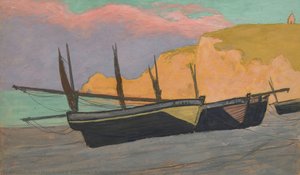
Boats in Étretat


 Read More
Hand Made Oil Reproduction
Hand-painted oil on canvas in your size and frame, made to order by our artists. ( Buy Print Buy Image)




P118B $10

P118H $10

P118W $10

P438Z $10

P508JH $12

P508YH $12

P805H $10

P805Z $10

P919BZ $10

P919G $10

P919XJ $10

P959ZH $10

P968JZ $12

W106C $8

W218G $10

W218JH $8

W218Y $10

W307PJ $10

W316G $10

W316PJ $8

W316Y $10

W398PJ $8

W4111J $10

W500HY $15

W500JH $15

W692G $12

W849H $8

W940BG $15

W953PJ $8




Pick from our preset sizes that match the artwork's original proportions.

You may enter your own dimensions to fit a specific frame or space. If your selected size does not match the original image's proportions, we will either crop the artwork or extend the painting with additional hand-painted elements. A digital mockup will be sent for your approval before production begins.
Please note that the on-screen preview does not reflect the actual cropping or extension. Only the mockup will accurately show the final composition.
While custom sizes are available, we recommend selecting a dimension from the predefined list to preserve the original proportions.
After order, ArtsDot.com team will email client for instructions and provide a mockup preview
Worldwide Delivery () in 3/4 weeks instead of standard 5 weeks. (16 August). No compromise on quality.

Free Worldwide Express Shipping

High-Quality Linen Canvas

Full Shipping Insurance

Customs Tax Refund Guarantee

True Color Matching Guarantee

60-Day Return Policy (Defects Only)

100% Money-Back Guarantee

Bulk Discount Offer
 Glass option is only available in size under 110 CM

Boats in Étretat
Reproduction Medium
Reproduction Size
-


Total Price
$ 263
Artwork Description
A Serene Encounter with the Normandy Coast
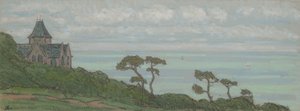
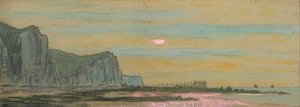
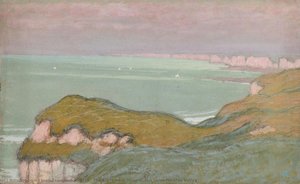
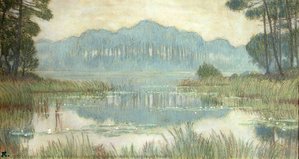
In the delicate strokes of Jean Francis Auburtin’s 1902 masterpiece, Boats in Étretat, we are invited to step into a moment of profound stillness. The painting captures a quintessential afternoon along the French coast, where the rhythmic pulse of the sea meets the quiet leisure of human presence. Through the medium of gouache, Auburtin achieves a luminous clarity that transcends mere representation, offering instead a window into a world defined by light and atmosphere. Several sailboats drift gracefully upon the water, their forms anchored near the shore yet seemingly lost in the vast, shimmering expanse of the ocean. The composition draws the eye from the gentle shoreline, where a solitary figure stands as a silent witness to the maritime dance, out toward the horizon where the sea and sky begin to blur into one.
The technique employed here is nothing short of masterful, showcasing Auburtin’s ability to manipulate the opaque qualities of gouache to mimic the translucency of coastal light. Unlike the heavy impasto of some of his contemporaries, this work breathes with a soft, ethereal quality. The artist utilizes subtle gradations of color to define the movement of the waves and the structural silhouettes of the boats, creating a sense of depth that feels both intimate and expansive. For the discerning collector or interior designer, this piece offers a sophisticated balance of texture and tone, making it an ideal centerpiece for spaces that require a touch of tranquility and classical elegance.
The Symbology of Light and Solitude
Beyond its aesthetic beauty, Boats in Étretat serves as a poignant exploration of the relationship between humanity and the natural world. The presence of the lone figure on the beach introduces a layer of Symbolist introspection; this individual is not merely an observer but a symbol of the human soul finding peace within the grandeur of nature. The boats themselves, caught in a state of gentle suspension, act as metaphors for the journeys we undertake—sometimes driven by purpose, sometimes simply drifting with the tides of existence. Auburtine, influenced by the Impressionist movement and the atmospheric depth of Claude Monet, uses the light of Étretat to evoke a sense of nostalgia and longing.
This painting is more than a landscape; it is an emotional landscape. It captures that fleeting, precious sensation of a summer day where time seems to suspend its march. For those looking to adorn a home or gallery with art that inspires contemplation, this reproduction provides a gateway to the Belle Époque. The soft palette and harmonious composition work seamlessly within modern minimalist interiors or more traditional, opulent settings, providing a focal point that radiates calm, dignity, and an enduring connection to the French maritime heritage.
Related Artworks
![Life Of Saint Francis - [01] - Stigmatization Of Saint Francis — Giotto Di Bondone, Early Renaissance](/media/artworks/images/thumbnails/68/e7/68e773fce913428a98b163c2afe68ed8.jpg)
![Legend Of St Francis - [21] - Apparition To Fra Agostino And To Bishop Guido Of Arezzo — Giotto Di Bondone, Proto-renaissance](/media/artworks/images/thumbnails/1f/a3/1fa370e8ba2040d380a682d61260727f.jpg)
![Legend Of St Francis - [11] - St Francis Before The Sultan (trial By Fire) — Giotto Di Bondone, Proto-renaissance](/media/artworks/images/thumbnails/34/e5/34e5f366254d43269d81112c719a6f9f.jpg)
![Legend Of St Francis - [24] - Canonization Of St Francis — Giotto Di Bondone, Gothic](/media/artworks/images/thumbnails/46/25/46258ba5eea24e14b12f138b9d3f90a3.jpg)
![Life Of Saint Francis - [04] - Death And Ascension Of St Francis — Giotto Di Bondone, Italian Renaissance](/media/artworks/images/thumbnails/e8/b6/e8b63a7fcb4a42ab89d26ae343d6f757.jpg)
![Legend Of St Francis - [12] - Ecstasy Of St Francis — Giotto Di Bondone, Proto-renaissance](/media/artworks/images/thumbnails/92/1a/921aeab5b4d04d3883fd7e7a25bff6de.jpg)
Artist Biography
Jean-Francis Auburtin: A Painter of Coastal Dreams
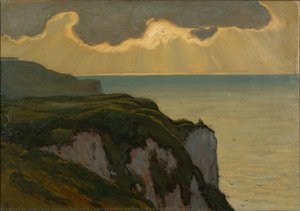
Jean-Francis Auburtin (1866-1930) remains a captivating figure in French art, often described as a painter who captured the very soul of the Normandy and Brittany coastlines. More than simply depicting landscapes, he created immersive experiences—a blend of Impressionism, Symbolism, and a deep connection to the natural world that continues to resonate with viewers today. His work is characterized by a luminous quality, a masterful use of light and color, and an almost palpable sense of atmosphere, inviting the viewer into the heart of his painted scenes.
Born in Paris, Auburtin’s early life was steeped in artistic influence. His father, Emile Auburtin, was an architect who introduced him to the world of design and construction, while his mother, Louise Jeanne Marion, provided a grounding in classical aesthetics. Crucially, he encountered the work of Claude Monet during his studies at the École des Beaux-Arts, an encounter that profoundly shaped his artistic trajectory. Monet’s emphasis on capturing fleeting moments of light and color—a revolutionary approach at the time—became a cornerstone of Auburtin's own practice. He also found inspiration in the Symbolist movement, particularly its exploration of subjective experience and the evocative power of nature.
Early Career & Decorative Commissions
Following his formal training, Auburtin initially pursued a career as a decorator, a path that proved both lucrative and creatively fulfilling. He quickly gained recognition for his ability to transform public spaces with elegant and atmospheric designs. He was commissioned to adorn the ceiling of the Sorbonne’s dining room, the university's zoology amphitheater, and even the prestigious Salle des Colonnes at the Conseil d’État. These commissions demanded a sophisticated understanding of color theory, composition, and spatial design—skills that undoubtedly informed his later work as a landscape painter.
However, Auburtin never abandoned his passion for painting *en plein air*. He meticulously documented his travels along the French coast, creating hundreds of sketches and studies that served as the foundation for his finished paintings. These journeys were not merely excursions; they were deeply personal explorations of light, color, and the rhythms of the sea.
The Language of Light & Color
Auburtin’s distinctive style is immediately recognizable by his masterful manipulation of light and color. He eschewed sharp outlines and precise details in favor of a hazy, atmospheric approach—a technique he honed through years of observing the shifting conditions of the coastline. His palette was rich and luminous, dominated by blues, greens, and golds, often layered with delicate washes of pastel to create an ethereal effect. He frequently employed a technique known as *pointillé*, using small, closely spaced brushstrokes to build up texture and depth—a method reminiscent of Monet but imbued with his own unique sensibility.
His paintings are not simply representations of landscapes; they are emotional responses to the beauty and power of nature. He captured the feeling of a misty morning over the sea, the warmth of sunlight on weathered rocks, and the drama of a storm-tossed coastline—evoking a sense of tranquility, mystery, and profound connection.
Key Works & Legacy
Among Auburtin’s most celebrated works is “Varengeville Church from the Pebble Beach,” a painting that exemplifies his signature style. The church, nestled within a dramatic coastal landscape, is rendered with remarkable sensitivity—its weathered stone walls bathed in soft light and framed by a swirling mist. Other notable paintings include depictions of Étretat’s cliffs, Belle-Île's rugged coastline, and the serene waters of Normandy.
Jean-Francis Auburtin’s legacy extends beyond his individual works. He is considered a key figure in the transition between Impressionism and Symbolism, bridging the gap between objective observation and subjective experience. His paintings continue to be admired for their beauty, atmosphere, and profound connection to the natural world—a testament to his artistic vision and enduring talent.
His work can be found in museums such as the Musée des Impressionnismes Giverny, the Smithsonian American Art Museum, and the MuMa Le Havre, showcasing his influence on French art history.
jean francis auburtin
1866 - 1930
Quick Facts
- Artistic Movement Or Style: Post-Impressionism
- Artists Or Movements Influenced By This Artist:
- Impressionism
- Symbolism
- Artists Who Influenced This Artist:
- Puvis de Chavannes
- Claude Monet
- Date Of Birth: 1866
- Date Of Death: 1930
- Full Name: Jean-Francis Auburtin
- Nationality: French
- Notable Artworks:
- Varengeville Church
- Normandy Coast
- Place Of Birth: Paris, France
Related Articles
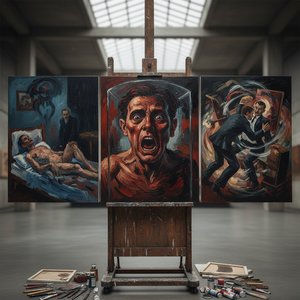
Francis Bacon's Masterpieces: Exploring 25 Iconic Paintings | ArtsDot
Delve into the haunting world of Francis Bacon with ArtsDot. Explore 25 iconic paintings, from his visceral portraits to powerful triptychs. Discover the stories behind these masterpieces & find museum-quality art reproductions for your home. Explore the full collection online!
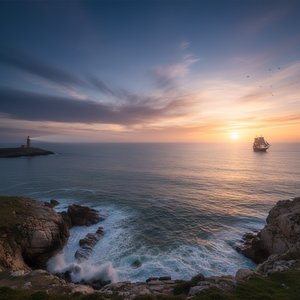
The Allure of the Horizon: A Comprehensive Exploration of Seascape Art Through History & Emotion
Explore the captivating world of seascape art! Discover its history, key artists & movements – from Dutch Masters to Impressionism. Expert insights for collectors and enthusiasts at ArtsDot.
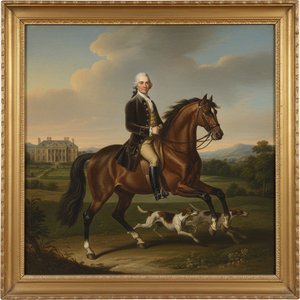
John Francis Sartorius II: Equestrian Elegance & the Rise of British Portraiture
Explore the captivating world of Francis Sartorius II (1734-1804), a leading British painter renowned for his exquisite equestrian portraits and hunting scenes. Discover his life, techniques & enduring legacy.
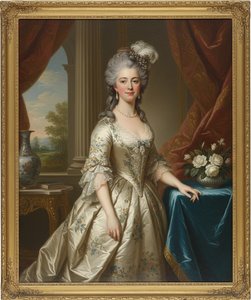
Francis Cotes: Elegance, Portraiture & the Rise of a Georgian Aesthetic
Explore the elegant world of Francis Cotes, pioneer of English pastel painting & celebrated Georgian portraitist. Discover his captivating portraits, artistic techniques, and lasting influence on 18th-century art.
Jean-Louis Forain: Capturing Parisian Life with Wit & Realism
Explore the captivating world of Jean-Louis Forain, a master Impressionist chronicler of Belle Époque Paris. Discover his satirical paintings, realistic scenes & lasting legacy. Learn about collecting Forain's art today!