Preview
 Send
Send Share
Share
 Details

 Download
 Similars
 X-Ray
X-Ray Diaporama
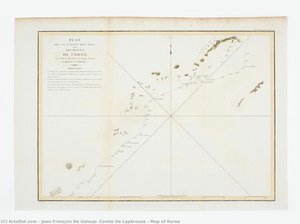
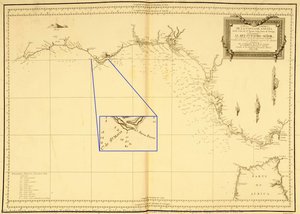
Map of Korea


 Read More
Hand Made Oil Reproduction
Hand-painted oil on canvas in your size and frame, made to order by our artists. ( Buy Print Buy Image)




































Pick from our preset sizes that match the artwork's original proportions.

You may enter your own dimensions to fit a specific frame or space. If your selected size does not match the original image's proportions, we will either crop the artwork or extend the painting with additional hand-painted elements. A digital mockup will be sent for your approval before production begins.
Please note that the on-screen preview does not reflect the actual cropping or extension. Only the mockup will accurately show the final composition.
While custom sizes are available, we recommend selecting a dimension from the predefined list to preserve the original proportions.
After order, ArtsDot.com team will email client for instructions and provide a mockup preview
Worldwide Delivery () in 3/4 weeks instead of standard 5 weeks. (28 August). No compromise on quality.

Free Worldwide Express Shipping

High-Quality Linen Canvas

Full Shipping Insurance

Customs Tax Refund Guarantee

True Color Matching Guarantee

60-Day Return Policy (Defects Only)

100% Money-Back Guarantee

Bulk Discount Offer
 Glass option is only available in size under 110 CM

Map of Korea
Reproduction Medium
Reproduction Size
-


Total Price
$ 263
Related Artworks

Artist Biography
A Life Dedicated to Charting the Unknown
Jean-François de Galaup, Comte de Lapérouse, a name resonating with both ambition and tragedy, stands as a pivotal figure in the Age of Exploration. Born into nobility in Albi, France, in 1741, his life was one defined by service to the French Navy and an insatiable curiosity about the world beyond known horizons. From a young age, Lapérouse demonstrated a natural aptitude for maritime pursuits, entering the navy at just fifteen years old – a testament to both his family’s standing and his own burgeoning skills. The crucible of the Seven Years' War provided early experience, forging him in naval engagements off Louisbourg and Quiberon Bay where he sustained an injury and briefly experienced capture by British forces. These formative experiences instilled within him not only tactical acumen but also a deep understanding of the complexities of maritime warfare. His rise through the ranks was steady, marked by both courage and competence, culminating in command of the frigate *Amazone* during the Anglo-French War (1778-1783). It was here that his strategic brilliance truly shone, notably with the capture of HMS *Ariel* in 1779 and a daring raid on British trading posts along the Hudson Bay coast in 1782. These successes weren’t merely military victories; they were demonstrations of a keen intellect and an ability to adapt to challenging circumstances – qualities that would prove invaluable in his later, grander undertaking. A personal milestone arrived in 1783 with his marriage to Louise-Eléonore Broudou, a Creole woman from Île de France (now Mauritius), adding a layer of warmth and stability to a life largely defined by duty and adventure.The Ambitious Circumnavigation: A Voyage of Science and Discovery
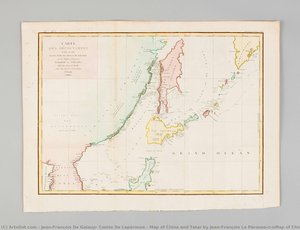
In 1785, King Louis XVI entrusted Lapérouse with leading a scientific expedition around the globe – a mission conceived as both a national prestige project and a significant contribution to European knowledge. This was not simply about claiming territory; it was an endeavor driven by a thirst for understanding, mirroring yet expanding upon the voyages of Captain James Cook. The expedition’s objectives were multifaceted: charting unexplored coastlines with unprecedented accuracy, observing astronomical phenomena, meticulously documenting local flora and fauna, studying indigenous cultures with sensitivity, and establishing potential trade routes. Lapérouse commanded two purpose-built ships, *Astrolabe* and *Uranie*, accompanied by a crew exceeding 200 men, including a contingent of dedicated scientists. Their journey was an epic undertaking, traversing the vast expanse of the Pacific Ocean with stops in Chile, Hawaii, Alaska, California, Macau, the Philippines, Korea, Russia, Japan, Samoa, Tonga, and Australia. Lapérouse’s detailed maps of China and Korea were particularly noteworthy, representing a significant leap forward in cartographic accuracy for these regions. He didn't merely record coastlines; he sought to understand the cultures and environments he encountered, collecting invaluable data that would enrich European understanding of the Pacific world. The expedition was characterized by meticulous observation and documentation, setting a new standard for scientific exploration.The Enigma of Vanikoro: A Disappearance That Captured Europe
After departing Botany Bay (Australia) in 1788, *Astrolabe* and *Uranie* vanished without a trace, plunging France – and indeed all of Europe – into speculation and anxiety. The fate of Lapérouse and his crew became one of the most enduring mysteries of the late 18th century. Years turned into decades with no definitive answers, fueling countless theories about their demise. Was it shipwreck? Disease? Hostile encounters with indigenous populations? The uncertainty only amplified the fascination surrounding the expedition and its leader. It wasn’t until 1974 that the mystery was finally solved – albeit tragically. The wrecks of *Astrolabe* and *Uranie* were discovered on the treacherous reefs of Vanikoro Island in the Solomon Islands, revealing they had been lost during a violent storm. The discovery confirmed the worst fears: Lapérouse and his crew had perished, victims of the unforgiving power of the ocean. While the circumstances surrounding their final moments remain somewhat unclear, the finding brought closure to a decades-long enigma and allowed for a more complete understanding of the expedition’s ultimate fate.A Lasting Legacy: Cartography, Science, and the Spirit of Exploration
Despite its tragic end, Lapérouse's expedition left an indelible mark on history. His meticulously crafted maps, particularly those of China and Korea, remain valuable historical artifacts, demonstrating a level of accuracy unprecedented for their time. These weren’t simply navigational tools; they were works of art in themselves, reflecting the dedication and skill of both Lapérouse and his cartographers. The scientific data collected during the voyage – encompassing botany, zoology, ethnography, and astronomy – significantly enriched European knowledge of the Pacific region. The expedition exemplified the spirit of scientific exploration that characterized the late 18th century, a period marked by an increasing desire to understand and document the world’s diverse cultures and environments. Lapérouse's emphasis on meticulous observation and documentation set a new standard for future voyages, influencing generations of explorers and scientists. His story serves as a poignant reminder of the risks inherent in exploration, but also of the enduring human drive to push boundaries and unravel the mysteries of our planet. The reproductions of his maps continue to captivate enthusiasts today, offering a glimpse into a world on the cusp of discovery – a world that Lapérouse dedicated his life to charting.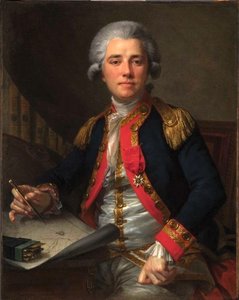
Jean-François de Galaup, Comte de Lapérouse
1741 - 1788 , France
Quick Facts
- Artistic Movement Or Style: Cartography & Exploration
- Date Of Birth: 1741
- Date Of Death: 1788
- Full Name: Jean-François de Galaup, Comte de Lapérouse
- Nationality: French
- Notable Artworks:
- Map of Korea
- Map of China and Tatar
- Place Of Birth: Albi, France